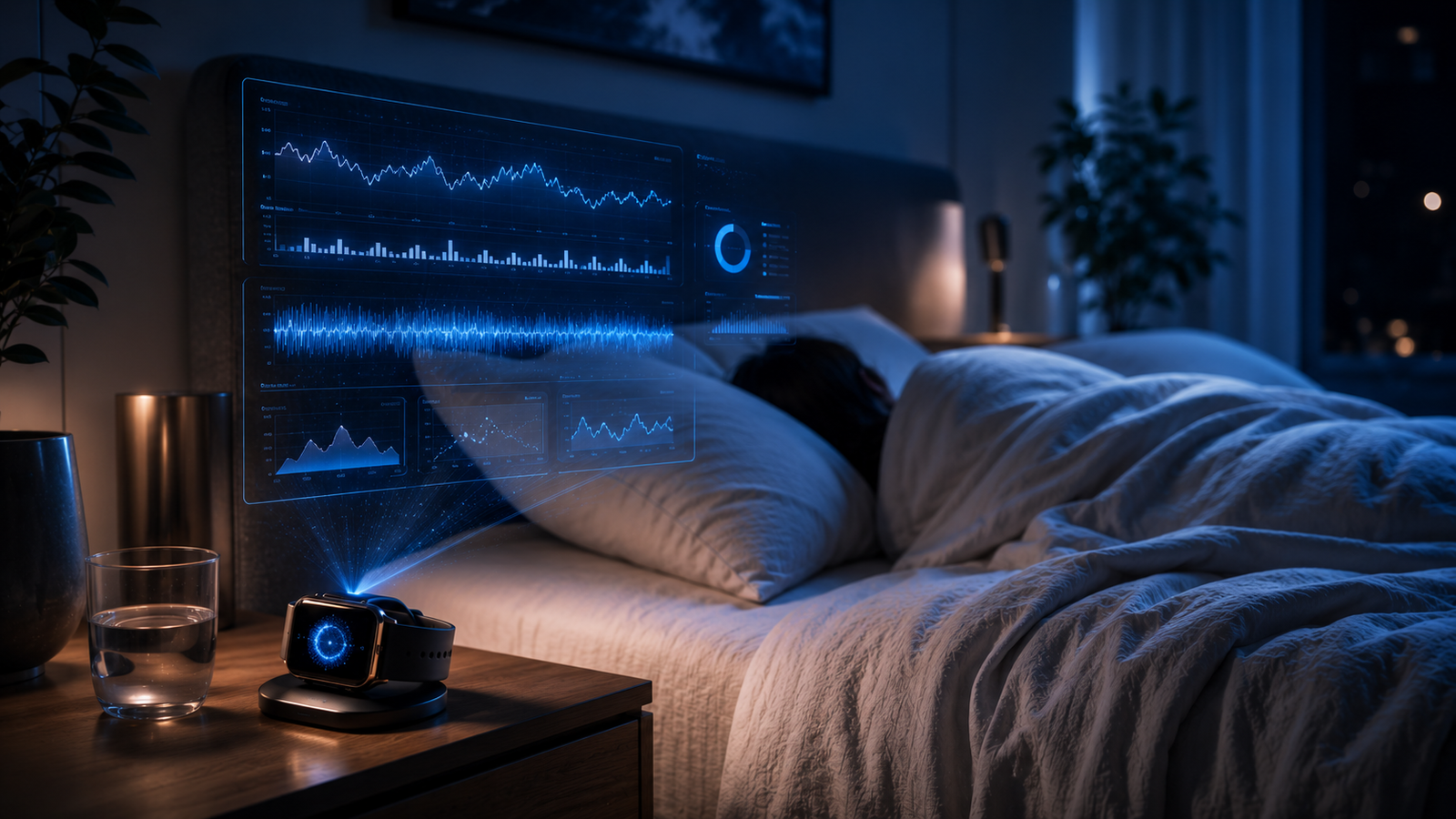
Are Sleep Trackers Accurate? What Your Smartwatch Can (and Can’t) Tell You (2026)
Millions of people check their smartwatch every morning to see how they slept. Whether you use an Apple Watch, Galaxy Watch, Fitbit, Garmin, or another wearable device, you’ve probably wondered one important question:
Are Sleep Trackers Accurate?
Modern sleep trackers can provide valuable insights into your sleeping habits, including estimated sleep duration, heart rate, movement, and different sleep stages.
However, these devices are not medical-grade diagnostic tools.
Understanding what sleep trackers measure—and where their limitations lie—can help you interpret your sleep data more accurately instead of worrying about every score.
In this guide, we’ll explain how sleep trackers work, how accurate they really are, and how to use your sleep data to improve your overall sleep quality.
Understanding Are Sleep Trackers Accurate can help you make better decisions about your sleep habits.
Can Sleep Trackers Really Detect Deep Sleep?
To answer Are Sleep Trackers Accurate, it’s important to understand how wearable devices collect and analyze sleep data.
1. Sleep Trackers Don’t Measure Brain Waves
One of the biggest misconceptions about Are Sleep Trackers Accurate is that they directly detect your sleep stages.
In reality, consumer sleep trackers do not measure brain waves (EEG).
Instead, they estimate your sleep by analyzing several indirect signals, including:
- Heart rate
- Heart rate variability (HRV)
- Body movement
- Skin temperature (on supported devices)
- Blood oxygen (SpO₂ on supported models)
These measurements are processed by algorithms that estimate whether you’re awake, in light sleep, deep sleep, or REM sleep.
2. Clinical Sleep Studies Are Still the Gold Standard
Professional sleep laboratories use polysomnography (PSG), which records:
- Brain waves (EEG)
- Eye movements
- Muscle activity
- Heart rhythm
- Breathing patterns
- Blood oxygen levels
Because sleep stages are determined directly from brain activity, polysomnography remains the most accurate method for diagnosing sleep disorders.
This is why your smartwatch should be viewed as a helpful wellness tool—not a medical diagnostic device.
According to the American Academy of Sleep Medicine (AASM), consumer sleep trackers are useful for monitoring long-term sleep habits but should not replace professional evaluation for diagnosing sleep disorders.
3. How Accurate Are Popular Smartwatches?
Modern wearable devices have improved significantly over the past few years.
Generally speaking:
- Total sleep time: Usually quite accurate.
- Sleep and wake detection: Good for most healthy adults.
- Deep sleep estimates: Moderately accurate.
- REM sleep estimates: Moderate accuracy.
- Exact sleep stage timing: Less reliable.
Different brands also use different algorithms, so two devices worn on the same night may report different results.
Overall, Are Sleep Trackers Accurate depends on what you’re measuring and how you interpret the results.
4. Why Sleep Scores Change Every Night
Many users become concerned when their sleep score drops unexpectedly.
However, sleep naturally changes from night to night.
Several factors can influence your score, including:
- Stress
- Exercise
- Alcohol consumption
- Caffeine intake
- Illness
- Bedroom temperature
- Bedtime consistency
A single low score doesn’t necessarily indicate poor health.
Instead, focus on long-term patterns over several weeks.
5. Don’t Chase Perfect Sleep Scores
Many sleep experts now recognize a phenomenon called orthosomnia—becoming overly anxious about achieving a “perfect” sleep score.
Ironically, worrying too much about your sleep data may actually make it harder to sleep well.
Healthy sleep isn’t about reaching 100 points every night.
Instead, use your smartwatch as a guide to notice trends and encourage healthier habits, rather than treating each night’s score as a test you must pass.
Want to understand why deep sleep matters more than chasing a high sleep score? Read our complete guide on How Much Deep Sleep Do You Need?
Who Should Use a Sleep Tracker?
6. Sleep Trackers Are Best for Long-Term Trends
The greatest strength of modern wearables isn’t measuring one perfect night of sleep—it’s identifying patterns over weeks or months.
By reviewing long-term data, you may notice trends such as:
- Going to bed later on weekends
- Reduced sleep after stressful days
- Better recovery after regular exercise
- Poor sleep following alcohol consumption
These patterns often provide far more valuable insights than a single night’s sleep score.
7. Who Can Benefit Most from Sleep Tracking?
Sleep trackers can be particularly helpful for people who want to improve their daily habits.
They may benefit:
- Busy professionals with inconsistent schedules
- Athletes monitoring recovery
- Frequent travelers adjusting to jet lag
- Older adults interested in sleep quality
- Anyone building healthier bedtime routines
For many users, simply becoming more aware of their sleep habits encourages healthier lifestyle choices.
8. When Should You See a Doctor Instead?
Even the best smartwatch cannot diagnose sleep disorders.
If you experience any of the following symptoms regularly, professional evaluation is recommended:
- Loud snoring with pauses in breathing
- Extreme daytime sleepiness
- Frequent nighttime awakenings
- Morning headaches
- Difficulty staying awake during the day
A sleep specialist may recommend a clinical sleep study to determine whether an underlying sleep disorder is present.
If you frequently wake up feeling exhausted even after a full night’s sleep, read our guide on Why You Feel Tired After Sleeping 8 Hours to explore other possible causes.
9. How to Use Your Sleep Data Wisely
Instead of asking:
“Was my sleep score good enough?”
Try asking:
- Did I maintain a consistent bedtime?
- Am I sleeping long enough?
- How do I actually feel this morning?
- What habits improved my sleep this week?
Using your sleep tracker as a coaching tool—not a report card—often leads to healthier long-term habits.
10. Sleep Quality Always Matters More Than Numbers
The purpose of sleep tracking isn’t achieving a perfect score.
It’s understanding your body’s natural sleep patterns and making gradual improvements over time.
Healthy sleep depends on many factors working together:
- Consistent sleep schedules
- A relaxing bedtime routine
- Good sleep hygiene
- Regular physical activity
- A comfortable bedroom
- Managing stress effectively
Technology can support these habits—but it can never replace them.
Building better sleep hygiene is one of the most effective ways to improve both your sleep quality and the accuracy of long-term sleep tracking trends.
Frequently Asked Questions (FAQ)
Are sleep trackers accurate?
Are Sleep Trackers Accurate? Modern sleep trackers are reasonably accurate for estimating total sleep time and identifying general sleep patterns. However, they cannot directly measure brain activity, so sleep stage estimates such as deep sleep and REM sleep should be viewed as approximations.
Can a smartwatch diagnose sleep apnea?
No. While some smartwatches monitor blood oxygen levels and breathing patterns, they cannot diagnose sleep apnea or other sleep disorders. If you experience loud snoring, pauses in breathing, or excessive daytime sleepiness, consult a healthcare professional.
Which sleep tracker is the most accurate?
Several premium wearables perform well, including:
- Apple Watch
- Fitbit
- Garmin
- Samsung Galaxy Watch
- Oura Ring
Each device uses different algorithms, so results may vary. Rather than comparing scores between devices, focus on trends within the same device over time.
Why does my smartwatch show different sleep stages every night?
Sleep naturally varies from night to night.
Factors such as stress, exercise, alcohol, illness, caffeine, room temperature, and bedtime consistency all influence your sleep patterns. Small nightly differences are completely normal.
Should I trust my sleep score?
A sleep score is best viewed as a helpful wellness indicator—not a medical diagnosis.
Pay attention to:
- Weekly trends
- Consistent bedtime habits
- Total sleep duration
- How rested you feel during the day
These factors are usually more meaningful than one night’s score.
Final Thoughts
Are Sleep Trackers Accurate? Yes—but only within their limitations.
The answer is yes—but only within their limitations.
Modern smartwatches and wearable devices provide valuable estimates of your sleep duration, heart rate, movement, and overall sleep patterns. They are excellent tools for building awareness and identifying long-term habits, but they cannot directly measure brain activity or replace a professional sleep study.
Rather than worrying about achieving a perfect sleep score every morning, focus on the bigger picture. Consistent sleep habits, a healthy bedtime routine, regular exercise, and a comfortable sleep environment will always have a greater impact on your well-being than any single number displayed on your smartwatch.
Use your sleep tracker as a guide—not as a judge. When combined with healthy habits, it can become a powerful tool for improving your sleep and overall health over time.
The Centers for Disease Control and Prevention (CDC) recommends prioritizing consistent sleep habits and sufficient nightly sleep as essential components of long-term physical and mental health.
Knowing Are Sleep Trackers Accurate allows you to use wearable technology more effectively while focusing on healthy sleep habits instead of chasing perfect scores.