Can Menopause Cause Vivid Dreams? 7 Surprising Links
Can menopause cause vivid dreams? Menopause may indirectly make dreams feel unusually intense, emotional, or memorable by disrupting sleep through changing hormones, night sweats, anxiety, medication effects, and repeated awakenings during or immediately after REM sleep.
Scientific evidence does not yet prove that menopause directly changes dream content. However, vivid dreams are frequently noticed during perimenopause and menopause, when sleep commonly becomes lighter and more fragmented.
You may experience:
- Highly detailed dreams
- Strong emotional dreams
- Disturbing nightmares
- Dreams that seem unusually realistic
- Several remembered dreams in one night
- Dreams followed by sweating or palpitations
- Greater dream recall after nighttime awakenings
The dreams themselves are not usually harmful. The more important question is whether they repeatedly interrupt sleep, produce fear of bedtime, or occur with unusual physical behaviors.
Quick Answer
Menopause can be associated with vivid dreams, but fluctuating estrogen and progesterone levels may not be the only explanation.
Dreams may become more noticeable because menopause can contribute to:
- Frequent awakenings during REM sleep
- Night sweats and hot flashes
- Anxiety and emotional stress
- Insomnia and irregular sleep patterns
- Medication or supplement effects
- REM rebound after sleep deprivation
- Increased risk of certain sleep disorders
Research consistently links the menopausal transition with difficulty falling asleep, nighttime awakenings, and early-morning waking. A recent review of sleep disturbance during perimenopause describes hormonal changes, vasomotor symptoms, mood changes, and age-related health conditions as interacting causes rather than one simple mechanism. Sleep Disturbance and Perimenopause: A Narrative Review
What Is a Vivid Dream?
A vivid dream feels especially clear, detailed, realistic, or emotionally powerful. You may remember specific people, conversations, locations, colors, or physical sensations long after waking.
Vivid dreams can be:
- Pleasant
- Exciting
- Confusing
- Sad
- Frightening
- Repetitive
- Closely connected to current worries
- Completely nonsensical—as dreams sometimes insist on being
A vivid dream is not automatically a nightmare. A nightmare is a disturbing dream that commonly produces fear, anxiety, sadness, or another strong negative emotion and may awaken the sleeper.
When Do Vivid Dreams Usually Occur?
Dreaming can happen during different sleep stages, but the most elaborate and story-like dreams commonly occur during rapid eye movement, or REM sleep.
During REM sleep:
- Brain activity increases.
- The eyes move rapidly beneath the eyelids.
- Breathing and heart rate become less regular.
- Most skeletal muscles temporarily relax.
- Emotional and memory-processing networks remain active.
- Dreams may become complex and immersive.
REM periods generally become longer later in the night. This helps explain why vivid dreams are often remembered near morning.
People do not necessarily dream more simply because they remember more dreams. They may instead be waking at a moment when the dream remains accessible to memory.
Why Are Dreams Easier to Remember During Menopause?
Dream recall depends partly on when awakening occurs.
If you sleep continuously through a REM period, the dream may disappear from memory. If a hot flash, noise, anxious thought, or need to urinate wakes you directly from REM sleep, the dream may feel extraordinarily fresh and detailed.
This creates an important distinction:
Menopause may increase dream recall by causing more awakenings, even if it does not dramatically increase the total amount of dreaming.
Women experiencing perimenopause frequently report problems maintaining sleep. Hormonal changes, vasomotor symptoms, mood symptoms, pain, and sleep disorders may all contribute to these awakenings. Sleep Disturbances Across a Woman’s Lifespan
Can Menopause Cause Vivid Dreams Directly?
A direct hormonal effect is possible, but current evidence is limited.
Estrogen and progesterone influence systems involved in:
- Sleep regulation
- Body temperature
- Mood
- Stress responses
- Memory
- Serotonin signaling
- GABA activity
- Circadian rhythms
Hormonal fluctuation may therefore affect the conditions in which dreams occur or are remembered. However, it would be inaccurate to claim that low estrogen alone causes every vivid dream.
A more realistic explanation is that several menopause-related changes interact:
flowchart TD
    A["Hormonal changes"] --> B["Hot flashes or anxiety"]
    A --> C["Lighter, fragmented sleep"]
    B --> D["Awakening during REM"]
    C --> D
    D --> E["Stronger dream recall"]
Understanding can menopause cause vivid dreams therefore requires looking at both hormonal changes and the reasons sleep is being interrupted.
1. Hormonal Fluctuations May Alter Sleep
During perimenopause, estrogen and progesterone levels may change unpredictably rather than declining in a smooth line.
Many women asking can menopause cause vivid dreams notice that the change begins alongside night sweats or frequent awakenings.
These hormones interact with brain systems that regulate sleep and emotional processing. Research has associated lower or rapidly changing reproductive hormone levels with:
- Difficulty falling asleep
- Reduced sleep efficiency
- More time awake during the night
- Early-morning awakenings
- Changes in sleep-stage patterns
- Greater vulnerability to mood symptoms
Progesterone and some of its metabolites have sleep-promoting effects through pathways involving GABA, an inhibitory chemical messenger in the brain. Declining or irregular progesterone may therefore contribute to lighter or less stable sleep in some women.
This does not necessarily create unusual dreams directly. It may make awakening during a dream more likely.
2. Night Sweats Can Interrupt REM Sleep
Night sweats are nighttime vasomotor symptoms caused by changes in temperature regulation during menopause.
An episode may include:
- Sudden warmth
- Facial or chest flushing
- Perspiration
- A noticeable heartbeat
- Anxiety or unease
- Chills after sweating
- An abrupt awakening
If the awakening happens during REM sleep, a vivid dream may be remembered immediately. The dream may also incorporate physical sensations occurring in the bedroom.
To understand can menopause cause vivid dreams, it helps to examine sleep disruption rather than dream content alone.
For example, feeling overheated could become part of a dream involving:
- A fire
- Hot weather
- A crowded room
- Exercise
- Being trapped
- Searching for water
This does not mean the dream predicted the hot flash. The sleeping brain may have woven a genuine physical sensation into the ongoing dream narrative.
The previous guide, Why Does Menopause Cause Night Sweats?, explains how hormonal changes affect temperature regulation and trigger nighttime awakenings.
3. Insomnia Creates More Opportunities for Dream Recall
Menopause-related insomnia may involve:
- Taking a long time to fall asleep
- Waking repeatedly
- Remaining awake after a dream
- Waking much earlier than intended
- Feeling unrefreshed in the morning
- Worrying about sleep during the day
Repeated awakenings create more opportunities to remember dreams. Remaining awake afterward also gives the brain time to rehearse the dream, making it less likely to fade.
This can form a frustrating cycle:
- A vivid dream causes awakening.
- The dream triggers worry or physical alertness.
- Returning to sleep becomes difficult.
- Sleep loss increases the pressure for REM sleep.
- Another intense dream is remembered the following night.
If general sleep disruption is the larger problem, Why Can’t I Sleep During Menopause? examines the overlapping hormonal, physical, and emotional causes.
Are Vivid Dreams a Recognized Menopause Symptom?
Major medical guidance more commonly lists insomnia, night sweats, anxiety, mood changes, palpitations, and concentration problems than vivid dreams themselves.
For that reason, vivid dreams are better understood as a possible secondary sleep experience rather than a definitive sign of menopause.
The timing may still provide useful clues. A hormonal association becomes more plausible when vivid dreams begin alongside:
- Irregular or changing periods
- Hot flashes
- Night sweats
- New sleep-maintenance problems
- Mood changes
- Vaginal dryness
- Brain fog
- Other recognized perimenopause symptoms
Vivid dreams alone cannot diagnose perimenopause or menopause.
4. Anxiety and Emotional Stress Can Intensify Dreams
Menopause often coincides with major emotional, physical, and practical changes. Hormonal fluctuations may also contribute to anxiety, irritability, or changes in mood.
The question can menopause cause vivid dreams becomes especially relevant when symptoms begin during perimenopause.
Stress can affect dreams by:
- Increasing emotional arousal before sleep
- Making sleep lighter and less stable
- Causing repeated awakenings
- Keeping worries active during sleep
- Making threatening dream content more likely
- Improving dream recall after awakening
Common dream themes may involve:
- Being late or unprepared
- Losing something important
- Conflict with family or coworkers
- Being chased
- Falling
- Returning to an earlier life stage
- Feeling trapped or unable to speak
Dream content does not have a fixed medical meaning. A dream about missing a train usually means the sleeping brain is being creative—not that a railway emergency is approaching.
The Anxiety–Dream–Insomnia Cycle
An intense dream can start a repeating cycle:
- Stress increases emotional dream content.
- A vivid dream causes awakening.
- The person interprets it as alarming.
- Heart rate and alertness increase.
- Returning to sleep becomes difficult.
- Sleep loss increases emotional sensitivity the next day.
- The following night begins with more worry.
If anxious thoughts are keeping you awake after these episodes, How to Calm Anxiety at Night offers breathing, grounding, and cognitive techniques that may help reduce nighttime arousal.
5. Medicines Can Change Dream Intensity or Recall
Vivid dreams sometimes begin after starting, stopping, or changing the dose of a medicine.
Possible contributors include certain:
- Antidepressants
- Beta blockers
- Blood-pressure medicines
- Sleep medicines
- Parkinson’s disease medicines
- Smoking-cessation products
- Antihistamines
- Steroids
- Opioid pain medicines
- Hormonal treatments
- Medicines that influence dopamine or serotonin
The effects vary between individuals. A medicine may alter REM sleep, increase awakenings, or make dreams easier to remember without increasing the total amount of dreaming.
Antidepressants and Dreams
Some antidepressants suppress or modify REM sleep. Starting treatment, changing the dose, missing doses, or stopping suddenly may therefore alter dream patterns.
Tracking sleep patterns may help clarify can menopause cause vivid dreams in your individual situation.
Possible experiences include:
- More detailed dreams
- Unusual dream themes
- Nightmares
- Reduced dream recall
- More intense dreams after withdrawal
- Sleep disruption that makes dreams memorable
Do not stop an antidepressant or other prescription medicine abruptly because withdrawal symptoms and worsening mood can occur.
Instead, record:
- Medicine and supplement names
- Dosages
- Time each one is taken
- Date treatment began
- Recent dose changes
- Date vivid dreams started
- Other new symptoms
A doctor or pharmacist can then assess whether the timing suggests a medication effect.
6. REM Rebound May Produce Intense Dreams
REM rebound is a temporary increase in REM sleep after REM has previously been reduced or disrupted.
It may occur after:
- Sleep deprivation
- Several nights of fragmented sleep
- Recovery from acute stress
- Reducing or stopping alcohol
- Stopping certain REM-suppressing medicines
- Major changes in the sleep schedule
- Recovery from illness
During REM rebound, REM sleep may begin sooner, last longer, or become more concentrated. Dreams may consequently feel unusually vivid or emotional.
Menopause can indirectly contribute when night sweats, insomnia, pain, or anxiety repeatedly reduce sleep. Once an uninterrupted night finally occurs, stronger REM pressure may make dreams more noticeable.
A clinical overview of REM rebound identifies sleep deprivation, stress, alcohol, and withdrawal from some REM-suppressing substances or medicines among its possible triggers.
Can Catch-Up Sleep Cause Vivid Dreams?
Yes. Sleeping considerably later than usual after several short nights can extend the morning portion of sleep, when REM periods are naturally longer.
This may explain why vivid dreams are sometimes strongest:
- On weekends
- After an exhausting week
- During vacation
- After recovering from illness
- Following several nights of hot flashes
- When returning to sleep in the morning
A consistent sleep and wake schedule may reduce large swings in sleep pressure. How to Fix a Broken Sleep Schedule explains how to reset sleep timing gradually.
7. Alcohol Can Disrupt REM Sleep
Alcohol may make falling asleep feel easier, but it does not reliably produce restorative sleep.
Early in the night, alcohol can suppress REM sleep. As the alcohol level falls, sleep may become lighter and more fragmented, with increased REM activity later in the night.
This pattern may produce:
- Repeated awakenings
- Sweating
- Palpitations
- Snoring
- More intense dreams
- Nightmares
- Early-morning waking
- Difficulty returning to sleep
Alcohol can also worsen menopause-related night sweats and obstructive sleep apnea, adding further opportunities to awaken during a dream.
If vivid dreams regularly follow evening drinking, record the amount and timing. Compare several alcohol-free evenings rather than relying on one night.
People who drink heavily or regularly should not stop suddenly without medical supervision. Alcohol withdrawal can cause insomnia, sweating, shaking, nightmares, seizures, and other potentially dangerous symptoms. MedlinePlus – Alcohol Withdrawal
Can Melatonin Cause Vivid Dreams?
Some people report vivid dreams or nightmares after taking melatonin, but the response is inconsistent.
Melatonin helps signal biological nighttime and regulate circadian timing. It does not necessarily function like a conventional sedative.
Dream changes may be noticed because melatonin:
- Changes sleep timing
- Helps someone sleep longer
- Extends late-morning REM sleep
- Alters the timing of awakening
- Improves recall by changing sleep continuity
The supplement may not be the only explanation. Dosage, product quality, other medicines, alcohol, stress, and the original sleep problem may all influence the experience.
The National Center for Complementary and Integrative Health advises discussing melatonin with a healthcare professional when taking medicines or managing a medical condition because interactions and safety considerations apply.
Do not assume that taking more will improve sleep. If vivid dreams begin after starting melatonin:
- Record the dose and time taken.
- Check for other active ingredients.
- Avoid combining it with alcohol.
- Discuss persistent effects with a doctor or pharmacist.
- Do not drive when significant morning drowsiness occurs.
Are Vivid Dreams and Nightmares the Same?
No.
| Feature | Vivid dream | Nightmare |
|---|---|---|
| Emotional tone | Pleasant, neutral, confusing, or frightening | Distressing or frightening |
| Detail | Usually clear and memorable | Often clear and memorable |
| Awakening | May or may not wake you | Commonly causes awakening |
| Return to sleep | Often easy | May be difficult |
| Daytime effect | Usually minimal | May cause fear, anxiety, or fatigue |
An occasional nightmare is common. Medical evaluation becomes more appropriate when nightmares:
- Occur repeatedly
- Create fear of sleeping
- Cause persistent daytime distress
- Follow a traumatic event
- Begin after a medication change
- Contribute to chronic insomnia
- Involve shouting, punching, kicking, or leaving the bed
- Create a risk of injury
Could Another Condition Be Causing the Dreams?
When considering can menopause cause vivid dreams, avoid assuming that menopause is always responsible.
Other possible contributors include:
- Post-traumatic stress disorder
- Anxiety or depression
- Fever or illness
- Sleep deprivation
- Sleep apnea
- Restless legs syndrome
- Narcolepsy
- Medication effects
- Alcohol or substance withdrawal
- Irregular sleep schedules
- Pregnancy
- Major emotional stress
- REM sleep behavior disorder
Sleep Apnea
Sleep apnea repeatedly interrupts breathing and can cause brief awakenings that improve dream recall.
Possible warning signs include:
- Loud habitual snoring
- Witnessed breathing pauses
- Gasping or choking
- Morning headaches
- Dry mouth
- Frequent nighttime urination
- Unrefreshing sleep
- Excessive daytime sleepiness
Because sleep apnea risk can increase after menopause, vivid dreams accompanied by these symptoms should not be dismissed as hormonal. Can Menopause Cause Sleep Apnea? explains the connection and common warning signs.
REM Sleep Behavior Disorder
Most people experience temporary muscle paralysis during REM sleep. In REM sleep behavior disorder, this normal protection is reduced, allowing a person to physically act out dreams.
Possible signs include:
- Shouting or swearing during sleep
- Punching or kicking
- Jumping from bed
- Grabbing a partner
- Injuring oneself or another person
- Remembering an action-filled dream after waking
This is different from merely having a vivid dream. New dream-enactment behavior warrants prompt medical evaluation, particularly when it is recurrent or potentially dangerous.
How Can You Identify the Most Likely Cause?
Track the pattern for two weeks.
| What to record | Useful details |
|---|---|
| Dream | Pleasant, confusing, frightening, or repetitive |
| Awakening | Time and suspected trigger |
| Menopause symptoms | Hot flashes, sweating, or palpitations |
| Medicines | Name, dose, timing, and recent changes |
| Supplements | Melatonin, herbal blends, or sleep products |
| Alcohol | Type, amount, and time consumed |
| Stress | Major worries or emotional events |
| Sleep schedule | Bedtime, wake time, and catch-up sleep |
| Physical behavior | Talking, shouting, kicking, or leaving bed |
| Daytime effect | Fatigue, anxiety, or impaired concentration |
This diary can help distinguish menopause-related sleep fragmentation from medication effects, REM rebound, alcohol, anxiety, or another sleep disorder.
The answer to can menopause cause vivid dreams is therefore yes, indirectly in many cases—but the timing, accompanying symptoms, and recent changes matter more than the dream content alone.
How Can You Reduce Vivid Dreams During Menopause?
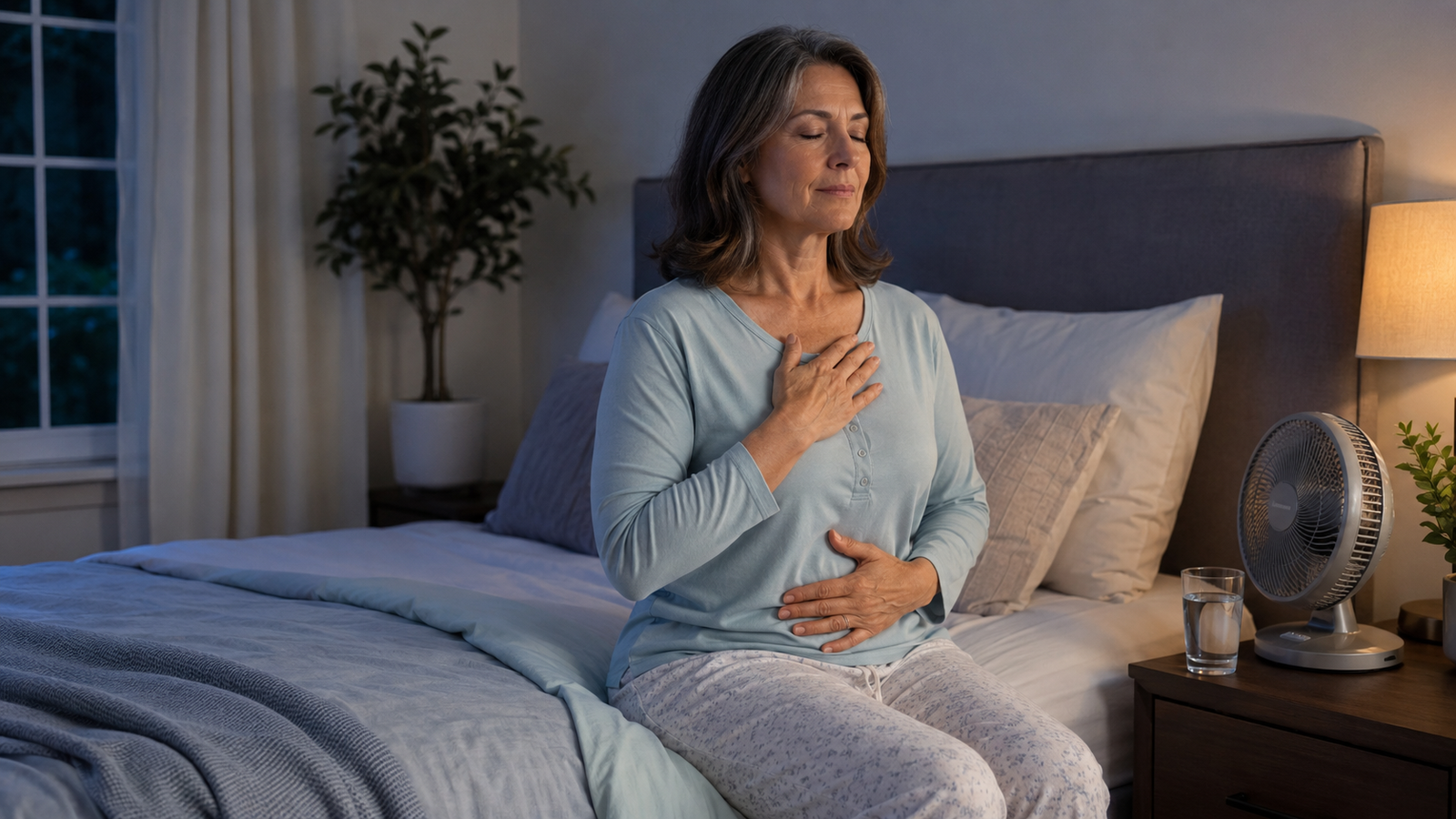
The goal is not to eliminate dreaming. Dreaming is a normal part of sleep. Instead, focus on reducing the hot flashes, anxiety, irregular sleep, and repeated awakenings that make dreams intense or memorable.
1. Keep a Consistent Sleep Schedule
Go to bed and wake up at roughly the same time every day, including weekends. A stable schedule may reduce sleep deprivation, catch-up sleep, and REM rebound.
Helpful habits include:
- Keeping the same morning wake time
- Getting daylight soon after waking
- Avoiding long or late naps
- Moving bedtime gradually rather than suddenly
- Allowing enough time for sleep
- Avoiding sleeping several hours later on weekends
If your routine has become irregular, follow the gradual steps in How to Fix a Broken Sleep Schedule.
2. Reduce Night Sweats and Overheating
When asking can menopause cause vivid dreams, consider whether hot flashes are waking you directly from REM sleep.
Try:
- Keeping the bedroom comfortably cool
- Using breathable sleepwear
- Layering lightweight bedding
- Running a quiet fan
- Keeping cool water nearby
- Avoiding heavy bedding
- Limiting known hot-flash triggers before bed
A bedroom that is too warm may increase sweating even when hormones are not the only cause. Learn how to adjust temperature, bedding, and airflow in What Is the Best Temperature for Sleep?.
3. Review Alcohol and Caffeine
Caffeine can increase alertness and make sleep less stable, particularly when consumed later in the day. Alcohol may initially cause drowsiness but fragment the second half of the night and alter REM sleep.
For two weeks, consider:
- Moving caffeine to the morning
- Avoiding caffeine within eight hours of bedtime
- Comparing dreams on alcohol-free nights
- Avoiding alcohol as a sleep aid
- Recording the amount and timing of each drink
Do not abruptly stop alcohol without medical help if you drink heavily or experience withdrawal symptoms.
4. Create a Calmer Pre-Sleep Routine
Stress and emotional arousal can influence dream content and make nighttime awakenings harder to manage.
Spend 30–60 minutes before bed on quiet activities such as:
- Reading something relaxing
- Taking a lukewarm shower
- Stretching gently
- Listening to calm audio
- Practicing slow breathing
- Writing tomorrow’s tasks on paper
- Dimming bright lights
- Avoiding upsetting news or arguments
The routine does not need to be elaborate. Sleep rarely demands candles, ceremonial tea, and a full orchestral soundtrack.
5. Review Medicines and Supplements
If vivid dreams began after starting or changing a medicine, contact a doctor or pharmacist.
Review:
- Prescription medicines
- Over-the-counter sleep aids
- Antihistamines
- Melatonin
- Menopause supplements
- Herbal products
- Nicotine-replacement products
- Recent dose changes
Do not stop prescription treatment independently. Changing the dose or timing may sometimes help, but that decision should be made with a healthcare professional.
6. Treat the Underlying Menopause Symptoms
When hot flashes, night sweats, anxiety, or insomnia are driving repeated awakenings, treating those symptoms may reduce dream recall.
Depending on medical history and symptom severity, a healthcare professional may discuss:
- Menopausal hormone therapy
- Nonhormonal prescription treatment
- Cognitive behavioral therapy
- Cognitive behavioral therapy for insomnia
- Treatment for anxiety or depression
- Evaluation for sleep apnea
- Management of pain or restless legs
Vivid dreams alone do not usually require hormone therapy. Treatment should target symptoms that meaningfully affect sleep and daytime functioning.
What Should You Do After a Vivid Dream or Nightmare?
When a dream wakes you:
- Remind yourself that the event was a dream.
- Take several slow breaths.
- Notice physical details in the room.
- Adjust damp clothing or bedding if needed.
- Keep the lights low.
- Avoid searching online for dream meanings.
- Do not repeatedly check the time.
- Return to a comfortable resting position.
A simple grounding exercise can help:
- Name five things you can see.
- Notice four physical sensations.
- Identify three sounds.
- Take two slow breaths.
- Repeat one reassuring statement.
Try saying:
“The dream has ended. I am safe, and my body can settle again.”
If you remain fully awake and frustrated for about 20 minutes, leave the bed temporarily and do something quiet in dim light. Return when sleepiness comes back. More practical techniques are available in How to Fall Back Asleep After Waking Up.
Can Rewriting a Nightmare Help?
For recurring nightmares, imagery rehearsal therapy may be useful. This technique involves:
- Writing a brief description of the recurring dream.
- Creating a safer or less distressing ending.
- Rehearsing the revised version while awake.
- Practicing it regularly for several minutes.
The purpose is not to uncover a hidden prediction. It is to help the brain develop a less threatening version of the repeated dream.
People with trauma-related nightmares should consider working with a qualified mental health professional, particularly when rewriting the dream causes significant distress.
When Should You Seek Medical Advice?
Arrange a medical appointment when vivid dreams or nightmares:
- Begin suddenly and persist
- Regularly interrupt sleep
- Cause fear of going to bed
- Produce significant daytime fatigue
- Begin after a medication change
- Occur with severe anxiety or depression
- Are accompanied by loud snoring or gasping
- Involve sleep paralysis or hallucinations
- Affect work, concentration, or driving
- Continue despite improving sleep habits
Seek prompt assessment if you:
- Punch, kick, shout, or leap from bed
- Injure yourself or your partner
- Experience confusion after waking
- Develop new weakness, tremor, or balance problems
- Have thoughts of self-harm
- Experience dangerous alcohol or medication withdrawal symptoms
Dream enactment is not a typical menopause symptom and should not be treated as an ordinary vivid dream.
A Practical Two-Week Experiment
During the first week, record dreams, awakenings, night sweats, medicines, alcohol, caffeine, and sleep timing without changing everything simultaneously.
During the second week:
- Maintain a consistent wake time.
- Move caffeine earlier.
- Avoid alcohol near bedtime.
- Keep the bedroom cooler.
- Use a calming pre-sleep routine.
- Compare dream frequency and morning fatigue.
This approach may reveal whether the main problem is hormonal sleep disruption, anxiety, a substance, a medicine, or an irregular schedule.
Ultimately, the answer to can menopause cause vivid dreams is often yes through indirect pathways. Improving sleep continuity and addressing the specific reason for awakening usually matters more than attempting to suppress dreams themselves.
Frequently Asked Questions
Can menopause cause vivid dreams every night?
Menopause may indirectly contribute to frequent vivid dreams when night sweats, anxiety, insomnia, or repeated awakenings occur regularly. However, dreams happening every night may also involve medicines, alcohol, stress, sleep apnea, or an irregular sleep schedule.
Why are my dreams suddenly so realistic?
You may be waking during or immediately after REM sleep, when elaborate dreams commonly occur. Menopause-related hot flashes and lighter sleep can increase these awakenings, making dreams easier to remember.
Are vivid dreams a definite symptom of perimenopause?
No. Sleep disturbances and mood changes are recognized menopause symptoms, but vivid dreams are not considered a reliable diagnostic sign. They are better understood as a possible consequence of fragmented sleep. The Menopause Society identifies hot flashes, sleep disturbances, vaginal changes, and mood changes among common symptoms.
Can low estrogen cause vivid dreams?
Changing estrogen levels may affect sleep, temperature regulation, mood, and brain signaling. However, current evidence does not establish low estrogen alone as a direct cause of vivid dreams.
Can hormone therapy stop vivid dreams?
Hormone therapy may improve sleep indirectly when hot flashes and night sweats are causing awakenings. It is not normally prescribed solely for vivid dreams, and suitability depends on symptoms, medical history, and individual risks.
Does melatonin make dreams more vivid?
Some people report vivid dreams or nightmares after taking melatonin. This might relate to altered sleep timing, longer sleep, or awakening near REM sleep. Record the dose and timing, and consult a healthcare professional if the effect persists.
Why do I remember several dreams in one night?
Each awakening creates an opportunity to remember the preceding dream. Multiple hot flashes, bathroom visits, anxious awakenings, noises, or breathing interruptions can therefore make it seem as though you dreamed continuously.
How can I stop vivid dreams naturally?
You may be able to reduce disruptive dream recall by:
- Maintaining a consistent wake time
- Keeping the bedroom cool
- Managing night sweats
- Moving caffeine earlier
- Limiting evening alcohol
- Reducing stress before bed
- Reviewing medicines and supplements
- Avoiding severe sleep deprivation
The objective is steadier sleep—not abolishing dreams, which would be a rather ambitious eviction notice for the brain.
Should I worry about acting out my dreams?
Yes, particularly when you shout, punch, kick, jump from bed, or injure yourself or another person. Dream enactment is different from an ordinary vivid dream and should be medically assessed.
Final Thoughts
Can menopause cause vivid dreams? Menopause may make dreams feel more intense or memorable, primarily by increasing night sweats, anxiety, insomnia, medication changes, and awakenings during REM sleep.
Vivid dreams alone are rarely dangerous. Start by recording when they happen and whether they coincide with hot flashes, alcohol, supplements, stress, or schedule changes. Improving sleep continuity often matters more than trying to control the dream itself.
Consult a healthcare professional when dreams regularly disturb sleep, cause significant daytime impairment, begin after a medication change, accompany loud snoring or gasping, or involve physical dream enactment.
Medical disclaimer: This article provides general educational information and does not replace medical diagnosis or individualized treatment. Consult a qualified healthcare professional before changing medicines, supplements, or menopause treatment.
Internal Links
- Why Does Menopause Cause Night Sweats?
- Why Can’t I Sleep During Menopause?
- How to Calm Anxiety at Night
- How to Fix a Broken Sleep Schedule
- Can Menopause Cause Sleep Apnea?
- How to Fall Back Asleep After Waking Up
External Resources
- The Menopause Society – Menopause Symptoms
- The Menopause Society – Perimenopause
- NCCIH – Melatonin: What You Need to Know
- NCBI Bookshelf – REM Rebound