How Much Deep Sleep Do You Really Need? A Complete Guide (2026)
How Much Deep Sleep Do You Need is one of the most common questions people ask after checking their smartwatch or sleep tracking app. Many people are surprised to discover that even after sleeping for seven or eight hours, they may have only one or two hours of deep sleep.
Does that mean something is wrong?
Not necessarily.
Deep sleep is only one stage of your nightly sleep cycle, but it plays an essential role in physical recovery, immune function, tissue repair, hormone regulation, and overall health.
Rather than focusing only on the total number of hours you sleep, understanding how much deep sleep you actually need can help you evaluate the quality of your sleep more accurately.
In this guide, you’ll learn what deep sleep is, how much you really need, what affects it, and practical ways to improve it naturally.
What Is Deep Sleep?
Deep sleep, also called slow-wave sleep (SWS), is the most restorative stage of non-REM sleep.
During this stage:
- Your heart rate slows.
- Breathing becomes steady.
- Blood pressure decreases.
- Muscles repair and recover.
- Growth hormone is released.
- The immune system strengthens.
- The brain clears metabolic waste.
Unlike REM sleep, which is closely associated with dreaming and memory processing, deep sleep focuses primarily on physical restoration.
This is why improving How Much Deep Sleep Do You Need isn’t about chasing a specific number—it is about improving overall sleep quality so your body naturally spends enough time in this critical sleep stage.
How Much Deep Sleep Do You Need by Age?
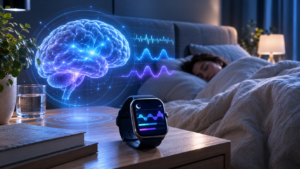
1. Adults Usually Need 1–2 Hours of Deep Sleep
One of the biggest misconceptions about How Much Deep Sleep Do You Need is believing that more is always better.
For most healthy adults, deep sleep typically accounts for 13–23% of total sleep.
If you sleep for eight hours, that usually equals approximately:
- 1 hour (minimum healthy range)
- 1.5 hours (typical average)
- Up to 2 hours (excellent sleep quality)
The exact amount varies from person to person and changes every night.
Instead of focusing on one night’s results, pay attention to long-term trends.
2. Deep Sleep Naturally Decreases With Age
Children experience much more deep sleep because their bodies and brains are rapidly developing.
As we age, the percentage of deep sleep gradually declines.
Typical averages include:
| Age | Typical Deep Sleep |
|---|---|
| Children | 25–35% |
| Teenagers | 20–25% |
| Adults | 13–23% |
| Older Adults | 10–15% |
A gradual decline is completely normal and doesn’t necessarily indicate poor sleep.
3. Smartwatches Don’t Measure Deep Sleep Perfectly
Many people become concerned after checking their Apple Watch, Galaxy Watch, Fitbit, or Garmin app.
However, consumer sleep trackers estimate sleep stages using:
- Heart rate
- Body movement
- Heart rate variability (HRV)
- Motion sensors
They do not directly measure brain activity like a clinical sleep study (polysomnography).
Use wearable devices to monitor long-term trends rather than treating each night’s score as a medical diagnosis.
According to the American Academy of Sleep Medicine, consumer sleep trackers can be helpful for observing long-term sleep patterns, but they should not replace professional medical evaluation when sleep disorders are suspected.
4. What Reduces Deep Sleep?
Several everyday habits can reduce deep sleep without you realizing it.
Common causes include:
- Drinking alcohol before bed
- Late-night caffeine
- Chronic stress
- Inconsistent sleep schedules
- Sleeping in a room that’s too warm
- Excessive evening screen time
Even small improvements in these areas can noticeably increase sleep quality over time.
5. Signs You May Not Be Getting Enough Deep Sleep
You don’t need a smartwatch to recognize poor deep sleep.
Possible signs include:
- Waking up feeling exhausted
- Difficulty concentrating
- Poor memory
- Low physical energy
- Frequent daytime sleepiness
- Slower recovery after exercise
If these symptoms continue despite getting enough sleep each night, improving your overall sleep habits may be more beneficial than simply trying to sleep longer.
How to Increase Deep Sleep Naturally