Why Do I Wake Up With Hip Pain? 9 Possible Causes
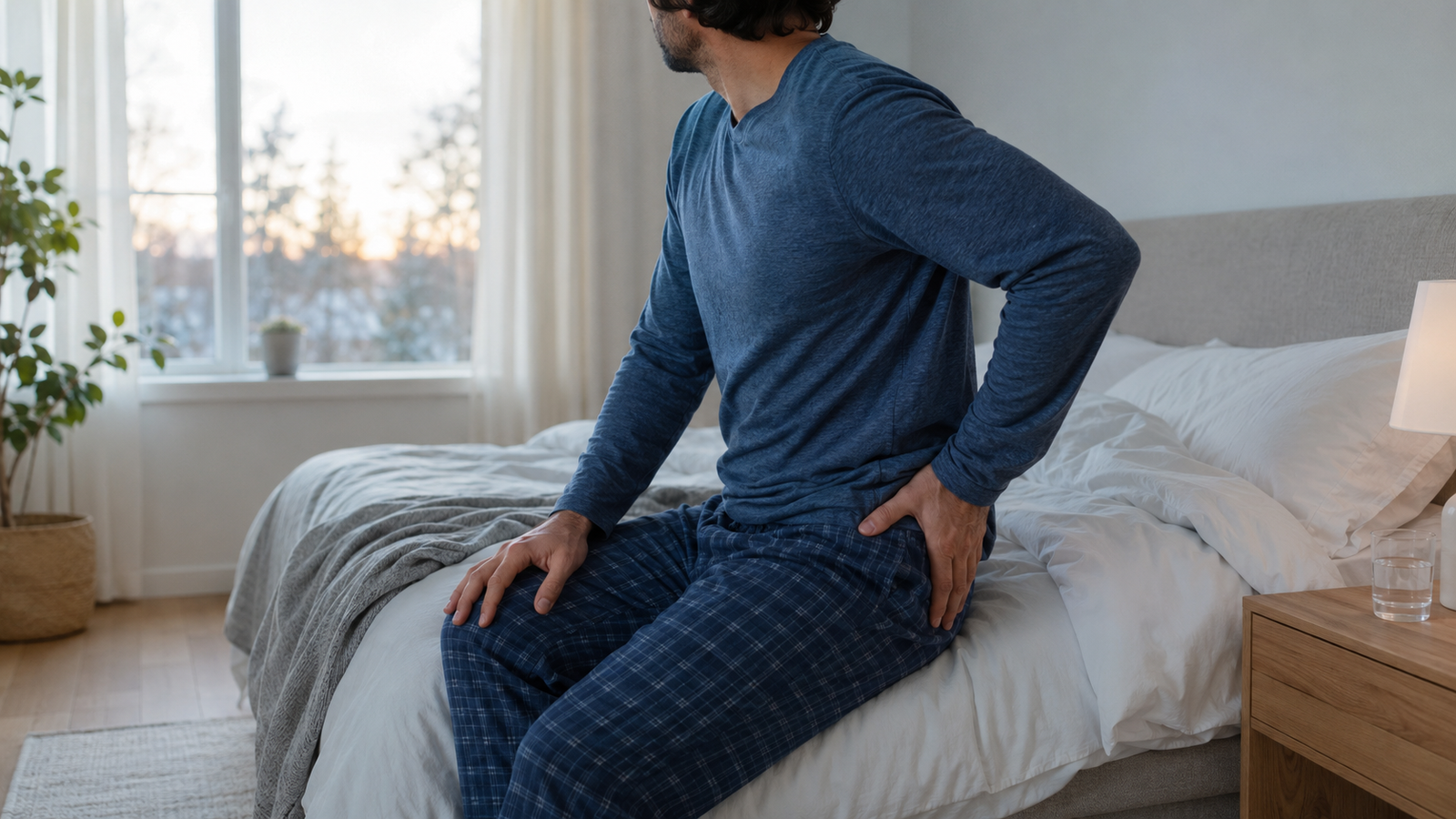
Why do I wake up with hip pain? Morning hip pain may result from pressure created by your sleeping position, greater trochanteric pain syndrome, osteoarthritis, muscle or tendon strain, a labral tear, a lower-back problem, inflammatory disease, an injury, or—less commonly—an infection or another serious condition.
The location and pattern of the discomfort matter. Pain on the outside of the hip may become worse when you lie on that side, while pain deep in the groin can be associated with the hip joint itself. Buttock pain extending down the leg may originate in the lower back rather than the hip.
Some people wake with mild stiffness that improves after walking around. Others experience sharp pain, limping, weakness, numbness, or difficulty putting weight on one leg. Morning timing alone cannot reveal the cause, but it can provide a useful clue.
This guide explores nine possible answers to why do I wake up with hip pain, ways to reduce mild discomfort, and warning signs that require medical care.
Important: Seek urgent medical attention for severe hip pain after a fall, inability to walk or bear weight, a visibly deformed joint, or numbness following an injury. Sudden severe pain with fever, swelling, warmth, or skin-color changes also requires prompt evaluation.
What Does Hip Pain After Sleeping Feel Like?
Hip pain is not always felt directly over the hip joint. It may occur in the:
- Groin
- Outer side of the hip
- Buttock
- Front or side of the thigh
- Lower back
- Area extending toward the knee
- Entire leg when a nerve is involved
The symptoms may include:
- A deep ache inside the joint
- Tenderness over the bony outside of the hip
- Sharp pain when rolling over in bed
- Stiffness when first standing
- Pain when climbing stairs
- Difficulty getting out of bed or a chair
- Clicking, catching, or locking
- A limp
- Burning pain extending down the leg
- Numbness or tingling
- Difficulty putting weight on one side
- Pain that repeatedly interrupts sleep
If the discomfort begins in your lower back and travels into the buttock or leg, compare the pattern with Why Do I Wake Up With Back Pain? 9 Causes and Solutions.
Where Is Your Morning Hip Pain Located?
The location may help organize possible causes, although it cannot confirm a diagnosis.
| Pain location or pattern | Possible contributors |
|---|---|
| Outer side of the hip | Greater trochanteric pain syndrome, gluteal tendon irritation, or bursitis |
| Groin or front of the hip | Osteoarthritis, hip impingement, labral injury, or hip-flexor problem |
| Buttock or back of the hip | Lower-back disorder, muscle strain, or sacroiliac-region pain |
| Pain extending below the knee | Sciatic or another nerve-related problem |
| Deep pain with clicking or catching | Labral injury or joint problem |
| Sudden severe pain after a fall | Fracture, dislocation, or soft-tissue injury |
| Hot, swollen hip with fever | Possible infection |
| Morning stiffness affecting several joints | Inflammatory arthritis or another systemic condition |
Pain can also be referred from the spine, pelvis, abdomen, or surrounding muscles. A physical examination may be necessary when symptoms persist or overlap.
When Is Morning Hip Pain an Emergency?
Most cases of hip pain after sleeping are not medical emergencies. However, a fracture, dislocation, infection, blood-flow problem, or serious nerve compression requires timely treatment.
Seek emergency care if:
- Severe pain began after a fall or collision
- You cannot stand, walk, or put weight on the leg
- The hip or leg appears deformed
- The leg looks unusually shortened or turned outward
- You have numbness or loss of sensation after an injury
- The foot becomes cold, pale, or blue
- Weakness develops suddenly
- You lose bladder or bowel control
- Numbness develops around the groin or saddle area
The NHS recommends emergency assessment for severe joint pain after an injury, inability to walk or bear weight, joint displacement, or loss of sensation around the injured area.
Arrange an urgent medical evaluation when:
- Severe hip pain begins without an obvious injury
- The joint is swollen, hot, or discolored
- You have a fever or chills
- You feel generally unwell
- Pain is rapidly worsening
- The hip repeatedly gives way
- Night pain is persistent and unexplained
- You have a history of cancer or a weakened immune system
- Pain occurs in a previously replaced hip
Do not forcefully stretch the hip or attempt to reposition a joint that looks displaced.
1. Your Sleeping Position May Place Pressure on the Hip
Sleeping directly on one hip can place prolonged pressure on the joint and surrounding tissues. This may aggravate an existing tendon, bursa, muscle, or joint problem and help explain why do I wake up with hip pain.
Your sleeping position may be contributing when:
- Pain affects the side on which you usually sleep
- Rolling onto that side wakes you
- Discomfort is strongest immediately after waking
- The outer hip feels tender when pressed
- Symptoms improve after changing position
- Pain began after sleeping on an unfamiliar mattress
- There was no recent injury, fever, swelling, or neurological change
Side Sleeping
Side sleeping is not inherently harmful, but lying directly on a sensitive outer hip can increase compression for several hours.
If only one side hurts, temporarily sleeping on the opposite side may reduce direct pressure. Placing a pillow between the knees can help keep the upper leg from dropping across the body and twisting the pelvis.
Avoid sharply pulling both knees toward the chest if that position increases groin pain. Your hips are seeking sleep, not trying out for a suitcase-packing demonstration.
Back Sleeping
Back sleeping removes direct pressure from the outside of both hips. Some people find a pillow beneath the knees comfortable because it slightly bends the hips and reduces tension through the lower back.
The support should not force the legs into an awkward position or worsen numbness, breathing problems, or reflux.
Stomach Sleeping
Stomach sleeping may rotate one hip outward or increase the curve of the lower back. This position can aggravate some hip or spinal conditions, particularly when one leg remains bent for long periods.
A position change may ease pressure-related discomfort, but it cannot repair a fracture, tendon tear, labral injury, or damaged joint.
2. Greater Trochanteric Pain Syndrome May Hurt When You Lie on Your Side
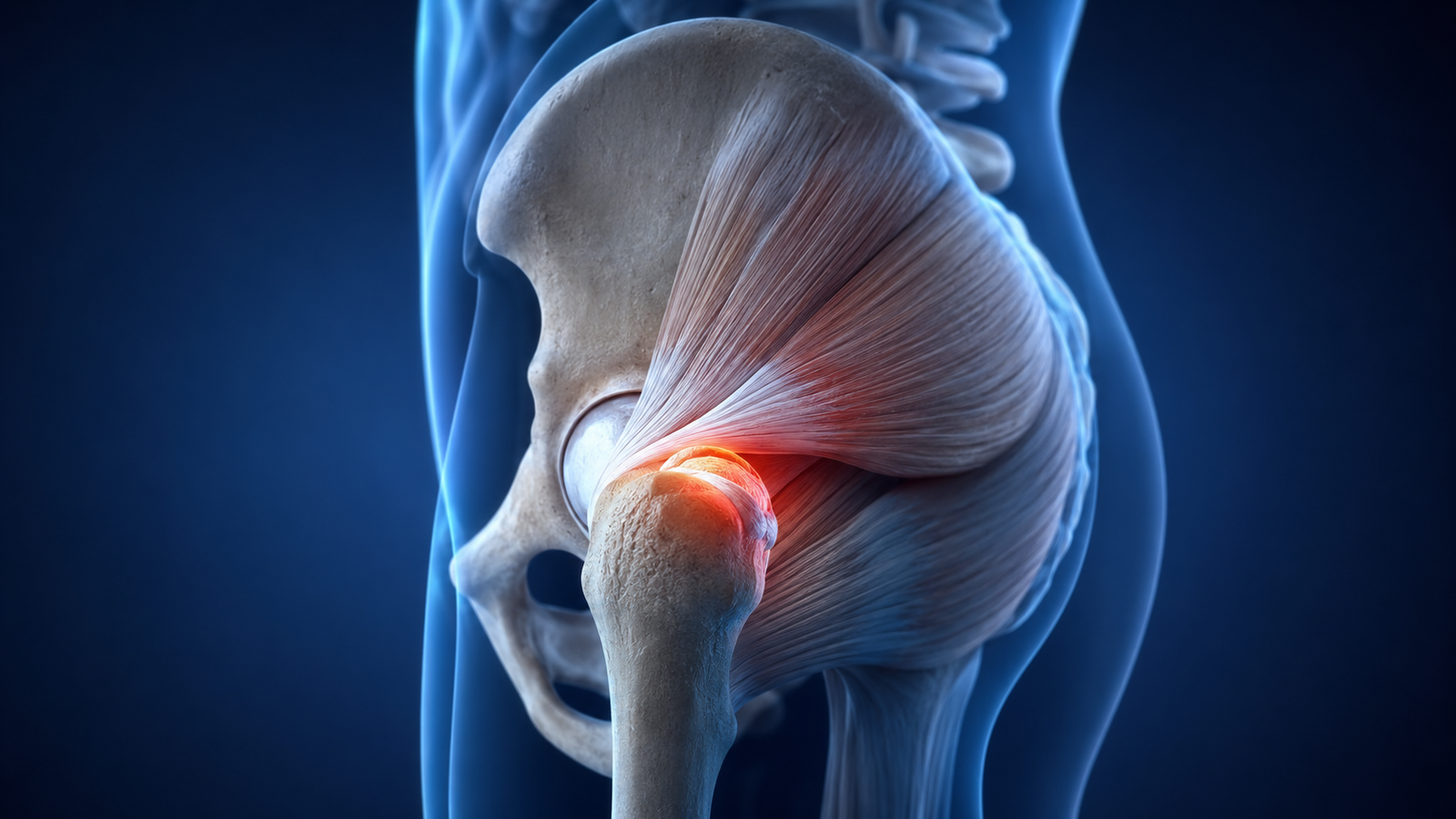
Greater trochanteric pain syndrome, or GTPS, is a common cause of pain on the outside of the hip. It can involve irritation of the gluteal tendons, nearby bursae, or other soft tissues surrounding the greater trochanter—the bony prominence at the side of the upper thigh.
Although people often call this condition “hip bursitis,” the bursa is not always the only painful structure.
Common symptoms include:
- Pain and tenderness on the outer hip
- Pain extending down the outside of the thigh
- Discomfort when lying on the affected side
- Nighttime pain
- Pain when getting out of bed or a chair
- Difficulty climbing stairs
- Pain during prolonged walking
- Discomfort when standing on one leg
- A limp
- Aching after sitting for a long time
The American Academy of Orthopaedic Surgeons explains that lateral hip pain associated with bursitis commonly becomes worse at night, while lying on the affected hip, and when rising after sitting.
Why Can GTPS Feel Worse in Bed?
Several factors may contribute:
- Lying on the painful side directly compresses sensitive tissue.
- The upper leg may drop inward when sleeping on the opposite side.
- Remaining still can make the area feel stiff.
- Repeatedly rolling onto the painful hip can interrupt sleep.
- Daytime walking, stair climbing, or exercise may irritate the area before bedtime.
The condition may develop gradually after a change in activity, repetitive stress, a fall onto the side of the hip, or altered walking mechanics. Lower-back and knee problems may also affect how force travels through the hip region.
Is Outer Hip Pain Always Bursitis?
No. Gluteal tendinopathy, referred pain from the lower back, iliotibial-band irritation, arthritis, and other disorders can cause discomfort in a similar area.
GTPS is more likely when the outside of the hip is tender and lying on that side clearly aggravates the pain. Groin pain, significant loss of joint movement, widespread numbness, or pain extending below the knee may suggest another cause.
The MedlinePlus guide to greater trochanteric pain syndrome notes that symptoms may become more noticeable when sleeping on the affected side, rising from a bed or chair, walking upstairs, or sitting for a prolonged period.
Seek an assessment if the pain persists, repeatedly disturbs sleep, causes limping, or limits ordinary activities. Treatment depends on the tissues involved and may include activity modification, guided exercise, physical therapy, or other clinician-directed care.
3. Hip Osteoarthritis May Cause Pain and Morning Stiffness
Hip osteoarthritis develops when the protective cartilage within the joint gradually deteriorates. As the joint changes, movement may become painful and restricted.
It is more common with increasing age, but previous hip injuries, structural abnormalities, family history, and excess body weight may increase the risk.
Possible symptoms include:
- Deep pain in the groin or front of the thigh
- Pain extending toward the buttock or knee
- Stiffness after sleeping or sitting
- Reduced hip movement
- Difficulty putting on shoes or socks
- Pain when walking, bending, or climbing stairs
- Grinding, catching, or clicking sensations
- Limping
- Pain that gradually becomes more frequent
- Nighttime discomfort that interrupts sleep
The American Academy of Orthopaedic Surgeons explains that hip osteoarthritis commonly causes groin or thigh pain, stiffness, reduced movement, and increasing difficulty with ordinary activities.
Why Can Hip Arthritis Feel Worse After Sleeping?
Several hours of limited movement may make an arthritic joint feel stiff upon waking. Sleeping directly on the affected side can add pressure, while an unsupported upper leg may rotate the hip into an uncomfortable position.
Morning stiffness caused by osteoarthritis often begins to improve after gentle movement. However, pain may return or increase after prolonged walking or strenuous activity.
Morning pain does not confirm arthritis. Tendon irritation, inflammatory disease, hip impingement, lower-back problems, and other conditions may cause similar symptoms.
A clinician may use:
- Medical history
- Walking and posture assessment
- Hip movement testing
- Strength testing
- X-rays
- Blood tests when inflammatory disease is suspected
- MRI in selected cases
Treatment may include activity modification, weight management when appropriate, physical therapy, assistive devices, medication reviewed for personal safety, injections, or hip replacement for advanced disease.
Avoid forcing a severely stiff joint through sharp pain. Gentle movement can be useful, but the correct exercise depends on the condition and its severity.
4. A Muscle or Tendon Strain May Become Stiff Overnight
The hip is surrounded by muscles and tendons that help move and stabilize the pelvis and leg. These tissues can become strained through sudden movement, repetitive exercise, lifting, overuse, or an unexpected increase in activity.
Structures that may contribute to morning hip pain include the:
- Hip flexors
- Gluteal muscles and tendons
- Hamstrings
- Adductor muscles of the inner thigh
- Abductor muscles along the outer hip
Possible symptoms include:
- Localized aching or tenderness
- Pain that began after exercise or physical work
- Discomfort when using a particular muscle
- Mild swelling or bruising
- Muscle tightness
- Pain when stretching the area
- Weakness during walking or stair climbing
- Stiffness after several hours of inactivity
- Pain when turning over or getting out of bed
The American Academy of Orthopaedic Surgeons notes that hip strains may occur suddenly or develop gradually through overuse, producing pain, tenderness, swelling, weakness, and reduced movement.
Why Does a Hip Strain Hurt in the Morning?
An injured muscle may tighten while remaining still overnight. A sleeping position that stretches or compresses the affected tissue can also make the discomfort more noticeable upon waking.
A strain may be more likely when pain began after:
- Running, jumping, or kicking
- A new workout
- Moving heavy furniture
- Repeated squatting or climbing
- Slipping without fully falling
- A sudden twisting movement
- Returning to exercise after inactivity
Mild strains often improve with temporarily reducing the activity that caused the pain. A wrapped cold pack may help after an acute injury, but it should not be placed directly against the skin or left on while sleeping.
Seek medical advice when pain is severe, bruising or swelling is substantial, walking is difficult, weakness persists, or symptoms fail to improve. A stress fracture, tendon tear, or joint disorder can resemble a muscle strain.
If the discomfort extends from the lower back through the buttock rather than remaining localized around one muscle, review Why Do I Wake Up With Back Pain? 9 Causes and Solutions because the source may be spinal or nerve-related.
5. Hip Impingement or a Labral Tear May Cause Groin Pain
Femoroacetabular impingement, commonly called hip impingement or FAI, occurs when the bones of the hip joint do not move together smoothly. Extra bone or an irregular shape around the femoral head or hip socket may cause abnormal contact during movement.
Over time, this contact can damage the cartilage or the labrum—the ring of firm tissue surrounding the hip socket.
A labral tear may also occur through an injury, repetitive twisting, hip instability, dysplasia, or age-related wear.
Possible symptoms include:
- Deep groin pain
- Pain at the front of the hip
- Sharp pain during twisting or squatting
- Stiffness
- Limping
- Clicking, catching, or locking
- Pain after prolonged sitting
- Discomfort when getting out of a low chair
- Reduced hip movement
- Pain when bringing the knee toward the chest
- Symptoms following a pivoting injury
According to the American Academy of Orthopaedic Surgeons, common symptoms of FAI include pain, stiffness, and limping. Groin pain may become sharp during turning, twisting, or squatting.
Can Hip Impingement Hurt After Sleeping?
Yes. A deeply bent or rotated sleeping position may place the hip in a range that aggravates sensitive joint structures. Remaining still can also make stiffness more noticeable when you first stand.
These clues may help distinguish joint pain from outer-hip soft-tissue pain:
| Hip impingement or labral problem | Greater trochanteric pain syndrome |
|---|---|
| Deep groin or front-hip pain | Tenderness on the outside of the hip |
| Clicking, catching, or locking | Pain when lying directly on the affected side |
| Pain with deep bending or twisting | Pain with stairs or standing on one leg |
| Restricted joint movement | Joint movement may remain relatively preserved |
The patterns may overlap and cannot establish a diagnosis. Clicking without pain is also common and does not necessarily mean that the labrum is torn.
When Should Clicking or Catching Be Evaluated?
Arrange an assessment when:
- Clicking occurs with persistent pain
- The hip locks or gives way
- Groin pain limits walking
- Movement is becoming increasingly restricted
- Symptoms followed a twisting injury
- Pain regularly wakes you
- Ordinary activities are becoming difficult
Evaluation may involve physical movement tests, X-rays, and sometimes MRI or other imaging. Treatment depends on the underlying anatomy, the extent of tissue damage, and how severely symptoms affect daily life.
Activity modification and guided physical therapy may help some people. Surgery may be considered when significant structural damage continues to cause pain despite appropriate nonsurgical treatment.
Comparing Causes 3–5
| Possible cause | Common clues |
|---|---|
| Hip osteoarthritis | Gradual groin pain, morning stiffness, reduced movement, and difficulty walking |
| Muscle or tendon strain | Localized pain following exercise, lifting, overuse, or sudden movement |
| Hip impingement | Groin pain aggravated by deep bending, twisting, or squatting |
| Labral tear | Deep joint pain with painful clicking, catching, locking, or giving way |
| Severe tendon injury | Sudden pain, bruising, marked weakness, or difficulty bearing weight |
These patterns may help narrow possible answers to why do I wake up with hip pain, but symptoms can overlap. Persistent groin pain, increasing stiffness, limping, or painful locking deserves professional evaluation.
6. A Lower-Back Problem or Sciatica May Feel Like Hip Pain
Sometimes the answer to why do I wake up with hip pain lies in the lumbar spine rather than the hip joint itself. Irritated or compressed spinal nerves can cause pain that spreads through the buttock, outer hip, thigh, calf, or foot.
Sciatica may produce:
- Lower-back or buttock pain
- Sharp, burning, or electric pain down one leg
- Tingling or numbness
- Weakness in the leg or foot
- Pain aggravated by coughing or sneezing
- Symptoms that change with spinal position
- Discomfort extending below the knee
- Difficulty standing or walking
The American Academy of Orthopaedic Surgeons explains that sciatica may cause sharp or electrical pain, burning, tingling, numbness, and weakness extending down the leg.
Hip Joint Pain vs. Sciatica
| More suggestive of a hip problem | More suggestive of sciatica |
|---|---|
| Deep groin or front-hip pain | Pain beginning in the back or buttock |
| Pain with rotating the hip | Burning or electric pain down the leg |
| Reduced hip-joint movement | Tingling or numbness |
| Difficulty putting on shoes | Leg or foot weakness |
| Clicking, catching, or grinding | Symptoms extending below the knee |
These patterns are not definitive. Hip disease and lower-back problems can occur simultaneously.
Sleeping in a position that twists the lower back or pelvis may aggravate nerve-related symptoms. However, changing mattresses or pillows cannot correct significant nerve compression.
If pain begins in the lumbar region, read Why Do I Wake Up With Back Pain? 9 Causes and Solutions for additional causes and sleeping-position considerations.
Seek emergency care for new loss of bladder or bowel control, numbness around the groin or inner thighs, or rapidly worsening leg weakness. These may indicate cauda equina syndrome, which requires immediate assessment.
7. An Inflammatory Condition May Cause Prolonged Morning Stiffness
Inflammatory arthritis can affect the hips, pelvis, spine, and surrounding tendon attachments. Unlike stiffness caused mainly by pressure or overuse, inflammatory symptoms may be worse after rest and improve with movement.
Possible clues include:
- Morning stiffness lasting 30 minutes or longer
- Pain affecting both hips or buttocks
- Lower-back stiffness
- Symptoms that improve after moving
- Pain during the second half of the night
- Swelling in other joints
- Persistent fatigue
- Psoriasis or inflammatory bowel disease
- Eye redness, pain, or light sensitivity
- A family history of inflammatory arthritis
Axial Spondyloarthritis and Ankylosing Spondylitis
Ankylosing spondylitis is a form of inflammatory arthritis that commonly affects the spine and sacroiliac joints, where the spine meets the pelvis. Hip involvement can also occur.
The National Institute of Arthritis and Musculoskeletal and Skin Diseases notes that lower-back or hip pain and stiffness often worsen during rest or inactivity and may improve with movement.
This pattern may help explain why do I wake up with hip pain, particularly when symptoms:
- Began before age 45
- Have persisted for several months
- Alternate between the buttocks
- Improve with exercise rather than rest
- Regularly wake you during the night
- Occur with prolonged morning stiffness
Other inflammatory disorders, including psoriatic arthritis, rheumatoid arthritis, reactive arthritis, and polymyalgia rheumatica, may also cause morning pain or stiffness. Polymyalgia rheumatica almost always begins after age 50 and typically affects the shoulders as well as the hips.
A doctor may use your symptom history, examination, blood tests, and imaging to investigate. No single symptom or blood test confirms every inflammatory condition.
Persistent fatigue from pain-disrupted sleep may also leave you unrested. Why You Feel Tired After Sleeping 8 Hours: 10 Common Causes explores other contributors to morning exhaustion.
8. An Injury, Stress Fracture, or Hip Fracture May Cause Severe Pain
Falls, collisions, twisting accidents, and athletic activity can injure bones or soft tissues around the hip. Possible injuries include:
- Hip or pelvic fracture
- Hip dislocation
- Stress fracture
- Muscle or tendon tear
- Labral tear
- Severe bruising
- Ligament injury
A hip fracture often causes sudden pain in the groin or upper thigh. According to the American Academy of Orthopaedic Surgeons, most people with a hip fracture cannot stand, bear weight, or move the upper leg normally. The injured leg may also appear shortened or rotated.
Warning Signs Following an Injury
Seek emergency assessment when:
- You cannot stand or bear weight
- The leg appears shortened, twisted, or deformed
- Pain is severe after a fall
- Swelling or bruising develops rapidly
- The foot becomes cold, pale, or blue
- Numbness or weakness develops
- Bone is visible
- You heard a crack or felt the joint move out of place
Do not attempt to straighten or reposition a visibly deformed hip.
Can a Stress Fracture Develop Without a Major Fall?
Yes. A stress fracture is a small bone injury associated with repetitive loading rather than one dramatic accident. It may occur after increased running, marching, jumping, or training, especially when bone strength is reduced.
Possible clues include:
- Gradually increasing groin or hip pain
- Pain during walking or exercise
- Discomfort that improves with rest initially
- Increasing pain while bearing weight
- A recent increase in training
- Osteoporosis or another bone-health risk
- Persistent pain despite treating it as a strain
Continuing to exercise through a suspected stress fracture can worsen the injury. Medical assessment and imaging may be necessary because early X-rays do not identify every stress fracture.
Comparing Causes 6–8
| Possible cause | Common clues |
|---|---|
| Sciatica | Burning pain from the buttock down one leg with tingling or numbness |
| Lumbar spinal disorder | Back stiffness with pain referred into the buttock or outer hip |
| Inflammatory arthritis | Prolonged morning stiffness that improves with movement |
| Ankylosing spondylitis | Nighttime lower-back or hip pain, often beginning before age 45 |
| Hip fracture | Sudden severe pain, inability to bear weight, and possible leg deformity |
| Stress fracture | Gradually worsening weight-bearing pain after repetitive activity |
These patterns can help narrow possible answers to why do I wake up with hip pain, but they cannot replace an examination. Neurological changes, prolonged inflammatory stiffness, inability to bear weight, or significant pain after an injury requires professional assessment.
9. A Joint Infection or Another Serious Condition May Cause Hip Pain
Rarely, the answer to why do I wake up with hip pain is septic arthritis—an infection inside the joint that requires urgent treatment.
Possible symptoms include:
- Sudden, severe pain in one hip
- Swelling, warmth, or skin-color changes
- Extreme pain when moving the joint
- Fever or chills
- Feeling generally unwell
- Difficulty walking or bearing weight
- Symptoms worsening rapidly over several hours or days
The NHS guidance on septic arthritis advises urgent assessment when sudden severe joint pain occurs with swelling, skin-color changes, fever, chills, or general illness.
Persistent unexplained hip pain may occasionally be associated with osteonecrosis, a bone disorder, or cancer. Arrange a medical evaluation when pain:
- Continually worsens
- Remains severe at rest or throughout the night
- Does not change with movement or position
- Occurs with unexplained weight loss
- Causes a growing lump or swelling
- Develops with persistent fatigue or fever
- Occurs in someone with a history of cancer
- Follows long-term corticosteroid use
- Affects a previously replaced hip
These symptoms do not automatically indicate a serious disease, but they should not be managed solely by changing pillows or sleeping positions.
How Will a Doctor Evaluate Morning Hip Pain?
A healthcare professional may ask about the pain’s location, duration, severity, nighttime pattern, recent injuries, exercise changes, and activities that aggravate it.
The examination may include:
- Observing how you walk
- Testing hip movement and strength
- Checking the groin, outer hip, and lower back
- Examining reflexes and sensation
- Comparing both legs
- Looking for swelling, warmth, or deformity
Depending on the findings, tests may include X-rays, ultrasound, MRI, blood tests, or joint-fluid analysis. Imaging is not required for every mild episode.
How Can You Reduce Mild Hip Pain After Sleeping?
When symptoms are mild and no warning signs are present:
- Avoid sleeping directly on the painful hip.
- Try back sleeping or lie on the opposite side.
- Place a pillow between your knees when side sleeping.
- Use a pillow beneath your knees when lying on your back.
- Reduce activities that clearly aggravate the pain.
- Continue gentle movement within a comfortable range.
- Avoid forceful stretching or exercising through sharp pain.
- Apply wrapped cold or gentle heat for temporary comfort.
- Change prolonged sitting positions regularly.
- Seek an assessment if pain persists, worsens, or affects walking.
MedlinePlus recommends contacting a healthcare professional when hip pain continues despite home care, occurs with fever, affects both hips and other joints, or causes limping and walking difficulty.
Do not sleep with an ice pack or heating pad against your skin. Ask a doctor or pharmacist before taking pain medication if you have kidney, liver, stomach, bleeding, or heart problems or take other medicines.
Frequently Asked Questions
Is it normal to wake up with hip pain?
Occasional mild soreness can follow prolonged pressure or an awkward position. Recurrent pain, limping, reduced movement, weakness, or pain that repeatedly interrupts sleep requires evaluation.
Can side sleeping cause hip pain?
Side sleeping can compress the outer hip and aggravate an irritated tendon or bursa. It may worsen an existing condition without necessarily causing the underlying problem.
What is the best sleeping position for hip pain?
Back sleeping may reduce direct pressure. When sleeping on the unaffected side, place a pillow between the knees to support the upper leg and pelvis.
Can a mattress cause morning hip pain?
An unsupportive or excessively firm mattress may increase pressure or allow uncomfortable spinal and pelvic positioning. However, a mattress cannot explain fever, joint swelling, neurological symptoms, or severe weight-bearing pain.
Why does my hip pain improve after walking?
Brief stiffness may improve as the joint and surrounding tissues begin moving. Prolonged morning stiffness that consistently improves with activity can also occur with inflammatory arthritis.
When should I see a doctor?
Arrange an evaluation for persistent pain, limping, restricted movement, painful clicking, numbness, or recurrent nighttime symptoms. Obtain urgent care for fever, swelling, rapid worsening, significant injury, deformity, or inability to bear weight.
Final Thoughts
Possible answers to why do I wake up with hip pain include sleeping position, greater trochanteric pain syndrome, osteoarthritis, muscle or tendon strain, hip impingement, a labral tear, sciatica, inflammatory arthritis, injury, and infection.
Position changes and gentle support may help mild pressure-related discomfort. Persistent or worsening pain deserves a proper examination—the hip is a joint, not a morning alarm with an especially rude ringtone.
Seek urgent medical care for severe pain after an injury, inability to bear weight, fever with a hot or swollen joint, sudden weakness, saddle numbness, or loss of bladder or bowel control.
Related Articles
Read Why Do I Wake Up With Back Pain? 9 Causes and Solutions when pain begins in the lower back or travels down the leg.
Explore Why Do I Wake Up With Shoulder Pain? 9 Common Causes if morning stiffness affects several joints.
See Why Do I Wake Up With Neck Pain? 9 Surprising Causes when your sleeping posture also causes upper-body discomfort.
Review Why You Feel Tired After Sleeping 8 Hours: 10 Common Causes if pain repeatedly disrupts restorative sleep.