

Why Do I Wake Up With Neck Pain? 9 Causes and Solutions (2026)
Why do I wake up with neck pain? Morning neck pain may result from an awkward sleeping position, unsuitable pillow height, muscle strain, prolonged screen use, arthritis, a cervical disc problem, nerve irritation, fibromyalgia, or an injury.
The discomfort may feel like stiffness, soreness, a sharp pinch, burning pain, or restricted movement when turning your head. In some cases, pain spreads into the shoulders, upper back, head, arms, or hands.
Mild pain that improves after moving may be related to overnight positioning or muscle tension. However, recurring or severe neck pain should not automatically be blamed on your pillow. The location, duration, accompanying symptoms, and events leading up to the pain can provide important clues.
This guide explores nine possible answers to why do I wake up with neck pain, practical adjustments that may help, and the warning signs that require professional care.
Emergency warning: Seek immediate medical attention if neck pain follows a serious injury or occurs with high fever, a severe headache, confusion, marked neck stiffness, difficulty breathing or swallowing, chest pressure, sudden weakness, loss of coordination, or loss of bladder or bowel control.
What Does Morning Neck Pain Feel Like?
Neck pain after sleeping may involve:
- Stiffness when turning your head
- Pain on one side of the neck
- Tender or tight neck muscles
- Pain at the base of the skull
- Discomfort extending into the shoulder blade
- Burning or electric sensations
- Tingling or numbness in an arm or hand
- Headache after waking
- Muscle spasms
- Pain that worsens when looking up or down
- Reduced range of motion
- Pain that improves after a warm shower or gentle movement
Notice whether the pain remains in the neck or travels into another area. Pain extending down an arm with numbness, tingling, or weakness may indicate nerve irritation rather than simple morning stiffness.
Neck tension can also contribute to head pain. If neck discomfort regularly accompanies a morning headache, read Why Do I Wake Up With a Headache? 9 Common Causes for additional possibilities.
Which Side of Your Neck Hurts?
The location may provide clues, although it cannot confirm the cause.
| Pain pattern | Possible contributors |
|---|---|
| One-sided stiffness | Sleeping position, pillow support, or muscle strain |
| Pain at the base of the skull | Muscle tension, posture, or headache disorder |
| Neck and shoulder pain | Muscle strain, pillow height, joint irritation, or nerve compression |
| Neck pain extending down one arm | Cervical disc problem or irritated nerve |
| Central neck pain | Joint, disc, ligament, or muscular problem |
| Neck pain with fever and severe headache | Infection requiring urgent evaluation |
| Neck pain after a fall or collision | Sprain, whiplash, fracture, or spinal injury |
Morning pain may occasionally originate from the jaw, shoulder, upper back, or another nearby structure. Symptoms should be considered together rather than interpreted from location alone.
When Is Neck Pain After Sleeping an Emergency?
Most morning neck stiffness is not an emergency. However, neck pain can occasionally signal an infection, spinal cord compression, vascular problem, heart condition, or significant injury.
Seek emergency medical care when neck pain occurs with:
- A high fever and severe headache
- Extreme stiffness that prevents you from bringing your chin toward your chest
- Confusion, unusual drowsiness, or sensitivity to light
- Sudden weakness or numbness
- Difficulty walking or maintaining balance
- Loss of bladder or bowel control
- Difficulty breathing or swallowing
- Chest pressure, sweating, nausea, or jaw or arm pain
- Sudden severe pain unlike your usual symptoms
- A serious fall, collision, sports injury, or blow to the head or neck
- An inability to move an arm or hand after an injury
MedlinePlus advises immediate medical attention for severe neck stiffness accompanied by fever and headache, symptoms of a heart attack, or significant neurological problems.
Arrange a prompt medical evaluation when:
- Pain repeatedly wakes you during the night
- Symptoms are progressively worsening
- Pain spreads into an arm or hand
- You experience numbness, tingling, or weakness
- You notice a lump or swollen glands
- Neck pain persists despite reasonable self-care
- You have unexplained weight loss
- You have a history of cancer, osteoporosis, or immune suppression
- The pain began after even a minor injury in someone at higher fracture risk
Do not aggressively stretch, twist, or manipulate the neck when pain follows an injury or occurs with neurological symptoms.
1. Your Sleeping Position May Strain Your Neck
An awkward sleeping position is one of the most common possible answers to why do I wake up with neck pain.
During sleep, your neck may remain rotated, bent, or extended for several hours. Muscles and joints can become irritated when the head is not reasonably aligned with the rest of the spine.
Sleeping posture may be contributing when:
- Pain is strongest immediately after waking
- Symptoms began after sleeping somewhere unfamiliar
- The pain occurs mainly on one side
- You remember sleeping with your head sharply turned
- Stiffness improves after gentle movement
- Symptoms change when you use a different sleeping position
- You do not have fever, weakness, numbness, or other warning signs
Stomach Sleeping
Stomach sleeping usually requires the head to remain turned to one side so you can breathe. This prolonged rotation may strain muscles, joints, and ligaments, particularly if the mattress or pillow also tilts the head backward.
If stomach sleeping repeatedly causes discomfort, gradually testing a side or back position may help. Position changes can take time, so there is no need to wrestle your mattress like it owes you money.
Side Sleeping
Side sleeping may be comfortable when the pillow fills the space between the shoulder and head. If the pillow is too low, the head may tilt toward the mattress. If it is too high, the head may tilt away from it.
Try to keep your nose approximately aligned with the center of your chest rather than allowing the chin to remain sharply tucked or lifted.
Back Sleeping
When sleeping on your back, a pillow should support the natural curve of the neck without pushing the head excessively forward. A very thick pillow may hold the neck in a flexed position throughout the night.
Sleeping position is only one possible contributor. Pain that persists in several positions, travels into an arm, or occurs with weakness needs further evaluation.
2. Your Pillow May Be Too High, Too Low, or Worn Out
The purpose of a pillow is not simply to feel soft. It should support the head and neck in a comfortable position that suits your body, mattress, and preferred sleeping posture.
A pillow may contribute to morning neck pain when:
- Your chin is pushed toward your chest
- Your head falls backward while lying down
- Your head tilts noticeably during side sleeping
- You regularly fold or stack the pillow
- The filling has become uneven or compressed
- You wake frequently to adjust it
- Your symptoms improve when using another pillow
- The pillow no longer returns to its original shape
Does Everyone Need a Cervical Pillow?
No single pillow design works for everyone. Contoured, feather, memory foam, latex, and adjustable-fill pillows can all feel comfortable for some people and unsuitable for others.
Factors that affect pillow choice include:
- Shoulder width
- Head size
- Sleeping position
- Mattress firmness
- Existing neck conditions
- Personal comfort
- Heat sensitivity
- Whether you change positions frequently
A side sleeper generally needs enough height to fill the shoulder-to-head gap. A back sleeper often needs less height. Someone who changes positions may prefer a pillow that remains supportive without holding the head rigidly.
How to Test Your Pillow
Before buying several new pillows at once:
- Check whether the filling is lumpy or permanently compressed.
- Observe whether your head visibly tilts when lying down.
- Adjust only one feature at a time.
- Test the change for several nights unless symptoms worsen.
- Compare how you feel after sleeping with a different pillow.
- Review return policies before purchasing an expensive model.
- Stop testing and seek care if neurological symptoms appear.
A pillow change may improve positioning, but it cannot treat arthritis, a disc problem, infection, or spinal injury.
Neck and back support are closely connected. If stiffness extends below the shoulders, compare the symptoms with Why Do I Wake Up With Back Pain? 9 Causes and Solutions.
3. Muscle Strain and Daytime Screen Habits May Increase Tension
Muscle strain is a common explanation for why do I wake up with neck pain, especially when soreness follows prolonged computer use, repetitive work, exercise, or an unusually stressful day.
The muscles supporting your head remain active throughout the day. Holding your neck in one position for long periods may contribute to fatigue and stiffness that becomes more noticeable after several hours of sleep.
Common triggers include:
- Looking down at a phone for long periods
- Working with a monitor that is too high or low
- Leaning toward a laptop screen
- Sitting without changing position
- Repeated overhead work
- Carrying a heavy bag on one shoulder
- Lifting with a sudden twisting movement
- Beginning an unfamiliar workout
- Clenching the jaw during stress
- Driving for extended periods
MedlinePlus identifies muscle strain and tension as common causes of neck pain and lists prolonged desk work, uncomfortable sleeping positions, and poorly positioned computer monitors among potential contributors.
Signs That Muscle Tension May Be Involved
Muscle-related neck pain may:
- Feel sore, tight, or tender
- Affect one side more than the other
- Extend across the shoulders or upper back
- Worsen when turning or tilting your head
- Follow a day of repetitive activity
- Improve with comfortable movement or warmth
- Cause a tension-type headache
- Occur without arm weakness or widespread numbness
Pain after waking does not necessarily mean that sleep caused the problem. Overnight inactivity may simply make tension from the previous day easier to notice.
Does “Text Neck” Permanently Damage Your Neck?
Looking downward does not automatically cause permanent damage. The more practical concern is remaining in any uncomfortable or fixed position for too long.
Instead of trying to maintain one supposedly perfect posture all day:
- Change position frequently.
- Bring frequently used screens closer to eye level.
- Keep your shoulders relaxed rather than elevated.
- Support your forearms when working at a desk.
- Avoid holding a phone between your shoulder and ear.
- Take brief movement breaks during prolonged work.
- Increase new exercise gradually.
- Ask a qualified professional about suitable strengthening exercises if pain recurs.
Stress can also increase muscle tension and interfere with restorative sleep. If tightness becomes worse during stressful periods, How Does Stress Affect Sleep? 9 Powerful Connections explains how stress, muscle tension, and poor sleep may reinforce one another.
Avoid forceful neck circles or aggressive stretching when the cause is uncertain. Stop any movement that causes sharp pain, dizziness, numbness, or symptoms extending down an arm.
4. Cervical Spondylosis May Cause Pain and Stiffness
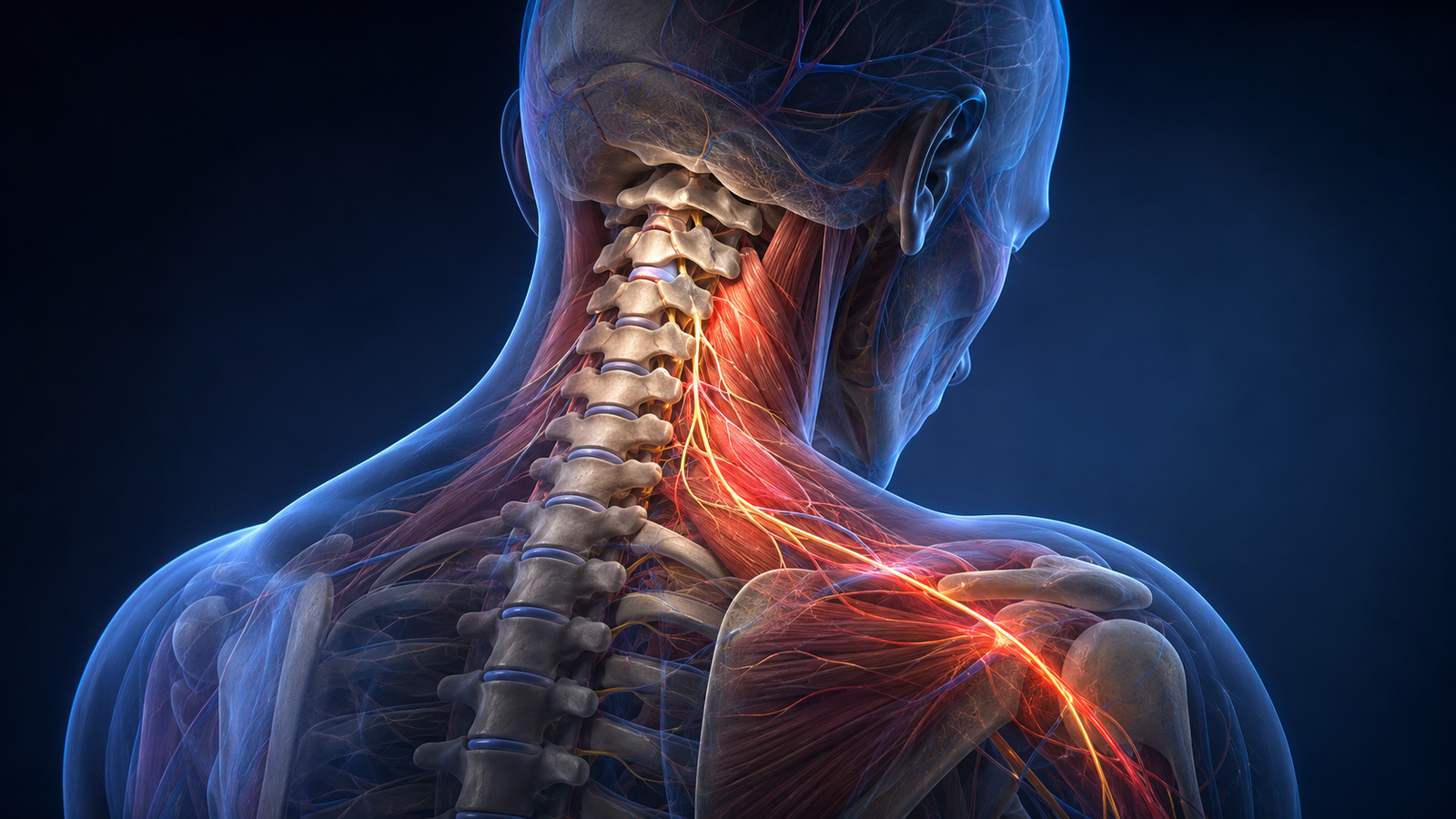
Cervical spondylosis refers to age-related changes affecting the discs, joints, and bones of the neck. It is sometimes called cervical osteoarthritis or arthritis of the neck.
These changes become increasingly common with age, but they do not always cause symptoms. A scan can show significant degeneration in someone who has little or no pain.
When symptoms occur, they may include:
- Neck pain or stiffness
- Reduced range of motion
- Discomfort after remaining still
- Headaches beginning near the back of the head
- Grinding or popping sensations
- Muscle spasms in the neck or shoulders
- Pain worsened by prolonged looking up or down
- Symptoms that fluctuate between better and worse days
The American Academy of Orthopaedic Surgeons explains that cervical spondylosis commonly causes neck pain and stiffness, although many people with these age-related changes have no noticeable symptoms.
Why Might It Feel Worse in the Morning?
Several hours in one position can make an already sensitive joint or muscle feel stiff. Pillow height, sleeping posture, and mattress support may also influence how the neck feels upon waking.
Morning stiffness alone does not confirm arthritis. Similar symptoms may result from muscle strain, an unsuitable pillow, inflammatory disease, or a disc problem.
A healthcare professional may evaluate:
- Neck movement
- Muscle strength
- Reflexes
- Sensation in the arms and hands
- Walking and balance
- Previous injuries
- Duration and pattern of symptoms
X-rays, MRI scans, or other tests may be considered when symptoms persist, follow an injury, or include neurological changes. Imaging results must be interpreted together with symptoms and the physical examination.
Can Cervical Spondylosis Be Managed?
Management depends on symptom severity and whether nerves or the spinal cord are affected. A treatment plan may involve:
- Activity modification
- Physical therapy
- Individually selected mobility exercises
- Muscle strengthening
- Heat or cold for temporary comfort
- Medication reviewed for personal safety
- Injections or surgery in selected cases
Surgery is not automatically required. However, worsening weakness, loss of coordination, difficulty walking, or problems using the hands require prompt medical assessment.
5. A Herniated Disc or Pinched Nerve May Affect an Arm
A cervical herniated disc occurs when disc material pushes outward and irritates or compresses a nearby nerve root. Age-related narrowing or bone spurs can also reduce the space available for a nerve.
This nerve irritation is called cervical radiculopathy. It can help explain why do I wake up with neck pain accompanied by symptoms extending into a shoulder, arm, or hand.
Signs of Cervical Radiculopathy
Possible symptoms include:
- Sharp or burning neck pain
- Pain traveling into one shoulder or arm
- Tingling or pins-and-needles sensations
- Numbness in the hand or fingers
- Weakness in the shoulder, arm, or hand
- Symptoms aggravated by particular neck movements
- Reduced grip strength
- Pain worsened by coughing or sneezing
According to the American Academy of Orthopaedic Surgeons, cervical radiculopathy commonly causes sharp or burning pain extending from the neck down an arm, sometimes accompanied by tingling, numbness, or weakness.
Does Arm Pain Prove You Have a Herniated Disc?
No. Shoulder disorders, muscle problems, peripheral nerve compression, and other conditions can produce similar symptoms. Some disc abnormalities visible on imaging do not cause pain.
A medical evaluation may include:
- Testing arm and hand strength
- Checking reflexes
- Mapping areas of altered sensation
- Observing which movements reproduce pain
- Examining the shoulder
- Assessing balance and walking
- Ordering imaging or nerve tests when appropriate
Many cases improve with nonsurgical treatment selected for the individual. This may include guided activity, physical therapy, medication, or other measures.
Watch for Signs of Spinal Cord Compression
Compression of the spinal cord in the neck is more serious than irritation of a single nerve root. Seek prompt medical care for:
- Increasing weakness in the arms or legs
- Difficulty walking or maintaining balance
- Frequent falls
- Loss of hand coordination
- Difficulty fastening buttons or writing
- Repeatedly dropping objects
- Numbness affecting multiple limbs
- New bladder or bowel dysfunction
Do not attempt forceful neck manipulation when neurological symptoms are present. Neck cracking is not an audition for an action movie.
Comparing Causes 3–5
| Possible cause | Common clues |
|---|---|
| Muscle strain | Local tightness or tenderness after screen use, repetitive activity, lifting, or exercise |
| Cervical spondylosis | Neck stiffness, reduced movement, headaches, or discomfort after remaining in one position |
| Herniated cervical disc | Neck pain that may extend into a shoulder or arm |
| Cervical radiculopathy | Burning or sharp arm pain with tingling, numbness, or weakness |
| Spinal cord compression | Balance problems, hand clumsiness, limb weakness, or bladder and bowel changes |
These patterns may help organize your symptoms, but they cannot confirm the underlying cause. More than one contributor—such as daytime muscle tension combined with unsuitable pillow support—may be present.
A regular evening routine cannot treat nerve compression or arthritis, but it may reduce unnecessary sleep disruption while the physical problem is addressed. See How to Build a Better Bedtime Routine for Deep Sleep for a practical nightly structure.