

Why Do I Wake Up With Back Pain? 9 Causes and Solutions (2026)
Why do I wake up with back pain? Morning back pain may result from an awkward sleeping position, an unsuitable mattress, muscle strain, a spinal disc problem, arthritis, inflammation, osteoporosis, or a condition involving another organ.
The discomfort may appear in your lower, middle, or upper back. You might feel a dull ache, sharp pain, muscle tightness, stiffness, burning, or pain that travels into your buttock or leg.
Some people feel better after getting out of bed and moving for several minutes. Others notice that the pain continues throughout the day or worsens when they bend, cough, walk, or remain seated.
Occasional mild stiffness may follow an unusually active day or an awkward night in bed. However, recurring or severe pain should not automatically be blamed on your mattress. The timing, location, duration, and accompanying symptoms can reveal important clues.
This guide explores nine possible answers to why do I wake up with back pain, practical changes that may help, and the warning signs that require urgent medical attention.
Emergency warning: Seek immediate medical care if back pain occurs with new loss of bladder or bowel control, difficulty urinating, numbness around the genitals or buttocks, rapidly worsening leg weakness, severe pain following an accident, chest pain, breathing difficulty, or symptoms of a serious infection.
Where Is Your Morning Back Pain?
Start by identifying where the pain is strongest.
| Pain location | Possible sources |
|---|---|
| Neck and upper back | Sleeping position, pillow support, muscle tension, joint or disc problems |
| Middle back | Muscle strain, posture, spinal joints, compression fracture, or an internal organ |
| Lower back | Muscle strain, sleep surface, disc problem, arthritis, sciatica, or inflammatory disease |
| One side near the ribs | Muscle strain, kidney or urinary problem |
| Back and buttock | Sacroiliac joint, inflammatory condition, or muscle irritation |
| Back with leg pain | Nerve irritation, herniated disc, spinal narrowing, or sciatica |
Pain location alone cannot establish the cause. Problems involving the kidneys, lungs, pancreas, gallbladder, or other organs may sometimes be experienced as back pain.
How Does the Pain Feel?
Notice whether the discomfort is:
- Dull and aching
- Sharp or stabbing
- Burning or tingling
- Stiff after resting
- Worse when turning in bed
- Improved after gentle movement
- Worse after prolonged sitting
- Traveling into the buttock or leg
- Associated with numbness or weakness
- Worse when coughing or sneezing
- Accompanied by fever or urinary symptoms
The National Institute of Arthritis and Musculoskeletal and Skin Diseases explains that back pain may remain localized or spread into the buttocks, legs, hips, or abdomen. Morning stiffness, pain with lifting or bending, and numbness or weakness in the legs or feet may also occur.
Keep track of how long stiffness lasts. Pain that improves within several minutes may have a different pattern from stiffness that continues for an hour or repeatedly wakes you during the second half of the night.
Pain can also fragment sleep without leaving a clear memory of each awakening. If you regularly spend eight hours in bed but still feel exhausted, read Why You Feel Tired After Sleeping 8 Hours: 10 Common Causes to understand how disrupted sleep affects morning energy.
When Is Back Pain After Waking an Emergency?
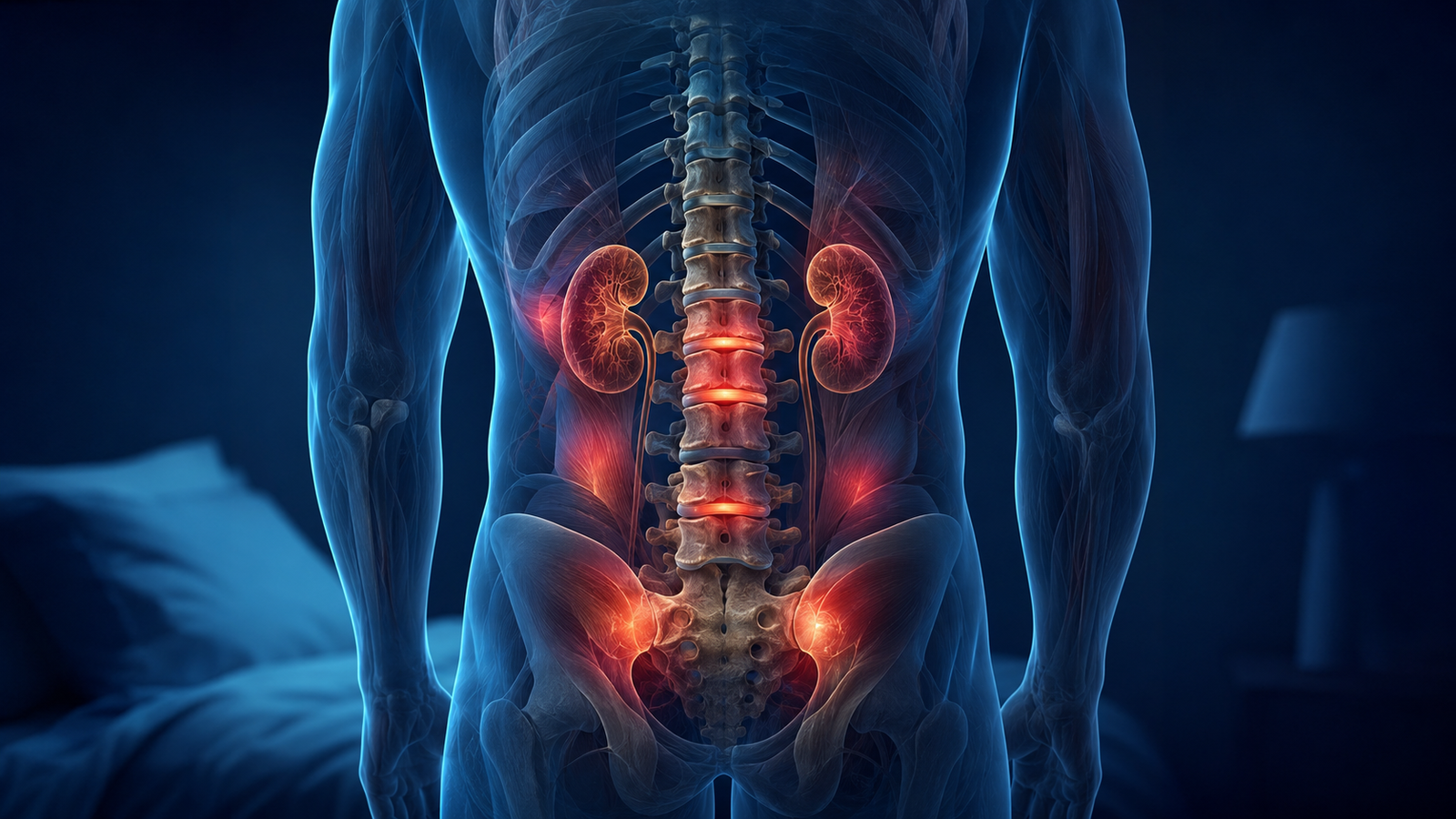
Most morning back pain does not require emergency treatment. Nevertheless, certain combinations of symptoms can indicate nerve compression, infection, a fracture, or another serious condition.
Seek emergency medical care for back pain accompanied by:
- New loss of bladder or bowel control
- Difficulty beginning or stopping urination
- An inability to feel whether the bladder is full
- Numbness around the genitals, inner thighs, buttocks, or anus
- Rapidly worsening weakness in one or both legs
- Difficulty walking or maintaining balance
- Sudden severe pain following a fall, collision, or other injury
- Chest pressure, breathing difficulty, sweating, or fainting
- Severe abdominal pain or a pulsating abdominal sensation
New bladder or bowel dysfunction combined with saddle-area numbness or leg weakness may indicate cauda equina syndrome, a rare but serious compression of the nerves at the bottom of the spinal canal. It requires immediate assessment.
Arrange prompt medical evaluation when back pain occurs with:
- Fever or chills
- Unexplained weight loss
- A history of cancer
- A weakened immune system
- Long-term steroid use
- Known osteoporosis
- Pain that is constant or progressively worsening
- Pain that repeatedly wakes you at night
- Burning urination or blood in the urine
- New numbness, tingling, or leg weakness
MedlinePlus identifies worsening leg weakness, bladder or bowel problems, fever, cancer history, serious injury, and severe unrelenting pain as warning signs that may require urgent imaging and assessment.
1. Your Sleeping Position May Place Stress on Your Back
Remaining in one position for several hours can make muscles and joints feel stiff after waking. A position that repeatedly rotates, arches, or bends an already sensitive area may contribute to morning discomfort.
Sleeping posture may be involved when the pain:
- Is strongest immediately after waking
- Improves after changing position or walking
- Began after sleeping somewhere unfamiliar
- Occurs mainly after sleeping on one side
- Improves when the legs or waist receive gentle support
- Does not involve fever, progressive weakness, or bladder changes
Stomach sleeping may feel comfortable for some people, but it can increase the arch in the lower back and require the neck to remain turned. Side sleeping without enough support may allow the pelvis to rotate, while lying completely flat on the back may feel uncomfortable for someone whose pain worsens with lumbar extension.
There is no single sleeping position that is perfect for every body or every cause of pain. The goal is to find a comfortable position that avoids excessive twisting and allows the spine to remain reasonably neutral.
Position Adjustments to Try
For mild pain without warning signs, consider these adjustments:
- When sleeping on your side: Place a pillow between your knees and keep them slightly bent.
- When sleeping on your back: Try a pillow under your knees to reduce tension through the lower back.
- When sleeping on your stomach: Use a thin pillow beneath the pelvis or gradually test another position if stomach sleeping consistently worsens pain.
- When turning in bed: Move your shoulders and hips together instead of sharply twisting your waist.
- When getting up: Roll onto your side, lower your legs, and use your arms to push yourself upright.
Change one variable at a time and observe the result for several nights. Replacing your mattress, pillows, and sleeping position simultaneously makes it difficult to identify what helped.
A comfortable bedtime setup can support sleep, but it cannot treat an injury, inflammatory disorder, or nerve compression. Persistent pain requires a proper evaluation.
2. Your Mattress May Be Too Firm, Too Soft, or Worn Out
Your mattress may contribute to why do I wake up with back pain, but firmness labels alone do not reveal whether a bed will suit your body.
A mattress that sags may allow the heaviest parts of the body to sink unevenly. A very firm surface may create uncomfortable pressure around the shoulders, hips, or lower back. Either problem can encourage repeated position changes and fragmented sleep.
Your sleep surface may be contributing when:
- Pain began after changing mattresses
- You feel better after sleeping in another bed
- A visible depression remains where you sleep
- The mattress tilts toward one side
- You frequently wake to change position
- Your partner’s movement causes the surface to dip
- Morning pain improves soon after leaving the bed
However, back pain that continues in different beds, worsens during the day, travels down a leg, or occurs with neurological symptoms is less likely to be explained by the mattress alone.
Does a Firm Mattress Prevent Back Pain?
“Firmer” does not necessarily mean “healthier.” In a randomized trial involving people with chronic nonspecific lower-back pain, a medium-firm mattress produced better pain and disability outcomes than a firm mattress after 90 days. The study supports testing comfortable support rather than automatically selecting the hardest available surface. View the study on PubMed.
The research does not prove that every person with back pain needs a medium-firm mattress. Body size, preferred sleeping position, existing medical conditions, mattress construction, and personal comfort all matter.
Test the Bed Before Replacing It
Before buying a new mattress:
- Check for visible sagging or broken support
- Rotate the mattress if the manufacturer permits it
- Confirm that the bed frame supports the mattress correctly
- Test a small positional change for several nights
- Compare symptoms after sleeping in another bed
- Review the mattress trial and return policy
- Avoid choosing firmness based only on advertising terms
A mattress topper may temporarily alter surface comfort, but it cannot repair a deeply sagging mattress or damaged foundation.
Poor comfort can also increase nighttime awakenings and make the next day feel less restorative. Maintaining a consistent evening routine may help you separate sleep-schedule problems from physical discomfort; see How to Build a Better Bedtime Routine for Deep Sleep for a practical nightly structure.
Do not spend heavily on a new bed before considering other possible causes. Mattresses are talented at accepting blame—and equally talented at keeping the receipt.
3. Muscle Strain and Daytime Habits May Cause Morning Stiffness
A strained muscle or irritated ligament is a common cause of back pain. Symptoms may develop after one obvious injury or gradually after repeated movements and prolonged positions.
Possible triggers include:
- Lifting or carrying something awkwardly
- Repeated bending or twisting
- An unfamiliar workout
- Long periods of sitting
- Standing in one position for hours
- Sudden movement after inactivity
- Physically demanding work
- Returning to exercise too quickly
- Muscle tension associated with stress
The National Institute of Arthritis and Musculoskeletal and Skin Diseases explains that strains affect muscles or tendons, while sprains involve the ligaments supporting the spine.
Clues That Muscles or Soft Tissues May Be Involved
Muscular pain may:
- Feel sore, tight, or tender
- Worsen with a particular movement
- Make turning in bed uncomfortable
- Follow lifting, exercise, or repetitive work
- Improve gradually with gentle movement
- Occur without leg weakness or bladder changes
Pain after waking does not necessarily mean sleep caused the problem. A long period of rest may simply make irritation from the previous day more noticeable.
Can Poor Posture Cause Back Pain?
There is no single “perfect” posture that guarantees a pain-free back. However, remaining in the same position for an extended period can increase stiffness and discomfort in some people.
Instead of trying to hold a rigid posture all day:
- Change position regularly.
- Adjust the chair and screen to reduce unnecessary reaching.
- Keep frequently used items within comfortable reach.
- Use safe lifting techniques.
- Divide heavy loads when possible.
- Resume activity gradually after an injury.
- Ask a qualified professional about appropriate strengthening exercises.
Avoid prolonged bed rest unless a clinician specifically recommends it. The MedlinePlus back-pain guidance notes that remaining in bed for longer than one or two days can make back pain worse.
Stress may also increase muscle tension and disturb sleep. If stressful periods repeatedly coincide with restless nights and physical tightness, How Does Stress Affect Sleep? 9 Powerful Connections explains how the two problems may reinforce each other.
Seek medical advice when pain follows a significant injury, continues to worsen, or occurs with fever, unexplained weight loss, numbness, weakness, or urinary symptoms.
4. A Herniated Disc or Sciatica May Irritate a Nerve
The discs between the vertebrae help cushion the spine. A herniated disc occurs when disc material pushes outward and irritates or compresses a nearby nerve.
Some herniated discs cause no symptoms. Others produce back pain, numbness, weakness, or pain that travels along a nerve.
Sciatica describes symptoms involving the sciatic nerve rather than a diagnosis by itself. It commonly causes pain, tingling, numbness, or weakness extending from the lower back or buttock into one leg.
According to MedlinePlus, sciatica usually affects one side and may extend into the calf, foot, or toes.
Signs of Possible Nerve Irritation
Possible clues include:
- Sharp, burning, or electric pain
- Pain traveling through the buttock and leg
- Tingling or numbness
- Weakness in one leg or foot
- Symptoms worsened by sitting
- Pain aggravated by coughing or sneezing
- Difficulty lifting the front of the foot
- Discomfort that changes with spinal movement
A lower-back herniated disc may cause sharp pain in the leg, hip, or buttock together with areas of numbness or weakness. Symptoms can sometimes worsen after prolonged sitting, at night, or during coughing and sneezing, as described in the MedlinePlus herniated-disc overview.
Does Morning Pain Prove You Have a Disc Problem?
No. Muscle strain, joint irritation, inflammatory disease, and other conditions can produce similar symptoms. Imaging findings also need to be interpreted alongside the examination because a disc abnormality may not be responsible for the pain.
A healthcare professional may assess:
- Muscle strength
- Reflexes
- Areas of numbness
- Walking ability
- Movements that reproduce symptoms
- Whether pain extends below the knee
- Bladder or bowel function
Many disc-related symptoms improve with appropriate nonsurgical care. Treatment may involve guided activity, physical therapy, medication, or other measures selected for the individual. Surgery is not automatically required.
Seek emergency care for new bladder or bowel dysfunction, numbness around the buttocks or genitals, or rapidly worsening leg weakness.
5. Osteoarthritis and Age-Related Spinal Changes May Cause Stiffness
If you are wondering why do I wake up with back pain that feels stiff after rest, age-related changes in the spinal joints and discs may be one possible explanation.
Osteoarthritis occurs when joint tissues gradually change. In the spine, these changes may be associated with:
- Aching pain
- Reduced flexibility
- Stiffness after inactivity
- Pain with certain movements
- Symptoms that fluctuate from day to day
- Bone spurs
- Narrowing around the spinal nerves
Age-related changes visible on an X-ray or MRI do not always cause pain. Some people have considerable imaging changes without significant symptoms, while others experience pain that requires treatment.
Could It Be Spinal Stenosis?
Spinal stenosis occurs when spaces inside the spine narrow and place pressure on nerves or related structures. In the lower back, it may cause:
- Lower-back discomfort
- Burning or aching into the buttocks and legs
- Leg numbness or tingling
- Cramping
- Leg or foot weakness
- Symptoms worsened by standing or walking
- Relief when sitting or leaning forward
These are characteristic patterns described by the NIAMS spinal-stenosis guidance.
Spinal stenosis usually develops gradually, and some people have no symptoms. Morning pain alone is insufficient to diagnose it.
Managing Joint-Related Back Pain
Depending on the diagnosis and general health, a treatment plan may include:
- Individually appropriate physical activity
- Physical therapy
- Strength and mobility exercises
- Weight management when relevant
- Heat or cold for temporary relief
- Medication reviewed for personal safety
- Injections or surgery in selected cases
Do not begin an aggressive stretching or strengthening program during severe or unexplained pain. A clinician or physical therapist can help select movements suited to the condition.
Back pain and repeated awakenings may also create a cycle of poorer sleep and increased pain sensitivity. A steady evening schedule will not cure arthritis, but How to Build a Better Bedtime Routine for Deep Sleep may help reduce avoidable sleep disruption while the physical cause is addressed.
Comparing Causes 3–5
| Possible cause | Common clues |
|---|---|
| Muscle strain | Local soreness or tightness after lifting, exercise, repetitive movement, or prolonged positioning |
| Herniated disc | Back pain with sharp, burning, numb, or weak sensations extending into an arm or leg |
| Sciatica | One-sided pain, tingling, or numbness traveling from the lower back or buttock down the leg |
| Osteoarthritis | Aching and stiffness after rest with reduced flexibility |
| Spinal stenosis | Buttock or leg symptoms worsened by standing or walking and relieved by sitting or leaning forward |
These patterns help organize symptoms but cannot confirm their cause. More than one problem may be present at the same time.
6. Inflammatory Back Disease May Be Worse After Rest
Inflammatory back disease is a possible explanation for why do I wake up with back pain, particularly when stiffness is worse after resting but improves with movement.
Axial spondyloarthritis is an inflammatory condition that mainly affects the spine and sacroiliac joints, where the spine connects to the pelvis. Ankylosing spondylitis is a form in which spinal changes may eventually become visible on X-rays.
Signs of Inflammatory Back Pain
Possible clues include:
- Symptoms beginning before age 45
- Pain lasting three months or longer
- Pronounced morning stiffness
- Pain that improves with exercise
- Little improvement with rest
- Pain that wakes you during the second half of the night
- Alternating pain in the buttocks
- Persistent fatigue
- Heel, hip, or other joint pain
- Eye redness, pain, or light sensitivity
- A history of psoriasis or inflammatory bowel disease
The American College of Rheumatology identifies lower-back pain with severe morning stiffness as a common axial spondyloarthritis pattern.
Inflammatory back pain can resemble muscle strain or ordinary stiffness. Diagnosis may involve a medical history, physical examination, blood tests, X-rays, or MRI imaging. No single symptom or blood test confirms every case.
Arrange a medical assessment if morning stiffness repeatedly lasts for an extended period, improves with activity rather than rest, or occurs with other inflammatory symptoms. Sudden eye pain, marked redness, blurred vision, or light sensitivity requires prompt evaluation.
7. Osteoporosis Can Lead to a Vertebral Compression Fracture
Osteoporosis weakens bones and increases the risk of fractures. It usually causes no symptoms until a bone breaks, which is why it is sometimes called a silent disease.
A vertebral compression fracture happens when a weakened spinal bone partially collapses. It may follow a fall or lifting movement, but fragile vertebrae can sometimes fracture after minimal stress.
Possible signs include:
- Sudden middle- or lower-back pain
- Pain worsened by standing, walking, bending, or twisting
- Tenderness over part of the spine
- Gradual loss of height
- A stooped or rounded posture
- Persistent pain without a clear muscle injury
The National Institute of Arthritis and Musculoskeletal and Skin Diseases lists severe back pain, reduced height, and a stooped posture among possible signs of vertebral fracture.
Who Has a Higher Risk?
Risk may be greater in people who:
- Are postmenopausal or older
- Have previously experienced a low-impact fracture
- Use corticosteroid medicine for a long period
- Have low bone density
- Have a low body weight
- Smoke or drink heavily
- Have certain hormonal, digestive, or inflammatory conditions
- Have a close family history of osteoporosis or hip fracture
Morning pain alone does not prove that a fracture is present. Seek prompt medical care for sudden severe pain, pain after a fall, noticeable height loss, or new pain in someone with osteoporosis or long-term steroid use.
Avoid forceful stretching, spinal manipulation, or strenuous exercise until a possible fracture has been assessed.
8. Kidney or Other Internal-Organ Problems Can Cause Referred Back Pain
Back pain does not always originate in the spine. Pain from a kidney, urinary tract, pancreas, gallbladder, lung, blood vessel, or pelvic organ may be felt in the back.
Kidney Stones
A kidney stone may cause:
- Severe pain in the side or back
- Pain moving toward the lower abdomen or groin
- Pain that comes in waves
- Nausea or vomiting
- Blood in the urine
- Painful or frequent urination
- Difficulty passing urine
The National Institute of Diabetes and Digestive and Kidney Diseases identifies sharp back, side, lower-abdominal, or groin pain and blood in the urine as common kidney-stone symptoms.
Kidney Infection
A kidney infection may produce back or side pain together with:
- Fever or chills
- Painful or frequent urination
- Cloudy, dark, bloody, or foul-smelling urine
- Nausea or vomiting
- Feeling unusually weak or ill
A kidney infection requires timely treatment. Seek prompt medical care when back or side pain occurs with fever or urinary symptoms.
Other Referred-Pain Patterns
Other possibilities include:
- Pancreas: Upper abdominal pain spreading into the back, often with nausea or vomiting
- Gallbladder: Upper-right abdominal pain extending toward the back or right shoulder
- Lung or pleura: Upper-back pain with coughing, fever, or difficulty breathing
- Pelvic condition: Lower-back pain with pelvic pain, bleeding, discharge, or urinary symptoms
- Abdominal aorta: Sudden severe abdominal or back pain, faintness, or a pulsating abdominal sensation
Upper-back discomfort accompanied by chest pressure, sweating, breathlessness, or fainting should be treated as an emergency. Why Do I Wake Up With Chest Pain? 9 Possible Causes explains other warning signs associated with morning chest discomfort.
Comparing Causes 6–8
| Possible cause | Common clues |
|---|---|
| Inflammatory back disease | Prolonged morning stiffness that improves with movement but not rest |
| Vertebral compression fracture | Sudden localized pain, height loss, osteoporosis, or pain after minimal trauma |
| Kidney stone | Severe wave-like side or back pain that may travel to the groin |
| Kidney infection | Back or side pain with fever, chills, nausea, or urinary symptoms |
| Another internal-organ problem | Back pain accompanied by abdominal, chest, breathing, pelvic, or systemic symptoms |
These patterns may help explain why do I wake up with back pain, but symptoms alone cannot confirm the source. Persistent pain, unexplained night pain, or symptoms involving another organ warrant professional evaluation.
9. Fibromyalgia May Cause Widespread Morning Pain
Fibromyalgia is another possible explanation for why do I wake up with back pain, especially when the discomfort occurs with widespread tenderness, fatigue, and unrefreshing sleep.
Fibromyalgia affects how the nervous system processes pain signals. The pain may involve the back, neck, shoulders, hips, arms, or legs rather than remaining in one specific area.
Possible symptoms include:
- Widespread aching or burning pain
- Morning stiffness
- Fatigue despite spending enough time in bed
- Frequent nighttime awakenings
- Headaches
- Difficulty concentrating
- Increased sensitivity to touch
- Symptoms that worsen with stress
- Irritable bowel symptoms
- Anxiety or depression
The National Institute of Arthritis and Musculoskeletal and Skin Diseases explains that fibromyalgia commonly involves widespread pain, fatigue, and sleep problems.
Fibromyalgia cannot be confirmed by morning back pain alone. Doctors may review the location and duration of pain, accompanying symptoms, medical history, and test results used to rule out other conditions.
Treatment may combine gradual physical activity, sleep support, stress management, behavioral therapy, and medication. The appropriate plan differs from person to person.
If you sleep for a full night but repeatedly wake feeling exhausted and sore, Why You Feel Tired After Sleeping 8 Hours: 10 Common Causes may help you recognize other contributors to unrefreshing sleep.
How Will a Doctor Evaluate Morning Back Pain?
A healthcare professional may ask:
- Where is the pain strongest?
- When did it begin?
- How long does morning stiffness last?
- Does movement improve or worsen it?
- Does pain travel into an arm, buttock, or leg?
- Have you noticed numbness or weakness?
- Does the pain wake you during the night?
- Have you recently fallen, lifted something heavy, or changed exercise routines?
- Do you have fever, weight loss, urinary symptoms, or abdominal pain?
- Have you previously had cancer, osteoporosis, or spinal surgery?
- Which medicines and supplements do you take?
The evaluation may include:
- Checking posture and spinal movement
- Testing muscle strength and reflexes
- Examining areas of numbness or tenderness
- Blood or urine testing
- X-rays
- MRI or CT imaging
- Bone-density testing
- Referral to physical therapy or a specialist
Imaging is not automatically required for every episode of back pain. A clinician considers the examination, symptom duration, injury history, and warning signs before deciding which tests are appropriate.
Before the appointment, record the pain location, morning stiffness duration, sleep position, daytime activities, and accompanying symptoms. Do not delay urgent treatment to complete a symptom diary.
How Can You Reduce Mild Back Pain After Waking?
Treatment depends on the cause. For mild discomfort without warning signs, consider these practical steps:
- Adjust your sleeping position with appropriate pillow support.
- Check the mattress and foundation for sagging or damage.
- Avoid staying in bed for prolonged periods after waking.
- Begin the morning with comfortable, gentle movement.
- Change sitting or standing positions regularly during the day.
- Use safe lifting techniques.
- Resume exercise gradually after inactivity.
- Avoid forceful stretching when the cause is unclear.
- Discuss pain medicines with a healthcare professional.
- Arrange an evaluation if symptoms persist or recur.
Heat or cold may provide temporary relief for some people. Protect the skin and avoid falling asleep with a heating pad or ice pack in place.
Do not rely on prolonged bed rest, aggressive spinal manipulation, or repeated self-treatment when pain is severe, spreads into a limb, or occurs with neurological symptoms.
A consistent sleep routine may reduce avoidable awakenings while the physical problem is treated. How to Build a Better Bedtime Routine for Deep Sleep provides a practical evening structure.
Frequently Asked Questions
Is it normal to wake up with back pain?
Occasional mild stiffness can occur after an awkward sleeping position, unfamiliar activity, or prolonged rest. Pain that is severe, recurring, worsening, or accompanied by numbness, weakness, fever, or bladder changes needs medical evaluation.
Why do I wake up with back pain that goes away after moving?
Pain that improves with movement may be related to muscle stiffness, sleeping position, osteoarthritis, or an inflammatory back condition. Prolonged morning stiffness or pain that repeatedly interrupts sleep should be assessed.
Can a mattress cause morning back pain?
A sagging, damaged, excessively soft, or uncomfortable mattress may contribute to morning discomfort. However, persistent pain should not automatically be blamed on the bed, particularly when it travels into a leg or occurs in different sleeping environments.
Should I sleep on a firm mattress for back pain?
The firmest mattress is not necessarily the best choice. Comfortable, even support is more important than a firmness label. Body size, sleeping position, health conditions, and personal comfort should guide the decision.
Why does my lower back hurt after sleeping?
Possible causes include sleeping position, mattress support, muscle strain, a disc problem, arthritis, spinal stenosis, inflammatory disease, or kidney and urinary conditions. Pain location alone cannot identify the cause.
Can stress make morning back pain worse?
Stress may increase muscle tension, interfere with restorative sleep, and heighten pain sensitivity. It may aggravate existing discomfort but should not be assumed to explain persistent or severe pain. Read How Does Stress Affect Sleep? 9 Powerful Connections for more information.
When should I worry about back pain after waking?
Seek urgent care for back pain with loss of bladder or bowel control, saddle-area numbness, rapidly worsening weakness, severe trauma, chest pain, breathing difficulty, or fainting. Fever, unexplained weight loss, urinary symptoms, or persistent night pain also require prompt assessment.
Final Thoughts
The answer to why do I wake up with back pain may involve your sleeping position, mattress, muscle strain, a disc or nerve problem, osteoarthritis, inflammatory disease, osteoporosis, an internal-organ condition, or fibromyalgia.
Notice where the pain occurs, how long morning stiffness lasts, whether movement helps, and whether symptoms travel into an arm or leg. Small changes to sleep support and daytime movement may help mild discomfort, but recurring pain deserves proper evaluation.
Seek immediate care for new bladder or bowel dysfunction, numbness around the genitals or buttocks, rapidly worsening weakness, severe pain after an injury, chest symptoms, or breathing difficulty.
Related Articles
Explore Why Do I Wake Up With Chest Pain? 9 Possible Causes if back discomfort occurs with chest pressure or breathing symptoms.
Read Why You Feel Tired After Sleeping 8 Hours: 10 Common Causes when morning pain accompanies persistent fatigue.
See How Does Stress Affect Sleep? 9 Powerful Connections if stress appears to worsen muscle tension and sleep quality.
Follow How to Build a Better Bedtime Routine for Deep Sleep to create a more consistent evening schedule.