
Why Do I Wake Up With Chest Pain? 9 Possible Causes (2026)
Why do I wake up with chest pain? Possible causes range from acid reflux, anxiety, and strained chest muscles to sleep apnea, lung problems, angina, or a heart attack.
Chest discomfort after sleep can feel frightening because it is difficult to know whether the pain is coming from your heart, lungs, digestive system, muscles, or nerves. Some people notice a mild burning sensation behind the breastbone, while others wake with pressure, tightness, stabbing pain, or discomfort that spreads toward the back, shoulder, arm, neck, or jaw.
The timing can also vary. Chest pain may:
- Wake you suddenly during the night
- Begin immediately after you open your eyes
- Appear when you sit up or take a deep breath
- Become worse after sleeping on one side
- Occur with coughing, wheezing, or breathlessness
- Improve after changing positions
- Follow a late meal or alcohol consumption
- Appear during a nightmare or panic episode
- Continue after you are fully awake
Although many episodes are caused by non-cardiac conditions, unexplained chest pain should never be diagnosed based only on how it feels. Heart, lung, digestive, and muscular problems can sometimes produce similar symptoms.
This guide explains nine possible reasons you may wake with chest discomfort, how accompanying symptoms can provide useful clues, and when you should seek immediate medical care.
Emergency warning: Call your local emergency number immediately if chest pain is severe, lasts more than a few minutes, repeatedly returns, or occurs with shortness of breath, cold sweating, fainting, nausea, confusion, or discomfort spreading to the arm, shoulder, back, neck, or jaw. Do not drive yourself when a heart attack or another serious emergency may be occurring.
Why Do I Wake Up With Chest Pain During the Night?
Chest pain can become noticeable during sleep for several reasons. Lying flat changes the way stomach contents, mucus, and body fluids move. Your breathing pattern changes, the muscles surrounding the airway relax, and prolonged pressure may affect the muscles and joints of the chest.
Possible nighttime triggers include:
- Reduced blood flow to the heart
- Acid moving into the esophagus
- Breathing interruptions caused by sleep apnea
- Asthma or another respiratory condition
- Anxiety, nightmares, or panic attacks
- Pressure on a sore chest muscle or rib joint
- Coughing during sleep
- Sleeping in an uncomfortable position
- Inflammation affecting the lungs or chest wall
Chest discomfort that occurs with gasping or difficulty breathing may overlap with the symptoms discussed in Why Do I Wake Up Short of Breath? 9 Causes and What to Do.
If the discomfort is accompanied by pounding, fluttering, or skipped heartbeats, also review Why Do I Wake Up With My Heart Racing? 9 Causes and Effective Fixes.
What Does Morning Chest Pain Feel Like?
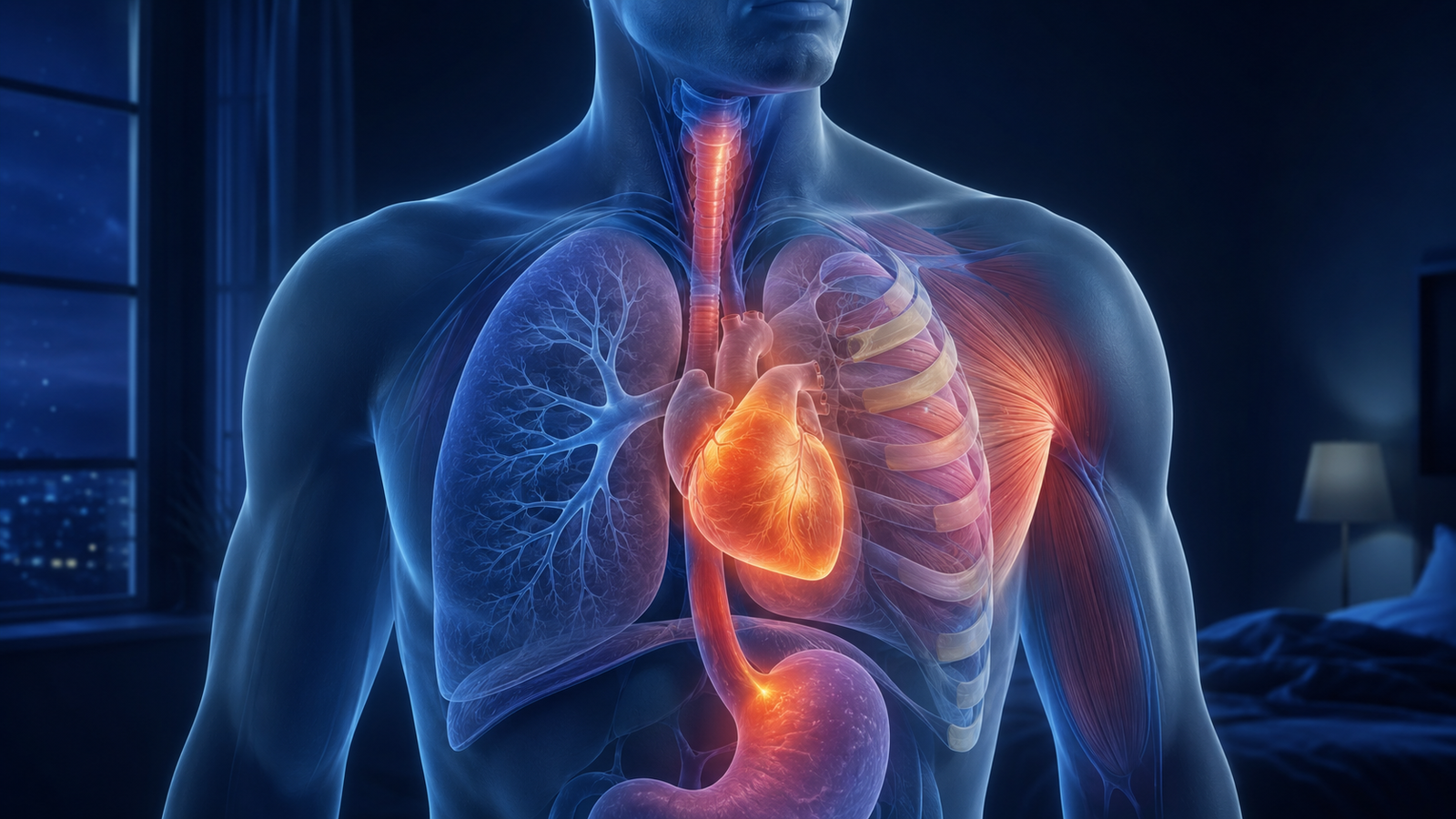
Before trying to understand why do I wake up with chest pain, pay attention to the type and location of the discomfort.
You may feel:
- Pressure or squeezing in the center of the chest
- A burning sensation behind the breastbone
- Sharp pain when breathing deeply
- Tenderness when pressing on the chest
- Pain that becomes worse with movement
- A heavy or tight feeling
- Discomfort spreading toward the arm, jaw, neck, or back
- A brief stabbing sensation
- Pain accompanied by a sour taste
- Tightness with coughing or wheezing
These details may help a healthcare professional investigate the cause, but they cannot safely rule out a heart or lung emergency.
For example, pain that becomes worse when you press on one specific area may suggest a chest-wall problem, while burning after a late meal may suggest reflux. However, serious conditions do not always follow a predictable pattern.
According to the American Heart Association, heart attack symptoms may include pressure, squeezing, fullness, or pain in the center of the chest. Discomfort may also spread to the arms, back, neck, jaw, or stomach and occur with shortness of breath, nausea, lightheadedness, or a cold sweat.
When Is Chest Pain After Sleep an Emergency?
Seek emergency help immediately if the pain:
- Feels severe, crushing, squeezing, or unusually heavy
- Lasts longer than a few minutes
- Disappears and repeatedly returns
- Spreads to your arm, shoulder, neck, jaw, stomach, or back
- Occurs with severe breathing difficulty
- Is accompanied by fainting or near-fainting
- Occurs with a cold sweat, nausea, or vomiting
- Is associated with a rapid or irregular heartbeat
- Begins after recent surgery or prolonged immobility
- Occurs with coughing up blood
- Appears with blue or gray lips
- Is new and you have known heart disease
Do not assume you are safe because the discomfort started while you were sleeping or improved after sitting up. A heart attack, unstable angina, pulmonary embolism, and other emergencies can occur at rest.
The intensity of pain is also not a dependable measure of seriousness. Some dangerous conditions may begin with mild or vague discomfort.
1. Angina or a Heart Attack Can Cause Chest Pressure
One of the most important possible explanations for waking with chest pain is reduced blood flow to the heart.
Angina occurs when the heart muscle does not receive enough oxygen-rich blood. It may feel like:
- Pressure
- Tightness
- Squeezing
- Heaviness
- Burning
- Indigestion-like discomfort
The pain may begin behind the breastbone and spread toward the shoulders, arms, neck, jaw, or back. Some people experience shortness of breath, nausea, weakness, sweating, or unusual fatigue instead of dramatic chest pain.
Chest discomfort that occurs at rest, awakens you from sleep, feels different from previous episodes, or becomes increasingly frequent requires prompt medical evaluation. Unstable angina can precede a heart attack and should be treated as an emergency.
A heart attack occurs when blood flow to part of the heart becomes blocked. Symptoms may begin suddenly, but they can also start gradually with mild pressure or discomfort.
Risk may be higher in people with:
- High blood pressure
- High cholesterol
- Diabetes
- Smoking history
- Obesity
- A personal or family history of heart disease
- Older age
- Physical inactivity
- Chronic kidney disease
- Untreated sleep apnea
If you repeatedly wake with chest discomfort and breathing problems, medical assessment is important even when the symptoms settle on their own.
2. Acid Reflux Can Cause Burning Chest Pain
Acid reflux is another common reason people ask, “Why do I wake up with chest pain?”
Reflux occurs when stomach contents move backward into the esophagus. Lying flat after eating can make this more likely because gravity is no longer helping keep stomach contents down.
Reflux-related chest discomfort often feels like:
- Burning behind the breastbone
- Pressure in the upper chest
- A sour or bitter taste
- Regurgitation
- Throat irritation
- Frequent burping
- Hoarseness after waking
- Nausea
- Coughing during the night
- Difficulty swallowing
Symptoms may be more likely after:
- Eating a large evening meal
- Lying down soon after eating
- Consuming fatty or spicy foods
- Drinking alcohol
- Having caffeine late in the day
- Eating chocolate or peppermint
- Smoking
- Sleeping completely flat
Nighttime reflux may also irritate the throat and trigger coughing. If coughing is the main symptom, read Why Do I Wake Up Coughing? 9 Causes and What to Do.
Avoid automatically treating new chest pain as heartburn, particularly if it feels like pressure, occurs with exertion or breathlessness, spreads beyond the chest, or is different from your usual reflux symptoms. Heart-related discomfort and reflux can sometimes feel remarkably similar.
3. Sleep Apnea May Cause Gasping and Chest Discomfort
Obstructive sleep apnea causes the upper airway to repeatedly narrow or close during sleep. Each breathing interruption can lower oxygen levels and force the body to work harder to restart breathing.
Sleep apnea does not always cause chest pain directly. However, repeated gasping, forceful breathing, nighttime reflux, and increased strain on the cardiovascular system may contribute to chest discomfort or make an underlying heart or lung condition more noticeable.
Possible signs include:
- Loud, persistent snoring
- Breathing pauses witnessed by another person
- Waking with choking or gasping
- Morning headaches
- Dry mouth after sleep
- Frequent nighttime urination
- Restless or fragmented sleep
- Excessive daytime sleepiness
- Difficulty concentrating
- Irritability or mood changes
- Chest discomfort accompanied by shortness of breath
Risk factors may include obesity, a larger neck circumference, narrowed upper-airway anatomy, alcohol consumption near bedtime, smoking, increasing age, and a family history of sleep apnea.
Untreated sleep apnea can contribute to low oxygen levels and is associated with increased risks of high blood pressure, heart disease, stroke, and other health problems, according to the National Heart, Lung, and Blood Institute.
You should discuss possible sleep apnea with a healthcare professional if you repeatedly wake gasping, experience unexplained chest discomfort, or remain unusually tired despite spending enough time in bed. A home sleep apnea test or an overnight sleep study may be recommended.
If breathing interruptions are suspected, sleeping on your side, avoiding alcohol near bedtime, and maintaining a healthy weight may help some people. These measures do not replace testing or prescribed treatment such as positive airway pressure therapy.
Chest pain that feels heavy, spreads beyond the chest, or occurs with sweating, fainting, nausea, or persistent breathing difficulty still requires emergency evaluation. Do not assume sleep apnea is the only cause.
4. Nocturnal Asthma Can Cause Chest Tightness
Asthma can produce nighttime chest tightness that becomes noticeable during sleep or immediately after waking.
Asthma causes the airways to become inflamed and narrowed, making it more difficult for air to move through the lungs. The most recognizable symptoms are:
- Chest tightness
- Shortness of breath
- Wheezing
- Recurrent coughing
- Difficulty breathing out
- Sleep interrupted by respiratory symptoms
The National Heart, Lung, and Blood Institute notes that asthma coughing commonly occurs at night or early in the morning. Nighttime symptoms can therefore explain why some people awaken with both chest tightness and coughing.
Common nighttime asthma triggers include:
- Dust mites in mattresses or pillows
- Pet dander
- Mold
- Pollen entering through an open window
- Cold or dry bedroom air
- Tobacco smoke
- Strong fragrances
- Respiratory infections
- Acid reflux
- Poorly controlled asthma
- Missing or incorrectly using prescribed medication
Nocturnal asthma is not a separate type of asthma. Frequent symptoms at night generally indicate that asthma is not adequately controlled and that the current treatment plan may need to be reviewed.
Asthma-related chest discomfort may feel like a tight band around the chest or as though something heavy is sitting on it. It often occurs with wheezing, coughing, or difficulty exhaling. However, symptoms can differ between individuals, and some people mainly experience a persistent nighttime cough.
The coughing patterns and bedroom triggers discussed in Why Do I Wake Up Coughing? 9 Causes and What to Do may help you identify information to share with your healthcare provider.
If you already have asthma, follow your personalized asthma action plan and use medications exactly as prescribed. Do not increase, discontinue, or replace a prescribed medicine without professional guidance.
Seek urgent medical help if:
- Breathing becomes severely difficult
- You cannot speak comfortably in complete sentences
- Your lips or face appear blue or gray
- A prescribed quick-relief inhaler is not helping
- Chest tightness is severe or feels different from your usual asthma symptoms
- You feel confused, faint, or extremely exhausted
Because heart problems can also cause chest pressure and breathlessness, new or unexplained symptoms should not automatically be attributed to asthma.
5. A Nocturnal Panic Attack Can Mimic a Heart Problem
A nocturnal panic attack is a sudden episode of intense fear that awakens you from sleep. It can occur without an obvious nightmare or conscious trigger.
Physical symptoms may include:
- Chest pain or tightness
- A pounding or racing heartbeat
- Shortness of breath
- A choking sensation
- Sweating
- Trembling
- Chills or hot flashes
- Nausea
- Dizziness
- Tingling or numbness
- A feeling of losing control
- Fear of dying or having a heart attack
- A sense that something terrible is about to happen
The National Institute of Mental Health explains that panic attacks may occur at any time, including during sleep, and can produce physical sensations that resemble a heart attack.
Panic symptoms often reach their greatest intensity quickly and then gradually improve. Afterward, you may remain frightened, exhausted, or worried about falling asleep again.
If you are wondering, “Why do I wake up with chest pain and my heart pounding?” a nocturnal panic attack is one possibility—but it should not be your automatic conclusion.
New chest pain requires appropriate medical assessment because panic attacks, abnormal heart rhythms, asthma, sleep apnea, reflux, and heart problems can produce overlapping symptoms. Having a history of anxiety does not make every episode of chest pain anxiety-related.
Information in Why Do I Wake Up With My Heart Racing? 9 Causes and Effective Fixes can help you recognize other possible reasons for nighttime palpitations.
Once urgent physical causes have been excluded, helpful strategies may include:
- Sitting upright and breathing slowly
- Relaxing the shoulders and jaw
- Reminding yourself that the sensations will pass
- Avoiding rapid, repeated deep breaths that worsen lightheadedness
- Reducing caffeine, nicotine, and alcohol
- Maintaining a consistent sleep schedule
- Recording when episodes occur and how long they last
- Discussing cognitive behavioral therapy with a mental health professional
Treatment for recurrent panic attacks may involve psychotherapy, medication, or a combination of both. Seeking treatment is especially important if fear of another episode causes insomnia, bedtime avoidance, or significant disruption to daily life.
How Can I Distinguish These Three Causes?
The accompanying symptoms may provide clues, although they cannot confirm a diagnosis.
| Possible cause | Common nighttime clues |
|---|---|
| Sleep apnea | Loud snoring, witnessed breathing pauses, choking, morning headache, dry mouth, daytime sleepiness |
| Nocturnal asthma | Wheezing, coughing, difficulty exhaling, known triggers, improvement with prescribed asthma treatment |
| Panic attack | Sudden intense fear, racing heart, trembling, tingling, sweating, dizziness, feeling of impending doom |
More than one condition can occur at the same time. For example, sleep apnea may coexist with reflux, while asthma symptoms can trigger panic. This overlap is why recurring chest discomfort should be evaluated based on your complete medical history rather than one symptom alone.
6. Costochondritis or a Strained Chest Muscle Can Hurt After Sleep
Chest-wall pain can originate from the muscles between the ribs or the cartilage connecting the ribs to the breastbone.
Costochondritis is inflammation of the cartilage where one or more ribs join the sternum. The discomfort may resemble heart-related chest pain, particularly when it occurs on the left side.
Possible signs include:
- Tenderness near the breastbone
- Pain that increases when you press the area
- Sharp, aching, or pressure-like discomfort
- Pain that becomes worse with deep breathing
- Discomfort when coughing or sneezing
- Pain triggered by twisting the upper body
- Symptoms that worsen when lying in a certain position
- Pain after strenuous exercise, lifting, or repeated coughing
According to the Mayo Clinic, costochondritis commonly affects the upper ribs and may become worse with deep breathing, coughing, or movement.
A strained chest muscle can produce similar symptoms. Common triggers include:
- A new upper-body workout
- Heavy lifting
- Reaching or twisting awkwardly
- Repeated coughing
- Carrying a heavy bag
- Moving furniture
- A minor fall or injury
- Sleeping with the upper body twisted
- Remaining in one position for too long
You may notice the discomfort more strongly after waking because the injured or inflamed area has remained compressed or relatively still for several hours.
Clues That the Pain May Come From the Chest Wall
Chest-wall pain may be more likely when:
- You can reproduce it by pressing one spot
- It becomes worse when moving your arm or torso
- It began after exercise, lifting, coughing, or an injury
- The surrounding area feels sore or tender
- Changing your sleeping position changes the discomfort
- Resting the affected muscles reduces the pain
However, tenderness does not provide a guaranteed diagnosis. New chest pain should still be medically assessed when the cause is uncertain, especially if you have cardiovascular risk factors.
Do not assume the pain is muscular if it:
- Feels like squeezing or heavy pressure
- Spreads to the arm, jaw, neck, shoulder, or back
- Occurs with breathlessness, sweating, nausea, or fainting
- Appears during exertion
- Is severe or progressively worsening
- Does not improve with rest
A healthcare professional may examine the chest wall and, when necessary, order an electrocardiogram, chest X-ray, or other tests to exclude heart and lung problems. There is no single laboratory or imaging test that confirms costochondritis.
Treatment depends on the cause and your medical history. Rest and temporarily avoiding movements that aggravate the area may help a minor muscle strain. Ask a qualified healthcare professional before using pain medication, particularly if you have heart, kidney, liver, digestive, bleeding, or medication-related concerns.
7. Pleurisy or Another Lung Condition May Cause Sharp Pain
When asking, “Why do I wake up with chest pain that becomes worse when I breathe?” the lungs and the tissues surrounding them must also be considered.
Pleurisy is inflammation of the two thin layers of tissue surrounding the lungs. These layers normally move smoothly against each other. When inflamed, they can produce sharp pain as you inhale, cough, sneeze, or move your upper body.
The Mayo Clinic lists chest pain that worsens with breathing, coughing, or sneezing as a characteristic symptom of pleurisy.
Other possible symptoms include:
- Sharp or stabbing pain on one side
- Pain spreading to the shoulder or back
- Shortness of breath
- Shallow breathing to avoid pain
- Coughing
- Fever
- Chills
- Fatigue
- Symptoms following a respiratory infection
Pleurisy is not a diagnosis you should make at home. It can be associated with viral or bacterial infections, pneumonia, autoimmune disease, lung injury, and other underlying conditions that may require treatment.
Other lung-related causes of nighttime or morning chest pain include:
- Pneumonia
- Bronchitis accompanied by persistent coughing
- A collapsed lung
- Fluid surrounding the lungs
- Pulmonary embolism
- Chronic lung disease
- A severe respiratory infection
Pulmonary Embolism Requires Emergency Care
A pulmonary embolism occurs when a blood clot blocks blood flow through an artery in the lungs. It can be life-threatening and requires immediate medical care.
Warning signs may include:
- Sudden unexplained shortness of breath
- Sharp chest pain that worsens with inhalation
- Rapid breathing
- A fast or irregular heartbeat
- Coughing up blood
- Dizziness or fainting
- Unusual sweating
- Anxiety or a feeling that something is seriously wrong
- Pain, tenderness, redness, or swelling in one leg
Risk may be higher after prolonged immobility, a long journey, recent surgery, hospitalization, major injury, pregnancy, childbirth, certain hormone treatments, cancer, or a previous blood clot.
Call emergency services immediately if sudden chest pain occurs with breathing difficulty, fainting, coughing up blood, or one-sided leg swelling. Do not wait to see whether sleeping, resting, or changing position makes it disappear.
If respiratory symptoms regularly interrupt your sleep, Why Do I Wake Up Short of Breath? 9 Causes and What to Do explains additional breathing-related causes and warning signs.
Likewise, persistent nighttime coughing may warrant reviewing Why Do I Wake Up Coughing? 9 Causes and What to Do.
8. Your Sleeping Position May Aggravate an Existing Problem
Sleeping position can sometimes explain why chest discomfort is most noticeable in the morning. However, posture usually aggravates an existing muscular, joint, digestive, or respiratory problem rather than causing unexplained internal chest pain by itself.
Positions that may contribute include:
- Sleeping with one shoulder rolled forward
- Lying directly on a tender rib or chest muscle
- Sleeping with the torso twisted
- Using a pillow that provides inadequate support
- Sleeping on the stomach with the upper body rotated
- Remaining in one position for many hours
- Lying completely flat when you have acid reflux
- Sleeping on the side affected by an injury
For example, sleeping on a strained chest muscle may increase localized soreness. Lying flat may worsen reflux, while poor neck and shoulder alignment may create pain that spreads toward the upper chest.
Position-related discomfort is more likely when it:
- Changes after you roll onto the other side
- Improves soon after getting out of bed
- Occurs with shoulder, neck, rib, or upper-back stiffness
- Can be reproduced through movement or pressure
- Follows a recent workout or physical task
- Returns after sleeping in the same position
How to Reduce Position-Related Chest-Wall Discomfort
If a healthcare professional has excluded serious causes, practical changes may include:
- Using a pillow that keeps the neck in a neutral position
- Avoiding direct pressure on a painful area
- Supporting the upper arm with a pillow
- Keeping the shoulders from collapsing forward
- Avoiding sleeping with the torso sharply twisted
- Replacing a mattress or pillow that no longer provides support
- Gradually returning to strenuous upper-body exercise
- Discussing persistent pain with a physician or physical therapist
If reflux has been diagnosed, avoiding large meals close to bedtime and following your clinician’s advice about sleep positioning may also help. Do not stack several ordinary pillows beneath your head if doing so bends the neck and compresses the upper body; use an appropriately designed support or bed elevation method recommended for your situation.
Do Not Blame Your Mattress Too Quickly
It is tempting to assume that a mattress, pillow, or unusual sleeping posture caused the pain. That explanation becomes less convincing when discomfort:
- Does not change with movement or pressure
- Continues throughout the day
- Occurs with exercise
- Is accompanied by shortness of breath
- Spreads beyond the chest
- Causes sweating, nausea, or dizziness
- Becomes more frequent or severe
- Appears without any obvious muscular trigger
A new pillow is lovely, but it is not a cardiologist in disguise. Unexplained or recurring chest pain should be evaluated before you attribute it solely to your bed.
Chest-Wall Pain vs. Lung Pain vs. Position-Related Pain
These patterns may provide useful clues, but they cannot confirm the cause.
| Possible cause | Typical clues |
|---|---|
| Costochondritis | Tender near the breastbone, worse with pressure, movement, coughing, or deep breathing |
| Muscle strain | Begins after exercise, lifting, coughing, or twisting; worsens with certain movements |
| Pleurisy | Sharp pain that becomes worse during deep breathing, coughing, or sneezing |
| Other lung condition | Pain accompanied by breathlessness, coughing, fever, rapid breathing, or low oxygen symptoms |
| Sleeping position | Changes with posture, occurs with stiffness, and improves after moving |
| Acid reflux | Burning behind the breastbone, sour taste, regurgitation, worse after lying flat |
| Heart-related condition | Pressure or squeezing, possible spreading pain, sweating, nausea, breathlessness, or exertional symptoms |
Because several conditions can occur together, the pattern should be treated as information for a healthcare professional—not as a self-diagnosis.
9. Pericarditis Can Feel Worse When You Lie Down
Pericarditis is inflammation of the thin sac surrounding the heart. Because lying flat can worsen the discomfort, symptoms may become noticeable during the night or immediately after waking.
Possible symptoms include:
- Sharp or stabbing pain in the center or left side of the chest
- Pain that worsens when lying on your back
- Relief when sitting up and leaning forward
- Pain with deep breathing or coughing
- Discomfort spreading to the shoulder, neck, arm, or back
- Shortness of breath
- Heart palpitations
- Low-grade fever, fatigue, or weakness
Pericarditis can sometimes occur after a viral infection, although autoimmune conditions, heart surgery, kidney disease, certain medications, and other medical problems may also be involved.
Its symptoms can resemble those of a heart attack, pleurisy, or another serious condition. Do not attempt to distinguish these problems using sleep position alone. Sudden or unexplained chest pain requires prompt medical assessment.
How Will a Doctor Evaluate Morning Chest Pain?
If you repeatedly wonder, “Why do I wake up with chest pain?” arrange a medical appointment even if the discomfort eventually disappears.
A healthcare professional may ask:
- When the pain began
- How long each episode lasts
- Whether it feels sharp, burning, squeezing, or heavy
- Where it is located and whether it spreads
- Whether movement, breathing, meals, or position affect it
- Whether you snore or wake gasping
- Whether you experience coughing, wheezing, fever, or palpitations
- Whether pressing the area reproduces the pain
- Whether you recently exercised, lifted something heavy, traveled, or had surgery
- Whether you have heart, lung, digestive, or anxiety-related conditions
- Which medications and supplements you take
Depending on your symptoms and risk factors, testing may include:
- An electrocardiogram
- Blood tests such as troponin
- Chest imaging
- Oxygen-level measurement
- Heart monitoring
- An echocardiogram
- A sleep study
- Lung-function testing
- Evaluation for acid reflux
Keep a brief symptom record showing the time, duration, pain type, associated symptoms, sleeping position, evening meals, and anything that improved the episode. Never delay emergency care to complete a symptom diary.
Can You Prevent Chest Pain After Sleeping?
Prevention depends entirely on the cause. General habits that may reduce certain non-emergency triggers include:
- Avoiding large meals shortly before bed
- Limiting late alcohol, caffeine, and nicotine
- Following prescribed asthma or reflux treatment
- Keeping bedding free from known respiratory allergens
- Using supportive sleep positioning
- Avoiding pressure on an injured chest muscle
- Gradually increasing upper-body exercise
- Following recommended sleep apnea treatment
- Maintaining regular medical checkups
- Managing cardiovascular risk factors with professional guidance
These measures cannot prevent every cause of chest pain and should never replace diagnosis. Do not start aspirin, acid-reducing medication, pain relievers, or supplements solely because of information in an online article.
Frequently Asked Questions
Is it normal to wake up with chest pain?
No unexplained chest pain should automatically be considered normal. A minor muscle strain or reflux may be responsible, but heart and lung conditions can produce similar symptoms. Seek medical advice when the pain is new, recurring, worsening, or unexplained.
Why does my chest hurt after sleeping on my side?
Side sleeping may place pressure on an irritated rib joint, strained muscle, shoulder, or tender area of the chest wall. Pain that changes with movement or pressure may suggest a musculoskeletal cause, but these features cannot safely exclude heart or lung disease.
Can anxiety cause chest pain while sleeping?
Yes. A nocturnal panic attack can cause chest tightness, a racing heartbeat, sweating, trembling, dizziness, and shortness of breath. However, new chest pain should be medically assessed before it is attributed to anxiety.
Can acid reflux cause chest pain in the morning?
Yes. Lying flat may allow stomach contents to move into the esophagus, producing burning, pressure, regurgitation, coughing, or a sour taste. Because reflux can resemble heart-related pain, seek urgent help for new pressure, spreading pain, sweating, faintness, or breathing difficulty.
Should I go to the emergency room for chest pain that wakes me up?
Call your local emergency number if the pain is severe, persistent, squeezing, heavy, or spreading to the arm, jaw, neck, shoulder, stomach, or back. Emergency care is also necessary when chest pain occurs with shortness of breath, sweating, nausea, fainting, confusion, coughing up blood, or blue or gray skin.
Final Thoughts
The answer to “why do I wake up with chest pain?” may involve reflux, sleep apnea, asthma, panic attacks, chest-wall inflammation, a muscle strain, lung disease, sleeping position, pericarditis, angina, or a heart attack.
The timing and accompanying symptoms can provide useful clues, but they cannot confirm the cause. Contact a healthcare professional for recurring or unexplained symptoms, and treat severe or persistent chest pain—especially with breathlessness, spreading discomfort, sweating, nausea, or fainting—as an emergency.
Related Articles
Explore additional causes of nighttime breathing difficulty in Why Do I Wake Up Short of Breath? 9 Causes and What to Do.
If the discomfort occurs with palpitations, read Why Do I Wake Up With My Heart Racing? 9 Causes and Effective Fixes.
For chest symptoms accompanied by nighttime coughing, see Why Do I Wake Up Coughing? 9 Causes and What to Do.