Can Menopause Cause Vivid Dreams? 7 Reasons They Feel So Real
Can menopause cause vivid dreams? Menopause may indirectly make dreams feel more intense, emotional, unusual, or memorable by changing sleep patterns and increasing nighttime awakenings.
Many women report dreams that suddenly seem:
- More realistic
- Emotionally intense
- Easier to remember
- Strange or confusing
- Frightening
- Connected to anxiety
- Filled with people or events from the past
Some wake feeling relieved that the dream was not real. Others remain unsettled for hours afterward.
However, vivid dreams are not considered a defining symptom of menopause, and changing estrogen levels have not been proven to directly produce a particular type of dream. More often, hot flashes, night sweats, stress, insomnia, medication, and disrupted REM sleep help explain why dreams become more noticeable.
This guide examines seven possible reasons for vivid dreams during perimenopause and menopause, how to distinguish vivid dreams from nightmares and night terrors, and when unusual nighttime experiences require medical assessment.
Quick answer: Menopause can disrupt sleep through hot flashes, night sweats, anxiety, and hormonal changes. These disruptions may cause you to wake during or shortly after REM sleep, making vivid dreams easier to remember.
What Are Vivid Dreams?
Vivid dreams are dreams that feel unusually clear, detailed, emotional, or realistic.
You may remember:
- Specific conversations
- Faces and voices
- Colors and locations
- Physical sensations
- Complicated storylines
- Strong fear, sadness, anger, or happiness
- Details that remain clear after waking
A vivid dream is not necessarily a nightmare. It may be pleasant, neutral, strange, or upsetting.
According to the National Institute of Child Health and Human Development, dreams are generally most vivid during rapid eye movement, or REM, sleep. REM periods become longer during the later part of the night.
Dreams can also occur during non-REM sleep, but REM dreams are commonly more detailed, emotional, and story-like.
Why Do Dreams Feel More Real During Menopause?
Dream vividness and dream recall are not the same thing.
A person may dream vividly every night but remember very little because they sleep continuously. Another person may wake several times and remember multiple dreams in detail.
During perimenopause and menopause, sleep may be interrupted by:
- Hot flashes
- Night sweats
- Anxiety
- Palpitations
- Pain
- A need to urinate
- Mood changes
- Snoring or breathing problems
- Restless legs
- Medication effects
If an awakening occurs during or immediately after REM sleep, the dream may remain accessible in memory. It can therefore seem as though menopause has suddenly increased dreaming when it has actually increased opportunities to remember dreams.
If you are also experiencing repeated awakenings, Why Do I Wake Up at Night? explains other common physical, emotional, and environmental causes.
Can Menopause Directly Cause Vivid Dreams?
Current evidence does not clearly show that menopause directly causes vivid dreams in every woman.
The more accurate explanation is that menopause can change several factors that influence sleep and dream recall, including:
- Hormonal fluctuations
- Hot flashes and night sweats
- Frequent REM-sleep awakenings
- Anxiety and emotional stress
- Insomnia and irregular sleep timing
- Medication or supplement changes
- Sleep disorders that become more noticeable with age
These factors can overlap. For example, a night sweat may wake you during a vivid dream, anxiety may make returning to sleep difficult, and sleeping later the following morning may produce another long REM period.
Researchers consistently identify sleep disruption as a common concern during the menopausal transition. A 2025 review available through the National Library of Medicine notes that perimenopausal sleep problems may involve insomnia, sleep-related breathing disorders, and movement disorders—not hormone changes alone.
The Difference Between Vivid Dreams, Nightmares, and Night Terrors
These experiences are sometimes treated as interchangeable, but they are different.
| Experience | Typical features | Usual timing | Memory after waking |
|---|---|---|---|
| Vivid dream | Clear, realistic, or emotionally intense | Often during REM sleep | Usually detailed |
| Nightmare | Disturbing dream that causes fear or distress | Usually later in the night during REM | Often clearly remembered |
| Night terror | Sudden screaming, fear, movement, or confusion | Usually during deep non-REM sleep | Often little or no memory |
| REM sleep behavior | Talking, punching, kicking, or acting out dreams | During REM sleep | Dream may be remembered |
| Sleep paralysis | Temporary inability to move while falling asleep or waking | At the boundary of REM sleep | Usually remembered |
A distressing vivid dream may qualify as a nightmare, but vivid dreams can also be pleasant or simply bizarre.
Night terrors are less common in adults. A person experiencing one may appear terrified but remain difficult to wake and have little memory of the event the next morning.
Physically acting out dreams is not a routine menopause symptom. Repeated punching, kicking, jumping from bed, or injuring yourself or a sleep partner requires medical assessment.
7 Possible Reasons for Vivid Dreams During Menopause
The seven possible reasons covered in this article are:
- Hormonal fluctuations affecting sleep stability
- Hot flashes and night sweats interrupting REM sleep
- Increased anxiety and emotional processing
- Insomnia creating more remembered awakenings
- Medication or supplement effects
- REM rebound after sleep deprivation
- An underlying sleep or medical condition
Several causes may be present at the same time.
1. Hormonal Fluctuations May Change Sleep Stability
Estrogen and progesterone interact with systems involved in:
- Body-temperature regulation
- Mood
- Stress responses
- Breathing
- Sleep continuity
- Circadian rhythms
- Neurotransmitter activity
During perimenopause, hormone levels may fluctuate unpredictably rather than declining in a smooth line. These changes can make sleep lighter or more fragmented for some women.
The result may include:
- Difficulty falling asleep
- Frequent waking
- Early-morning waking
- Feeling overheated at night
- Increased sensitivity to sound
- More awareness of dreams
- Difficulty returning to sleep
This does not prove that estrogen directly controls dream content. Instead, hormonal changes may alter the conditions surrounding sleep, increasing the likelihood that a dream will be remembered.
For a broader explanation of hormonal sleep disruption, Does Perimenopause Cause Insomnia? reviews the relationship between changing hormones, vasomotor symptoms, mood, and nighttime waking.
Do Low Estrogen Levels Cause Strange Dreams?
There is not enough evidence to say that low estrogen alone causes strange or vivid dreams.
Dream content can be influenced by many factors, including:
- Recent experiences
- Emotional concerns
- Trauma
- Illness
- Fever
- Medication
- Alcohol
- Sleep deprivation
- Irregular sleep schedules
A sudden change in dreams should therefore be considered in the context of your overall sleep, health, and medication use rather than attributed automatically to estrogen.
2. Hot Flashes and Night Sweats Can Interrupt REM Sleep
Hot flashes and night sweats are among the most recognizable menopause symptoms.
A nighttime episode may cause:
- Sudden heat
- Sweating
- Flushing
- Chills afterward
- A racing heartbeat
- Anxiety
- Complete awakening
- Difficulty returning to sleep
The NHS guidance on night sweats identifies menopause-related hot flashes as a common cause of night sweating.
When a hot flash wakes you during REM sleep, you may remember the dream that was occurring immediately beforehand. The dream can appear unusually vivid because the brain did not have time to lose the memory during the transition into another sleep stage.
Sometimes the heat sensation may even become incorporated into the dream. You might dream about:
- Being trapped in a hot room
- Standing near a fire
- Travelling through a desert
- Feeling embarrassed or flushed
- Searching for water
- Being unable to breathe comfortably
This does not mean the dream predicted the hot flash. The sleeping brain may have incorporated a real physical sensation into the dream narrative.
Women who regularly wake overheated may also benefit from Why Can’t I Sleep During Menopause?, which explains practical strategies for temperature-related sleep disruption.
A Simple Dream and Sleep Diary
Track symptoms for two weeks to identify patterns.
| What to record | Examples |
|---|---|
| Bedtime and wake time | 10:30 p.m. to 6:30 a.m. |
| Dream recall | None, vague, clear, or extremely vivid |
| Dream emotion | Neutral, pleasant, anxious, or frightening |
| Awakening time | 1:20 a.m., 3:45 a.m., or early morning |
| Physical trigger | Sweating, heat, pain, palpitations, or urination |
| Medication | Name, dose, and timing |
| Evening intake | Caffeine, alcohol, or heavy meal |
| Menopause symptoms | Hot flashes, mood changes, or irregular periods |
| Daytime effect | Fatigue, anxiety, or difficulty concentrating |
A diary cannot prove whether menopause causes vivid dreams, but it may reveal whether dream recall increases after night sweats, medication changes, stress, or irregular sleep.
In Part 2, we’ll continue with reasons 3 through 7, including anxiety, insomnia, medication effects, REM rebound, and sleep disorders that can cause unusually vivid or disturbing dreams.
3. Anxiety and Emotional Stress Can Intensify Dreams
Anxiety commonly increases during perimenopause and menopause, although the experience varies greatly between women.
Possible contributors include:
- Hormonal fluctuations
- Hot flashes and poor sleep
- Work or financial pressure
- Caring for children or aging parents
- Relationship changes
- Health concerns
- Changes in body image
- Fear about aging
- Previous trauma
- Major life transitions
Emotional experiences from waking life may appear in dreams in symbolic, exaggerated, or surprisingly realistic ways.
Common dream themes may include:
- Being late or unprepared
- Losing something important
- Returning to school or a former workplace
- Conflict with family members
- Being chased
- Feeling trapped
- Searching for someone
- Revisiting a past relationship
- Failing to complete an urgent task
- Trying to speak but being unable to do so
These themes do not provide a medical diagnosis or predict future events. Dreams often combine recent experiences, older memories, physical sensations, and emotions without forming a literal message.
The Anxiety–Dream Cycle
Vivid dreams and anxiety can reinforce each other:
- Stress increases emotional arousal before sleep.
- Sleep becomes lighter or more fragmented.
- You wake during or shortly after a vivid dream.
- The dream remains clear in your memory.
- You worry about its meaning or fear another dream.
- Bedtime anxiety increases the following night.
- Sleep becomes even more disrupted.
If worry continues after you wake, remind yourself that a realistic dream is still a dream. Avoid immediately searching online for alarming interpretations at 3 a.m.—the internet rarely becomes a calming therapist after midnight.
Instead, briefly record the dream, use slow breathing, and return your attention to the physical room around you.
When racing thoughts make it difficult to settle again, How to Calm Anxiety at Night offers practical grounding and relaxation techniques.
Can Trauma Cause Vivid Dreams During Menopause?
Previous trauma may contribute to recurring nightmares or distressing dreams. Menopause-related sleep disruption may make these dreams easier to remember, but menopause is not necessarily their underlying cause.
Seek professional support if dreams:
- Repeatedly recreate a traumatic event
- Cause intense fear of sleeping
- Lead to avoidance of bedtime
- Trigger daytime flashbacks
- Cause panic after waking
- Affect relationships or work
- Continue for several weeks
- Are accompanied by depression or thoughts of self-harm
Trauma-focused therapy and specific nightmare treatments may help. Urgent support is necessary if you feel unsafe or have thoughts of harming yourself.
4. Insomnia Can Increase Dream Recall
Insomnia may involve:
- Difficulty falling asleep
- Frequent nighttime waking
- Long periods awake during the night
- Waking earlier than intended
- Sleep that feels unrefreshing
- Anxiety about sleep
- Daytime fatigue or irritability
Women with insomnia do not necessarily dream more than everyone else. They may simply have more awakenings during which a dream can be remembered.
For example, someone who sleeps continuously through several sleep cycles may recall only the final dream before morning. Someone who wakes four times may remember fragments from four different dreams.
This can create the impression of dreaming constantly.
Why Early-Morning Dreams May Feel Especially Vivid
REM periods generally become longer toward morning. Dreams during this part of the night may therefore be:
- Longer
- More detailed
- More emotional
- More story-like
- Easier to remember
If insomnia causes an early awakening followed by repeated dozing, you may move in and out of REM sleep and remember several vivid dream sequences.
Sleeping much later after a poor night may also provide additional morning REM sleep. This can temporarily increase dream recall without indicating a dangerous condition.
Does Remembering Dreams Mean You Slept Badly?
Not always. Dream recall alone does not prove that sleep quality was poor.
However, vivid dreams may be associated with disrupted sleep when they occur alongside:
- Repeated awakenings
- Long periods awake
- Night sweats
- Loud snoring
- Gasping or choking
- Morning headaches
- Severe daytime sleepiness
- Restless legs
- Acting out dreams
- Persistent nightmares
If insomnia has continued for at least several weeks and affects daytime functioning, professional assessment is appropriate. Cognitive behavioral therapy for insomnia, or CBT-I, is a first-line treatment for chronic insomnia and can be useful during menopause.
5. Medication and Supplements May Affect Dreams
A new medication, dosage change, withdrawal, or altered dosing time can change dream intensity or recall.
Medicines sometimes associated with unusual or vivid dreams include certain:
- Antidepressants
- Beta blockers
- Blood-pressure medications
- Parkinson’s disease medications
- Smoking-cessation products
- Sleep medications
- Sedatives
- Stimulants
- Dementia medications
- Hormonal treatments
This does not mean everyone taking these medicines will experience vivid dreams. Effects vary according to the medication, dose, timing, individual sensitivity, and other health conditions.
Antidepressants and Vivid Dreams
Some antidepressants affect serotonin, norepinephrine, and REM sleep. They may alter dream recall, produce intense dreams, or change nightmare frequency.
Menopause and midlife may coincide with beginning an antidepressant for:
- Anxiety
- Depression
- Hot flashes
- Chronic pain
- Migraine prevention
- Sleep difficulties
The timing may make the dream change appear hormonal when medication is contributing.
Do not stop an antidepressant abruptly. Sudden discontinuation can cause withdrawal symptoms, sleep disturbance, anxiety, dizziness, flu-like sensations, and unusually vivid dreams.
Melatonin and Dream Intensity
Some people report vivid dreams after taking melatonin, although the response is inconsistent.
Possible explanations include:
- Increased opportunity for sleep
- Changes in sleep timing
- More REM sleep later in the night
- Waking shortly after a dream
- Taking more than needed
- Combining melatonin with other sedating products
Melatonin supplements also vary in purity and labeled dose. More is not automatically better.
Discuss melatonin with a healthcare professional if you take other medication, have a medical condition, or experience persistent side effects.
Menopause Hormone Therapy and Dreams
Menopause hormone therapy may improve hot flashes and sleep for appropriately selected women. Better sleep could reduce awakenings and dream recall, but individual responses differ.
Some women notice changes in dreaming after beginning or adjusting hormone therapy. That does not establish that the medication is dangerous or that hormones directly determine dream content.
Record:
- The medication name
- Dose and formulation
- Time taken
- Date treatment began
- Date vivid dreams changed
- Other symptoms or side effects
Share the record with the prescriber. Do not independently stop or change hormone treatment based only on dream intensity.
Review Everything You Take
Include the following when reviewing possible causes:
- Prescription medicines
- Over-the-counter sleep aids
- Allergy and cold products
- Pain relievers
- Melatonin
- Herbal menopause products
- Cannabis products
- Nicotine patches
- Energy supplements
- Weight-loss products
- Alcohol
“Natural” products can still affect the nervous system, interact with medication, or contain inconsistent ingredients.
6. REM Rebound May Produce Intense Dreams
REM rebound occurs when the brain spends more time in REM sleep after REM sleep has previously been reduced or disrupted.
Potential triggers include:
- Sleep deprivation
- An irregular sleep schedule
- Repeated nighttime waking
- Recovery after illness
- Stopping heavy alcohol use
- Withdrawal from certain medications
- Changes in sleep medication
- Untreated sleep apnea followed by effective treatment
During rebound, dreams may feel unusually long, emotional, or bizarre.
The Weekend Pattern
A typical pattern may look like this:
- You sleep too little during the working week.
- Hot flashes or stress further fragment sleep.
- You sleep later on the weekend.
- Longer morning sleep provides more REM opportunity.
- You wake from a detailed dream.
- It appears that menopause caused a sudden night of extreme dreaming.
Menopause-related symptoms may have contributed to the sleep debt, but recovery sleep helps explain the intense dream recall.
A consistent sleep schedule may reduce this pattern. If weekday and weekend timing differs considerably, How to Fix Your Sleep Schedule explains how to shift it gradually.
Alcohol and REM Rebound
Alcohol may initially shorten the time needed to fall asleep, but it can fragment the second half of the night.
As alcohol is metabolized, sleep may become lighter and REM-related awakenings may increase. This can lead to:
- Intense dreams
- Nightmares
- Sweating
- Palpitations
- Early waking
- Anxiety
- Poor-quality sleep
Avoid using alcohol as a treatment for menopause-related insomnia or vivid dreams. Regular heavy drinking should not be stopped abruptly without medical advice because withdrawal can be dangerous.
7. An Underlying Sleep or Medical Condition May Be Responsible
The answer to can menopause cause vivid dreams should not prevent consideration of other conditions.
Dream changes may occur alongside a sleep disorder, mental health condition, neurological condition, fever, pain, or medication effect.
Sleep Apnea
Obstructive sleep apnea causes repeated narrowing or closure of the upper airway during sleep.
Possible signs include:
- Loud snoring
- Witnessed breathing pauses
- Gasping or choking
- Dry mouth on waking
- Morning headaches
- Frequent urination at night
- Unrefreshing sleep
- Poor concentration
- Mood changes
- Excessive daytime sleepiness
Breathing-related awakenings may occur during REM sleep and make dreams easier to remember. Dreams involving suffocation, drowning, choking, or being trapped do not diagnose sleep apnea, but accompanying breathing symptoms deserve assessment.
Sleep apnea risk can become more important after menopause. Can Menopause Cause Sleep Apnea? explains the warning signs and testing process.
Restless Legs Syndrome
Restless legs syndrome causes an urge to move the legs that:
- Begins or worsens during rest
- Improves temporarily with movement
- Is stronger in the evening or at night
- Can delay or interrupt sleep
Repeated awakenings caused by leg sensations may increase dream recall.
If vivid dreams occur alongside crawling, pulling, tingling, or an irresistible urge to move, the leg symptoms require separate evaluation. They should not be dismissed as simply another strange menopause experience.
REM Sleep Behavior Disorder
During normal REM sleep, most skeletal muscles become temporarily inactive. REM sleep behavior disorder can reduce this protective paralysis, allowing a person to physically act out dreams.
Possible signs include:
- Shouting or swearing during sleep
- Punching
- Kicking
- Grabbing
- Jumping from bed
- Falling out of bed
- Injuring a sleep partner
- Dream content that matches the observed behavior
This condition is different from having vivid dreams alone and requires medical assessment, particularly when it begins in adulthood.
Until evaluated:
- Move sharp objects away from the bed.
- Pad nearby furniture if necessary.
- Keep the floor clear.
- Consider sleeping separately if a partner is at risk.
- Do not restrain the sleeper physically during an episode unless immediate safety requires intervention.
Nightmare Disorder
Nightmare disorder involves repeated, well-remembered disturbing dreams that cause meaningful distress or impairment.
Possible effects include:
- Fear of returning to sleep
- Chronic sleep loss
- Daytime anxiety
- Reduced concentration
- Mood changes
- Relationship difficulties
- Avoidance of bedtime
Treatment may include psychotherapy, management of contributing conditions, and imagery rehearsal therapy, in which a recurring nightmare is rewritten with a safer ending and mentally rehearsed while awake.
Sleep Paralysis
Sleep paralysis causes temporary inability to move or speak while falling asleep or waking.
It may include:
- Chest pressure
- A sense of another presence
- Visual or auditory hallucinations
- Fear
- Awareness of the bedroom
- Episodes lasting seconds or minutes
Although frightening, occasional isolated sleep paralysis is generally not dangerous. Sleep deprivation and irregular sleep timing may make it more likely.
Frequent episodes, severe daytime sleepiness, sudden muscle weakness triggered by emotion, or other unusual REM symptoms require assessment for narcolepsy or another sleep disorder.
Depression, Anxiety, and Other Mental Health Conditions
Vivid or disturbing dreams can occur with:
- Depression
- Generalized anxiety
- Panic disorder
- Post-traumatic stress disorder
- Grief
- Severe stress
- Substance withdrawal
Menopause may coincide with increased emotional vulnerability, but persistent symptoms should not be written off as “just hormones.”
Seek urgent help if you experience:
- Thoughts of suicide or self-harm
- Hallucinations while fully awake
- Extreme confusion
- Severe agitation
- Inability to care for yourself
- A sudden major change in behavior
Fever and Physical Illness
Fever can produce unusually intense or bizarre dreams. Pain, breathing difficulty, infection, and some neurological conditions can also disrupt sleep.
Contact a healthcare professional if vivid dreams begin suddenly alongside:
- High fever
- Severe headache
- Stiff neck
- Confusion
- New weakness
- Seizure
- Fainting
- Chest pain
- Shortness of breath
These symptoms require attention beyond routine menopause sleep care.
When Are Vivid Dreams Usually Harmless?
Vivid dreams are generally less concerning when they:
- Occur occasionally
- Do not cause injury
- Are clearly recognized as dreams
- Do not create significant daytime distress
- Follow temporary stress or sleep loss
- Improve when sleep becomes more regular
- Are not accompanied by unusual behavior or neurological symptoms
You do not necessarily need to eliminate vivid dreams if sleep quality and daytime functioning remain good.
When Should You See a Healthcare Professional?
Arrange an assessment when vivid dreams:
- Begin suddenly after a medication change
- Occur repeatedly for several weeks
- Cause fear of sleeping
- Regularly wake you
- Produce significant daytime anxiety
- Accompany severe insomnia
- Involve recurrent trauma-related nightmares
- Occur with loud snoring or breathing pauses
- Are physically acted out
- Cause injury
- Occur with severe daytime sleepiness
- Are accompanied by waking hallucinations or confusion
A clinician may review:
- Menopause symptoms
- Sleep schedule
- Medication and supplement use
- Alcohol or substance use
- Mental health
- Snoring and breathing symptoms
- Movement during sleep
- Neurological symptoms
- Recent illness
- Thyroid or other medical concerns
A sleep study may be recommended when sleep apnea, unusual movements, narcolepsy, or another sleep disorder is suspected.
What to Do After Waking From a Vivid Dream
Use a simple reset routine:
- Remind yourself that you are awake and safe.
- Look around and identify familiar objects.
- Take slow, comfortable breaths.
- Cool the room or change damp clothing if needed.
- Avoid checking distressing news or dream-interpretation sites.
- Write one brief note if you want to track the dream.
- Return to bed when you feel calmer.
- Use quiet, dimly lit activity if you remain awake.
If dream-related anxiety keeps you alert, How to Fall Back Asleep After Waking Up provides additional steps without encouraging clock-watching.
Practical Ways to Reduce Disturbing Vivid Dreams
These strategies may help when dreams are linked to fragmented sleep:
- Keep a consistent wake time.
- Allow enough time for sleep.
- Treat hot flashes and night sweats appropriately.
- Keep the bedroom cool and breathable.
- Reduce heavy meals close to bedtime.
- Limit alcohol.
- Move caffeine earlier.
- Review medication with a clinician.
- Avoid frightening media immediately before bed.
- Use a predictable wind-down routine.
- Address persistent anxiety or trauma.
- Seek assessment for snoring or dream enactment.
Do not intentionally restrict sleep to avoid dreaming. Sleep deprivation can worsen mood, health, and REM rebound.
Understanding can menopause cause vivid dreams requires looking beyond the dream itself. Hormonal changes may contribute indirectly, but awakenings, anxiety, insomnia, medication, REM rebound, and underlying sleep disorders often provide more useful explanations.
In Part 3, we’ll cover targeted solutions for night sweats, nightmares, medication-related dreams, and improving sleep without suppressing healthy REM sleep.
How to Reduce Vivid Dreams During Menopause
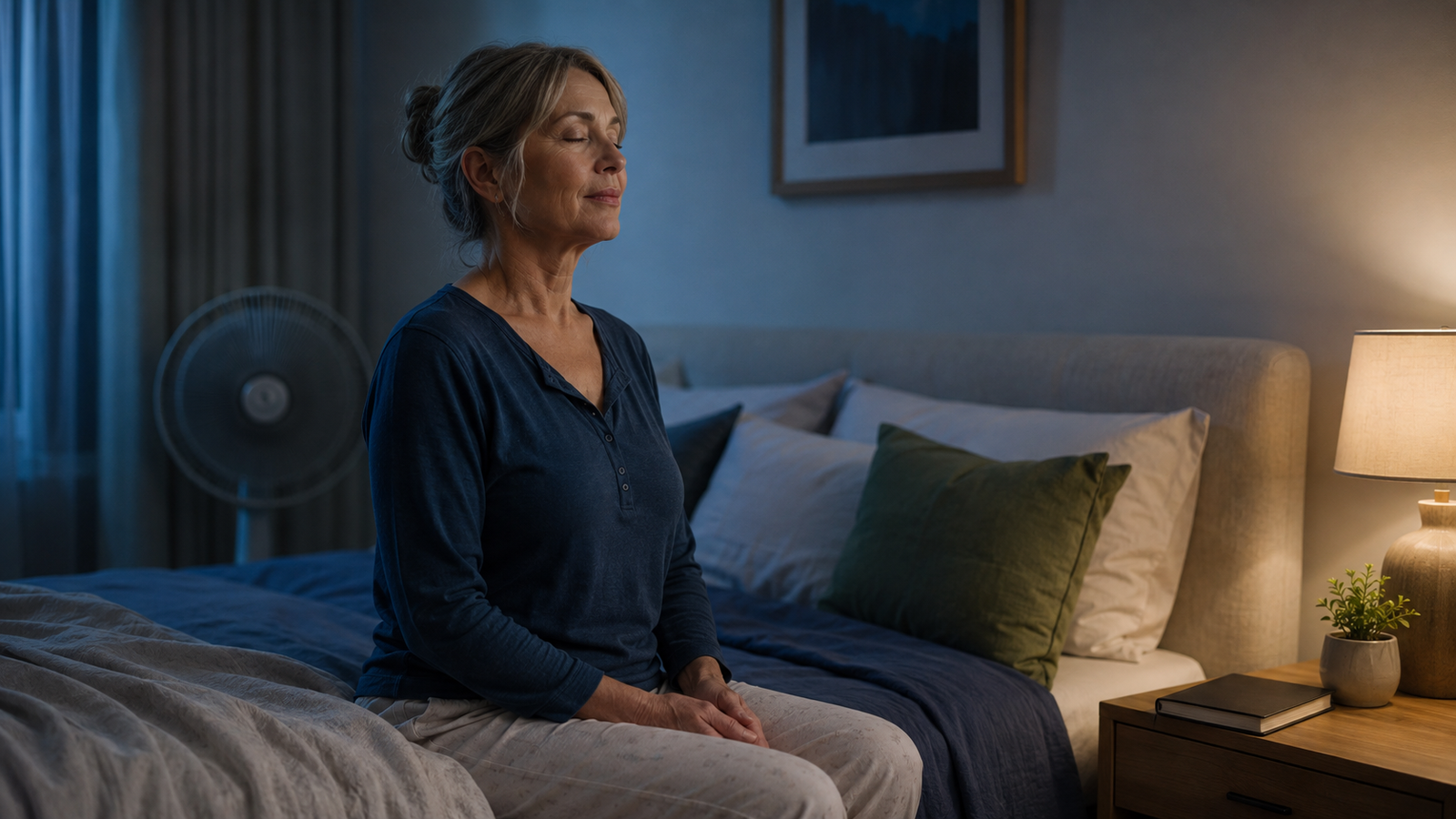
The best response to can menopause cause vivid dreams is not to suppress dreaming itself. REM sleep is a normal part of healthy sleep. Instead, focus on the hot flashes, awakenings, anxiety, medication effects, or sleep disorders making dreams unusually disruptive or memorable.
1. Reduce Hot Flashes and Night Sweats
If vivid dreams repeatedly end with sweating, heat, or palpitations, improving nighttime temperature control may reduce REM-sleep awakenings.
Try:
- Keeping the bedroom comfortably cool
- Using breathable cotton or linen bedding
- Wearing lightweight sleepwear
- Layering blankets that are easy to remove
- Keeping dry clothing beside the bed
- Using a quiet fan
- Avoiding very hot showers immediately before bed
- Identifying personal hot-flash triggers
Possible triggers include alcohol, caffeine, smoking, spicy food, stress, and an overheated bedroom. Triggers vary, so record symptoms rather than removing everything at once.
The NHS menopause self-care guidance recommends lightweight clothing, a cool bedroom, regular exercise, stress reduction, and limiting individual triggers to ease hot flashes and night sweats.
If temperature remains a problem, What Is the Best Temperature for Sleep? can help you adjust the bedroom without turning it into a walk-in refrigerator.
2. Discuss Persistent Menopause Symptoms With a Clinician
Lifestyle adjustments may not be enough when hot flashes, night sweats, anxiety, or insomnia occur frequently.
Treatment options may include:
- Menopause hormone therapy
- Cognitive behavioral therapy
- Nonhormonal prescription medication
- Treatment for anxiety or depression
- Cognitive behavioral therapy for insomnia
- Management of another medical condition
Hormone therapy can help selected women with hot flashes, night sweats, and related sleep disruption, but it is not suitable for everyone. Its benefits and risks depend on factors such as age, time since menopause, medical history, symptoms, and treatment type.
Nonhormonal options are also available. The NHS menopause treatment overview advises discussing individual symptoms and appropriate medicines with a healthcare professional.
Treatment should target the underlying menopause symptoms—not merely the fact that dreams are memorable.
3. Keep Sleep Timing Consistent
Changing sleep and wake times can increase sleep deprivation and REM rebound.
Aim to:
- Wake at approximately the same time every day.
- Avoid sleeping several hours later after a difficult night.
- Get morning daylight exposure.
- Exercise regularly but not intensely near bedtime.
- Begin winding down at a predictable time.
- Go to bed when sleepy rather than unusually early.
- Keep naps brief and earlier if they interfere with nighttime sleep.
Do not intentionally sleep less to prevent dreaming. Sleep restriction without professional guidance can intensify fatigue, anxiety, and subsequent REM rebound.
4. Create a Low-Stimulation Wind-Down Routine
A calm transition into sleep may reduce emotional arousal and make awakenings easier to manage.
During the final 30 to 60 minutes before bed:
- Dim bright lights
- Stop stressful work
- Avoid frightening or emotionally intense media
- Silence unnecessary notifications
- Prepare a cool sleeping environment
- Practice slow breathing
- Read something calming
- Write down unfinished tasks
- Avoid repeatedly checking the time
A routine cannot guarantee pleasant dreams, but it can reduce the stress surrounding sleep. How to Create a Relaxing Bedtime Routine provides a simple structure you can personalize.
5. Manage Anxiety Without Analyzing Every Dream
A vivid dream may feel meaningful because it creates a strong emotional response. However, repeatedly decoding every detail can increase anxiety and make bedtime feel threatening.
After waking:
- Identify the experience as a dream.
- Notice where you are.
- Feel the mattress supporting your body.
- Name several objects in the room.
- Slow your breathing without forcing it.
- Write a one-sentence note if needed.
- Avoid searching for alarming interpretations.
- Return to a quiet activity if you remain alert.
During the day, consider whether an unresolved stressor needs practical attention. The helpful question is often not “What secret message did the dream contain?” but “What is currently keeping my nervous system on high alert?”
Professional counseling may help when anxiety, grief, trauma, or depression contributes to recurring distressing dreams.
6. Use Imagery Rehearsal for Recurring Nightmares
Imagery rehearsal therapy may help with repeated nightmares.
A simplified version involves:
- Writing a brief description of the recurring nightmare.
- Changing the story so it becomes safer or less threatening.
- Creating a new ending.
- Rehearsing the revised version while awake.
- Practicing consistently without deliberately reliving overwhelming trauma alone.
For example, a dream about being trapped could be rewritten so that a door opens, help arrives, or the dreamer gains control of the situation.
The Mayo Clinic nightmare-disorder guidance describes imagery rehearsal therapy as changing a remembered nightmare’s ending and mentally practicing the new version.
People with trauma-related nightmares should consider working with a qualified mental health professional rather than forcing themselves through distressing memories without support.
7. Review Medication and Supplements Safely
If vivid dreams began shortly after starting, stopping, or changing a product, create a complete list of:
- Prescription medication
- Over-the-counter sleep aids
- Antihistamines
- Antidepressants
- Hormone therapy
- Melatonin
- Herbal menopause products
- Nicotine-replacement products
- Cannabis products
- Alcohol use
- Recent dose or timing changes
Record when the dream change began and bring the information to a doctor or pharmacist.
Do not abruptly stop antidepressants, sedatives, hormone treatment, or other prescribed medication. Withdrawal or returning symptoms may disrupt sleep more severely.
Moving a dose to another time may sometimes help, but make that change only after confirming it is safe with the prescriber or pharmacist.
8. Be Careful With “Natural” Sleep Remedies
Products advertised for menopause dreams may contain:
- Melatonin
- Valerian
- Black cohosh
- St. John’s wort
- Magnesium
- CBD or cannabis compounds
- Multiple sedating herbs
“Natural” does not mean interaction-free. Some products can intensify dreams, increase sedation, affect other medicines, or contain inconsistent doses.
Avoid combining several sleep products in an attempt to knock out REM sleep. That strategy can produce side effects without addressing hot flashes, anxiety, insomnia, or sleep apnea.
9. Limit Alcohol Near Bedtime
Alcohol can initially make you sleepy while causing fragmented sleep later.
Possible effects include:
- More nighttime awakenings
- Sweating
- Palpitations
- Increased snoring
- Worse sleep apnea
- Early-morning anxiety
- REM rebound
- More memorable dreams
Try reducing the amount, moving it earlier, or avoiding it for two weeks while tracking dreams and awakenings.
People who drink heavily or regularly should seek medical guidance before stopping suddenly because alcohol withdrawal can be dangerous.
10. Treat Chronic Insomnia Directly
When insomnia has continued for months, generic sleep tips may not be enough.
Cognitive behavioral therapy for insomnia may address:
- Anxiety about sleep
- Excessive time awake in bed
- Irregular sleep timing
- Unhelpful beliefs about sleep
- Repeated clock-checking
- Behaviors that maintain insomnia
Improving sleep continuity may reduce opportunities to wake directly from vivid dreams.
Sleeping pills are not the only option, and taking sedating medication without addressing chronic insomnia can sometimes create additional problems.
11. Investigate Snoring and Dream Enactment
Vivid dreams deserve separate medical assessment when accompanied by:
- Loud habitual snoring
- Witnessed breathing pauses
- Gasping or choking
- Severe daytime sleepiness
- Morning headaches
- Punching or kicking during sleep
- Falling from bed
- Injuring a sleep partner
- Confusion after waking
- Hallucinations while fully awake
Treating menopause symptoms alone will not correct obstructive sleep apnea or REM sleep behavior disorder.
Until dream enactment is assessed, reduce injury risk by moving sharp objects, clearing the floor, and padding dangerous furniture near the bed.
A Two-Week Action Plan
Use this simple plan before deciding whether the dreams are improving:
Days 1–3
- Record dream intensity and awakening times.
- Note hot flashes, sweating, and medication timing.
- Keep the wake time consistent.
- Cool the bedroom.
Days 4–7
- Move caffeine earlier.
- Reduce or avoid evening alcohol.
- Establish a short wind-down routine.
- Avoid disturbing media before bed.
Days 8–14
- Continue the sleep diary.
- Review whether dreams follow night sweats or stressful days.
- Note snoring, gasping, leg discomfort, or unusual movement.
- Arrange medical advice if symptoms remain disruptive.
Seek help sooner if dreams involve injury, severe breathing symptoms, suicidal thoughts, waking hallucinations, or sudden neurological changes.
What Not to Do
Avoid:
- Restricting sleep to prevent dreams
- Taking several sedating products together
- Abruptly stopping prescribed medication
- Assuming every dream has a literal meaning
- Blaming all sleep changes on menopause
- Ignoring loud snoring or breathing pauses
- Dismissing punching or kicking as normal dreaming
- Beginning hormone treatment without medical guidance
- Using alcohol as a sleep aid
How Long Does It Take for Vivid Dreams to Improve?
The timeline depends on the cause.
Dreams associated with temporary stress or an irregular schedule may settle within days or weeks. Medication-related changes may improve after a professionally supervised adjustment. Night sweats may require menopause-specific treatment, while persistent nightmares or sleep disorders may need targeted therapy.
The goal is not necessarily to remember no dreams. Improvement may instead mean:
- Fewer distressing awakenings
- Less fear after dreaming
- Faster return to sleep
- Reduced night sweating
- More stable energy during the day
- No dangerous dream-enactment behavior
When asking can menopause cause vivid dreams, focus on the entire nighttime pattern. Dreams often become less disruptive when temperature symptoms, anxiety, sleep timing, medication effects, and underlying sleep disorders are addressed appropriately.
In Part 4, we’ll finish with the FAQs, final thoughts, internal and external resources, category, tags, and complete Rank Math SEO information.
Frequently Asked Questions
Can menopause cause vivid dreams?
Menopause may indirectly make vivid dreams more noticeable by increasing hot flashes, night sweats, anxiety, insomnia, and awakenings during REM sleep. However, vivid dreams are not considered a defining menopause symptom.
Why am I suddenly remembering my dreams?
Dream recall often increases when you wake during or immediately after REM sleep. Menopause-related night sweats, stress, medication changes, or insomnia may create more opportunities to remember dreams.
Can low estrogen cause strange dreams?
There is not enough evidence to conclude that low estrogen directly causes strange dreams. Hormonal fluctuations may affect sleep stability, but stress, medication, alcohol, illness, and interrupted sleep can also influence dreaming.
Are vivid dreams a sign of poor sleep?
Not necessarily. Occasional vivid dreams can occur during normal sleep. They are more suggestive of disrupted sleep when accompanied by repeated awakenings, night sweats, severe fatigue, loud snoring, gasping, or persistent insomnia.
Can menopause hormone therapy stop vivid dreams?
Hormone therapy is not a specific treatment for vivid dreams. It may reduce hot flashes, night sweats, and related sleep disruption in suitable women, potentially reducing dream-related awakenings. Individual benefits and risks require medical evaluation.
Does melatonin cause vivid dreams?
Some people report more intense or memorable dreams while taking melatonin, although reactions differ. Discuss persistent side effects, dosage, and medication interactions with a doctor or pharmacist.
How can I stop disturbing dreams during menopause?
Focus on possible triggers:
- Keep a consistent sleep schedule.
- Cool the bedroom.
- Manage hot flashes appropriately.
- Limit evening alcohol.
- Move caffeine earlier.
- Reduce stimulating media before bed.
- Review medication and supplements.
- Address persistent anxiety or trauma.
- Seek help for snoring or dream enactment.
Recurring nightmares may benefit from professional treatment such as imagery rehearsal therapy.
When should vivid dreams be medically assessed?
Seek professional advice if dreams repeatedly disrupt sleep, cause intense daytime distress, begin after a medication change, or occur with breathing pauses, severe sleepiness, waking hallucinations, or physical dream enactment.
Punching, kicking, falling from bed, or injuring a sleep partner should not be dismissed as an ordinary menopause symptom.
Final Thoughts
Can menopause cause vivid dreams? Menopause may contribute indirectly, but changing hormones are rarely the entire explanation.
Hot flashes, night sweats, anxiety, insomnia, medication effects, REM rebound, and underlying sleep disorders can all make dreams feel unusually realistic or easier to remember. The most helpful approach is to examine the complete nighttime pattern rather than attempting to suppress normal REM sleep.
Start by tracking dream intensity, awakening times, temperature symptoms, medication changes, alcohol, and stress for approximately two weeks. Improving sleep consistency and treating the factor responsible for repeated awakenings may make dreams less disruptive.
Arrange an assessment when dreams cause injury, severe distress, fear of sleeping, persistent daytime impairment, or occur with snoring, gasping, confusion, or dream enactment. Your dreams may be dramatic, but they should not be allowed to direct the entire nighttime production.
Medical disclaimer: This article provides general educational information and does not replace professional diagnosis or individualized medical care. Consult a qualified healthcare professional before changing medication, supplements, melatonin, or menopause treatment.
Internal Links
- Why Do I Wake Up at Night?
- Does Perimenopause Cause Insomnia?
- Why Can’t I Sleep During Menopause?
- How to Calm Anxiety at Night
- How to Fix Your Sleep Schedule
- Can Menopause Cause Sleep Apnea?
- How to Fall Back Asleep After Waking Up
- What Is the Best Temperature for Sleep?
- How to Create a Relaxing Bedtime Routine
External Resources
- NICHD – What Happens During Sleep?
- NHS – Menopause and Perimenopause Symptoms
- National Institute on Aging – Sleep Problems and Menopause
- Mayo Clinic – Nightmare Disorder Treatment