How Does Stress Affect Sleep? Causes and Solutions
Stress can keep your mind racing long after the day is over. You may feel exhausted, climb into bed hoping to fall asleep quickly, and then suddenly remember every unfinished task, awkward conversation, and possible problem in your life.
So, how does stress affect sleep?
Stress activates the body’s alert system. It can increase mental activity, muscle tension, heart rate, and stress hormones, making it harder to relax and transition into sleep. It may also cause lighter sleep, frequent awakenings, vivid dreams, and early-morning waking.
Poor sleep can then make it more difficult to manage stress the following day, creating a frustrating cycle. This guide explains why stress affects sleep and what you can do to calm your mind and body at night.
The Short Answer
Stress can interfere with both the amount and quality of sleep you receive.
When you feel threatened, pressured, or overwhelmed, your nervous system prepares the body to respond. This reaction is useful during an actual emergency, but less helpful when you are safely lying in bed at midnight thinking about tomorrow’s schedule.
Stress may cause:
- Difficulty falling asleep
- Racing thoughts at bedtime
- Frequent nighttime awakenings
- Early-morning waking
- Light or restless sleep
- Vivid or unpleasant dreams
- Muscle tension
- Teeth grinding
- A fast heartbeat
- Night sweats
- Daytime fatigue
- Irritability and poor concentration
The National Heart, Lung, and Blood Institute identifies stress and worries about work, school, relationships, money, or major life events as factors that can increase the risk of insomnia.
Occasional sleep disruption during a stressful period is common. However, when the pattern continues, the bed itself may become associated with worry and frustration.
Why Does Stress Make It Hard to Sleep?
Sleep requires the body to gradually reduce alertness. Stress pushes the body in the opposite direction.
When the brain detects a challenge, the sympathetic nervous system becomes more active. This is often called the “fight-or-flight” response.
The stress response may:
- Increase heart rate
- Make breathing faster or shallower
- Tighten muscles
- Increase alertness
- Raise blood pressure temporarily
- Release stress hormones
- Heighten sensitivity to sounds
- Keep attention focused on possible problems
These changes help you respond to danger. Unfortunately, the body does not always distinguish between a physical threat and an unanswered email marked “urgent.”
Even after the stressful situation has ended, your mind may continue reviewing what happened or anticipating what could happen next. This state of physical and mental hyperarousal can delay sleep.
What Is the Connection Between Cortisol and Sleep?
Cortisol is a hormone involved in the body’s stress response, metabolism, immune activity, and daily sleep-wake rhythm.
Cortisol levels normally follow a daily pattern:
- They are generally higher around the time you wake up
- They gradually decline throughout the day
- They are usually lower during the early part of the night
- They begin rising again toward morning
Stress may interfere with this pattern by increasing cortisol and alertness at a time when the body should be settling down.
Elevated nighttime arousal does not mean cortisol is the only reason you cannot sleep. Thoughts, habits, emotions, environmental factors, medical conditions, caffeine, alcohol, and irregular schedules may also contribute.
However, stress-related activation can make you feel tired and wired at the same time—physically exhausted but mentally unable to switch off.
Can Stress Cause Insomnia?
Yes. Stress is a common trigger for short-term insomnia.
Short-term insomnia may appear during:
- Work pressure
- Financial problems
- Relationship conflict
- Grief
- Illness
- Caregiving responsibilities
- Moving
- Travel
- Major life changes
- Exams or important deadlines
- Fear about not getting enough sleep
According to the NHLBI, short-term insomnia may last for several days or weeks and can be caused by stress or changes in schedule or environment.
The original stressor may eventually improve, but unhelpful sleep habits can keep the problem going. For example, you may begin spending more time in bed, taking long naps, repeatedly checking the clock, or trying too hard to force yourself to sleep.
These behaviors are understandable, but they may weaken your natural sleep drive or increase bedtime anxiety.
The Stress and Sleep Cycle
Stress and poor sleep can reinforce each other.
The cycle often develops like this:
- A stressful event makes it difficult to sleep.
- Poor sleep causes fatigue and reduced concentration.
- Everyday responsibilities feel harder to manage.
- Emotional reactions become stronger.
- Stress increases during the day.
- You begin worrying about sleep before bedtime.
- That worry makes falling asleep even harder.
After several difficult nights, you may start calculating how many hours remain before morning. Unfortunately, clock-watching usually turns bedtime into a countdown instead of a period of rest.
The goal is not to force sleep. It is to reduce the physical and mental conditions that keep the brain alert.
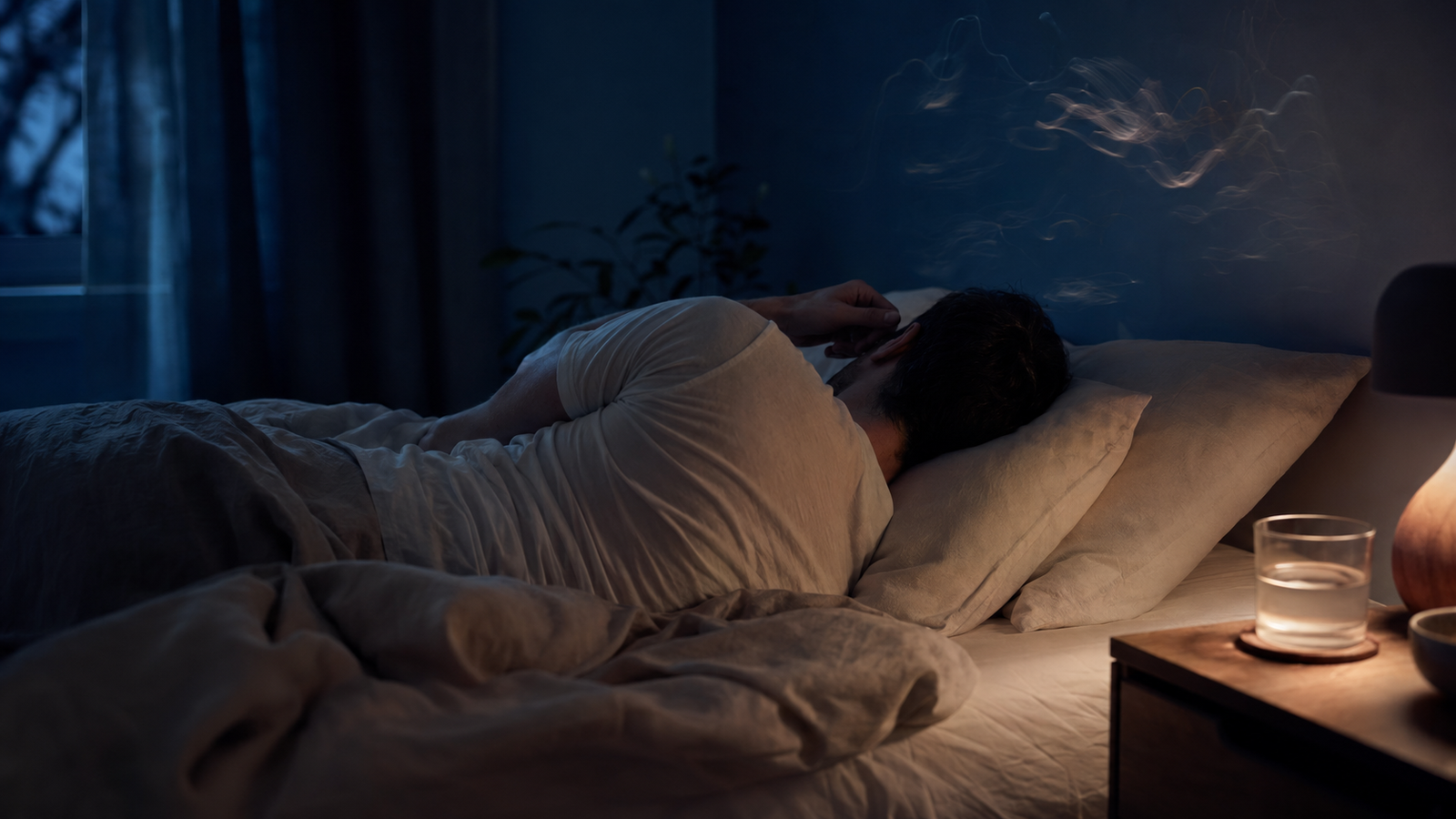
Why Does Your Mind Race at Bedtime?
During the day, work, conversations, errands, and digital distractions may prevent you from fully processing your thoughts.
When the environment becomes quiet at night, unfinished concerns can suddenly demand attention.
Racing thoughts may involve:
- Replaying past conversations
- Planning tomorrow’s tasks
- Imagining worst-case scenarios
- Worrying about family or money
- Reviewing mistakes
- Trying to solve several problems at once
- Monitoring whether you are becoming sleepy
- Calculating how tired you will feel tomorrow
Trying to suppress these thoughts often makes them feel more persistent. Telling yourself, “I absolutely must stop thinking right now,” gives the brain one more stressful assignment.
A more helpful approach is to acknowledge the thought, record anything important, and gently return attention to a neutral or calming activity.
Can Stress Make You Wake Up During the Night?
Stress may cause both difficulty falling asleep and difficulty staying asleep.
You may initially fall asleep because you are exhausted, but increased arousal can make sleep lighter and more easily interrupted.
Possible triggers include:
- Small noises
- Temperature changes
- Vivid dreams
- Muscle discomfort
- A full bladder
- A partner moving
- Changes between sleep cycles
- An increase in early-morning alertness
Brief awakenings naturally occur during the night. When you are calm, you may not remember them. When you are stressed, the brain may quickly return to worrying, making it difficult to fall back asleep.
The awakening itself is not always the main problem. The mental reaction that follows—such as checking the time and predicting a terrible day—can prolong it.
Why Does Stress Cause Early-Morning Waking?
Some people under stress wake one or two hours earlier than planned and cannot return to sleep.
Early-morning waking may occur because:
- Sleep becomes lighter toward morning
- Cortisol naturally begins rising
- The brain anticipates the coming day
- Anxiety returns as soon as you become conscious
- Depression or another health condition is affecting sleep
- Alcohol, medication, pain, or menopause symptoms are contributing
A single early awakening is not necessarily concerning. However, frequent early waking accompanied by persistent low mood, loss of interest, anxiety, or daytime impairment deserves professional attention.
Does Stress Affect Deep Sleep?
Stress may reduce the restorative quality of sleep by increasing arousal and fragmentation.
Deep sleep is most concentrated during the first part of the night. It supports physical restoration, immune function, and other recovery processes.
Learn more about deep sleep and its role in physical and mental recovery
Stress does not affect everyone’s sleep stages in exactly the same way. The effects can depend on the type and duration of stress, personal sleep reactivity, existing insomnia, age, health, and daily habits.
Even if your total sleep time appears normal, repeated brief awakenings may leave you feeling unrefreshed.
Signs that your sleep may not be restorative include:
- Difficulty waking up
- Morning headaches
- Heavy eyelids
- Mental fog
- Low motivation
- Muscle soreness
- Irritability
- Needing excessive caffeine
- Feeling sleepy during quiet activities
Consumer sleep trackers may estimate deep sleep, but they cannot measure sleep stages as accurately as a clinical sleep study.
Does Stress Affect REM Sleep and Dreams?
Stress may influence REM sleep and dream content.
REM sleep is associated with vivid dreaming, memory processing, learning, and emotional regulation. Stressful experiences may appear in dreams directly or symbolically.
You may notice:
- More vivid dreams
- Repeated dreams about work or deadlines
- Nightmares
- Dreams involving conflict or failure
- Waking with a racing heart
- Remembering more dreams than usual
- Feeling emotionally unsettled in the morning
Remembering a dream does not necessarily mean you dreamed more. It may mean stress caused you to wake during or shortly after REM sleep, making the dream easier to recall.
Persistent nightmares, especially after trauma, should be discussed with a qualified mental health or sleep professional.
Understanding REM sleep, dreams, and memory can help explain why stressful dreams may feel so vivid.
Can Chronic Stress Cause Long-Term Sleep Problems?
Yes. When stress continues for weeks or months, occasional sleep disruption may develop into a persistent pattern.
Chronic stress can keep the body in a state of heightened alertness. Over time, you may begin to expect another difficult night before even getting into bed.
Long-term sleep problems may be maintained by:
- Going to bed too early to “catch up”
- Spending excessive time awake in bed
- Taking long or late naps
- Sleeping much later on weekends
- Checking the clock repeatedly
- Using alcohol to relax
- Increasing caffeine to fight daytime fatigue
- Using phones or television to distract from worry
- Canceling daytime activities because of tiredness
- Believing that one poor night will ruin the next day
These reactions are understandable, but they can weaken sleep drive and strengthen the association between bed and wakefulness.
The longer the cycle continues, the less sleep may depend on the original stressful event. Bedtime itself can become a source of stress.
Physical Signs of Stress at Bedtime
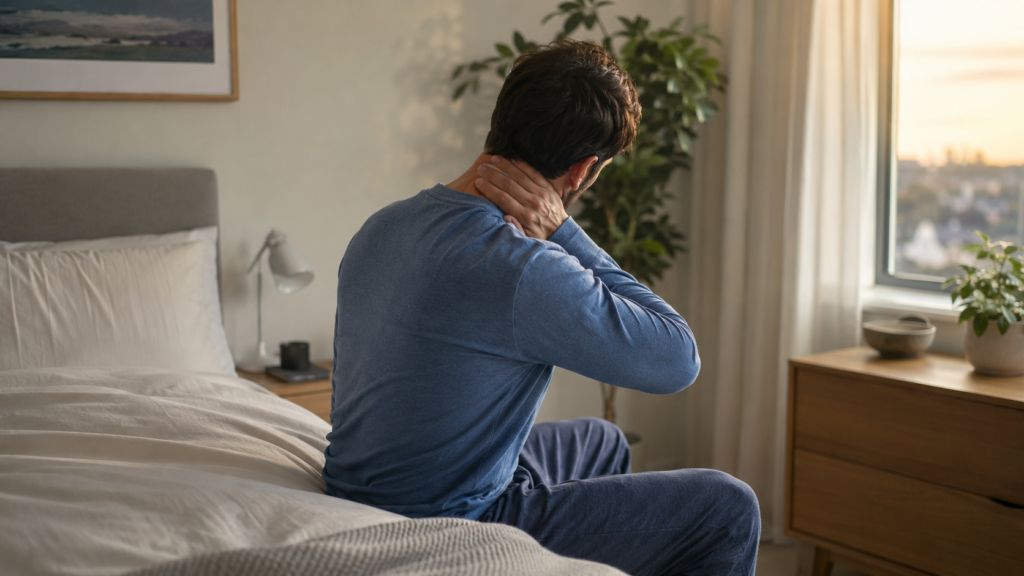
Stress does not affect only your thoughts. It can create physical sensations that make settling down difficult.
Common bedtime symptoms include:
- Tight shoulders
- Jaw clenching
- Teeth grinding
- Headaches
- Rapid heartbeat
- Shallow breathing
- Chest tightness
- Stomach discomfort
- Restless legs
- Sweating
- Trembling
- Feeling unusually hot or cold
Some of these symptoms may also have medical causes. New, severe, or persistent chest pain, breathing difficulty, fainting, or an irregular heartbeat requires prompt medical evaluation.
Can Stress Cause Teeth Grinding During Sleep?
Stress and anxiety may contribute to sleep bruxism, which involves clenching or grinding the teeth during sleep.
Possible signs include:
- Jaw pain in the morning
- Morning headaches
- Tooth sensitivity
- Worn or damaged teeth
- Facial muscle soreness
- Clicking or discomfort in the jaw
- A partner hearing grinding sounds
Reducing stress may help, but persistent symptoms should be evaluated by a dentist or healthcare professional. A professionally fitted mouthguard may protect the teeth, although it does not necessarily address the underlying cause.
Can Stress Cause Night Sweats?
Stress and anxiety can activate the nervous system and cause sweating, including during the night.
Stress-related night sweats may be more likely when:
- You experience vivid dreams or nightmares
- Your heart rate increases during an awakening
- The bedroom is too warm
- Heavy bedding traps heat
- Alcohol or spicy food is consumed in the evening
- Menopause symptoms are present
- Certain medications affect temperature regulation
Keep the bedroom comfortably cool and choose breathable bedding. However, frequent drenching night sweats should be discussed with a healthcare professional because infections, hormonal changes, medications, and other medical conditions may also cause them.
How Poor Sleep Makes Stress Worse
The relationship between stress and sleep works in both directions.
After insufficient or fragmented sleep, you may have more difficulty regulating emotions and responding calmly to everyday challenges.
Poor sleep may contribute to:
- Irritability
- Reduced patience
- Stronger emotional reactions
- Difficulty concentrating
- Forgetfulness
- Negative thinking
- Increased worry
- Reduced motivation
- Lower tolerance for uncertainty
- More conflict with other people
Tasks that normally feel manageable may seem overwhelming. You may also become more likely to interpret neutral events negatively or focus on potential problems.
This does not mean you are failing to cope. A sleep-deprived brain simply has fewer resources available for flexible thinking and emotional regulation.
How to Calm a Racing Mind Before Bed
The goal is not to remove every thought. The goal is to stop treating every thought as an urgent problem that must be solved in bed.
Schedule a Worry Period
Set aside 15 to 20 minutes in the early evening to think deliberately about your concerns.
During this time:
- Write down each concern.
- Decide whether you can take action.
- Record one realistic next step.
- Schedule that step for a specific time.
- Accept that some concerns cannot be solved tonight.
If the thought returns at bedtime, remind yourself that it has already been recorded and can be reviewed during the next scheduled worry period.
Create a Tomorrow List
Write down the most important tasks for the following day.
Keep the list short and realistic. A list of three priorities is usually more calming than a heroic list of twenty-seven tasks waiting to judge you from the bedside table.
Include:
- The first task you will begin
- Any important appointment
- Items you need to bring
- One task that can wait
This helps reduce the fear that you will forget something important overnight.
Use a Brain Dump
A brain dump is an unstructured list of thoughts, reminders, and worries.
Write continuously for five minutes without trying to organize or solve everything. When finished, close the notebook and treat the exercise as a temporary storage system for your thoughts.
Use paper if a phone is likely to lead to messages, news, or social media.
Practice Cognitive Shuffling
Cognitive shuffling involves imagining unrelated neutral objects one at a time.
For example, slowly picture:
- An apple
- A bridge
- A candle
- A dog
- An envelope
Spend several seconds imagining each object before moving to another unrelated image. The exercise may interrupt repetitive problem-solving without requiring you to force the mind completely blank.
Avoid emotionally meaningful images or anything connected to work.
Breathing Exercises for Stress and Sleep
Slow breathing may help reduce physical arousal before bed.
Try this simple pattern:
- Inhale gently through your nose for four seconds.
- Exhale slowly for six seconds.
- Keep your shoulders relaxed.
- Continue for three to five minutes.
The breath should feel comfortable. Do not take excessively deep breaths or hold your breath if doing so causes dizziness or discomfort.
A longer, relaxed exhalation may help shift attention away from racing thoughts and signal that the immediate environment is safe.
Breathing exercises are not a test. If counting creates more pressure, simply breathe slowly and comfortably.
Progressive Muscle Relaxation
Progressive muscle relaxation can help you notice and release physical tension.
Beginning with your feet and moving upward:
- Gently tense one muscle group for about five seconds.
- Release the tension slowly.
- Notice the difference between tension and relaxation.
- Move to the next muscle group.
You can progress through:
- Feet
- Calves
- Thighs
- Abdomen
- Hands
- Arms
- Shoulders
- Jaw
- Forehead
Use only mild tension. Skip any painful or injured area, and avoid forcefully clenching the jaw.
Grounding Techniques for Nighttime Anxiety
Grounding directs attention away from imagined future problems and back toward the present environment.
Try identifying:
- Five things you can see
- Four things you can feel
- Three things you can hear
- Two things you can smell
- One thing you can taste
In a dark bedroom, simplify the exercise by noticing the support of the mattress, the temperature of the air, nearby sounds, and the rhythm of your breathing.
The purpose is not to guarantee immediate sleep. It is to reduce escalation and help the nervous system settle.
Should You Meditate Before Bed?
Meditation may help some people reduce stress and relate differently to racing thoughts.
A short bedtime practice may involve:
- Following the breath
- Scanning the body
- Noticing sounds
- Repeating a calming phrase
- Observing thoughts without responding to them
- Listening to a quiet guided meditation
Start with five minutes. A long or highly demanding session can feel like another task when you are already stressed.
If meditation increases anxiety or brings up distressing memories, stop and choose another calming method. People with trauma-related symptoms may benefit from guidance from a qualified mental health professional.
Journaling Before Bed
Journaling may help organize thoughts, but the timing and style matter.
Helpful approaches include:
- Listing tomorrow’s priorities
- Writing down unresolved concerns
- Recording one action you can take
- Noting three things that went reasonably well
- Writing a brief reflection on the day
Avoid turning bedtime journaling into an hour-long analysis of every painful event. If writing makes you more alert or emotional, move the activity to earlier in the evening.
How Exercise Helps With Stress and Sleep
Regular physical activity can support stress management and sleep quality.
Exercise may help by:
- Reducing muscle tension
- Improving mood
- Providing a break from repetitive thoughts
- Supporting healthy sleep pressure
- Strengthening the daily sleep-wake rhythm
- Increasing confidence and energy
Walking, cycling, swimming, resistance training, yoga, and other enjoyable activities can all be useful.
Intense exercise close to bedtime may keep some people alert, while others sleep well afterward. Pay attention to your individual response and finish vigorous workouts earlier if they delay sleep.
Gentle stretching or slow yoga is usually a better choice immediately before bed.
Why Caffeine Can Intensify Stress-Related Insomnia
When stress causes fatigue, it is tempting to rely on more caffeine. Unfortunately, caffeine can increase alertness and may intensify symptoms such as nervousness, restlessness, or a racing heartbeat.
Caffeine may also remain active for many hours.
Common sources include:
- Coffee
- Espresso
- Energy drinks
- Black tea
- Green tea
- Cola
- Chocolate
- Pre-workout supplements
- Some headache medicines
If you are struggling with stress-related sleep problems, consider limiting caffeine after late morning or early afternoon. People who are particularly sensitive may need an earlier cutoff.
Reduce a high daily intake gradually to minimize withdrawal headaches and fatigue.
Alcohol, Stress, and Sleep
Alcohol may feel calming at first, but it can make sleep lighter and more fragmented later in the night.
It may also:
- Suppress REM sleep
- Increase snoring
- Worsen sleep apnea
- Cause dehydration
- Increase bathroom visits
- Trigger early-morning waking
- Intensify anxiety as its effects wear off
Using alcohol regularly to manage stress can create dependence and worsen the original sleep problem.
If you frequently need alcohol to relax or sleep, speak with a healthcare professional. People who drink heavily should not suddenly stop without medical guidance because withdrawal can be dangerous.
Learn more about how alcohol affects sleep quality and nighttime awakenings
What to Do When You Cannot Sleep Because of Stress
If you remain awake and frustrated, do not keep fighting with the bed.
A practical approach is to:
- Stop checking the time.
- Leave the bed when you feel fully awake or increasingly frustrated.
- Keep the lighting low.
- Do something quiet and unstimulating.
- Avoid work, news, social media, and bright screens.
- Return to bed when sleepiness returns.
Suitable activities might include reading a calm printed book, listening to quiet audio, breathing slowly, or sitting comfortably in dim light.
This strategy helps preserve the connection between bed and sleep rather than teaching the brain that bed is a place for prolonged worry.
A Bedtime Routine for Stress-Related Sleep Problems
A predictable routine can help create distance between daytime stress and sleep.
Begin about 30 to 60 minutes before bed. A simple routine might include:
- Finish work and difficult conversations.
- Write down tomorrow’s main tasks.
- Dim the lights.
- Put away stimulating screens.
- Take a warm shower.
- Practice slow breathing or gentle stretching.
- Read something calming.
- Go to bed when you feel sleepy.
The routine does not need to be elaborate. Consistency matters more than buying special products or creating a flawless evening schedule.
If you miss part of the routine, continue with the next step. Bedtime should not become another performance review.
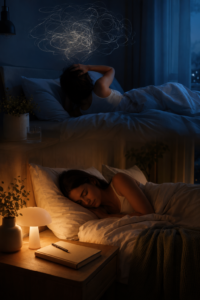
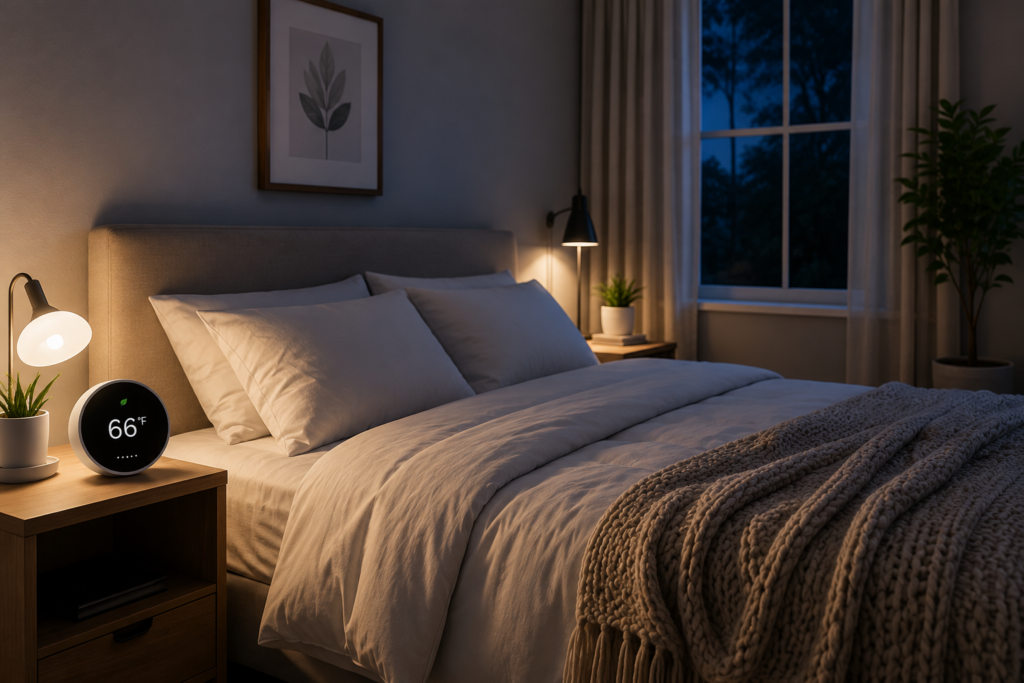
How to Make Your Bedroom Feel Safer and Calmer
A stressful mind can become more sensitive to noise, light, temperature, and physical discomfort.
Consider adjusting:
- Temperature: Keep the room comfortably cool.
- Lighting: Use warm, dim light during the final hour before bed.
- Noise: Reduce unpredictable sounds or use steady background noise.
- Bedding: Choose breathable, comfortable materials.
- Clutter: Keep the area around the bed reasonably clear.
- Clock placement: Turn the clock away if you repeatedly check the time.
- Phone location: Charge your phone away from the bed if possible.
- Work materials: Keep laptops, bills, and paperwork outside the sleeping area.
You do not need a magazine-perfect bedroom. The goal is to remove reminders of urgency and make the room easier to associate with rest.
Should You Go to Bed Earlier After a Stressful Day?
Going to bed much earlier than usual may seem like a good way to recover, but it can backfire if you are not sleepy.
Spending extra time awake in bed may:
- Increase worrying
- Encourage clock-watching
- Create frustration
- Weaken the connection between bed and sleep
- Reduce sleep efficiency
Maintain your usual bedtime when possible and go to bed when genuine sleepiness appears.
If you had a poor night, avoid moving bedtime several hours earlier. A modest adjustment may be reasonable, but protecting a stable wake time is often more helpful for maintaining your sleep-wake rhythm.
Should You Take a Nap After a Stressful Night?
A short nap may improve alertness after a difficult night, but long or late naps can reduce the sleep pressure needed at bedtime.
If you need a nap:
- Keep it around 10 to 30 minutes
- Take it earlier in the afternoon
- Set an alarm
- Avoid napping in the evening
- Skip it if naps regularly make nighttime sleep worse
When safety is involved, rest takes priority. Do not drive or perform hazardous work if you are struggling to remain awake.
How to Manage Stress During the Day for Better Sleep
Bedtime techniques are helpful, but stress management should not begin only after you turn off the lights.
Take Short Recovery Breaks
Brief pauses during the day can prevent stress from accumulating until bedtime.
A recovery break might involve:
- Walking for five minutes
- Stretching your shoulders
- Looking away from a screen
- Breathing slowly
- Drinking water
- Sitting outdoors
- Completing one task without multitasking
The break does not need to be long. Regularly giving the nervous system a chance to settle may be more useful than expecting one relaxation exercise to undo an entire stressful day.
Set Boundaries Around Work
If possible, establish a clear time when work ends.
Helpful boundaries may include:
- Turning off work notifications
- Avoiding email in bed
- Writing down unfinished tasks
- Communicating realistic response times
- Keeping work equipment outside the bedroom
- Scheduling demanding tasks earlier in the day
Some jobs make complete separation difficult. Even a small closing ritual—such as shutting down the computer and writing tomorrow’s first task—can signal that the workday has ended.
Stay Connected With Other People
Stress often becomes more intense when it is carried alone.
Talking with a trusted friend, family member, counselor, or support group may help you:
- Organize your thoughts
- Gain perspective
- Feel less isolated
- Identify practical solutions
- Recognize when professional help is needed
Choose someone who can listen without turning the conversation into a competition for who has the most stressful life.
Spend Time Outdoors
Daylight exposure, particularly in the morning, can support the body’s circadian rhythm and improve daytime alertness.
A short morning walk may provide several benefits at once:
- Natural light
- Gentle physical activity
- A change of environment
- Reduced screen exposure
- Time to process thoughts
Try to receive outdoor light soon after waking when practical. Morning light does not remove the source of stress, but it can help strengthen the timing of sleep and wakefulness.
How Long Does Stress-Related Insomnia Last?
The duration varies depending on the stressor, individual sleep sensitivity, coping strategies, health conditions, and sleep habits.
Sleep may improve when:
- The stressful event resolves
- Your schedule becomes more predictable
- You reduce caffeine or alcohol
- You stop spending excessive time awake in bed
- You address anxiety or depression
- You receive effective insomnia treatment
A few disrupted nights during a difficult period are common. However, seek professional guidance when sleep difficulty happens frequently, continues for weeks or months, or significantly affects daytime functioning.
Can Supplements Fix Stress-Related Sleep Problems?
Supplements should not be treated as the primary solution to chronic stress or insomnia.
Products marketed for relaxation may include:
- Melatonin
- Magnesium
- Valerian root
- Chamomile
- Lemon balm
- Lavender
- L-theanine
Evidence, product quality, appropriate dosage, and side effects vary. Supplements can also interact with prescription medicines, alcohol, and health conditions.
Melatonin mainly influences sleep timing and may not address racing thoughts or chronic stress. Taking more does not necessarily produce better sleep and may increase next-day drowsiness, headaches, or vivid dreams.
Speak with a healthcare professional or pharmacist before using a sleep supplement, especially if you are pregnant, have a medical condition, or take other medications.
When to Seek Professional Help
Consider speaking with a healthcare or mental health professional if:
- Sleep problems continue for several weeks
- You struggle to function at work or home
- Anxiety feels difficult to control
- You experience persistent low mood
- You have panic attacks
- Nightmares repeatedly disturb sleep
- You rely on alcohol or medication to sleep
- You frequently fall asleep while driving
- Loud snoring or breathing pauses occur
- Pain, reflux, hot flashes, or restless legs disrupt sleep
- Stress is affecting your relationships or responsibilities
Seek urgent assistance if you are experiencing thoughts of self-harm, feel unable to stay safe, have severe chest pain, or have serious breathing difficulty.
Sleep problems may be related to stress, but they can also occur with medical conditions, medication effects, sleep apnea, restless legs syndrome, depression, anxiety disorders, or hormonal changes.
How CBT-I Helps With Stress and Insomnia
Cognitive behavioral therapy for insomnia, commonly called CBT-I, is a structured treatment for persistent insomnia.
It may include:
- Adjusting time spent in bed
- Strengthening the association between bed and sleep
- Maintaining a consistent wake time
- Addressing unrealistic fears about sleep
- Reducing clock-watching
- Developing more helpful responses to nighttime wakefulness
- Using relaxation techniques appropriately
CBT-I does not simply tell you to relax or practice better “sleep hygiene.” It addresses the thoughts and behaviors that maintain insomnia after the original stressor has changed.
A qualified healthcare professional can determine whether CBT-I, mental health treatment, medical evaluation, or a combination is most appropriate.
Final Thoughts
So, how does stress affect sleep? Stress activates the brain and body at the very time they need to reduce alertness. It can cause racing thoughts, muscle tension, delayed sleep, frequent awakenings, vivid dreams, and early-morning waking.
Poor sleep can then intensify worry, irritability, and emotional reactions the following day, reinforcing the stress-and-sleep cycle.
You do not need to eliminate every source of stress before sleep can improve. Begin with practical steps: write down unfinished concerns, maintain a consistent wake time, reduce evening stimulation, leave the bed when prolonged wakefulness becomes frustrating, and practice a calming routine.
If the pattern persists or significantly affects daily life, professional support can help identify the cause and provide effective treatment.
Frequently Asked Questions
Can stress cause insomnia?
Yes. Stress is a common cause of short-term insomnia and may contribute to persistent insomnia when bedtime becomes associated with worry, frustration, and wakefulness.
Why am I tired but unable to sleep?
Stress can leave you physically exhausted while keeping your nervous system and thoughts highly active. This “tired but wired” feeling can delay sleep despite fatigue.
Can stress make you wake up at 3 a.m.?
Yes. Stress may make sleep lighter and cause the mind to become alert during a normal nighttime awakening. Worrying, checking the time, or anticipating the next day can make returning to sleep harder.
Does stress increase cortisol at night?
Stress may increase physiological arousal and interfere with the normal daily rhythm of cortisol. However, cortisol is only one factor; habits, thoughts, medications, caffeine, alcohol, and medical conditions may also affect sleep.
How can I stop overthinking before bed?
Write down your concerns and one realistic next step earlier in the evening. A short brain dump, scheduled worry period, slow breathing, or cognitive-shuffling exercise may also help interrupt repetitive thinking.
Should I stay in bed when stress keeps me awake?
If you feel fully awake or increasingly frustrated, get out of bed and do something quiet in dim light. Return when you feel sleepy. This can help prevent the bed from becoming associated with prolonged worry.
Can stress cause vivid dreams or nightmares?
Yes. Stress may influence dream content and cause awakenings during or shortly after REM sleep, making dreams easier to remember. Persistent trauma-related nightmares should be discussed with a qualified professional.
Does exercise help with stress-related insomnia?
Regular exercise may reduce tension, support mood, and strengthen sleep pressure. If vigorous evening exercise makes you alert, complete it earlier and choose gentle stretching near bedtime.
What is the best breathing exercise for sleep?
A simple option is to inhale gently for four seconds and exhale for six seconds for several minutes. Keep the breathing comfortable and stop if you feel dizzy or uncomfortable.
When should I see a doctor about stress and sleep?
Seek guidance when sleep problems persist for several weeks, interfere with daily functioning, or occur with severe anxiety, depression, breathing pauses, substance dependence, or excessive daytime sleepiness.
Related Guides
How to Build a Healthy Bedtime Routine