

What Happens to Your Brain While You Sleep? The Science Explained
Many people assume the brain simply “shuts down” during sleep, but the opposite is true. In fact, your brain while you sleep remains remarkably active, carrying out essential tasks that support memory, emotional health, learning, and overall well-being.
Throughout the night, your brain cycles through different stages of sleep, each serving a unique purpose. While your body rests, billions of neurons continue communicating, memories are organized, unnecessary information is removed, and important biological processes help prepare you for the next day.
In this guide, you’ll discover what happens to your brain while you sleep, how different sleep stages affect brain function, and why getting enough quality sleep is one of the best things you can do for your long-term brain health.
If you’re new to sleep science, begin with our The Ultimate Guide to Natural Sleep, where you’ll learn the foundations of healthy, restorative sleep.
Why Your Brain Never Truly Sleeps
Although you lose consciousness while sleeping, your brain never completely switches off.
Instead, it continuously performs vital maintenance tasks that keep your body and mind functioning properly.
During sleep, your brain helps:
- Process information collected throughout the day
- Organize and strengthen memories
- Regulate emotions
- Repair neural connections
- Remove waste products that accumulate while you’re awake
Scientists now recognize that sleep is one of the brain’s most active and productive periods rather than simply a time of rest.
Brain Activity During NREM Sleep
The first part of the night is dominated by Non-Rapid Eye Movement (NREM) sleep, which includes three progressively deeper stages.
During NREM sleep, your brain while you sleep slows its electrical activity, allowing the body to recover physically while supporting several important brain functions.
Stage 1: Falling Asleep
Stage 1 is the transition between wakefulness and sleep.
Brain activity begins to slow, muscles relax, and awareness of your surroundings gradually fades.
This stage usually lasts only a few minutes.
Stage 2: Light Sleep
Stage 2 accounts for nearly half of a typical night’s sleep.
During this stage, your brain produces unique bursts of electrical activity known as sleep spindles and K-complexes.
Researchers believe these brain patterns help:
- Protect sleep from outside disturbances
- Strengthen newly formed memories
- Improve learning
- Support cognitive performance
Stage 3: Deep Sleep
Stage 3 is often called deep sleep or slow-wave sleep.
This stage is especially important for physical recovery and brain restoration.
While you’re in deep sleep:
- Brain waves become slow and synchronized.
- Growth hormone is released.
- The immune system becomes more active.
- Cells repair damage accumulated during the day.
Deep sleep is also essential for feeling refreshed when you wake up.
Brain Activity During REM Sleep
After progressing through NREM sleep, your brain enters Rapid Eye Movement (REM) sleep.
This stage is fascinating because brain activity increases dramatically, resembling that of someone who is awake.
During REM sleep:
- Dreams become more vivid.
- Emotional processing increases.
- Learning and creativity are strengthened.
- Memory consolidation continues.
- The body temporarily enters muscle paralysis to prevent acting out dreams.
If you’ve ever wondered why do we dream, REM sleep is the stage most closely associated with vivid dreaming and imagination.
Why Do We Dream? 7 Fascinating Facts About Dream Science
The Brain’s Overnight Cleaning System
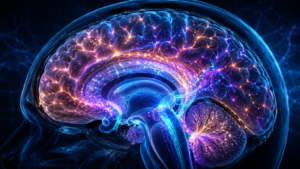
One of the most remarkable discoveries in modern sleep science is that the brain performs an intensive cleaning process while you sleep.
Researchers have identified a network known as the glymphatic system, which becomes significantly more active during sleep.
This system helps remove waste products and excess proteins that accumulate throughout the day, including substances linked to aging and neurodegenerative diseases.
Scientists believe this nightly “cleaning cycle” is one reason why consistent, high-quality sleep is so important for maintaining long-term brain health.
Although research is still ongoing, these findings suggest that healthy sleep may play a role in protecting cognitive function as we age.
What Does the Research Say?
Modern neuroscience continues to reveal how active the brain while you sleep really is.
Current evidence suggests healthy sleep helps the brain:
- Strengthen memories
- Process emotions
- Remove metabolic waste
- Support learning
- Improve decision-making
- Maintain healthy neural connections
Rather than being inactive, the brain works continuously throughout the night to prepare you for optimal performance the following day.
How Sleep Strengthens Memory
One of the brain’s most important overnight jobs is strengthening memory.
Throughout the day, your brain constantly receives new information. However, simply experiencing something doesn’t guarantee you’ll remember it. While your brain while you sleep is active, it reviews, organizes, and stores important information for long-term use.
Researchers call this process memory consolidation.
During sleep, especially during deep sleep (NREM) and REM sleep, the brain:
- Transfers short-term memories into long-term storage
- Strengthens important neural connections
- Removes unnecessary information
- Reinforces newly learned skills
This is why students, athletes, and professionals often perform better after a full night’s sleep than after staying awake to study or work longer.
How Sleep Regulates Emotions
Sleep doesn’t only improve memory—it also helps maintain emotional balance.
While your brain while you sleep processes emotional experiences from the day, it reduces the intensity of stressful memories and helps organize emotional responses.
Scientists believe this explains why many people feel calmer and think more clearly after a good night’s sleep.
Healthy sleep may help:
- Improve emotional resilience
- Reduce irritability
- Lower stress levels
- Improve decision-making
- Support healthy relationships
In contrast, poor sleep often makes emotional reactions stronger and more difficult to control.
What Happens When You Don’t Get Enough Sleep?
When your brain doesn’t get enough quality sleep, its performance begins to decline surprisingly quickly.
Even one night of insufficient sleep can affect:
Attention and Concentration
Your brain becomes less efficient at focusing, making mistakes more likely during work, school, or driving.
Learning and Memory
Without enough sleep, memory consolidation becomes less effective, making it harder to remember new information.
Decision-Making
Sleep deprivation reduces activity in the prefrontal cortex—the part of the brain responsible for planning, reasoning, and judgment.
As a result, people often make riskier decisions when tired.
Emotional Health
Lack of sleep increases activity in the brain’s emotional centers while reducing the brain’s ability to regulate those emotions.
This may contribute to:
- Anxiety
- Mood swings
- Increased stress
- Irritability
Long-Term Brain Health
Researchers continue studying how chronic sleep deprivation affects the brain.
Growing evidence suggests that consistently poor sleep may increase the risk of cognitive decline later in life, although many factors contribute to overall brain health.
Maintaining healthy sleep habits remains one of the most effective ways to support lifelong brain function.
How to Keep Your Brain Healthy While You Sleep
Although you can’t control everything your brain does overnight, you can create the best conditions for healthy brain function.
Consider these evidence-based habits:
- Aim for 7–9 hours of sleep each night.
- Keep a consistent bedtime and wake-up schedule.
- Limit screen exposure before bed.
- Exercise regularly during the day.
- Reduce caffeine late in the afternoon.
- Create a cool, dark, and quiet sleep environment.
If you’re looking to improve your nighttime habits, our guide on How to Build the Perfect Bedtime Routine provides practical strategies supported by sleep science.

Final Thoughts
Your brain while you sleep is anything but inactive.
Every night, it strengthens memories, regulates emotions, clears away waste products, repairs neural connections, and prepares you for the challenges of the next day.
Modern sleep science continues to reveal just how essential sleep is for maintaining cognitive performance, emotional well-being, and long-term brain health.
Rather than viewing sleep as lost time, think of it as one of the most productive investments you can make in your physical and mental health.
To learn more about how the sleeping brain works, explore our guide Why Do We Dream? 7 Fascinating Facts About Dream Science, where we explain the science behind REM sleep and dreaming.