Why Am I Tired but Can’t Sleep? 9 Possible Reasons
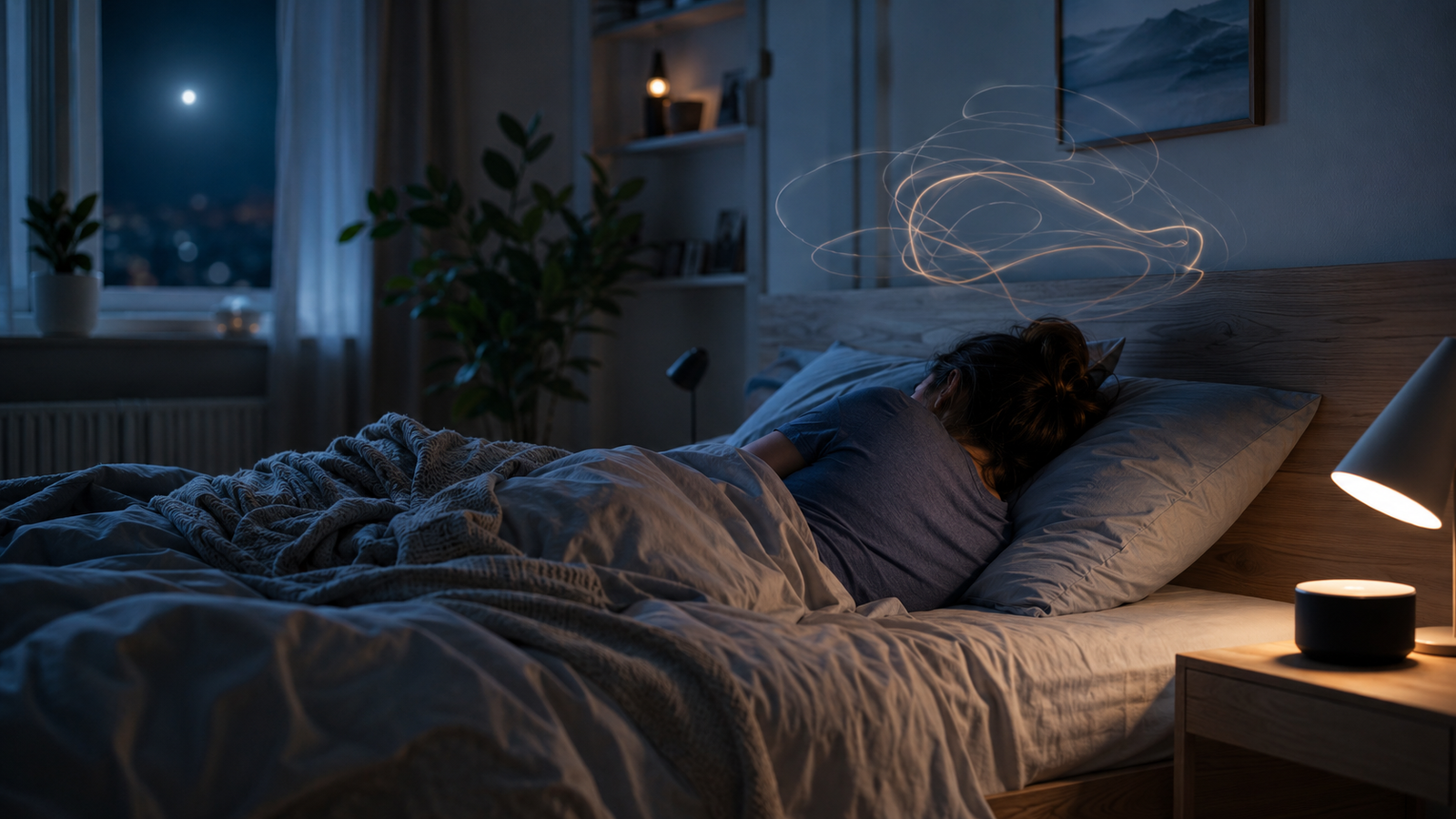
You feel exhausted throughout the day, but the moment your head touches the pillow, sleep disappears. Your body feels heavy while your mind suddenly becomes alert, restless, or filled with thoughts.
So, why am I tired but can’t sleep?
Feeling tired does not always mean your brain is ready for sleep. Stress, an irregular sleep schedule, caffeine, screen exposure, anxiety, naps, and certain health conditions can interfere with the systems that control when you fall asleep.
This frustrating experience is sometimes described as feeling “tired but wired.” Understanding why it happens can help you choose the right solution instead of simply spending more time in bed.
The Short Answer
You may feel tired but be unable to sleep when physical fatigue, sleep pressure, and your internal body clock are not working together.
Common causes include:
- Stress or anxiety
- Racing thoughts
- An inconsistent sleep schedule
- Going to bed before you are sleepy
- Caffeine consumed too late
- Evening screen exposure
- Long or late naps
- Alcohol
- An uncomfortable bedroom
- Chronic insomnia
- Pain or digestive symptoms
- Menopause or hormonal changes
- Restless legs syndrome
- Certain medications
- Depression or another mental health condition
According to the National Institute of Neurological Disorders and Stroke, sleep timing is regulated mainly by two interacting processes: sleep-wake homeostasis and the circadian rhythm.
You may therefore feel physically drained while your internal clock or nervous system is still sending signals that promote wakefulness.
What Does “Tired but Wired” Mean?
“Tired but wired” is not a formal medical diagnosis. It describes the uncomfortable state in which your body feels exhausted but your brain remains too alert to fall asleep.
You may experience:
- Heavy or sore muscles
- Low daytime energy
- Difficulty concentrating
- Frequent yawning
- Irritability
- Mental fog
- Racing thoughts after getting into bed
- A fast heartbeat
- Muscle tension
- Increased awareness of sounds
- Repeated clock-checking
- Anxiety about not sleeping
This state often occurs when fatigue is present alongside mental or physical hyperarousal.
You may have enough reason to rest, but your nervous system has not received—or accepted—the message that the day is over. Apparently, the brain occasionally schedules its most important meeting at 11:47 p.m.

The Difference Between Feeling Tired and Feeling Sleepy
Tiredness and sleepiness are related, but they are not identical.
Tiredness
Tiredness usually refers to low physical or mental energy. You may feel drained, unmotivated, weak, or unable to concentrate.
You can feel tired because of:
- Stress
- Overwork
- Emotional exhaustion
- Illness
- Poor nutrition
- Pain
- Inactivity
- Depression
- Insufficient sleep
A tired person may want to rest without necessarily being able to fall asleep.
Sleepiness
Sleepiness is the biological tendency to fall asleep. Common signs include:
- Drooping eyelids
- Difficulty keeping your eyes open
- Head nodding
- Slower reactions
- Losing track of what you are reading
- Briefly drifting into sleep
Waiting for genuine sleepiness before going to bed can reduce the amount of frustrated wakefulness spent under the covers.
How Sleep Pressure Affects Your Ability to Fall Asleep
Sleep pressure gradually builds while you are awake. The longer you remain awake, the stronger this pressure generally becomes.
Sleep reduces it again.
Your sleep pressure may be weaker at bedtime if you:
- Slept late that morning
- Took a long afternoon nap
- Napped in the evening
- Spent excessive time in bed
- Followed an irregular sleep schedule
- Had very little daytime activity
For example, you might feel mentally tired after a stressful day but still lack enough biological sleep pressure to fall asleep at an unusually early bedtime.
Trying to compensate for a poor night by going to bed several hours earlier can sometimes create another long period of wakefulness.
How Your Circadian Rhythm Controls Sleep Timing
Your circadian rhythm is the internal timing system that helps regulate sleep, alertness, hormones, body temperature, and other daily functions.
It is influenced by:
- Morning daylight
- Evening light exposure
- Regular wake times
- Meal timing
- Physical activity
- Work schedules
- Travel
- Social routines
If your circadian rhythm is signaling alertness, falling asleep can be difficult even when you feel fatigued.
This may happen when:
- You sleep and wake at different times each day
- You stay up much later on weekends
- You work night or rotating shifts
- You recently traveled across time zones
- You receive little morning daylight
- You use bright screens late at night
- You attempt to sleep earlier than usual
A person with a delayed sleep schedule, for example, may feel exhausted at 10 p.m. but remain biologically alert until much later.
1. Stress and Racing Thoughts
Stress is one of the most common reasons you may be tired but unable to sleep.
During stress, the nervous system may increase:
- Alertness
- Heart rate
- Muscle tension
- Stress hormones
- Sensitivity to sound
- Attention to possible problems
When the bedroom becomes quiet, concerns that were pushed aside during the day may suddenly feel urgent.
You may begin:
- Replaying conversations
- Reviewing unfinished work
- Planning tomorrow
- Worrying about money or family
- Imagining worst-case scenarios
- Calculating how many hours remain before morning
Trying to force sleep can add another layer of pressure. The thought “I must fall asleep immediately” may make the brain monitor sleep more closely, increasing alertness instead of reducing it.
Learn more about how stress affects sleep and why mental tension can keep you awake at night.
2. An Irregular Sleep Schedule
Sleeping at inconsistent times can confuse the body’s internal clock.
Common patterns include:
- Staying up late on weekends
- Sleeping several hours later on days off
- Alternating between early and late work shifts
- Going to bed early after a bad night
- Taking naps at unpredictable times
- Frequently changing your bedtime
This can create a form of “social jet lag,” where your schedule shifts even though you have not traveled anywhere.
A consistent wake time is particularly useful because it helps anchor the circadian rhythm. Try to wake at approximately the same time each day, including after a difficult night.
3. Going to Bed Too Early
Going to bed early may seem sensible when you feel tired, but tiredness alone does not guarantee sleep.
If you enter bed before sufficient sleep pressure has developed, you may spend a long time awake. This can encourage:
- Clock-watching
- Frustration
- Overthinking
- Phone use
- Anxiety about sleep
- A stronger association between bed and wakefulness
Instead of choosing bedtime only by the clock, notice whether you are genuinely sleepy.
If you are yawning, struggling to keep your eyes open, and losing focus on a quiet activity, your body may be ready for sleep. If you are simply exhausted and emotionally drained, a calming wind-down period may be more helpful first.
4. Caffeine Consumed Too Late
Caffeine promotes alertness by interfering with the effects of adenosine, a substance involved in building sleep pressure.
Sources include:
- Coffee
- Espresso
- Energy drinks
- Black tea
- Green tea
- Cola
- Chocolate
- Pre-workout supplements
- Some pain or headache medicines
Caffeine can remain active for many hours, and sensitivity varies considerably between individuals.
An afternoon coffee may not feel stimulating, particularly if you are accustomed to caffeine, but it can still make it harder to fall asleep or reduce sleep quality.
If you regularly feel tired but can’t sleep, try moving your final caffeine serving to late morning or early afternoon. Reduce a high intake gradually to avoid withdrawal headaches and fatigue.
Understanding how caffeine and electronic devices affect sleep can help you create a calmer evening routine.
5. Evening Screen Exposure
Phones, tablets, computers, and televisions may delay sleep in several ways.
They can:
- Expose your eyes to bright light
- Encourage you to stay awake longer
- Deliver emotionally stimulating content
- Trigger work-related thoughts
- Make time pass unnoticed
- Interrupt relaxation with alerts
- Keep the brain searching for new information
The problem is not limited to blue light. A dim screen can still keep you alert if you are reading upsetting news, answering work messages, or watching increasingly interesting videos at midnight.
Try creating a screen-free period during the final 30 to 60 minutes before bed. If that feels unrealistic, begin by lowering brightness, silencing notifications, and avoiding stressful or highly engaging content.
6. Long or Late Naps
Napping reduces the sleep pressure that builds while you are awake.
A brief early-afternoon nap may improve alertness without significantly disrupting nighttime sleep. However, a long or late nap can make it harder to fall asleep at your usual bedtime.
Naps are more likely to interfere with sleep when they:
- Last longer than 30 minutes
- Occur late in the afternoon or evening
- Happen every day despite nighttime insomnia
- Take place in bed
- Become a way to compensate for an irregular schedule
If you need to nap, aim for approximately 10 to 30 minutes earlier in the afternoon. If even a short nap delays your nighttime sleep, avoid napping temporarily while rebuilding a consistent schedule.
7. Alcohol Before Bed
Alcohol may make you feel drowsy initially, but it does not reliably produce restorative sleep.
As the body processes alcohol, sleep may become lighter and more fragmented. Alcohol can also:
- Increase nighttime awakenings
- Suppress REM sleep early in the night
- Worsen snoring and sleep apnea
- Increase bathroom visits
- Cause dehydration
- Trigger early-morning waking
- Increase anxiety as its sedating effects wear off
You may therefore fall asleep quickly but wake feeling tired—or feel exhausted the following evening while still struggling to settle naturally.
Avoid using alcohol as a sleep aid. If you regularly depend on it to fall asleep, discuss the pattern with a healthcare professional. Heavy drinkers should not stop suddenly without medical guidance because withdrawal can be dangerous.
8. Anxiety About Sleep
After several difficult nights, sleep itself can become a source of anxiety.
You may start worrying about bedtime hours in advance and monitoring every sign of wakefulness. Common thoughts include:
- “What if I cannot sleep again?”
- “I will not function tomorrow.”
- “There must be something wrong with me.”
- “I only have five hours left.”
- “I need to try harder to sleep.”
Unfortunately, trying harder often increases alertness. Repeatedly checking the clock, testing whether you feel sleepy, or calculating the remaining hours can turn bedtime into a performance test.
To reduce sleep anxiety:
- Turn the clock away
- Avoid repeatedly checking sleep-tracker data
- Go to bed when sleepy rather than merely tired
- Leave the bed if you become frustrated and fully alert
- Remind yourself that rest still has value
- Focus on calming down rather than forcing sleep
One imperfect night is uncomfortable, but it does not automatically ruin the following day.
9. Medical or Hormonal Causes
Sometimes the problem is not explained by habits or stress alone.
Conditions that may cause fatigue while also interfering with sleep include:
- Chronic pain
- Acid reflux
- Asthma
- Thyroid disorders
- Iron deficiency
- Restless legs syndrome
- Sleep apnea
- Depression
- Anxiety disorders
- Menopause-related hot flashes
- Medication side effects
Restless legs syndrome may cause an uncomfortable urge to move the legs while resting, particularly in the evening. Sleep apnea may involve loud snoring, pauses in breathing, gasping, morning headaches, or excessive daytime sleepiness.
Menopause and perimenopause can also affect sleep through hot flashes, night sweats, mood changes, and nighttime awakenings.
Seek medical guidance if fatigue and sleep difficulty persist, worsen, or occur with other unexplained symptoms.
Could Your Medication Be Keeping You Awake?
Some medicines and supplements can interfere with sleep or increase alertness.
Possible examples include:
- Certain antidepressants
- Corticosteroids
- Stimulant medications
- Decongestants
- Some asthma medicines
- Thyroid hormone taken at an unsuitable time
- Diuretics that increase nighttime urination
- Weight-loss products
- Supplements containing caffeine or other stimulants
Do not stop a prescribed medication on your own. Ask a doctor or pharmacist whether the dose, timing, or medication itself could be affecting your sleep.
Why You Feel More Awake as Soon as You Get Into Bed
Your brain learns associations through repetition.
If you regularly use your bed for worrying, working, scrolling, watching videos, or struggling to sleep, the bed may gradually become connected with wakefulness instead of rest.
You might feel sleepy on the sofa but suddenly alert after moving to bed. This does not mean you have lost the ability to sleep. It may indicate a learned pattern of arousal.
To rebuild the connection between bed and sleep:
- Use the bed mainly for sleep.
- Go to bed when you feel genuinely sleepy.
- Get up if you become fully awake or frustrated.
- Do something quiet in dim light.
- Return to bed when sleepiness comes back.
- Maintain a consistent morning wake time.
This approach is commonly used in cognitive behavioral therapy for insomnia, or CBT-I.
Why You Are Exhausted During the Day but Alert at Night
This pattern may develop when your daily schedule repeatedly shifts alertness toward the evening.
Possible contributors include:
- Sleeping late after a poor night
- Receiving little morning daylight
- Remaining inactive during the day
- Napping after work
- Consuming afternoon caffeine
- Working or studying late
- Using stimulating screens at night
- Becoming anxious as bedtime approaches
The result can feel like a second wind: your energy is low throughout the day, yet your brain becomes unexpectedly active at night.
Morning daylight, regular physical activity, consistent meal timing, and a stable wake time can help shift alertness earlier.
What to Do When You Are Tired but Can’t Sleep
If you are lying awake and becoming frustrated, use this simple approach:
- Stop checking the time.
- Relax your jaw and shoulders.
- Take slow, comfortable breaths.
- Leave the bed if you feel fully awake.
- Keep the lights low.
- Choose a quiet activity.
- Return to bed when your eyelids feel heavy.
Suitable activities include:
- Reading a calm printed book
- Listening to quiet audio
- Practicing gentle breathing
- Doing a simple puzzle on paper
- Sitting comfortably in dim light
Avoid work, social media, upsetting news, bright screens, and vigorous exercise.
The goal is not to make sleep happen on command. It is to reduce frustration and allow sleepiness to return naturally.
How to Reset Your Sleep Schedule
If your sleep timing has drifted later, avoid trying to correct everything in one night. Gradual, consistent changes are usually easier to maintain.
Keep a Consistent Wake Time
Wake up at approximately the same time every day, including weekends and after a poor night.
A stable wake time helps anchor your circadian rhythm. Sleeping several hours later may provide temporary relief, but it can delay sleep again the following night.
Get Morning Light
Spend time outdoors soon after waking when possible.
Morning light helps signal that the active part of the day has begun and may make it easier for sleepiness to develop at an appropriate time later.
Try combining light exposure with:
- A short walk
- Breakfast near a window
- Gentle stretching outdoors
- Drinking your morning coffee outside
- A brief commute on foot
Outdoor light is generally much brighter than ordinary indoor lighting, even on a cloudy day.
Move Bedtime Gradually
If you currently fall asleep very late, suddenly going to bed two hours earlier may lead to prolonged wakefulness.
Instead, move your schedule earlier in small increments while maintaining the same wake time. Go to bed when you feel sleepy rather than simply because the clock says you should be asleep.
Limit Weekend Schedule Changes
Try to keep weekend sleep and wake times reasonably close to your weekday schedule.
A large weekend shift can create social jet lag, making Sunday night feel like an unwanted international flight—except nobody brings snacks.
A Simple Evening Routine for Better Sleep
A predictable wind-down routine can help your brain transition from activity to rest.
Begin approximately 30 to 60 minutes before bed:
- Finish demanding work and difficult conversations.
- Write down tomorrow’s three main priorities.
- Dim the lights.
- Silence unnecessary notifications.
- Take a warm shower or wash your face.
- Practice gentle stretching or slow breathing.
- Read or listen to something calming.
- Go to bed when genuine sleepiness appears.
Your routine does not need to be complicated or identical every night. Its purpose is to create a reliable boundary between the active day and the sleep period.
A consistent healthy bedtime routine can help separate daytime activity from nighttime rest.
How to Calm Racing Thoughts
Trying to completely empty your mind can create more pressure. A better goal is to reduce the urgency attached to each thought.
Write a Tomorrow List
Before beginning your bedtime routine, write down:
- Three important tasks
- One appointment or deadline
- Anything you need to bring
- The first action you will take in the morning
This reassures the brain that unfinished responsibilities have been recorded.
Schedule Worry Time
Set aside 15 to 20 minutes earlier in the evening to review your concerns.
For each worry:
- Write it down.
- Decide whether action is possible.
- Record one realistic next step.
- Schedule when you will take that step.
- Leave unsolvable concerns for another day.
Avoid doing this exercise in bed, where it may strengthen the connection between the bedroom and problem-solving.
Practice Cognitive Shuffling
Picture a series of unrelated, emotionally neutral objects.
For example:
- A bicycle
- A lemon
- A wooden chair
- A cloud
- A paper envelope
Imagine each object briefly before moving to the next one. This may interrupt repetitive planning without requiring you to force your mind blank.
Breathing and Relaxation Techniques
Slow breathing may help reduce physical tension and shift attention away from stressful thoughts.
Try this comfortable pattern:
- Inhale gently through your nose for four seconds.
- Exhale slowly for six seconds.
- Relax your shoulders and jaw.
- Continue for three to five minutes.
Do not force an unusually deep breath. Stop if you feel dizzy or uncomfortable.
Progressive muscle relaxation is another option. Gently tense and release one muscle group at a time, beginning with your feet and moving toward your face.
Use only mild tension and skip painful or injured areas.
Improve Your Bedroom Environment
Physical discomfort can make it harder to settle when you are already mentally alert.
Consider adjusting:
- Temperature: Keep the room comfortably cool.
- Light: Use blackout curtains or an eye mask if needed.
- Noise: Reduce unpredictable sounds or use steady background noise.
- Bedding: Choose breathable and comfortable materials.
- Clock placement: Turn the clock away from view.
- Phone location: Charge your phone away from the bed.
- Work materials: Keep laptops and paperwork outside the sleeping area.
The room does not need to be perfect. Focus on removing obvious sources of stimulation, discomfort, and urgency.
These practical bedroom environment improvements can make it easier to relax and fall asleep.
Habits That Support Natural Sleepiness
Healthy daytime habits can make sleep more likely at night.
Stay Physically Active
Regular activity can strengthen sleep pressure and support mood.
Walking, cycling, swimming, resistance training, and yoga may all help. If vigorous exercise near bedtime makes you feel alert, complete it earlier and choose gentle stretching in the evening.
Eat at Regular Times
Irregular or heavy late-night meals may contribute to discomfort, reflux, or delayed sleep.
If you are hungry before bed, choose a small, easy-to-digest snack rather than a large meal. Avoid foods that reliably trigger heartburn or digestive symptoms.
Reduce Evening Stimulation
During the final hour before bed, limit:
- Work email
- Arguments
- Disturbing news
- Competitive gaming
- Intense exercise
- Bright overhead lighting
- Endless short-form videos
You do not have to make the evening completely silent or boring. Choose activities that are interesting enough to prevent worrying but calm enough to allow sleepiness to develop.
Should You Take Melatonin?
Melatonin helps regulate sleep timing, but it is not a universal solution for feeling tired but unable to sleep.
It may be more useful for certain circadian timing problems, jet lag, or delayed sleep schedules than for insomnia caused primarily by worry or conditioned alertness.
Potential side effects can include:
- Next-day drowsiness
- Headaches
- Dizziness
- Nausea
- Vivid dreams
Product strength and quality may also vary. Taking a larger dose does not necessarily improve sleep.
Speak with a healthcare professional or pharmacist before using melatonin, particularly if you take medication, have a medical condition, are pregnant, or are considering giving it to a child.
When to See a Healthcare Professional
Occasional difficulty falling asleep is common. Professional evaluation is appropriate when the pattern persists, worsens, or significantly affects daily life.
Seek guidance if:
- Sleep problems continue for several weeks
- Fatigue interferes with work or family responsibilities
- You regularly need alcohol or medication to sleep
- Anxiety or low mood feels difficult to manage
- You experience uncomfortable sensations in your legs at night
- Loud snoring, gasping, or breathing pauses occur
- Hot flashes or night sweats repeatedly wake you
- Pain, reflux, or breathing problems disturb sleep
- You frequently fall asleep unintentionally during the day
- A medication appears to be affecting your sleep
Do not drive or perform hazardous work if you are struggling to remain awake.
Seek urgent assistance for severe breathing difficulty, chest pain, thoughts of self-harm, or an inability to stay safe.
How CBT-I Can Help
Cognitive behavioral therapy for insomnia, or CBT-I, is a structured treatment for persistent insomnia.
It may involve:
- Maintaining a stable wake time
- Adjusting time spent in bed
- Rebuilding the association between bed and sleep
- Reducing clock-checking
- Addressing fear and unrealistic beliefs about sleep
- Developing healthier responses to nighttime wakefulness
- Using relaxation strategies appropriately
CBT-I goes beyond general sleep-hygiene advice. It targets the patterns that can maintain insomnia even after the original cause has improved.
A qualified healthcare professional can help determine whether CBT-I, medical evaluation, mental health support, or a combination is appropriate.
Final Thoughts
So, why am I tired but can’t sleep? Tiredness and sleepiness are not the same. You can feel physically and mentally exhausted while stress, caffeine, an irregular schedule, weak sleep pressure, evening stimulation, or a medical condition keeps your brain alert.
Start by maintaining a consistent wake time, getting morning daylight, limiting late caffeine and naps, and going to bed only when you feel genuinely sleepy. If you become frustrated while awake in bed, move to a quiet place with dim lighting and return when sleepiness develops.
Persistent sleep difficulty is not something you simply have to tolerate. Effective treatment is available, particularly when the underlying cause is identified.
Frequently Asked Questions
Why am I exhausted all day but awake at night?
Sleeping late, napping, limited morning light, afternoon caffeine, evening screen use, and an irregular body clock can shift alertness toward nighttime. Stress may also create a second wind when the environment becomes quiet.
Why does my brain become active when I get into bed?
The absence of daytime distractions may allow unfinished concerns to demand attention. Repeated worrying or scrolling in bed can also teach the brain to associate the bed with alertness.
Should I go to bed early when I feel tired?
Go to bed when you feel sleepy, not merely drained. Entering bed too early can result in prolonged wakefulness and increased frustration.
How can I fall asleep when I am tired but wired?
Stop checking the time, relax your jaw and shoulders, breathe slowly, and leave the bed if you become fully awake or frustrated. Return when genuine sleepiness appears.
Can anxiety make you tired but unable to sleep?
Yes. Anxiety can consume energy during the day while maintaining mental and physical alertness at night.
Can caffeine affect sleep even if I drink it in the afternoon?
Yes. Caffeine can remain active for many hours, although sensitivity varies. Moving your final serving earlier may help you identify whether it is contributing to the problem.
Does melatonin help when you cannot sleep?
It may help some sleep-timing problems, but it does not directly resolve every cause of insomnia. Ask a healthcare professional or pharmacist whether it is appropriate for you.
When should I worry about being tired but unable to sleep?
Seek professional guidance when the problem lasts several weeks, disrupts daily functioning, or occurs with breathing pauses, severe anxiety, depression, persistent pain, restless legs, or excessive daytime sleepiness.
Related Guides
How Does Stress Affect Sleep? 7 Ways to Sleep Better
How to Build a Healthy Bedtime Routine