What to Eat Before Bed for Better Sleep: 12 Smart Bedtime Snacks (2026)
Many people avoid eating before bedtime because they worry it might cause weight gain or disrupt their sleep.
However, going to bed hungry isn’t always the best solution either.
The key isn’t whether you eat before bed—it’s what you eat before bed.
A light, balanced evening snack containing protein, complex carbohydrates, and sleep-supporting nutrients may help you fall asleep more comfortably while preventing late-night hunger.
In this guide, you’ll discover What to Eat Before Bed, the best bedtime snack combinations, foods to avoid, and simple nutrition tips that support healthier, more restful sleep.
Why Your Evening Snack Matters
Eating the right foods before bed may help stabilize blood sugar, reduce nighttime hunger, and provide nutrients that support melatonin production and muscle relaxation.
A healthy bedtime snack should be:
- Light and easy to digest
- Rich in protein
- Low in added sugar
- Moderate in healthy fats
- Naturally rich in magnesium, calcium, or tryptophan
Choosing nutritious foods instead of processed snacks may help improve both sleep quality and overnight recovery.
12 Smart Bedtime Snacks for Better Sleep
1. Greek Yogurt with Walnuts
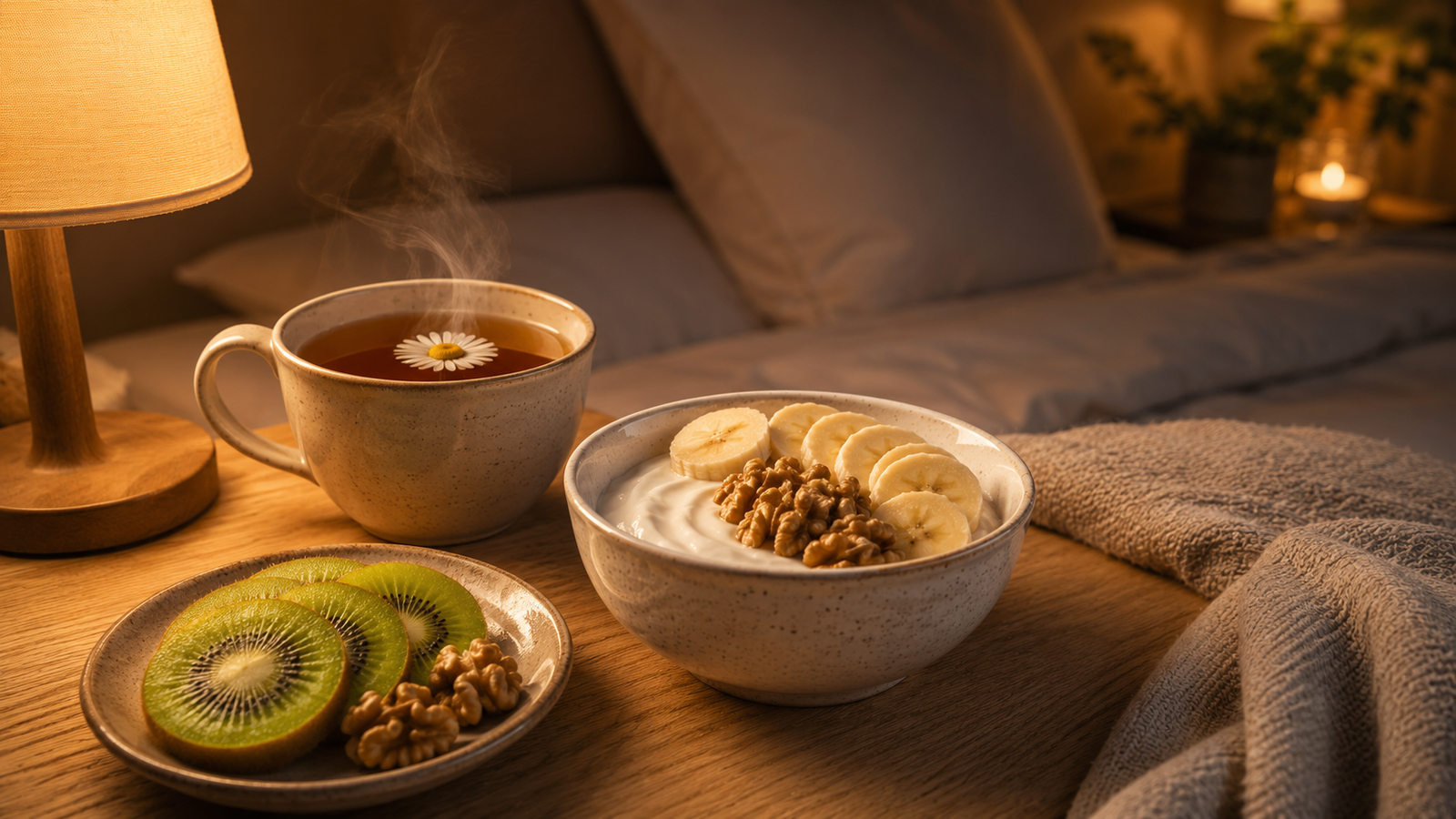
One of the best answers to What to Eat Before Bed is a bowl of plain Greek yogurt topped with walnuts.
This combination provides:
- Protein
- Calcium
- Healthy fats
- Magnesium
Together, these nutrients help keep you satisfied overnight while supporting normal melatonin production.
2. Banana and Almonds
Bananas provide potassium and vitamin B6, while almonds are rich in magnesium.
This simple combination supports muscle relaxation and is easy to digest before bedtime.
3. Kiwi
Kiwi is one of the most researched fruits for sleep.
Eating two kiwis about one hour before bed has been associated with improved sleep quality in several studies.
4. Tart Cherries
Tart cherries naturally contain melatonin.
A small serving of fresh tart cherries or unsweetened tart cherry juice may support a healthy sleep-wake cycle.
5. Warm Oatmeal
Oatmeal isn’t only a breakfast food.
Its complex carbohydrates may help promote relaxation while providing steady energy throughout the night.
6. Cottage Cheese
Cottage cheese is rich in casein protein, which digests slowly throughout the night.
It also contains calcium that helps support normal melatonin production.
7. Whole-Grain Crackers with Peanut Butter
This balanced snack combines:
- Complex carbohydrates
- Healthy fats
- Protein
Together they may help stabilize blood sugar before bedtime.
8. Pumpkin Seeds
Pumpkin seeds are naturally rich in magnesium and zinc.
Both nutrients play important roles in supporting healthy sleep.
Pumpkin seeds are one of the best natural sources of magnesium. Learn more in our guide on Magnesium for Sleep.
9. Chamomile Tea
Chamomile tea remains one of the world’s favorite bedtime beverages.
Many people enjoy it as part of a calming nighttime routine.
Learn more about the calming benefits of Chamomile Tea for Sleep in our complete guide.
Discover why Chamomile Tea for Sleep remains one of the world’s most trusted natural bedtime drinks.
10. Small Handful of Walnuts
Walnuts contain healthy fats and naturally occurring melatonin.
A small portion is often enough to enjoy their nutritional benefits.
11. Sliced Apple with Almond Butter
This snack provides fiber, healthy fats, and a small amount of protein while remaining relatively light before bedtime.
12. A Small Bowl of Mixed Sleep-Friendly Foods
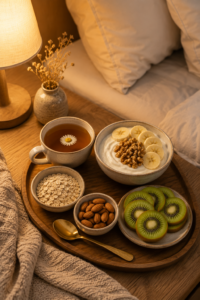
If you’re unsure What to Eat Before Bed, try combining several small portions instead of eating one large snack.
For example:
- Kiwi
- Greek yogurt
- Walnuts
- Chamomile tea
This balanced combination supplies multiple nutrients that support relaxation without leaving you feeling overly full.
Choosing What to Eat Before Bed doesn’t have to be complicated. Simple, nutrient-rich foods are often the best choice for better sleep.
Looking for even more ideas? Explore our complete guide to Foods That Help You Sleep for additional science-backed bedtime nutrition tips.
Foods to Avoid Before Bed
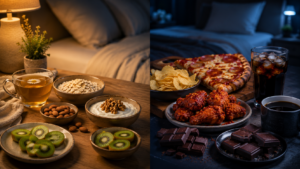
Foods You Should Avoid Before Bed
Knowing What to Eat Before Bed is only part of the equation. Understanding which foods to avoid is just as important for improving sleep quality.
Some foods may delay sleep, increase nighttime awakenings, or reduce deep sleep by affecting digestion, body temperature, or hormone production.
1. Large Heavy Meals
Eating a large meal shortly before bedtime forces your digestive system to remain active while your body is trying to rest.
Large portions may lead to:
- Indigestion
- Acid reflux
- Discomfort while lying down
- Poor sleep quality
Try finishing large meals at least 2–3 hours before bedtime.
2. Caffeine
Caffeine doesn’t just make it harder to fall asleep.
It may also reduce deep sleep even if you fall asleep quickly.
Common sources include:
- Coffee
- Black tea
- Energy drinks
- Cola
- Dark chocolate
Many experts recommend avoiding caffeine during the 6–8 hours before bedtime.
3. Sugary Snacks
Candy, cookies, cakes, and sugary cereals can cause rapid spikes in blood sugar followed by sudden drops.
These fluctuations may contribute to:
- Nighttime awakenings
- Restless sleep
- Morning fatigue
Replacing sugary desserts with healthier snacks is often a better choice.
4. Alcohol
Although alcohol may initially make you feel sleepy, it often disrupts sleep later in the night.
It can:
- Reduce REM sleep
- Increase nighttime awakenings
- Leave you feeling less refreshed in the morning
Moderation is important, especially if good sleep is your goal.
5. Spicy Foods
Spicy meals can increase body temperature and trigger heartburn in some people.
Both effects may make falling asleep more difficult.
Building healthy eating habits is even more effective when combined with good Sleep Hygiene practices.
What Is the Best Time to Eat Before Bed?
If you’re wondering What to Eat Before Bed, timing matters just as much as food choice.
Most sleep specialists recommend eating your final snack about 1–2 hours before going to sleep.
This allows your body enough time to begin digestion without going to bed either overly full or overly hungry.
If you exercise in the evening, a light protein-rich snack after your workout may also support overnight muscle recovery while helping you sleep comfortably.
A consistent Bedtime Routine works together with healthy evening nutrition to improve overall sleep quality.
Frequently Asked Questions (FAQ)
What should I eat before bed for better sleep?
The best answer to What to Eat Before Bed is a light snack that combines protein, healthy fats, and complex carbohydrates.
Some excellent choices include:
- Greek yogurt with walnuts
- Banana and almonds
- Kiwi
- Chamomile tea
- Oatmeal
- Cottage cheese
- Tart cherries
These foods provide nutrients that may naturally support healthy sleep.
Is it bad to eat before bed?
Not necessarily.
Eating a small, balanced snack 1–2 hours before bedtime is generally fine for most people. Going to bed overly hungry may actually make it harder to fall asleep or stay asleep.
What foods should I avoid before bed?
Foods that commonly interfere with sleep include:
- Coffee
- Energy drinks
- Chocolate
- Alcohol
- Fried foods
- Spicy meals
- Sugary desserts
- Large late-night meals
These foods may affect digestion, body temperature, or sleep quality.
Can eating protein before bed help?
Yes.
Protein-rich snacks such as Greek yogurt or cottage cheese may help reduce overnight hunger while supporting muscle recovery during sleep.
The key is keeping portions moderate.
How long before bed should I eat?
Most sleep experts recommend eating your final snack 1–2 hours before bedtime.
This gives your body enough time to begin digestion while allowing you to sleep comfortably.
Related Articles
- 10 Best Foods That Help You Sleep Better Naturally
- Chamomile Tea for Sleep: Benefits and Best Time to Drink It
- Magnesium for Sleep: Does It Really Work?
- How to Build the Perfect Bedtime Routine
- Sleep Hygiene Explained: 10 Habits That Improve Sleep Naturally
Final Thoughts
Choosing What to Eat Before Bed doesn’t have to be complicated.
The Centers for Disease Control and Prevention (CDC) recommends maintaining healthy eating habits, regular physical activity, and consistent sleep schedules to support long-term health and better sleep.
Simple, nutrient-rich foods such as Greek yogurt, kiwi, bananas, walnuts, oatmeal, and chamomile tea can help satisfy late-night hunger while supporting healthy sleep.
The goal isn’t to eat a large meal before bed, but to choose small, balanced snacks that provide protein, healthy fats, and sleep-supporting nutrients.
Healthy bedtime nutrition works even better when combined with good Sleep Hygiene habits every night.
Remember that What to Eat Before Bed is only one part of healthy sleep. Regular exercise, consistent bedtimes, stress management, and a comfortable sleep environment all work together to improve sleep quality.
Making small, sustainable changes to your evening eating habits can lead to better sleep—and better mornings—for years to come.
Looking for more natural sleep solutions? Explore our guide to Foods That Help You Sleep for additional science-backed nutrition tips.