Best Bedroom Temperature for Sleep: How Cool Should Your Room Be?
The best bedroom temperature for sleep is generally cool enough to prevent overheating but warm enough that you do not shiver, tense your muscles, or repeatedly wake up.
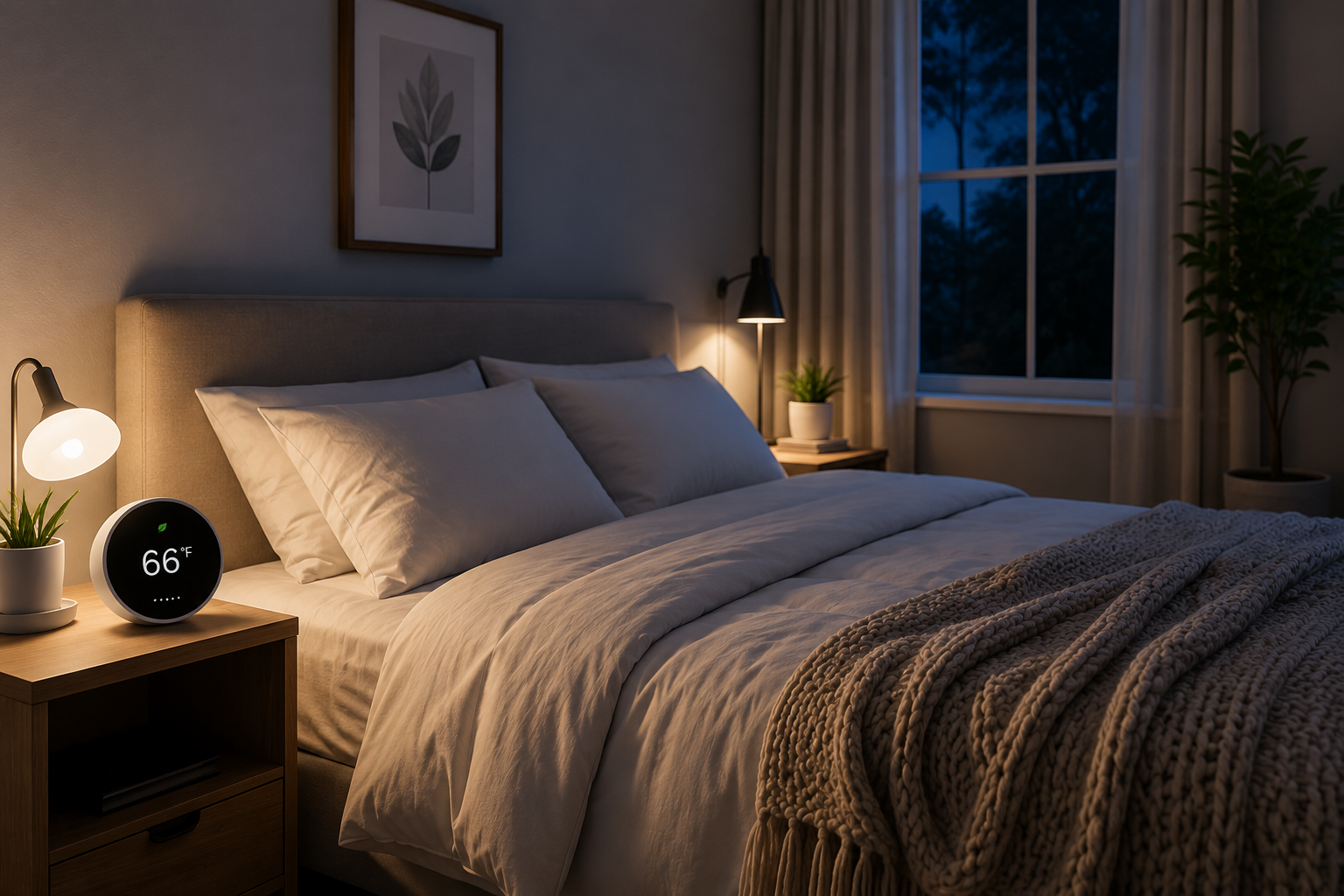
For many adults, 65–68°F (18–20°C) is a reasonable starting range. However, it is not a biological commandment or a perfect setting for every bedroom.
Your bedding, sleepwear, humidity, age, health, hormones, mattress, airflow, season, and personal preference all change how a room feels.
Some people sleep comfortably at 65°F. Others need a room closer to 70°F or warmer, especially when using lightweight bedding. The goal is not to achieve a famous thermostat number. It is to maintain comfortable thermal conditions throughout the night.
Quick answer: Begin near 65–68°F (18–20°C), then test changes of one or two degrees for several nights. Adjust your bedding and sleepwear at the same time, and look for fewer awakenings, less sweating or chilling, and better morning comfort.
Is 65°F Really the Best Temperature for Sleep?
A cool bedroom is widely recommended, but research does not identify one temperature that guarantees better sleep for everyone.
The CDC’s National Institute for Occupational Safety and Health describes approximately 65–68°F as comfortably cool for many people. It also emphasizes using covers and adjusting the room according to personal comfort. See the CDC guidance on creating a good sleep environment.
A practical adult starting point is:
| Bedroom condition | Temperature |
|---|---|
| Common starting range | 65–68°F |
| Celsius equivalent | 18–20°C |
| Adjustment step | 1–2°F or approximately 1°C |
| Testing period | Several nights per setting |
This table is a starting experiment, not a prescription.
A bedroom at 65°F can still feel too warm under a heavy comforter. Another room at 70°F may feel comfortable with lightweight sheets, low humidity, and gentle airflow.
Older adults may also prefer warmer conditions. A 2023 field study involving older adults found that sleep was most efficient and restful within an observed nighttime bedroom range of approximately 20–25°C, although individual responses varied. Read the study of nighttime bedroom temperature and sleep in older adults.
This does not mean everyone over 65 should set the thermostat to 25°C. It shows why one narrow universal recommendation should be treated cautiously.
Why Temperature Affects Sleep
Your body temperature changes across the day.
During the evening, the body begins redistributing and releasing heat as part of the transition toward sleep. Core temperature normally falls during the night and rises again toward morning.
This process is connected to circadian timing, sleep pressure, blood flow near the skin, hormone activity, activity level, and the surrounding thermal environment.
An excessively warm bedroom may make it harder for the body to release heat. This can contribute to:
- Difficulty settling into sleep
- Sweating
- Restlessness
- Removing covers repeatedly
- More nighttime awakenings
- Feeling unrefreshed in the morning
An excessively cold bedroom can create a different set of problems:
- Cold hands or feet
- Shivering
- Muscle tension
- Curling tightly under the covers
- Waking when bedding moves
- Stiffness or discomfort after waking
A review of temperature and sleep research explains that thermal conditions affect sleep through a combination of room temperature, clothing, bedding, air movement, humidity, and the warmer microclimate created around the body under the covers. Read the review of thermal environment and sleep.
In other words, your thermostat measures the room. It does not measure what is happening underneath your comforter.
The Bed Microclimate Matters More Than Most People Realize
The small pocket of warmth and humidity between your skin, sleepwear, sheets, and blankets is sometimes called the bed microclimate.
Two people can sleep in the same room and experience very different conditions because they use different:
- Mattresses
- Mattress protectors
- Sheets
- Comforters
- Pajamas
- Sleeping positions
- Sides of the bed
Foam mattresses and waterproof protectors may retain more warmth for some sleepers. Thick synthetic comforters can also reduce heat loss.
Before lowering the thermostat several degrees, check whether your bedding is trapping heat.
Possible adjustments include:
- Removing one blanket layer
- Using a thinner comforter
- Choosing loose, lightweight sleepwear
- Trying breathable sheets
- Replacing a heat-trapping mattress protector
- Keeping an extra blanket nearby instead of starting with every layer
- Using separate covers when partners have different preferences
Material names alone do not guarantee comfort. Weave, fabric weight, construction, moisture, and personal sensitivity all matter. “Bamboo” on a label does not automatically turn bedding into air conditioning wearing a leaf costume.
How to Find Your Personal Sleep Temperature
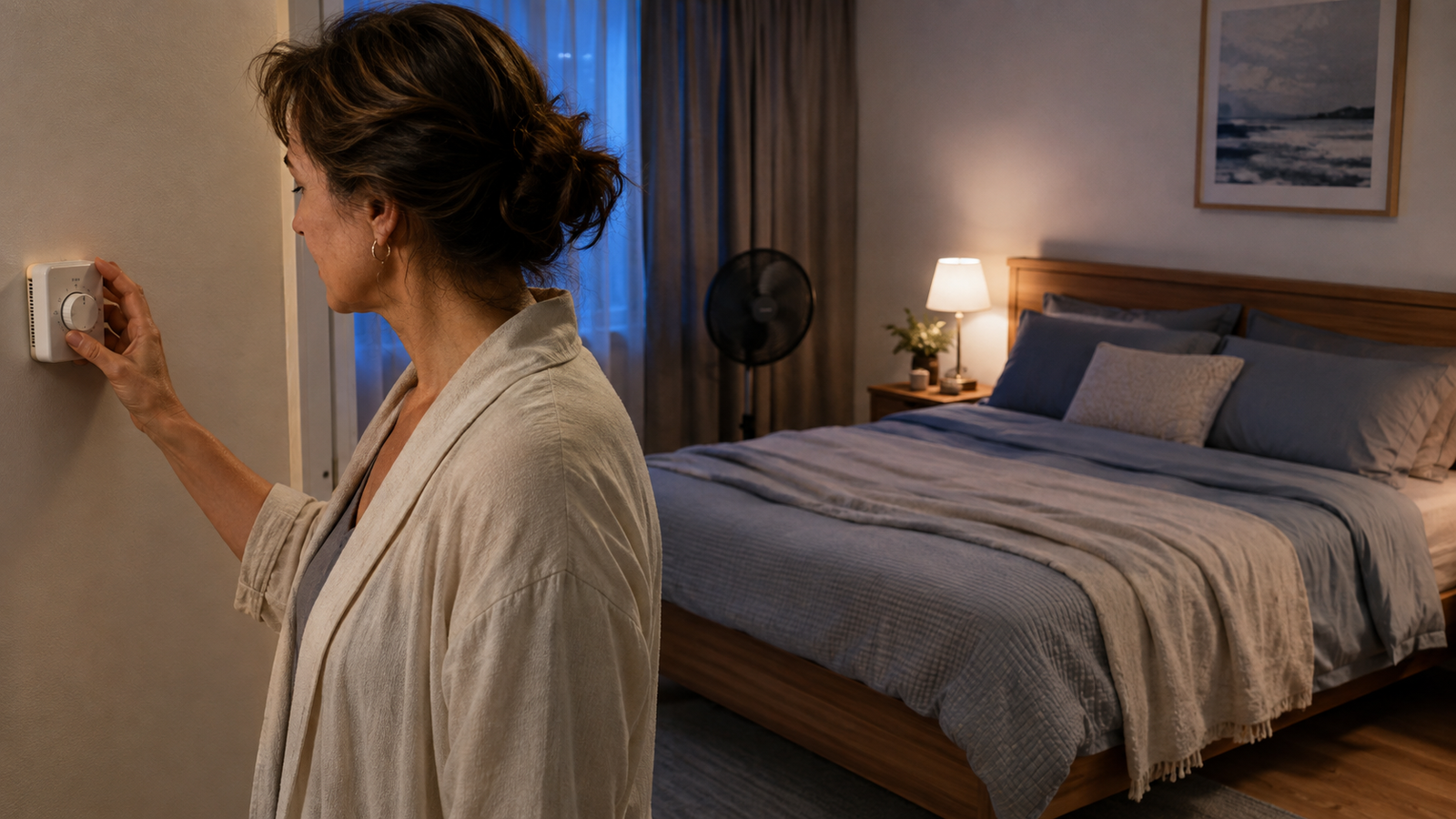
Instead of changing several things at once, conduct a simple bedroom-temperature test.
Step 1: Record Your Current Conditions
For three nights, record:
- Thermostat or room-thermometer reading
- Approximate humidity if available
- Bedding layers
- Sleepwear
- Whether a fan or air conditioner was used
- Sweating, chills, or cold feet
- Number of remembered awakenings
- Morning comfort and energy
A consumer sleep tracker is optional. Your physical comfort and awakenings are more important than a device’s estimated sleep-stage score.
Step 2: Change Only One Main Variable
Change the temperature by approximately one or two degrees.
Keep your bedding and sleepwear reasonably similar during the test. Otherwise, you will not know whether the thermostat or the new blanket caused the difference.
Test the setting for several nights unless it is clearly uncomfortable.
Step 3: Look for a Pattern
A more suitable setting may be associated with:
- Falling asleep without feeling hot or cold
- Fewer awakenings
- Less sweating
- No need to repeatedly remove or retrieve covers
- Comfortable hands and feet
- Better morning energy
- No condensation or excessive dryness problems
One unusually good or bad night proves very little. Stress, alcohol, illness, exercise, meals, noise, and schedule changes can all affect sleep.
Step 4: Adjust Bedding Before Making Extreme Changes
If your face and torso feel hot while the room already feels cool, reduce heat-trapping bedding.
If your hands and feet feel cold but the rest of your body is comfortable, consider socks or a light additional layer rather than heating the entire room substantially.
The best setting should be affordable, sustainable, and comfortable—not a nightly contest between your thermostat and the electricity bill.
Signs Your Bedroom May Be Too Warm
Consider testing a cooler setting or lighter bedding if you regularly:
- Wake with damp clothing or sheets
- Feel hot around your neck, chest, or back
- Push the covers away while asleep
- Wake thirsty after sweating
- Notice poor sleep primarily during warm weather
- Sleep better when airflow improves
- Experience hot flashes or night sweats
- Share a bed with someone who also reports overheating
Persistent night sweats are not always caused by the room.
They can be associated with menopausal symptoms, infection, medication effects, alcohol, anxiety, low blood sugar, thyroid conditions, and other medical issues. If sweating is new, severe, unexplained, or accompanied by fever, weight loss, pain, or other symptoms, seek medical advice.
For symptom-specific information, read Why Does Menopause Cause Night Sweats?.
Signs Your Bedroom May Be Too Cold
The room may be colder than your body tolerates if you:
- Shiver or tense your muscles
- Wake with very cold hands or feet
- Pull the covers tightly around your face
- Struggle to relax when first entering bed
- Wake when part of your body becomes uncovered
- Feel stiff or uncomfortable in the morning
- Sleep better after adding one breathable layer
Do not assume that colder always means healthier sleep.
Cold discomfort can interrupt sleep just as heat discomfort can. Older adults, people with circulation problems, people with limited mobility, and those affected by certain medications or health conditions may be more sensitive to cold.
If you consistently feel unusually cold when other people are comfortable, discuss the symptom with a healthcare professional rather than endlessly adjusting the thermostat.
How Humidity Changes the Way Temperature Feels
Temperature and humidity work together.
High humidity can make a warm room feel heavier and reduce the effectiveness of sweat evaporation. Low humidity may contribute to dry eyes, dry skin, nasal irritation, or throat discomfort.
A humidity reading should not be treated as another magic number. Instead, look for practical signs such as:
- Condensation on windows
- A musty smell
- Visible mold
- Damp bedding
- Static electricity
- Dry nose or throat
- Morning congestion
- Discomfort that changes with the weather
Use a humidifier or dehumidifier only when needed, clean it according to the manufacturer’s instructions, and avoid allowing water to sit in a neglected reservoir.
A humidifier that is not cleaned properly can turn a helpful sleep product into a tiny indoor swamp with a power cord.
How to Keep the Bedroom Cooler in Summer
Begin cooling the room before bedtime rather than waiting until you are already overheated in bed.
Try the following:
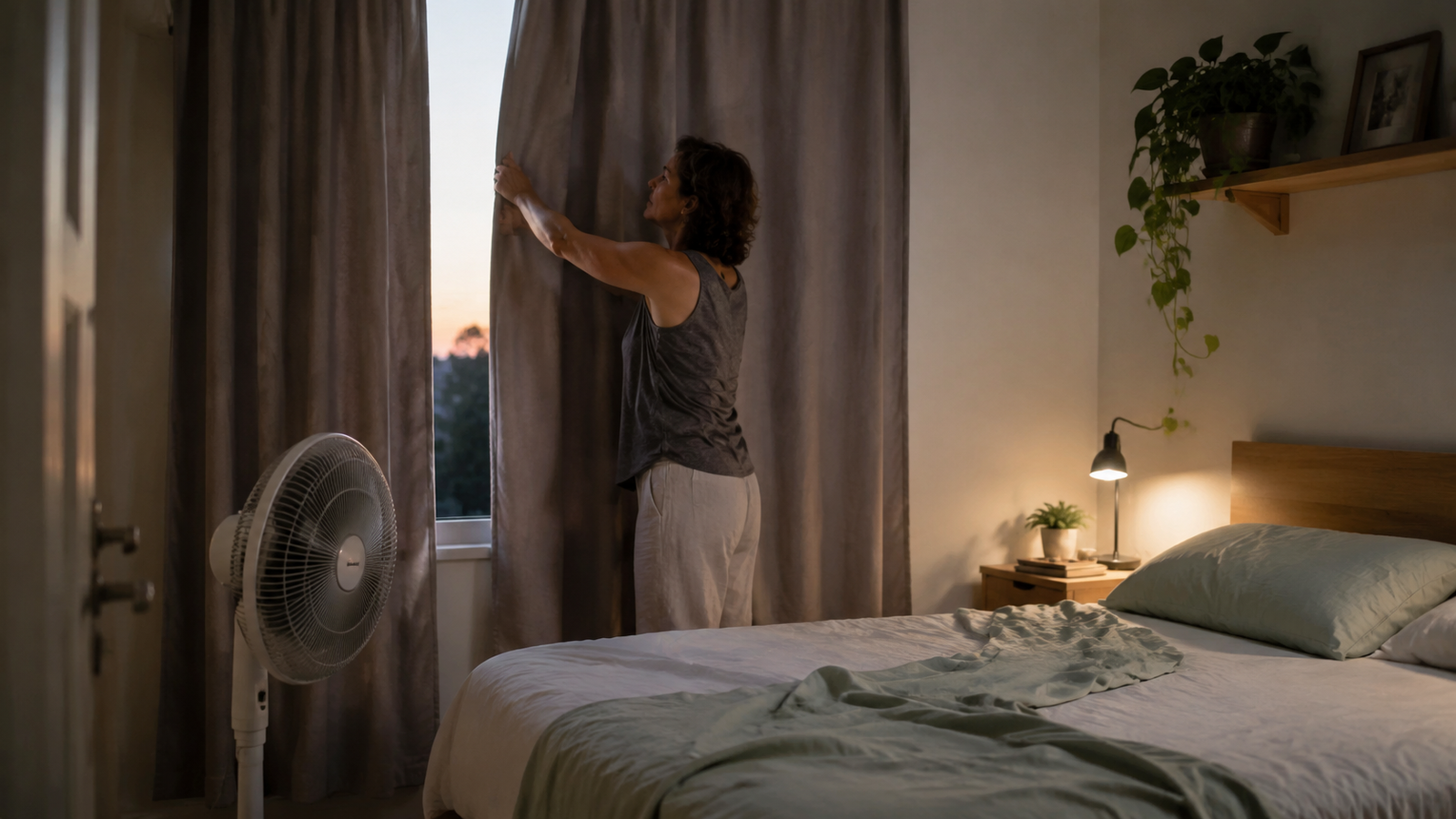
- Close curtains or blinds before direct afternoon sunlight enters.
- Open windows when outdoor air is cooler and local air quality is acceptable.
- Use cross-ventilation when safe.
- Run a fan to improve air movement.
- Use lightweight bedding and loose sleepwear.
- Reduce heat from unnecessary lighting and electronics.
- Move intense exercise earlier if it leaves you overheated at bedtime.
- Take a comfortably warm shower and allow time to cool afterward.
- Use air conditioning when needed and available.
A fan improves airflow but does not actually lower the room temperature. During dangerous heat, older adults and people with relevant medical conditions should not depend on a fan as their only protection.
How to Stay Comfortable in Winter
A winter bedroom does not need to feel refrigerated to support sleep.
Try:
- Prewarming the room to a comfortable level before bed
- Using several adjustable layers instead of one extremely heavy blanket
- Wearing socks if only your feet feel cold
- Checking for drafts around windows and doors
- Keeping bedding dry
- Using seasonally appropriate sleepwear
- Avoiding unsafe portable-heater placement
- Following all electric-blanket and heating-pad safety instructions
Do not use a heating device with damaged cords, fold it in ways prohibited by the manufacturer, or leave an unsuitable product operating unattended.
If condensation or mold appears during winter, ventilation and moisture management may require attention even when the room feels cold.
When Partners Prefer Different Temperatures
Different temperature preferences are normal.
One person may naturally sleep warmer. Menopausal symptoms, medication, body composition, sleepwear, bedding habits, and mattress position can increase the difference.
Practical solutions include:
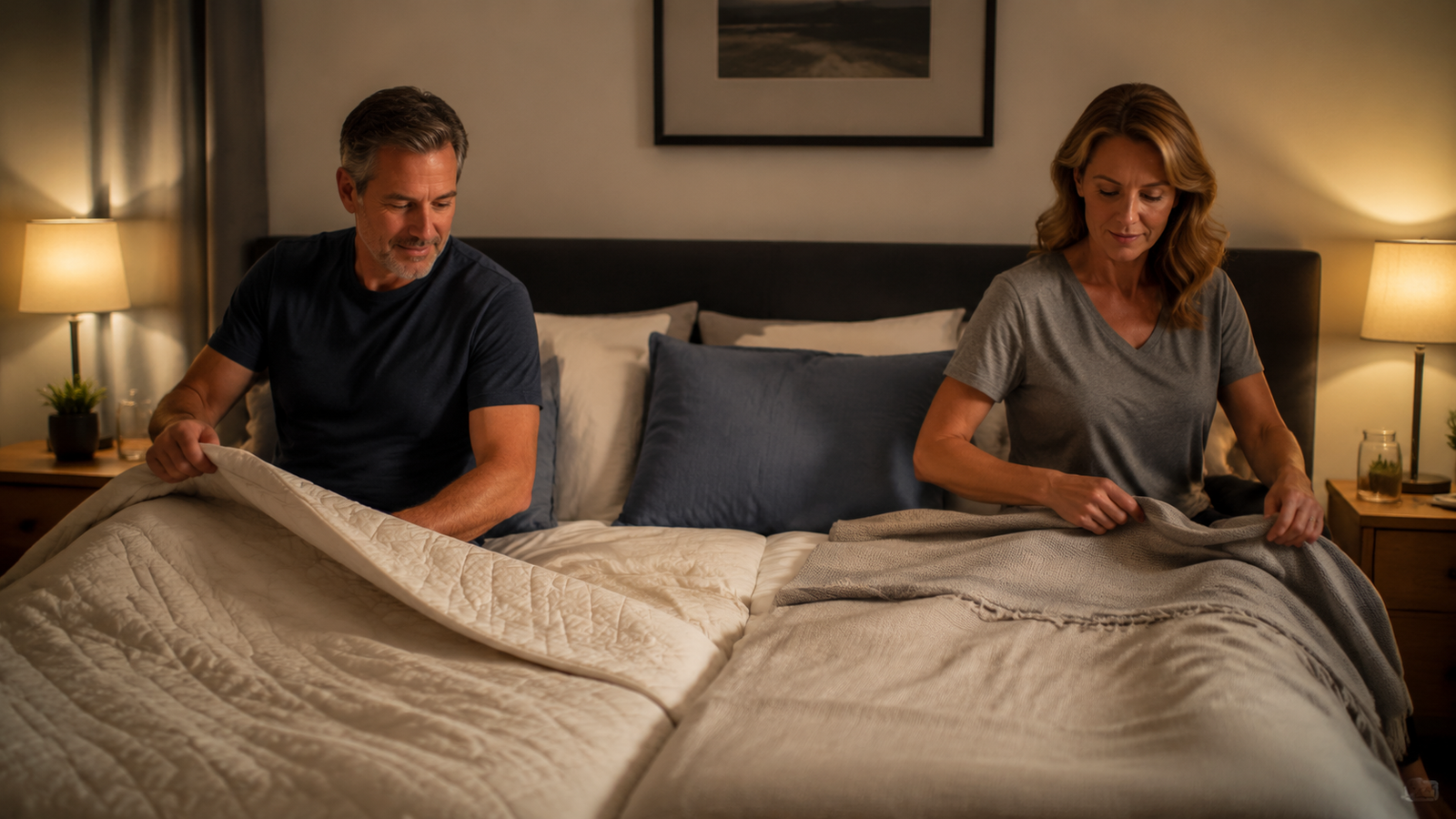
- Separate blankets
- Different blanket weights
- A fan directed toward only one side
- Breathable bedding on the warmer side
- Socks or an extra layer for the colder sleeper
- Separate mattress toppers when heat retention differs
- Adjusting the shared thermostat gradually
- Keeping spare layers within reach
Separate blankets are often the cheapest solution. They are also considerably easier than holding a midnight household referendum about the thermostat.
Babies Need Different Safety Guidance
Adult temperature advice should not be directly applied to infants.
Parents and caregivers should focus on avoiding overheating while following complete safe-sleep recommendations. These include placing babies on their backs, using a firm and flat approved sleep surface, and keeping pillows, loose blankets, bumpers, and soft toys out of the sleep area.
The CDC also advises against allowing a baby’s head to become covered and recommends safe sleep clothing, such as an appropriate wearable blanket, instead of loose bedding. Read the CDC safe-sleep guidance for babies.
Weighted sleepers, weighted swaddles, weighted blankets, and other weighted sleep products are not considered safe for infants.
Ask a pediatric healthcare professional for guidance when a baby is premature, ill, has difficulty regulating temperature, or requires specific medical care.
Temperature Is Only One Part of the Sleep Environment
Changing the thermostat will not correct every cause of poor sleep.
Also check:
- Light entering through windows
- Household or traffic noise
- Phone notifications
- An uncomfortable mattress or pillow
- Late caffeine
- Alcohol near bedtime
- Long or late naps
- Pain, reflux, snoring, or breathing problems
- An irregular sleep schedule
- Too little time allocated for sleep
The CDC sleep guidance recommends a bedroom that is quiet, relaxing, and cool, together with consistent sleep timing and healthy daytime habits.
For a complete routine, use What Is Sleep Hygiene? 12 Habits That Actually Help.
If temperature is comfortable but you repeatedly wake, read Why You Wake Up at Night: 10 Causes and What to Do.
When Temperature Changes Are Not Enough
Speak with a healthcare professional when sleep problems persist or occur with:
- Severe or unexplained night sweats
- Fever or unexplained weight loss
- Loud snoring, gasping, or breathing pauses
- Chest pain or difficulty breathing
- Severe daytime sleepiness
- Falling asleep while driving
- Frequent hot flashes that disrupt daily life
- Pain, reflux, coughing, or frequent urination
- Unusual sensitivity to heat or cold
- Symptoms beginning after a medication change
- Insomnia despite adequate sleep opportunity
Do not stop prescribed medicine because it might affect sleep or temperature regulation. Ask the prescribing clinician or a pharmacist to review the medication and its timing.
Frequently Asked Questions
What is the best bedroom temperature for sleep?
Approximately 65–68°F (18–20°C) is a practical starting range for many adults. It is not ideal for everyone, so adjust it gradually according to bedding, season, humidity, age, health, and personal comfort.
Is 70°F too warm for sleeping?
Not necessarily. Some people sleep comfortably at 70°F, particularly with lightweight bedding and suitable airflow. If you sweat, repeatedly remove covers, or wake feeling overheated, test a slightly cooler setting.
Is 60°F too cold for sleeping?
It may be comfortable for some adults using appropriate bedding, but too cold for others. If you shiver, tense your muscles, develop very cold hands or feet, or wake repeatedly, increase the temperature or add a suitable layer.
Does a cold room increase deep sleep?
A comfortably cool environment can support normal heat loss and reduce overheating. However, colder does not automatically mean more deep sleep. Cold discomfort can also cause awakenings, and consumer trackers cannot precisely determine whether a thermostat change increased deep sleep.
Is a fan or air conditioner better?
An air conditioner lowers room temperature and often reduces humidity. A fan mainly moves air and may provide steady background noise. The better choice depends on actual room temperature, humidity, energy use, health, and personal comfort.
Should I sleep with a fan pointed at me?
You can if it feels comfortable. If direct airflow causes dry eyes, nasal irritation, throat discomfort, or chills, point it away from your face or use oscillation.
Why am I still sweating in a cool room?
Heavy bedding, a heat-retaining mattress, menopause, alcohol, medication, illness, anxiety, and other health factors may contribute. Persistent or unexplained night sweats deserve medical evaluation.
How long should I test a bedroom temperature?
Test a one- or two-degree change for several nights while keeping bedding reasonably consistent. Look for a repeated pattern rather than judging the setting after one night.
Final Thoughts
The best bedroom temperature for sleep is not one exact number printed on every thermostat.
For many adults, 65–68°F (18–20°C) provides a useful starting point. From there, adjust the room by one or two degrees and pay attention to sweating, chills, awakenings, bedding changes, and morning comfort.
Remember that your body experiences the combined effect of room temperature, humidity, airflow, sleepwear, mattress, and bedding. Changing the comforter may sometimes help more than changing the thermostat.
Create a bedroom that feels comfortably cool—not punishingly cold—and adapt it across seasons and life stages.
If sleep remains poor after your environment becomes comfortable, investigate other causes instead of continuing to lower the temperature.