

Why Do I Wake Up Dizzy? 9 Common Causes and Smart Solutions (2026)
Why do I wake up dizzy? Morning dizziness may be caused by benign positional vertigo, a sudden drop in blood pressure, dehydration, low blood sugar, medication side effects, sleep apnea, anxiety, or another medical condition.
Some people feel lightheaded only when they stand up, while others experience a spinning sensation as soon as they roll over in bed. You may also feel unsteady, weak, nauseated, faint, or as though the room is moving around you.
Morning dizziness can last:
- Only a few seconds after changing position
- Several minutes after getting out of bed
- Until you drink water or eat breakfast
- Throughout the morning
- Intermittently during the entire day
- Every time you turn your head or lie back down
Occasional mild dizziness may have a simple explanation, such as standing too quickly after sleep. However, recurring, severe, or sudden dizziness deserves medical attention because balance disorders, blood pressure problems, heart conditions, neurological disorders, and medication effects can produce similar symptoms.
This guide explains nine possible reasons you may wake up dizzy, the warning signs that require emergency care, and the information you should share with a healthcare professional.
Emergency warning: Call your local emergency number immediately if sudden dizziness occurs with facial drooping, one-sided weakness or numbness, difficulty speaking, confusion, severe headache, double vision, loss of coordination, fainting, chest pain, or severe breathing difficulty.
What Does Morning Dizziness Feel Like?
Before asking why do I wake up dizzy, consider exactly what you mean by “dizzy.” The word can describe several different sensations.
Vertigo
Vertigo feels as though you or your surroundings are spinning, tilting, or moving. It may become worse when you:
- Roll over in bed
- Sit up
- Tilt your head
- Look upward
- Bend down
- Lie back
- Turn toward one side
Lightheadedness
Lightheadedness feels as though you may faint. It often occurs after sitting or standing and may be accompanied by:
- Blurred or darkened vision
- Weakness
- Nausea
- Sweating
- Heart palpitations
- Unsteadiness
If dizziness occurs with a pounding or irregular heartbeat, read Why Do I Wake Up With My Heart Racing? 9 Causes and Effective Fixes for additional symptoms to discuss with your healthcare provider.
Disequilibrium
Disequilibrium is a feeling of being off-balance or unstable without a clear spinning sensation. You may feel as though you are leaning, swaying, or unable to walk in a straight line.
General Weakness or “Foggy” Dizziness
Some people use the word dizziness to describe fatigue, difficulty concentrating, or a vague sense of being disconnected. Poor sleep, low blood sugar, medication effects, anxiety, and sleep disorders may contribute to this type of sensation.
Carefully describing the feeling, duration, triggers, and accompanying symptoms can help a healthcare professional narrow down the possible cause.
When Is Dizziness After Waking an Emergency?
Most brief episodes of morning dizziness are not caused by a medical emergency. However, sudden dizziness can sometimes be a symptom of a stroke, serious heart problem, internal bleeding, or another urgent condition.
According to the Centers for Disease Control and Prevention, stroke warning signs can include sudden dizziness, difficulty walking, loss of balance, vision problems, one-sided weakness, confusion, or trouble speaking.
Seek emergency care immediately if dizziness occurs with:
- Sudden facial drooping
- Weakness or numbness on one side
- Slurred speech or difficulty understanding others
- New double vision or vision loss
- A sudden, severe headache
- Inability to walk or remain balanced
- Chest pressure or pain
- Severe shortness of breath
- A rapid or irregular heartbeat with faintness
- Loss of consciousness
- Seizure
- Persistent vomiting
- A recent head injury
- Black or bloody stools
- Coughing or vomiting blood
Do not drive yourself if you may be experiencing a stroke, heart problem, or another serious emergency.
If dizziness appears with an unusual morning headache, the warning signs in Why Do I Wake Up With a Headache? 9 Common Causes and Solutions may also be relevant.
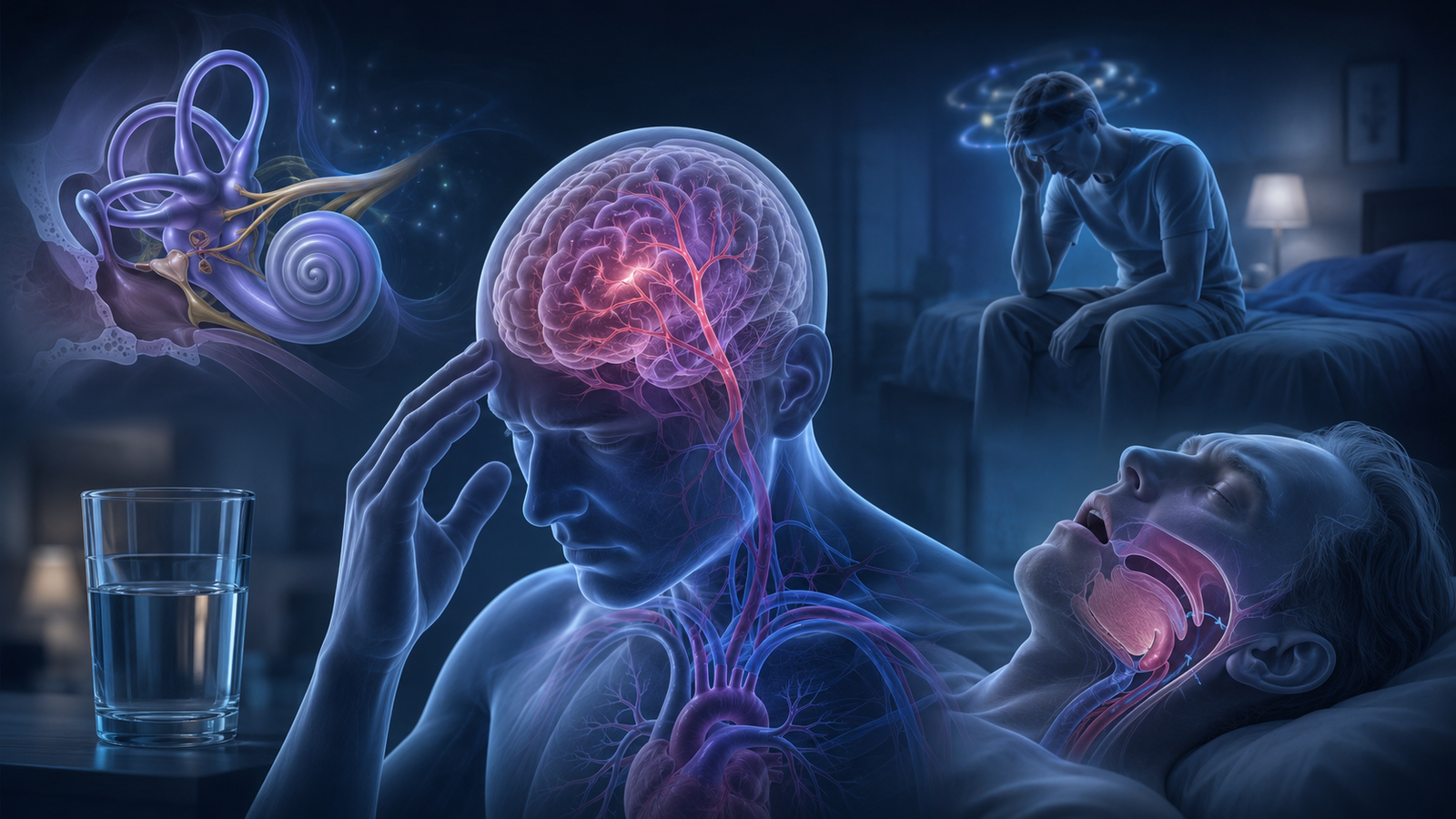
1. Benign Paroxysmal Positional Vertigo Can Cause Spinning
Benign paroxysmal positional vertigo, commonly called BPPV, is one of the most common explanations for brief spinning sensations triggered by head movement.
The inner ear contains tiny calcium carbonate particles that help the brain detect movement and maintain balance. When some of these particles move into an area where they do not belong, certain head positions can send incorrect movement signals to the brain.
This may cause an intense but usually brief spinning sensation when you:
- Roll over in bed
- Turn toward a particular side
- Sit up after sleeping
- Lie down
- Tilt your head backward
- Bend forward
- Look up toward a high shelf
The National Institute on Deafness and Other Communication Disorders explains that BPPV can trigger brief, intense vertigo following a specific change in head position, including rolling over in bed.
What Does BPPV Feel Like in the Morning?
Possible symptoms include:
- A sudden spinning sensation
- Nausea
- Unsteadiness
- Abnormal eye movements
- Loss of balance
- Symptoms lasting seconds to less than a minute
- Repeated episodes after the same head movement
- Lingering mild imbalance after the spinning stops
BPPV does not usually cause hearing loss, fainting, weakness, numbness, or difficulty speaking. Symptoms such as these require medical evaluation for another cause.
A healthcare professional may use a positional examination to determine whether your symptoms match BPPV. If confirmed, specific repositioning maneuvers can help move the displaced particles. These maneuvers should initially be performed or taught by a qualified professional because dizziness can have other causes and incorrect movements may worsen certain neck or back conditions.
2. Orthostatic Hypotension May Make You Dizzy When You Stand
Orthostatic hypotension—also called postural hypotension—is a drop in blood pressure that occurs after moving from lying or sitting to standing.
When you get out of bed, gravity causes some blood to move toward your legs and abdomen. Your body normally responds by adjusting your heart rate and tightening blood vessels to maintain blood flow to the brain.
If that adjustment is delayed or insufficient, you may briefly feel:
- Lightheaded
- Faint
- Weak
- Unsteady
- Nauseated
- Confused
- Tired
- Unable to see clearly
The sensation usually begins after sitting up or standing rather than while you remain still in bed. Symptoms may improve when you sit or lie down again.
Morning episodes can be more noticeable after you have remained horizontal for several hours. Dehydration, certain medications, alcohol, prolonged bed rest, heart conditions, diabetes, and disorders affecting the nervous system may contribute.
Could Dehydration Be Involved?
You naturally lose some water overnight through breathing, perspiration, and urination. Fluid loss may be greater if you:
- Sweated heavily during sleep
- Had a fever
- Experienced vomiting or diarrhea
- Drank alcohol the previous evening
- Used a diuretic
- Did not drink enough during the day
- Slept in a hot bedroom
- Exercised intensely without replacing fluids
Other possible signs of dehydration include thirst, dark urine, reduced urination, fatigue, and a dry mouth. If dryness regularly accompanies the dizziness, see Why Do I Wake Up With a Dry Mouth? 8 Causes and Simple Fixes.
Do not assume every episode is caused by dehydration or simply drink excessive amounts of water. People with heart, kidney, liver, or electrolyte disorders may require individualized fluid guidance.
What Should You Do When Standing Makes You Dizzy?
Until the cause has been evaluated:
- Remain lying down for a moment after waking.
- Sit on the edge of the bed slowly.
- Wait until you feel steady before standing.
- Hold a stable surface when you stand.
- Sit or lie down immediately if you feel faint.
- Avoid walking until your vision and balance return to normal.
A healthcare professional may compare your blood pressure and pulse while you are lying down and after you stand. Recurrent symptoms should be evaluated rather than treated only by standing more slowly, especially when dizziness occurs with fainting, chest pain, breathlessness, or heart palpitations.
3. Overnight Dehydration Can Make You Feel Lightheaded
Dehydration is a common possible answer to why do I wake up dizzy, especially when the sensation appears after sitting up or standing and occurs with thirst, a dry mouth, or dark urine.
Your body loses water overnight through breathing, perspiration, and urination. This normal fluid loss is usually small, but it can become significant when combined with inadequate fluid intake or illness.
Morning dehydration may be more likely if you:
- Drank very little during the previous day
- Sweated heavily overnight
- Slept in a hot or humid bedroom
- Exercised intensely without replacing fluids
- Drank alcohol before bed
- Had vomiting, diarrhea, or a fever
- Urinated frequently during the night
- Take a prescribed diuretic
- Have a condition that affects fluid balance
- Are an older adult with a reduced sense of thirst
According to MedlinePlus, adult dehydration symptoms may include thirst, dry mouth, reduced urination, dark-colored urine, fatigue, and dizziness.
How Does Dehydration Cause Morning Dizziness?
When your body lacks enough fluid, blood volume may decrease. This can make it harder to maintain adequate blood flow to the brain, particularly when you move quickly from lying down to standing.
The resulting sensation may feel like:
- Lightheadedness
- Weakness
- Unsteadiness
- Blurred or darkened vision
- Nausea
- A rapid heartbeat
- Feeling as though you may faint
Dehydration generally causes lightheadedness rather than the distinct room-spinning sensation associated with vertigo. However, people describe dizziness differently, so the sensation alone cannot confirm its cause.
Morning thirst and dryness may offer another clue. If these symptoms occur regularly, Why Do I Wake Up With a Dry Mouth? 8 Causes and Simple Fixes explains how mouth breathing, medications, dehydration, and sleep disorders may contribute.
What Can You Do?
For mild symptoms without medical fluid restrictions:
- Sit up slowly before leaving the bed
- Drink a moderate amount of water
- Eat regular, balanced meals
- Replace fluids after exercise or illness
- Limit excessive alcohol consumption
- Keep the bedroom comfortably cool
- Monitor whether your urine remains unusually dark
- Discuss frequent nighttime urination with a healthcare professional
Avoid rapidly consuming an excessive amount of water. Too much water can dilute sodium levels, while people with heart, kidney, liver, or hormonal conditions may need individualized guidance.
Seek prompt medical care if suspected dehydration occurs with confusion, fainting, inability to keep fluids down, very little urination, rapid breathing, or a persistently fast heartbeat.
4. Low Blood Sugar May Cause Dizziness After Waking
Low blood glucose, also called hypoglycemia, can cause dizziness, sweating, shakiness, hunger, weakness, and confusion.
It is particularly important to consider in people who:
- Use insulin
- Take certain diabetes medications
- Skip or delay meals
- Exercise more than usual
- Drink alcohol without enough food
- Have recently changed a diabetes treatment plan
- Have kidney, liver, or hormone-related conditions
- Have previously experienced nighttime hypoglycemia
An ordinary overnight fast does not usually cause true hypoglycemia in an otherwise healthy person. Recurring symptoms should therefore be evaluated rather than assumed to mean you simply need more sugar.
The National Institute of Diabetes and Digestive and Kidney Diseases lists dizziness, lightheadedness, hunger, tiredness, shakiness, confusion, headache, and a rapid or irregular heartbeat among possible symptoms of low blood glucose.
Signs of Overnight Hypoglycemia
An episode during sleep may cause:
- Night sweats
- Damp bedding or pajamas
- Restless sleep
- Nightmares
- Waking suddenly
- A morning headache
- Unusual fatigue
- Irritability
- Confusion after waking
- Shakiness or intense hunger
- A pounding heartbeat
If a racing heartbeat is one of your main symptoms, additional possible causes are discussed in Why Do I Wake Up With My Heart Racing? 9 Causes and Effective Fixes.
Symptoms alone cannot prove that your glucose level is low. Anxiety, medication effects, dehydration, abnormal heart rhythms, and other conditions can create a similar combination of sweating, trembling, dizziness, and palpitations.
What Should You Do if You Have Diabetes?
Follow the hypoglycemia plan provided by your diabetes care team. If possible, check your glucose with your usual meter or monitoring device when symptoms occur.
Do not independently stop insulin or change a medication dose because you felt dizzy one morning. Repeated nighttime episodes may require a professional review of:
- Medication type and timing
- Evening meal composition
- Alcohol consumption
- Exercise timing
- Glucose-monitoring results
- Kidney or liver function
- Other medications and supplements
Severe hypoglycemia can cause seizures, loss of consciousness, or an inability to treat yourself. A person who is unconscious or unable to swallow should not be given food or drink by mouth. Use prescribed emergency glucagon if available and call emergency services.
People without diabetes should arrange an evaluation if symptoms recur, particularly when an episode is accompanied by measured low glucose, confusion, fainting, or seizure activity.
5. Sleep Apnea May Contribute to Morning Dizziness
Obstructive sleep apnea causes the upper airway to repeatedly narrow or close during sleep. Breathing may stop and restart many times, reducing sleep quality and sometimes lowering oxygen levels.
Dizziness is not one of the most specific or defining symptoms of sleep apnea. However, disrupted sleep, oxygen fluctuations, morning headaches, blood pressure changes, and associated health conditions may contribute to feeling foggy, weak, or unsteady after waking.
Possible signs of sleep apnea include:
- Frequent loud snoring
- Witnessed breathing pauses
- Choking or gasping during sleep
- Morning headaches
- Dry mouth after waking
- Excessive daytime sleepiness
- Difficulty concentrating
- Irritability
- Frequent nighttime urination
- Restless or fragmented sleep
- Feeling unrefreshed despite enough time in bed
The National Heart, Lung, and Blood Institute identifies breathing that stops and restarts, loud snoring, and gasping for air as common nighttime symptoms. Daytime signs may include tiredness, headache, dry mouth, and problems concentrating.
If you wake with dizziness and an unexplained headache, review Why Do I Wake Up With a Headache? 9 Common Causes and Solutions for additional patterns to discuss with your doctor.
Who Is More Likely to Have Sleep Apnea?
Risk may be higher with:
- Excess body weight
- A naturally narrow upper airway
- Large tonsils or tongue
- Increasing age
- Family history of sleep apnea
- Alcohol consumption near bedtime
- Smoking
- Nasal congestion
- Certain hormonal or neurological conditions
- Sleeping on your back
Sleep apnea can also occur in people who are not overweight, so body size alone should not be used to rule it out.
When Should You Request a Sleep Evaluation?
Discuss sleep apnea testing with a healthcare professional if morning dizziness repeatedly occurs alongside:
- Loud snoring
- Witnessed breathing pauses
- Gasping or choking
- Persistent morning headaches
- Severe daytime sleepiness
- Resistant high blood pressure
- Waking with a racing heart
- Poor concentration despite adequate sleep time
A home sleep apnea test or overnight sleep study may be recommended. If sleep apnea is confirmed, treatment may involve positive airway pressure therapy, an oral appliance, weight management, positional therapy, surgery, or treatment of contributing conditions.
Avoid driving or operating machinery when dizziness or sleepiness makes it unsafe. Lifestyle changes may help some people, but they should not replace testing or prescribed treatment.
Dehydration vs. Low Blood Sugar vs. Sleep Apnea
These accompanying symptoms may offer clues, but they cannot establish a diagnosis.
| Possible cause | Common morning clues |
|---|---|
| Dehydration | Thirst, dry mouth, dark urine, reduced urination, lightheadedness after standing |
| Low blood sugar | Shaking, sweating, hunger, confusion, headache, rapid heartbeat |
| Sleep apnea | Loud snoring, gasping, breathing pauses, morning headache, daytime sleepiness |
| BPPV | Brief spinning triggered by rolling over, sitting up, looking up, or turning the head |
| Orthostatic hypotension | Lightheadedness beginning after sitting or standing and improving after lying down |
More than one factor may be present. For example, sleep apnea can coexist with high blood pressure, while dehydration can make postural blood-pressure changes more noticeable.
Recurring morning dizziness should be assessed using the full pattern of symptoms rather than one clue alone.
6. Medication Side Effects May Be More Noticeable in the Morning
Medication effects are another possible answer to why do I wake up dizzy, particularly when symptoms began after starting a medicine, changing the dose, or altering the time you take it.
Some medicines can cause lightheadedness by lowering blood pressure, increasing fluid loss, causing drowsiness, or affecting balance. The effect may remain noticeable the next morning when a medicine is taken at night.
Examples that may contribute include:
- Blood pressure medicines
- Diuretics
- Sedatives and sleeping pills
- Certain antidepressants
- Anti-anxiety medicines
- Some antihistamines
- Muscle relaxants
- Opioid pain medicines
- Some seizure medicines
- Medicines that lower blood sugar
The U.S. Food and Drug Administration notes that certain prescription and over-the-counter medicines can cause dizziness, drowsiness, blurred vision, fainting, or impaired coordination. These effects may sometimes continue into the following day.
Medication-related dizziness may be more likely if:
- It started soon after a new prescription
- Your dose recently increased
- You take several medicines with similar effects
- Symptoms are strongest after standing
- You also feel unusually sleepy or mentally foggy
- You recently added an over-the-counter sleep aid
- You combined medication with alcohol
- The dizziness follows a consistent dosing pattern
What Should You Do?
Review every product you take, including prescriptions, over-the-counter medicines, vitamins, supplements, and sleep aids, with a doctor or pharmacist.
Do not suddenly stop or reduce a prescribed medicine. Abrupt withdrawal from certain medicines can cause serious complications. Instead, ask whether the dose, timing, interaction, or medication itself could be contributing.
Until the problem is reviewed:
- Sit up and stand slowly
- Avoid driving while dizzy
- Use support when walking
- Avoid alcohol
- Follow the dosing instructions precisely
- Record when you take each medicine and when symptoms begin
Seek urgent care if dizziness after taking a medicine occurs with facial swelling, difficulty breathing, severe rash, fainting, chest pain, confusion, or a rapid or irregular heartbeat.
7. Anemia or a Circulation Problem Can Cause Lightheadedness
Anemia occurs when the body does not have enough healthy red blood cells to carry adequate oxygen to its tissues.
Morning dizziness caused by anemia is usually described as lightheadedness, weakness, or near-fainting rather than a brief spinning sensation triggered by rolling over.
Other possible symptoms include:
- Persistent fatigue
- Pale skin
- Shortness of breath
- Headaches
- Weakness
- Cold hands and feet
- A rapid or irregular heartbeat
- Reduced exercise tolerance
- Difficulty concentrating
- Fainting in more serious cases
The National Heart, Lung, and Blood Institute identifies tiredness, weakness, shortness of breath, headache, dizziness, and fainting among the possible symptoms of anemia.
Possible causes include iron deficiency, vitamin B12 or folate deficiency, chronic disease, kidney disease, inherited blood disorders, and blood loss.
Blood loss may not always be obvious. Tell a healthcare professional if dizziness accompanies:
- Black or bloody stools
- Vomiting blood
- Frequent nosebleeds
- Unexplained bruising
- Recent surgery or injury
- Heavy menstrual bleeding
- Abdominal pain
- Unexplained weight loss
Do Not Start Iron Without Testing
Dizziness and fatigue do not confirm iron deficiency. A healthcare professional may order a complete blood count and additional tests to identify whether anemia is present and what caused it.
Taking iron unnecessarily may cause side effects, interact with other medicines, or delay diagnosis of the actual problem.
Could the Heart or Circulation Be Involved?
Lightheadedness can also occur when the brain temporarily receives inadequate blood flow. Possible contributors include:
- Low blood pressure
- An abnormal heart rhythm
- Heart-valve disease
- Reduced heart-pumping function
- Significant blood loss
- Medication-related blood-pressure changes
- Autonomic nervous system disorders
Contact a healthcare professional promptly if morning dizziness repeatedly occurs with palpitations, unusual fatigue, breathlessness, or reduced exercise tolerance.
If dizziness appears with chest discomfort, review Why Do I Wake Up With Chest Pain? 9 Possible Causes and seek emergency care for pressure, spreading pain, sweating, faintness, or breathing difficulty.
Call emergency services immediately if dizziness occurs with:
- Fainting
- Chest pressure or pain
- Severe shortness of breath
- A very fast or irregular heartbeat
- New confusion
- Blue or gray lips
- Signs of major bleeding
- Sudden weakness, speech difficulty, or vision loss
8. Anxiety and Hyperventilation Can Trigger Dizziness
Anxiety can cause dizziness during the night or after waking, particularly when it leads to rapid or unusually deep breathing.
Hyperventilation means breathing more than the body requires. This lowers the amount of carbon dioxide in the blood and may cause:
- Lightheadedness
- Tingling around the mouth or in the hands
- Numbness
- Chest tightness
- A racing heartbeat
- Shortness of breath
- Trembling
- Sweating
- Blurred vision
- A feeling of unreality
- Fear of fainting or losing control
A nocturnal panic attack can awaken you suddenly with intense fear and strong physical sensations. The National Institute of Mental Health lists difficulty breathing, weakness or dizziness, chest pain, trembling, sweating, and a pounding heartbeat among possible panic-attack symptoms.
Some people remain lightheaded or exhausted after the most intense fear has passed. Poor sleep caused by ongoing anxiety may also contribute to a vague, foggy, or unsteady feeling the next morning.
Clues That Anxiety May Be Contributing
Anxiety-related dizziness may be more likely when:
- It occurs during intense fear or worry
- You breathe rapidly
- Your fingers or lips tingle
- Your heart pounds
- You feel detached from your surroundings
- Symptoms peak quickly and gradually improve
- Previous medical evaluations excluded other causes
- Episodes occur during stressful periods
However, anxiety should not become the default explanation for new dizziness. Stroke, abnormal heart rhythms, low blood sugar, asthma, anemia, medication effects, and inner-ear conditions can create overlapping symptoms.
If dizziness occurs with nighttime breathing distress, Why Do I Wake Up Short of Breath? 9 Causes and What to Do explains additional causes and urgent warning signs.
What Can Help During an Episode?
If serious physical causes have been excluded:
- Sit or lie down somewhere safe.
- Relax your shoulders and jaw.
- Breathe gently through your nose.
- Allow the abdomen to rise without forcing a large breath.
- Exhale slowly and comfortably.
- Avoid repeatedly taking rapid, deep breaths.
- Remain seated until your balance returns.
Do not breathe into a paper bag. This outdated technique can be dangerous when symptoms are caused by a heart, lung, or metabolic problem rather than anxiety.
Recurring panic attacks or persistent anxiety may improve with professional treatment such as cognitive behavioral therapy, medication, or both. Arrange an evaluation if fear of another episode leads to bedtime avoidance, insomnia, or disruption of everyday activities.
Medication Effects vs. Anemia vs. Anxiety
These patterns offer clues but cannot confirm a diagnosis.
| Possible cause | Common clues |
|---|---|
| Medication effect | Begins after a new medicine or dose change; may include drowsiness, low blood pressure, or impaired balance |
| Anemia | Fatigue, weakness, pale skin, breathlessness, headache, or rapid heartbeat |
| Circulation problem | Lightheadedness, fainting, palpitations, chest discomfort, or symptoms during exertion |
| Anxiety or hyperventilation | Rapid breathing, tingling, trembling, intense fear, chest tightness, or feeling detached |
| BPPV | Brief spinning after rolling over or changing head position |
| Orthostatic hypotension | Lightheadedness after sitting or standing that improves when lying down |
More than one cause may be involved. A medication can lower blood pressure, anemia can make exertional symptoms worse, and unexplained dizziness can itself trigger anxiety.
For that reason, recurring symptoms should be evaluated using their timing, triggers, accompanying signs, medication history, and appropriate medical testing—not one symptom in isolation.
9. Vestibular Migraine or Another Inner-Ear Disorder May Be Responsible
Vestibular migraine is another possible explanation for why do I wake up dizzy, especially when episodes involve motion sensitivity, nausea, imbalance, or sensitivity to light and sound.
Unlike a typical migraine, vestibular migraine can cause vertigo without a severe headache. Symptoms may last from several minutes to hours and occasionally longer.
Possible signs include:
- Spinning or rocking sensations
- Loss of balance
- Sensitivity to head movement
- Nausea or vomiting
- Sensitivity to light, sound, or strong smells
- Visual disturbances
- A history of migraines
- Head pressure or throbbing pain
Johns Hopkins Medicine explains that vestibular migraine may produce vertigo, unsteadiness, and motion sensitivity, with or without headache.
Other inner-ear conditions can also cause dizziness:
- Vestibular neuritis: Often causes sudden, continuous vertigo and difficulty walking.
- Labyrinthitis: May produce vertigo together with hearing changes.
- Ménière’s disease: Can cause episodes of vertigo, tinnitus, hearing loss, or fullness in one ear.
The National Institute on Deafness and Other Communication Disorders identifies vertigo, hearing changes, tinnitus, and ear fullness as possible clues to certain balance disorders.
When Should You Seek Medical Care?
Arrange prompt medical evaluation if dizziness:
- Is sudden, severe, or persistent
- Returns repeatedly
- Prevents you from walking normally
- Occurs with new hearing loss
- Follows an infection or head injury
- Causes repeated vomiting
- Occurs with a new or unusual headache
Sudden severe dizziness with weakness, numbness, speech difficulty, double vision, confusion, or an inability to stand may indicate a stroke. Call emergency services immediately.
If dizziness regularly occurs with head pain, Why Do I Wake Up With a Headache? 9 Common Causes and Solutions may help you identify additional details to share with your healthcare provider.
How Will a Doctor Evaluate Morning Dizziness?
A healthcare professional may ask:
- Does the room spin, or do you feel faint?
- Does dizziness begin while rolling over, sitting up, or standing?
- How long does each episode last?
- Do you experience nausea, headache, tinnitus, or hearing loss?
- Do you snore or wake gasping?
- Have you started or changed any medication?
- Do you have diabetes, anemia, migraines, or heart disease?
- Have you recently had an infection, injury, vomiting, or diarrhea?
Depending on the pattern, evaluation may include:
- Blood pressure measurements while lying and standing
- Ear and eye-movement examinations
- A balance or positional test
- Blood glucose testing
- A complete blood count
- An electrocardiogram
- Hearing tests
- Neurological assessment
- Brain imaging when clinically necessary
- A sleep study when sleep apnea is suspected
Keep a brief record of the timing, duration, triggers, medication use, evening meals, and accompanying symptoms. Do not delay emergency care to complete the record.
How Can You Reduce Dizziness After Waking?
Treatment depends on the cause, but these safety measures may reduce falls:
- Remain still for a moment after waking.
- Roll onto your side before sitting up.
- Sit on the edge of the bed until you feel steady.
- Stand while holding a stable surface.
- Keep the route to the bathroom free from clutter.
- Use a night-light when walking in darkness.
- Avoid driving while dizzy.
- Follow prescribed treatment for diabetes, sleep apnea, or blood pressure problems.
- Review medications with a doctor or pharmacist.
- Arrange an evaluation when symptoms recur.
Do not perform repositioning maneuvers, start iron, change medication doses, or consume excessive amounts of water unless the suspected cause has been appropriately assessed.
Frequently Asked Questions
Is it normal to wake up dizzy?
Brief mild lightheadedness after standing quickly can occur, but recurring or unexplained dizziness should not be considered normal. Seek medical advice if it keeps returning, lasts a long time, or disrupts everyday activities.
Why do I wake up dizzy when I roll over?
Brief spinning triggered by rolling over commonly occurs with BPPV. A healthcare professional can confirm the diagnosis and determine whether a repositioning maneuver is appropriate.
Why am I dizzy when I stand up in the morning?
A sudden blood-pressure drop, dehydration, medication effects, anemia, or a circulation problem may contribute. Sit down immediately if you feel faint and seek evaluation when episodes recur.
Can sleep apnea make me wake up dizzy?
Sleep apnea may indirectly contribute through disrupted sleep, oxygen fluctuations, morning headaches, and blood-pressure changes. Loud snoring, gasping, witnessed breathing pauses, and daytime sleepiness strengthen the reason to request a sleep evaluation.
Can dehydration cause dizziness every morning?
Dehydration can cause lightheadedness, particularly with thirst, dry mouth, dark urine, or symptoms after standing. Daily dizziness should still be evaluated because medication effects, blood-pressure disorders, anemia, and other conditions may produce similar symptoms.
When is morning dizziness an emergency?
Call emergency services if sudden dizziness occurs with:
- Facial drooping
- One-sided weakness or numbness
- Speech difficulty
- New confusion
- Double vision or vision loss
- A sudden severe headache
- Chest pain
- Fainting
- Severe shortness of breath
- Inability to walk or stand
Final Thoughts
The answer to why do I wake up dizzy may involve BPPV, orthostatic hypotension, dehydration, low blood sugar, sleep apnea, medication effects, anemia, circulation problems, anxiety, vestibular migraine, or another inner-ear disorder.
The timing and type of dizziness provide useful clues, but they cannot confirm the cause. Move slowly when leaving bed, avoid driving while symptoms affect your balance, and arrange medical evaluation for recurring, severe, persistent, or unexplained episodes.
Treat sudden dizziness with neurological symptoms, chest pain, fainting, or severe breathing difficulty as an emergency.
Related Articles
Read Why Do I Wake Up With a Headache? 9 Common Causes and Solutions if dizziness occurs with morning head pain.
Review Why Do I Wake Up With My Heart Racing? 9 Causes and Effective Fixes when dizziness accompanies palpitations.
See Why Do I Wake Up Short of Breath? 9 Causes and What to Do if breathing difficulty is also present.