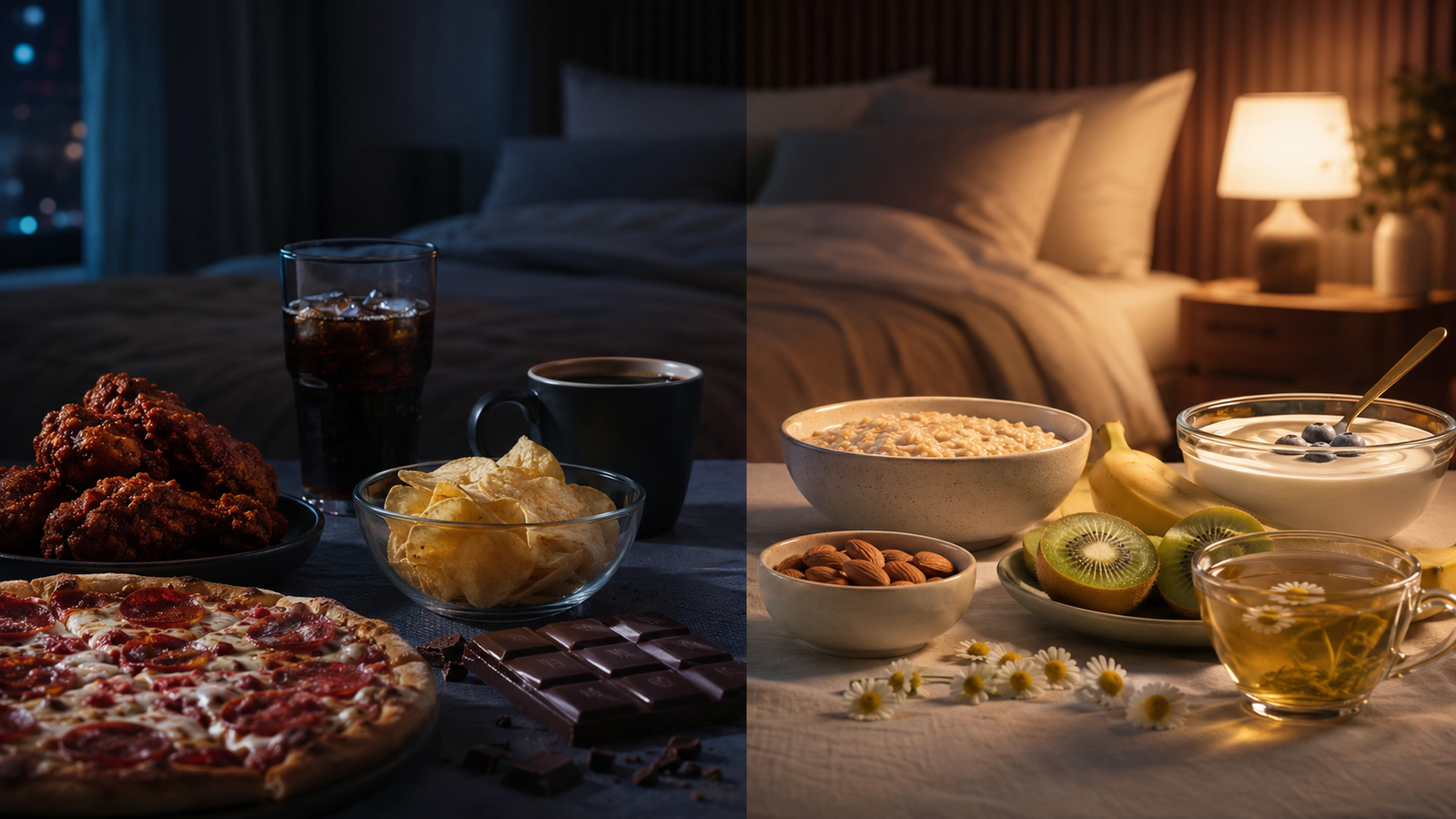
12 Foods to Avoid Before Bed for Better Sleep
Getting a good night’s sleep is not only about maintaining a consistent bedtime. What you eat during the evening can also influence how quickly you fall asleep and how well you stay asleep.
Some foods to avoid before bed can trigger heartburn, raise blood sugar, stimulate the nervous system, or make digestion work harder while your body is trying to rest. Even foods that seem harmless during the day may interfere with sleep when eaten too close to bedtime.
This guide explains 12 foods that may disrupt sleep, when to stop eating before bed, and healthier alternatives you can choose when nighttime hunger strikes.
How Food Can Affect Your Sleep
Eating a large or heavy meal shortly before lying down can keep your digestive system active for several hours. This may cause physical discomfort, acid reflux, bloating, or frequent awakenings.
Certain foods and drinks can also affect sleep by:
- Increasing alertness and delaying sleep
- Triggering acid reflux or indigestion
- Causing rapid changes in blood sugar
- Raising body temperature
- Increasing nighttime bathroom visits
- Making deep and uninterrupted sleep more difficult
Not everyone reacts to food in exactly the same way. However, if you regularly struggle to fall asleep or wake up during the night, changing your evening food choices may help.
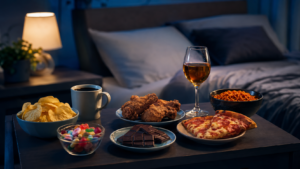
1. Coffee and Other Caffeinated Drinks
Coffee is one of the most obvious drinks to avoid before bedtime. Caffeine blocks adenosine, a natural chemical that helps your brain recognize when it is tired.
The stimulating effects of caffeine can remain in the body for several hours. This means an afternoon coffee may still affect your sleep later that night, especially if you are sensitive to caffeine.
Caffeine may also be found in:
- Espresso and cold brew
- Black tea and green tea
- Energy drinks
- Cola
- Pre-workout supplements
- Some headache medications
For better sleep, consider stopping caffeine at least six hours before bedtime. People who are highly sensitive may need to avoid it after lunchtime.
2. Chocolate
Chocolate may feel like a comforting evening treat, but it contains both caffeine and theobromine. These natural stimulants can increase alertness and may make it harder to relax.
Dark chocolate generally contains more caffeine than milk chocolate because it has a higher cocoa content. Chocolate also contains sugar, which may cause changes in blood glucose when eaten in large amounts.
You do not necessarily have to remove chocolate from your diet. Try enjoying a small portion earlier in the day instead of eating it immediately before bed.
3. Spicy Foods
Spicy dishes can cause indigestion, stomach discomfort, or heartburn, particularly when you lie down soon after eating.
Ingredients such as chili peppers contain capsaicin, a compound that creates a warming sensation. It may temporarily raise body temperature, while the natural drop in core body temperature is an important part of the body’s preparation for sleep.
Common spicy foods to limit in the evening include:
- Spicy fried chicken
- Hot curry
- Chili-covered snacks
- Spicy noodles
- Salsa and hot sauce
- Foods containing large amounts of red pepper
If you enjoy spicy meals, try eating them at lunch or during the early evening. This gives your digestive system more time to settle before bedtime.
4. Fried and Greasy Foods
Fried foods tend to be high in fat and can take longer to digest than lighter meals. Eating them late at night may leave you feeling overly full, bloated, or uncomfortable when you lie down.
Greasy foods can also relax the lower esophageal sphincter in some people. This makes it easier for stomach acid to move upward and cause nighttime heartburn.
Examples include:
- French fries
- Fried chicken
- Onion rings
- Potato chips
- Greasy pizza
- Deep-fried snacks
When you want something savory at night, choose a small portion of whole-grain crackers, plain oatmeal, or lightly seasoned nuts instead. These options are usually easier on the stomach when eaten in moderation.
5. High-Sugar Desserts
Cookies, cakes, donuts, candy, and ice cream may satisfy a late-night craving, but large amounts of added sugar can interfere with stable sleep.
Sugary foods can cause a rapid rise in blood glucose followed by a drop later. These changes may contribute to restlessness or nighttime awakenings in some people. Desserts that combine sugar, chocolate, and saturated fat can be especially heavy before bed.
High-sugar foods to limit at night include:
- Candy and chocolate bars
- Cookies and brownies
- Cakes and pastries
- Sweetened breakfast cereals
- Ice cream
- Sugary yogurt
- Syrup-covered desserts
For something naturally sweet, try a small serving of kiwi, tart cherries, or plain Greek yogurt with a few banana slices.
6. Pizza
Pizza combines several ingredients that may make it difficult to sleep comfortably. Tomato sauce is acidic, cheese is high in fat, and processed meat can contain a large amount of sodium.
This combination may cause heartburn, thirst, bloating, or slow digestion—especially when pizza is eaten shortly before lying down. Spicy toppings such as pepperoni, sausage, or chili flakes may increase discomfort.
If pizza is your evening meal, eat a moderate portion at least three hours before bed. Choosing lighter toppings and eating it earlier can reduce its effect on sleep.
7. Tomato-Based Foods
Tomatoes are nutritious, but their natural acidity may trigger reflux in people with sensitive stomachs. Lying down after eating can make it easier for stomach acid to travel toward the esophagus.
Common tomato-based foods include:
- Pasta with tomato sauce
- Pizza
- Tomato soup
- Ketchup
- Salsa
- Spicy marinara sauce
You may not need to avoid tomatoes completely. If they regularly cause heartburn, eat them earlier in the day and choose a mild, non-acidic evening meal instead.
8. Processed and Salty Foods
Chips, instant noodles, processed meats, and packaged snacks often contain high levels of sodium. Eating too much salt in the evening may make you thirsty and encourage you to drink more water close to bedtime.
This can lead to nighttime bathroom visits that interrupt your sleep. Salty meals may also cause temporary fluid retention, leaving you feeling uncomfortable or bloated.
Foods to watch include:
- Potato chips
- Instant noodles
- Bacon and sausage
- Deli meats
- Salted crackers
- Fast food
- Frozen meals
Choose lightly salted nuts, whole-grain crackers, or a small bowl of plain oatmeal when you need a simple late-night snack.
9. Fatty Red Meat
Steak, burgers, and other fatty cuts of red meat require more time and effort to digest than lighter foods. A large serving close to bedtime may cause fullness, indigestion, or acid reflux.
Processed red meats can create additional problems because they are often high in sodium and saturated fat.
If you plan to eat red meat for dinner, choose a moderate portion and finish the meal several hours before sleep. Lean protein options such as chicken, turkey, or fish may feel lighter in the evening.
10. Alcohol
Alcohol may make you feel sleepy at first, but it does not usually support healthy, restorative sleep. As the body processes alcohol, sleep can become lighter and more fragmented.
Alcohol may also:
- Reduce REM sleep
- Increase snoring
- Worsen sleep apnea symptoms
- Cause dehydration
- Increase nighttime bathroom visits
- Lead to early morning awakenings
Using alcohol as a sleep aid can create the illusion that you are sleeping better while reducing overall sleep quality. Water or caffeine-free herbal tea is generally a more sleep-friendly evening choice.
11. Large Portions of Cruciferous Vegetables
Broccoli, cauliflower, cabbage, and Brussels sprouts are highly nutritious. However, they contain fiber and complex carbohydrates that may produce gas during digestion.
Eating a large serving shortly before bed can cause bloating or abdominal discomfort in people with sensitive digestive systems.
This does not mean you should avoid these vegetables entirely. Try eating them earlier in the day or serving a smaller cooked portion with dinner. Cooking them thoroughly may also make them easier to digest.
12. Large Amounts of Water
Staying hydrated is essential, but drinking several glasses of water immediately before bed can increase the chance of waking up to use the bathroom.
These interruptions can reduce sleep continuity, even if you fall asleep again quickly. Older adults and people with bladder sensitivity may notice this effect more strongly.
Drink water regularly throughout the day instead of trying to catch up at night. A few small sips before bed are usually fine, but avoid consuming a large amount during the final hour before sleep.
How Long Before Bed Should You Stop Eating?
Most people benefit from finishing a full meal approximately two to three hours before bedtime. This gives the stomach time to begin digestion before you lie down.
The National Heart, Lung, and Blood Institute also recommends avoiding heavy meals and alcoholic drinks close to bedtime as part of healthy sleep habits.
People who experience frequent acid reflux may need a longer gap of three or four hours. The ideal timing depends on your digestion, portion size, food choices, and bedtime routine.
A practical evening schedule might look like this:
- Finish dinner two to three hours before bed
- Avoid caffeine at least six hours before bed
- Limit alcohol during the evening
- Choose only a small snack if you are genuinely hungry
- Reduce liquids during the final hour before sleep
Going to bed overly full can be uncomfortable, but going to bed extremely hungry may also make it difficult to relax. The goal is to find a comfortable middle ground.
What Should You Eat If You Are Hungry Before Bed?
If hunger is keeping you awake, you do not have to ignore it. Choose a small snack that contains protein, fiber, or complex carbohydrates and is easy to digest.
Sleep-friendly options include:
- Plain Greek yogurt
- A small banana
- Kiwi
- Tart cherries
- A small bowl of oatmeal
- Whole-grain crackers
- A spoonful of unsweetened peanut butter
- A small handful of almonds or walnuts
- Cottage cheese
- Caffeine-free chamomile tea
Keep the portion modest. A nighttime snack should reduce hunger without making you feel heavy or overly full.
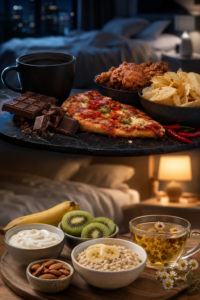
Tips for Healthier Evening Eating
Avoiding every food on this list is not necessary for everyone. Your personal reaction and the amount you eat are equally important.
Try these simple habits:
- Plan dinner instead of relying on late-night takeout
- Keep portions moderate
- Eat slowly and notice when you feel satisfied
- Avoid lying down immediately after eating
- Keep healthier snacks readily available
- Track foods that cause reflux or poor sleep
- Maintain a consistent dinner and bedtime schedule
If you suspect that certain foods affect your sleep, keep a simple food-and-sleep journal for one or two weeks. Record what you ate, when you ate it, and how well you slept. Patterns may become easier to recognize.
Food choices work best when combined with a consistent healthy bedtime routine
Frequently Asked Questions
What is the worst food to eat before bed?
There is no single worst food for everyone. However, large portions of fried, spicy, sugary, or high-fat foods are more likely to cause indigestion, reflux, or restless sleep. Foods and drinks containing caffeine can also delay falling asleep.
Is it bad to eat immediately before sleeping?
Eating a large meal immediately before sleeping may cause discomfort and acid reflux. Whenever possible, finish dinner two to three hours before bed. A small and easy-to-digest snack is generally a better choice if you are hungry.
Can sugar cause poor sleep?
Large amounts of added sugar may contribute to unstable blood glucose and restless sleep in some people. Sugary desserts containing chocolate or high levels of fat may be particularly disruptive when eaten late at night.
Are bananas good before bed?
Bananas can be a suitable bedtime snack when eaten in a modest portion. They provide carbohydrates, potassium, magnesium, and vitamin B6. Pairing a few banana slices with plain yogurt or nut butter can make the snack more satisfying.
What can I eat at night without affecting my sleep?
Good options include plain Greek yogurt, kiwi, tart cherries, oatmeal, whole-grain crackers, almonds, walnuts, or a small banana. Individual reactions vary, so choose a small portion of something that feels comfortable to digest.
Should I go to bed hungry?
Mild hunger is not always a problem, but strong hunger can make it harder to fall asleep. If you are genuinely hungry, choose a light snack rather than a large meal. Avoid foods that are spicy, greasy, caffeinated, or high in added sugar.
Related Guides
- 12 Healthy Bedtime Snacks for Better Sleep
- Best Foods to Eat Before Bed for Better Sleep
- How to Build a Healthy Bedtime Routine
- Does Chamomile Tea Help You Sleep?
Final Thoughts
The most common foods to avoid before bed include caffeinated drinks, chocolate, spicy meals, fried foods, sugary desserts, pizza, salty snacks, fatty meat, and alcohol.
These foods do not affect everyone equally, and eating them occasionally does not mean you will automatically have a bad night. Timing, portion size, digestive sensitivity, and your overall sleep routine all matter.
Start with one realistic change, such as finishing dinner earlier or replacing a sugary dessert with a lighter snack. Small and consistent adjustments can make nighttime digestion more comfortable and support better-quality sleep.