Why Do I Wake Up With a Headache? 9 Common Causes and Solutions (2026)
If you frequently ask, “Why do I wake up with a headache?”, the answer may involve dehydration, poor-quality sleep, teeth grinding, caffeine withdrawal, migraine, medication use, or a sleep disorder such as obstructive sleep apnea.
An occasional morning headache after a stressful night or too little sleep is usually not an emergency. However, headaches that occur repeatedly, become more severe, or appear with neurological symptoms should not be ignored.
Pay attention to where the pain occurs, how long it lasts, and whether you also experience:
- Dry mouth
- Jaw soreness
- Loud snoring
- Nausea
- Sensitivity to light or sound
- Neck stiffness
- Daytime sleepiness
- Blurred vision
- Weakness or numbness
These details can help distinguish an ordinary tension headache from migraine, teeth grinding, dehydration, or a condition requiring medical evaluation.
This guide explains nine common reasons you may wake up with a headache, practical ways to reduce morning pain, and warning signs that mean you should seek medical help.
What Is a Morning Headache?
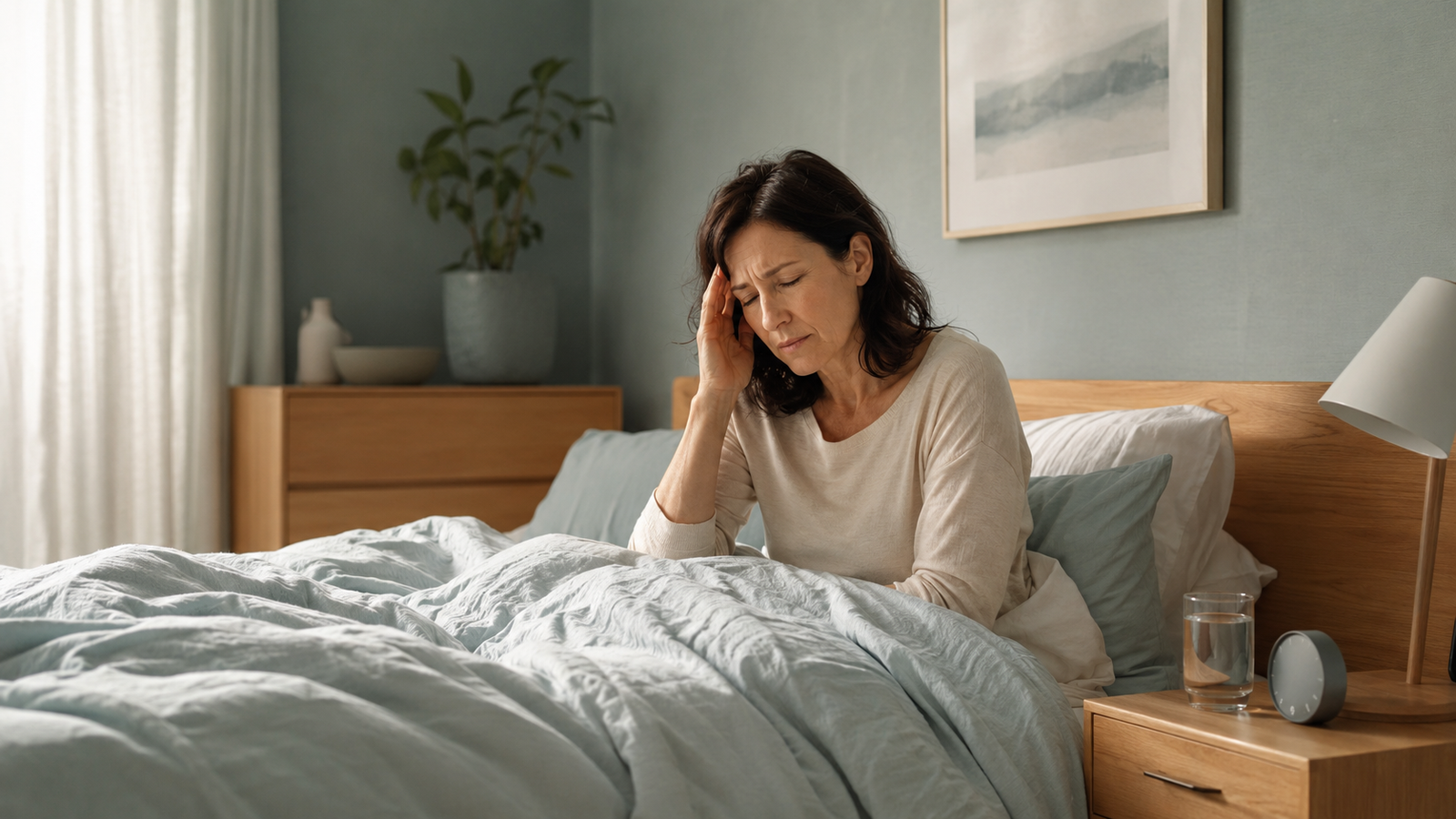
A morning headache is head or facial pain that is already present when you wake or develops shortly afterward.
The pain may feel:
- Dull and heavy
- Tight or pressure-like
- Throbbing or pulsing
- Focused around the temples
- Located behind the eyes
- Concentrated on one side
- Connected to soreness in the jaw or neck
The timing alone does not identify the cause. A headache that appears after waking may have developed during sleep, been triggered by interrupted breathing, or resulted from something that happened the previous evening.
According to the MedlinePlus overview of headaches, tension headaches—the most common type—are associated with tight muscles in the shoulders, neck, scalp, and jaw. Stress, insufficient sleep, missed meals, and alcohol can also contribute.
Keeping a headache diary may help you recognize patterns. Record your bedtime, wake time, sleep quality, caffeine intake, alcohol use, medications, hydration, snoring, and pain severity.
Why Do I Wake Up With a Headache?
Morning headaches have many possible causes. Some are related to daily habits, while others involve the muscles, nervous system, breathing, or an underlying medical condition.
The following nine causes can help you identify which factors may be relevant.
1. You May Be Dehydrated
Your body continues to lose water through breathing, perspiration, and urine while you sleep. If you begin the night without adequate fluids, you may wake mildly dehydrated.
Dehydration can contribute to headaches and may also cause:
- Thirst
- A dry or sticky mouth
- Dry lips or tongue
- Dark yellow urine
- Urinating less frequently
- Dizziness or lightheadedness
- Fatigue
- Muscle cramps
The NHS guidance on dehydration identifies headache, thirst, dark urine, dizziness, tiredness, and dry mouth among its common symptoms.
Morning dehydration may be more likely after:
- Drinking alcohol
- Exercising heavily
- Sweating during the night
- Sleeping in a hot bedroom
- Experiencing vomiting, diarrhea, or fever
- Consuming a salty evening meal
- Taking certain medications
- Not drinking enough during the day
Try drinking fluids consistently throughout the day instead of consuming a large amount immediately before bed. Drinking excessively late may cause repeated bathroom visits and further disrupt your sleep.
Hydration may be involved if your headache improves after drinking water and eating breakfast. However, recurring headaches should not automatically be blamed on dehydration—especially when you already drink enough fluids.
Persistent thirst and frequent urination may require medical evaluation because they can sometimes occur with diabetes or another health condition.
2. Poor-Quality or Insufficient Sleep May Trigger Headaches
Both the amount and quality of your sleep can influence headache risk.
Adults generally need between seven and nine hours of sleep per night, although individual needs vary. Sleeping too little can affect pain sensitivity, stress hormones, muscle tension, and the body’s ability to recover.
Your ideal sleep duration can also vary by age, health, activity level, and individual sleep needs.
Poor sleep quality may involve:
- Taking a long time to fall asleep
- Waking repeatedly during the night
- Waking much earlier than planned
- Sleeping at inconsistent times
- Getting enough hours but still feeling unrefreshed
- Working rotating or overnight shifts
- Experiencing frequent noise or light disruption
The CDC explains that quality sleep should be uninterrupted and refreshing. Repeated awakenings and feeling tired despite sufficient time in bed are signs that sleep quality may be poor.
Headaches may be especially noticeable after:
- Staying awake much later than usual
- Sleeping in after several short nights
- Changing your schedule on weekends
- Traveling across time zones
- Working night shifts
- Experiencing prolonged insomnia
Interestingly, sleeping considerably longer than usual may also trigger headaches in some people, particularly those prone to migraine.
Try maintaining a consistent bedtime and wake time for one or two weeks. Track whether the headache improves when your sleep schedule becomes more regular.
If you repeatedly wake tired and in pain despite allowing enough time for sleep, an underlying disorder such as insomnia, sleep apnea, or nighttime teeth grinding may be affecting sleep quality.
3. You May Be Grinding or Clenching Your Teeth
Sleep bruxism is the involuntary grinding or clenching of the teeth during sleep. Because it often occurs unconsciously, you may not realize it is happening.
Repeated contraction of the jaw and facial muscles can produce a tension-like headache by morning.
Possible signs include:
- Jaw pain or stiffness
- Tender facial muscles
- Pain around the temples
- Tooth sensitivity
- Flattened, chipped, or worn teeth
- Earache without an ear infection
- Clicking or discomfort in the jaw joint
- A partner hearing grinding sounds
- Difficulty opening the mouth comfortably
- Headache that is strongest after waking
The MedlinePlus guide to bruxism lists headaches, morning muscle tenderness, tooth sensitivity, insomnia, and jaw pain among its possible symptoms.
Teeth grinding may be associated with:
- Stress or anxiety
- Sleep apnea and snoring
- Smoking
- High alcohol or caffeine intake
- Certain antidepressants or other medications
- Misaligned teeth in some cases
Understanding how stress affects sleep may help explain why jaw tension and nighttime clenching become worse during emotionally demanding periods.
Avoid purchasing a generic night guard and assuming that it solves the underlying problem. A poorly fitting device may be uncomfortable, and grinding can sometimes occur alongside sleep apnea.
A dentist can examine your teeth for wear, assess your jaw, and determine whether a properly fitted mouth guard may help. If grinding occurs with loud snoring, gasping, breathing pauses, or severe daytime sleepiness, a sleep evaluation may also be appropriate.
Reducing evening caffeine and alcohol, managing stress, and relaxing the jaw before bed may lessen clenching for some people. However, persistent pain or visible tooth damage deserves professional attention.
4. Obstructive Sleep Apnea May Cause Morning Headaches
Obstructive sleep apnea causes the upper airway to repeatedly narrow or close during sleep. Each interruption may reduce sleep quality and force the body to briefly wake so that normal breathing can resume.
These repeated breathing disturbances may contribute to a headache upon waking.
Possible signs of sleep apnea include:
- Loud, frequent snoring
- Breathing that repeatedly stops and starts
- Gasping or choking during sleep
- Waking with a dry mouth
- Morning headaches
- Frequent nighttime urination
- Difficulty concentrating
- Irritability
- Excessive daytime sleepiness
- Feeling unrefreshed after enough time in bed
The NHLBI guide to sleep apnea symptoms includes headaches, dry mouth, daytime tiredness, loud snoring, gasping, and witnessed pauses in breathing among the possible warning signs.
You may not notice the breathing interruptions yourself. A partner may be the first person to report that you snore loudly, choke, or stop breathing temporarily during sleep.
If dryness is one of your main symptoms, review the common reasons you may wake up with a dry mouth.
Risk factors may include:
- Excess body weight
- A naturally narrow airway
- Enlarged tonsils
- Increasing age
- Alcohol use
- Smoking
- A family history of sleep apnea
- Sleeping on your back
- Certain medical conditions
However, sleep apnea can also affect people who do not have obesity or obvious risk factors.
Morning headaches alone cannot confirm sleep apnea. Dehydration, migraine, teeth grinding, caffeine withdrawal, medication use, and poor sleep can produce similar symptoms.
Speak with a healthcare professional if your headaches occur with loud snoring, breathing pauses, gasping, or severe daytime sleepiness. Diagnosis may require a home sleep apnea test or an overnight sleep study.
Untreated sleep apnea can affect more than your morning comfort. Repeated sleep disruption may impair concentration, mood, driving safety, and long-term cardiovascular health.
5. Caffeine Withdrawal May Begin Before You Wake Up
If you regularly consume caffeine, your body may become accustomed to receiving it at approximately the same time each day.
During the overnight period, caffeine levels gradually decline. Some people may therefore develop withdrawal symptoms before consuming their usual morning coffee or tea.
According to MedlinePlus information about caffeine, suddenly stopping regular caffeine consumption can cause headaches, drowsiness, irritability, nausea, and difficulty concentrating.
Caffeine withdrawal may be involved when:
- The headache improves after coffee or tea
- You recently reduced your caffeine intake
- You slept later than usual
- Your first cup was delayed
- You switched to decaffeinated drinks
- You stopped drinking energy drinks
- The headache appears on weekends or holidays
- You regularly consume several caffeinated products
Caffeine may be found in more products than you expect, including:
- Coffee
- Black or green tea
- Energy drinks
- Cola
- Chocolate
- Pre-workout supplements
- Certain pain relievers
- Some cold and diet products
A withdrawal headache does not mean that you must continue consuming large amounts of caffeine. If you want to reduce your intake, decrease it gradually instead of stopping suddenly.
For example, you might replace part of your regular coffee with decaffeinated coffee or reduce one serving at a time. A slower reduction may lessen headaches, fatigue, and irritability.
Avoid treating every morning headache with increasing amounts of caffeine. Too much caffeine—especially later in the day—can make it harder to sleep and may create a cycle of poor sleep, fatigue, additional caffeine, and another headache.
Try keeping the amount and timing consistent while you track your symptoms. If headaches continue despite stable caffeine habits, another cause may be involved.
6. A Migraine Attack May Develop Overnight
Migraine is a neurological condition that can cause moderate to severe headache attacks. The pain often throbs or pulses and may affect one side of the head, although it can occur on both sides.
Migraine can begin during sleep or become noticeable when you wake.
Possible migraine symptoms include:
- Throbbing or pulsing pain
- Pain on one or both sides of the head
- Nausea or vomiting
- Sensitivity to light
- Sensitivity to sound
- Sensitivity to odors
- Pain that worsens with movement
- Visual disturbances
- Tingling or numbness
- Difficulty speaking in some cases
- Fatigue or confusion after the headache
The MedlinePlus migraine overview notes that migraine attacks are more common in the morning and that people sometimes wake with them.
Common triggers vary from person to person but may include:
- Too little or too much sleep
- An inconsistent sleep schedule
- Stress or anxiety
- Hormonal changes
- Caffeine or caffeine withdrawal
- Alcohol
- Skipped meals
- Dehydration
- Bright lights
- Loud noises
- Strong odors
- Certain medications
- Medication overuse
Weekend morning headaches can sometimes result from several triggers occurring together. Sleeping later than usual, delaying caffeine, skipping breakfast, and relaxing after a stressful week may all alter the body’s usual routine.
A migraine diary can help identify patterns. Record:
- The time the headache began
- Pain location and severity
- Sleep duration
- Caffeine and alcohol intake
- Meals and hydration
- Menstrual or hormonal changes
- Stress levels
- Medications taken
- Sensitivity to light or sound
- Nausea or visual symptoms
During a migraine attack, resting in a quiet, dark room, drinking fluids, and applying a cool cloth may provide some relief. Use prescribed or over-the-counter medication only as directed.
Taking pain relievers too frequently can lead to medication-overuse headaches, which may make headaches occur more often. Discuss your treatment with a healthcare professional if you need headache medicine regularly.
Seek medical evaluation when headaches are frequent, severe, changing in character, or interfering with work and daily activities. A clinician can help determine whether the pain is migraine or another type of headache and recommend an appropriate treatment plan.