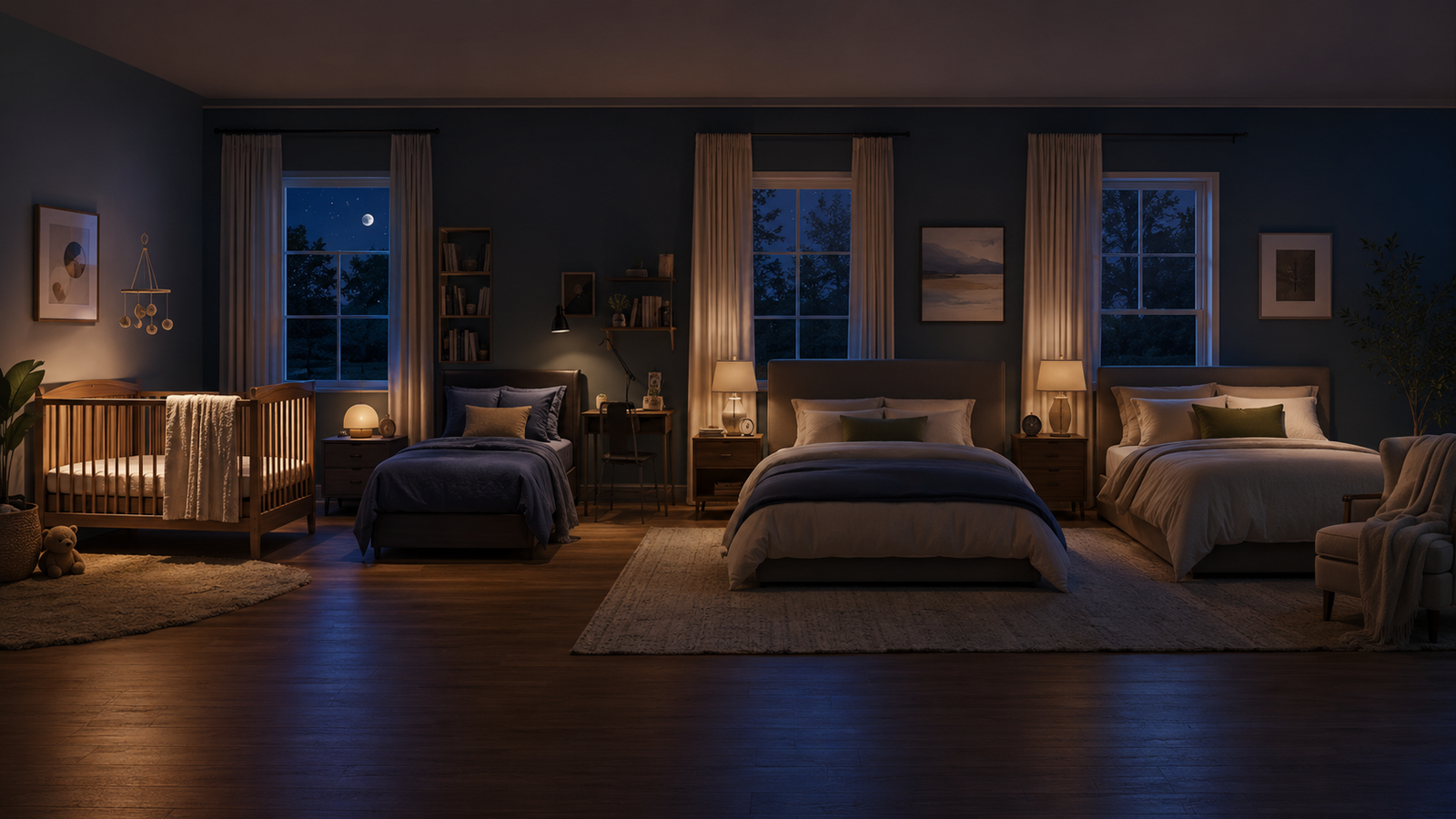
How Much Sleep Do You Need by Age? 9 Signs You Need More Rest
Some people feel refreshed after seven hours, while others struggle to function without nine. Children and teenagers require even more. So, how much sleep do you need by age, and how can you tell whether your current amount is actually enough?
Sleep requirements change throughout life because the brain and body do not remain the same from infancy to older adulthood. Growth, learning, hormonal changes, physical recovery, health conditions, activity levels, and daily responsibilities can all influence sleep needs.
Age-based recommendations provide a helpful starting point, but they are not personalized prescriptions. Two adults of the same age may require slightly different amounts of sleep to feel alert and function well.
Quick answer: Most adults need at least seven hours of sleep each night. Babies, children, and teenagers generally need considerably more, while adults aged 65 and older commonly need approximately seven to eight hours.
The best amount is not simply the number that fits your schedule. It is the amount that allows you to wake reasonably refreshed, remain alert throughout the day, manage your emotions, and perform daily activities safely.
Recommended Sleep Hours by Age
The amount of sleep recommended within a 24-hour period changes considerably during childhood and gradually stabilizes in adulthood.
The following ranges are based on current guidance published by the Centers for Disease Control and Prevention.
| Age group | Age | Recommended sleep per 24 hours |
|---|---|---|
| Newborn | 0–3 months | 14–17 hours |
| Infant | 4–12 months | 12–16 hours, including naps |
| Toddler | 1–2 years | 11–14 hours, including naps |
| Preschool child | 3–5 years | 10–13 hours, including naps |
| School-age child | 6–12 years | 9–12 hours |
| Teenager | 13–17 years | 8–10 hours |
| Adult | 18–60 years | 7 or more hours |
| Adult | 61–64 years | 7–9 hours |
| Older adult | 65 years and older | 7–8 hours |
These ranges describe general sleep needs rather than strict nightly targets.

A healthy adult does not necessarily have a problem because one night lasts six and a half hours. Similarly, sleeping for eight hours does not guarantee restorative sleep if it is repeatedly interrupted by pain, breathing problems, noise, or insomnia.
The overall pattern matters more than a single night.
Why Do Babies and Children Need More Sleep?
Sleep supports growth, brain development, memory, emotional regulation, and physical recovery. These processes are especially active during infancy and childhood.
Babies divide much of their sleep across the day and night because their sleep-wake patterns are still developing. As children grow, nighttime sleep becomes more consolidated and daytime naps usually decrease.
Adequate sleep helps children:
- Learn and retain new information
- Regulate emotions and behavior
- Maintain attention
- Support physical growth
- Strengthen immune function
- Recover from daily activity
- Perform more consistently at school
Sleep deficiency may look different in children than in adults. A sleepy adult may become quiet and sluggish, while a sleep-deprived child may appear unusually active, impulsive, emotional, or difficult to settle.
According to the National Heart, Lung, and Blood Institute, children who do not obtain enough sleep may experience problems with attention, behavior, motivation, mood, and school performance.
Parents should consider the child’s complete 24-hour sleep total when naps remain part of the daily routine.
How Much Sleep Do Teenagers Need?
Teenagers generally need between eight and ten hours of sleep each night.
However, many teenagers experience a natural shift toward later sleep and wake times during adolescence. They may not feel sleepy early in the evening even when school requires an early morning wake-up.
For example:
Natural sleep onset: 11:30 p.m.
Required school wake time: 6:15 a.m.
Total available sleep: 6 hours 45 minutes
Recommended range: 8–10 hours
This schedule creates a sleep shortage even if the teenager falls asleep easily.
Homework, extracurricular activities, part-time jobs, gaming, social media, caffeine, and early school schedules can further reduce sleep opportunity.
Common signs that a teenager may need more sleep include:
- Extreme difficulty waking for school
- Sleeping several additional hours on weekends
- Falling asleep in class
- Irritability or emotional changes
- Poor concentration
- Heavy reliance on caffeine
- Reduced motivation
- Unintended evening naps
Sleeping later on weekends may provide temporary relief, but a large shift in wake time can make Sunday-night sleep more difficult. A reasonably consistent schedule is usually more supportive than repeatedly switching between school-time and vacation-time sleep.
How Much Sleep Do Adults Need?
Adults aged 18 to 60 should generally obtain at least seven hours of sleep per night. Many adults function best with approximately seven to nine hours, but individual requirements vary.
An adult may need more sleep temporarily during:
- Recovery from illness
- Periods of increased physical activity
- Pregnancy
- Recovery from sleep deprivation
- Times of intense mental or emotional demand
- Healing after surgery or injury
Some people claim that they function perfectly on four or five hours. True natural short sleepers exist, but they are uncommon. Feeling accustomed to insufficient sleep does not necessarily mean that the brain and body are functioning at their best.
Sleep deficiency can gradually become familiar. You may stop noticing how tired you feel while reaction time, memory, patience, and decision-making continue to suffer. The brain is adaptable, but unfortunately it occasionally adapts to bad ideas too.
Adults should consider both sleep duration and daytime functioning.
Ask yourself:
- Do I wake feeling reasonably restored?
- Can I remain alert without unintended naps?
- Do I rely heavily on caffeine to function?
- Is my concentration stable throughout the day?
- Do I become unusually irritable when sleeping less?
- Do I sleep much longer whenever my schedule allows?
- Do I feel sleepy while driving?
Regular difficulty staying awake during daily activities is more meaningful than simply preferring an extra hour in bed.
Do Older Adults Need Less Sleep?
Older adults still need substantial sleep. The idea that people need almost no sleep as they age is misleading.
Adults aged 61 to 64 generally need approximately seven to nine hours, while adults aged 65 and older commonly need seven to eight hours.
What often changes is the pattern of sleep.
Older adults may:
- Become sleepy earlier in the evening
- Wake earlier in the morning
- Experience lighter sleep
- Wake more frequently
- Take more daytime naps
- Experience sleep disruption from pain or medication
- Need to use the bathroom during the night
Spending eight hours in bed while remaining awake for long periods does not equal eight hours of sleep.
Persistent tiredness should not automatically be dismissed as a normal part of aging. Sleep apnea, restless legs syndrome, chronic pain, depression, medication effects, and other health conditions can interfere with restorative sleep at any age.
Time in Bed Is Not the Same as Time Asleep
When estimating sleep duration, count the time you are actually asleep—not merely the time between entering and leaving the bed.
For example:
Entered bed: 10:00 p.m.
Attempted sleep after reading: 10:30 p.m.
Fell asleep: Approximately 10:50 p.m.
Nighttime waking: Approximately 20 minutes
Final wake time: 6:30 a.m.
Estimated total sleep: Approximately 7 hours 20 minutes
Although this person spent eight and a half hours in bed, the estimated sleep duration was closer to seven hours and 20 minutes.
You do not need to calculate every minute precisely. Personal estimates and wearable devices are imperfect, but a sleep diary can reveal whether you regularly allow enough time for sleep.
Record:
- When you attempt to sleep
- How long falling asleep seems to take
- Approximate nighttime wakefulness
- Final morning wake time
- Daytime naps
- Morning energy
- Daytime sleepiness
Reviewing the pattern across one or two weeks is more useful than judging your sleep from a single difficult night.
Recommended Hours Are a Starting Point
Age-based guidance answers the general question, “How much sleep do you need by age?” It cannot determine your exact personal requirement.
Your ideal amount is likely within or near the recommended range if you:
- Wake without extreme difficulty
- Feel restored on most mornings
- Remain alert throughout the day
- Concentrate effectively
- Maintain a reasonably stable mood
- Do not unintentionally fall asleep
- Do not require excessive catch-up sleep
If you consistently sleep within the recommended range but remain exhausted, the problem may involve sleep quality, an irregular body clock, a health condition, medication, or an undiagnosed sleep disorder rather than duration alone.
9 Signs You May Need More Sleep
Age-based recommendations are useful, but daytime functioning provides additional clues about whether you are meeting your personal sleep needs.
One tired morning does not prove that you are chronically sleep-deprived. Look for patterns that occur repeatedly across several days or weeks.
Sign 1: You Cannot Wake Up Without Multiple Alarms
Using an alarm is normal when work, school, or family responsibilities require an early start. The concern is not the alarm itself—it is needing several alarms and still feeling almost unable to get out of bed.
Possible warning signs include:
- Setting alarms every five minutes
- Pressing snooze repeatedly
- Turning off alarms without remembering
- Sleeping through loud alarms
- Requiring another person to wake you
- Feeling confused or extremely irritable after waking
- Frequently arriving late because you cannot get up
This pattern may occur when your wake-up time arrives before your body has completed the sleep it needs.
For example:
Required wake time: 6:00 a.m.
Usual sleep onset: 12:30 a.m.
Available sleep: Approximately 5 hours 30 minutes
A more powerful alarm does not correct the missing sleep. It merely makes the shortage louder.
However, severe difficulty waking can also occur with irregular schedules, certain medications, depression, sleep disorders, or poor-quality sleep. If you receive adequate sleep time but consistently cannot wake or remain alert, discuss the pattern with a healthcare professional.
Sign 2: You Sleep Much Longer on Weekends
Babies and children need considerably more sleep than most adults.

Sleeping several additional hours whenever your schedule permits may indicate accumulated sleep debt.
Learn how accumulated sleep debt develops and whether lost sleep can truly be recovered.
A common pattern looks like this:
| Schedule | Bedtime | Wake time | Approximate sleep |
|---|---|---|---|
| Weekdays | 12:00 a.m. | 6:00 a.m. | 6 hours |
| Weekends | 12:30 a.m. | 10:00 a.m. | 9.5 hours |
The longer weekend sleep may reflect your body attempting to recover from insufficient weekday sleep.
Learn how accumulated sleep debt develops and whether lost sleep can truly be recovered.
Occasional extra rest can be helpful after an unusually demanding week. However, regularly switching between very early weekday mornings and late weekend mornings can disrupt your sleep-wake rhythm and make Sunday-night sleep more difficult.
Weekend recovery sleep also cannot be assumed to erase every effect of chronic sleep loss. A better long-term goal is to create enough sleep opportunity on most nights.
Ask yourself:
- Do I sleep two or more hours later on days off?
- Do I feel that I could sleep all morning?
- Does Sunday night become difficult after sleeping late?
- Do I begin every Monday already tired?
If so, gradually increase weekday sleep rather than relying entirely on weekend recovery.
Sign 3: You Need Caffeine to Feel Normal
Enjoying morning coffee does not automatically mean you are sleep-deprived. The more useful question is whether caffeine feels optional or essential.
Possible signs of dependence related to tiredness include:
- Needing caffeine immediately after waking
- Consuming several caffeinated drinks to remain functional
- Using energy drinks to prevent dozing
- Drinking caffeine late in the day despite sleep problems
- Developing headaches or irritability when skipping it
- Feeling unable to concentrate without it
Caffeine can temporarily increase alertness, but it does not provide the physical and mental recovery that occurs during sleep.
Late caffeine may also create a repeating cycle:
Insufficient sleep
→ Morning and afternoon caffeine
→ Difficulty sleeping that night
→ Greater tiredness the next day
→ More caffeine
The CDC recommends avoiding caffeine in the afternoon or evening as part of healthy sleep habits.
If you consume a large amount, reduce it gradually rather than stopping abruptly. Sudden withdrawal can cause headaches, fatigue, and irritability.
Sign 4: Your Concentration and Memory Decline
Sleep supports attention, learning, memory, judgment, and reaction time. When you do not receive enough, ordinary mental tasks may require more effort.
You may notice:
- Reading the same paragraph repeatedly
- Forgetting appointments or conversations
- Losing track of simple tasks
- Making unusual mistakes
- Struggling to find familiar words
- Reacting more slowly
- Missing details while driving
- Finding decisions unusually difficult
According to the NHLBI, adequate sleep supports healthy brain function, learning, decision-making, attention, and creativity.
Sleep loss does not always make you feel dramatically exhausted. Sometimes it appears as reduced accuracy, slower thinking, or the mysterious disappearance of the keys currently in your hand.
These symptoms can have many causes. Persistent or worsening memory and concentration problems should not automatically be attributed to sleep without appropriate medical assessment.
Sign 5: Your Mood Changes When You Sleep Less
Insufficient sleep can make emotional regulation more difficult.
Common changes include:
- Irritability
- Impatience
- Increased stress sensitivity
- Feeling emotionally overwhelmed
- Reduced motivation
- Frequent frustration
- Anxiety
- Low mood
- Conflict with family members or coworkers
You may notice that small problems feel unusually large after several short nights. Tasks that are manageable when rested may seem exhausting or infuriating when sleep-deprived.
The CDC notes that sufficient sleep can reduce stress and improve mood. However, the relationship works in both directions: poor sleep can affect mental health, while anxiety and depression can also interfere with sleep.
Consider whether your mood improves after several nights of adequate rest. A consistent connection may suggest that your current sleep opportunity is insufficient.
Persistent anxiety, depression, extreme mood changes, or thoughts of self-harm require professional support and should not be treated only as a sleep-hygiene issue.
Look for a Combination of Signs
No single sign provides a complete answer to how much sleep do you need by age or as an individual.
Repeatedly needing several alarms, sleeping much longer on weekends, depending heavily on caffeine, losing concentration, and becoming unusually irritable together create a stronger indication that you may need more sleep.
Try recording these details for one or two weeks:
| Date | Estimated sleep | Alarms used | Caffeine | Daytime energy | Mood and focus |
|---|---|---|---|---|---|
| Monday | 6 hours | 4 | 3 drinks | 2/5 | Irritable, distracted |
| Tuesday | 7.5 hours | 1 | 1 drink | 4/5 | Stable |
| Wednesday | 6.5 hours | 3 | 2 drinks | 3/5 | Slow concentration |
The goal is not to produce a perfect spreadsheet. It is to identify whether more sleep consistently improves how you feel and function.
Safety note: If you struggle to remain awake while driving, stop driving and prioritize immediate safety. Caffeine, loud music, and an open window are not reliable substitutes for sleep.
Sign 6: You Frequently Doze Off or Need Long Naps
Occasional sleepiness after a demanding day is understandable. Repeatedly falling asleep without intending to, however, may indicate that you are not receiving enough sleep or that your sleep quality is poor.
Warning signs include:
- Dozing while watching television
- Falling asleep during meetings or classes
- Struggling to stay awake as a passenger
- Taking long naps immediately after work
- Feeling sleepy shortly after lunch every day
- Nodding off during conversations
- Experiencing brief lapses in attention
The NHLBI explains that sleep deficiency may cause daytime tiredness and difficulty remaining awake during quiet activities.
Naps can temporarily improve alertness, but they may also hide an inadequate nighttime schedule. A long or late nap can reduce sleep pressure and make it harder to fall asleep at the desired bedtime.
If you need a nap, keep it relatively brief and schedule it earlier when possible. Shift workers may require a different strategy based on their work hours and total sleep opportunity.
Unintended sleep episodes despite receiving sufficient sleep deserve medical attention. Sleep apnea, narcolepsy, medication effects, and other conditions can cause excessive daytime sleepiness.
Safety warning: Never continue driving when you are struggling to remain awake. Pull over safely and arrange another form of transportation or obtain adequate sleep.
Sign 7: Your Physical Performance and Recovery Decline
Insufficient sleep can affect physical energy, coordination, reaction time, and motivation.
You may notice:
- Workouts feel unusually difficult
- Your usual pace becomes slower
- Coordination becomes less reliable
- Muscle soreness lasts longer
- You skip exercise because of exhaustion
- Physical tasks require more effort
- Your reaction time seems slower
- Recovery between demanding days feels incomplete
One difficult workout does not prove that you need more sleep. Hydration, nutrition, illness, stress, training intensity, and environmental conditions can also affect performance.
Look for a repeated relationship between sleep duration and performance. If workouts consistently feel better after eight hours than after six, that pattern provides useful information about your personal sleep requirement.
Do not compensate for severe sleepiness with a very intense late-evening workout if it further delays bedtime. Protecting sufficient sleep opportunity may be more beneficial than squeezing every activity into an already overloaded schedule.
Sign 8: You Become Ill More Often or Recover Slowly
Sleep supports normal immune function and physical recovery. Repeated sleep deficiency may make it more difficult for the body to maintain its usual defenses.
Possible clues include:
- Frequently feeling run-down
- Taking longer to recover from minor illnesses
- Persistent fatigue during recovery
- Feeling physically depleted after ordinary activities
- Requiring several days to recover from a demanding schedule
These symptoms are not specific to sleep loss. Frequent infections, persistent fatigue, unexplained weakness, or unusually slow healing can have many medical causes.
Do not assume that sleeping longer will correct every health problem. If symptoms continue despite adequate rest—or are accompanied by fever, weight changes, shortness of breath, significant pain, or other concerning signs—consult a healthcare professional.
Sign 9: Your Appetite and Food Choices Change
Short sleep may influence appetite, cravings, and decision-making. When tired, many people find convenient, sugary, or high-calorie foods more appealing.
You may experience:
- Stronger evening cravings
- Increased snacking
- Difficulty recognizing fullness
- Greater desire for sweet foods
- Eating for energy rather than hunger
- Reduced motivation to prepare balanced meals
- Combining caffeine and sugar to remain alert
Sleep loss can also make meal planning and self-control more difficult. The issue is not simply hunger; an exhausted brain tends to prefer the fastest available solution—and sometimes that solution is apparently an entire packet of cookies.
Appetite changes alone cannot determine whether you need more sleep. Stress, medications, hormonal changes, activity, and medical conditions may also influence eating patterns.
However, if cravings and unplanned eating consistently increase after short nights, improving sleep may support your broader health routine.
How to Find Your Personal Sleep Requirement

Age-based recommendations provide a range. Finding your individual requirement requires observing how you function within that range.
Step 1: Start With the Recommended Range
Use the range for your age as the initial target.
For example, a healthy adult might begin by allowing approximately eight hours for actual sleep. Because time in bed and sleep time are different, this may require slightly more than eight hours between getting into bed and waking.
Step 2: Choose a Consistent Wake-Up Time
Set a wake time that fits your work, school, or family responsibilities.
Count backward to create an adequate sleep opportunity:
Required wake time: 6:30 a.m.
Target sleep duration: 8 hours
Estimated time needed to fall asleep: 20 minutes
Target lights-out time: Approximately 10:10 p.m.
Do not calculate the schedule from the time you enter the bedroom if you normally spend another hour watching videos.
Step 3: Keep a Two-Week Sleep Diary
Record:
- Bedtime
- Estimated sleep onset
- Nighttime awakenings
- Final wake time
- Time out of bed
- Naps
- Caffeine and alcohol
- Exercise
- Morning energy
- Daytime sleepiness
- Mood and concentration
The CDC recommends recording these details in a sleep diary when evaluating sleep habits.
Step 4: Adjust Gradually
If you remain tired, increase your sleep opportunity by approximately 15 to 30 minutes and maintain the new schedule for several nights.
Avoid drawing conclusions after one unusually good or bad morning. Evaluate the average pattern.
Continue adjusting until you generally:
- Wake with less difficulty
- Need fewer alarms
- Remain alert during the day
- Concentrate consistently
- Maintain a steadier mood
- Require less recovery sleep on weekends
- Avoid unintended dozing
Step 5: Consider Sleep Quality
If you allow enough time but remain exhausted, adding more hours may not solve the problem.
Possible sleep-quality problems include:
- Frequent awakenings
- Loud snoring
- Gasping or breathing pauses
- Restless legs sensations
- Pain
- Hot flashes
- Reflux
- Nightmares
- Medication effects
- An irregular body clock
Long sleep accompanied by persistent exhaustion deserves evaluation just as much as short sleep.
If you receive eight hours but still wake exhausted, explore the common reasons sleep may not feel restorative.
Avoid Searching for One Perfect Number
Your sleep requirement may change temporarily with illness, pregnancy, heavy training, stress, or recovery from accumulated sleep loss.
Instead of deciding that you must obtain exactly eight hours every night, identify a realistic range that supports stable daytime functioning.
For example:
Below 7 hours: Difficult waking and poor concentration
7–7.5 hours: Functional but tired in the afternoon
8–8.5 hours: Refreshed with stable daytime energy
Personal working range: Approximately 8–8.5 hours
This is more useful than copying another person’s schedule. The correct amount is the amount that supports your health, alertness, and daily responsibilities—not the shortest amount you can survive while holding a coffee cup.
Can You Sleep Too Much and Still Feel Tired?
Occasionally sleeping longer may be a normal response to illness, intense activity, stress, or accumulated sleep debt.
However, regularly sleeping longer than the recommended range while still feeling exhausted may indicate that sleep quality is poor.
Possible causes include:
- Frequent nighttime awakenings
- Sleep apnea
- Depression or anxiety
- Chronic pain
- Medication effects
- Alcohol use
- An irregular sleep schedule
- Another underlying health condition
Do not intentionally reduce sleep simply because you worry that eight or nine hours is “too much.” First consider whether your sleep is uninterrupted, refreshing, and aligned with your natural sleep-wake rhythm.
Consistent sleep-hygiene habits can support both sufficient sleep duration and better sleep quality.
When Should You Seek Professional Help?
Talk with a healthcare professional if you:
- Remain exhausted despite adequate sleep
- Frequently fall asleep unintentionally
- Snore loudly, gasp, or stop breathing during sleep
- Experience uncomfortable urges to move your legs
- Regularly need unusually long sleep
- Cannot maintain a workable sleep schedule
- Notice persistent mood, memory, or concentration changes
- Depend on sleep medication, alcohol, or stimulants
Seek prompt assistance if sleepiness affects driving, operating equipment, or another safety-sensitive activity.
Frequently Asked Questions
Is seven hours of sleep enough for adults?
Seven hours may be sufficient for some adults, but others function better with eight or nine. Daytime alertness and overall sleep quality should also be considered.
Do teenagers really need more sleep than adults?
Yes. Teenagers generally need eight to ten hours because sleep supports ongoing brain development, learning, emotional regulation, and physical growth.
Do older adults need less sleep?
Their sleep pattern may change, but adults aged 65 and older commonly still need approximately seven to eight hours.
Can I repay sleep debt on weekends?
Additional sleep may provide temporary recovery, but weekend sleep cannot reliably replace a consistently adequate weekday schedule.
Why am I tired after sleeping eight hours?
Sleep fragmentation, an unsuitable schedule, stress, pain, medication, sleep apnea, or another health condition may prevent those eight hours from being restorative.
Final Thoughts
So, how much sleep do you need by age? Babies and children require the most, teenagers generally need eight to ten hours, and most adults need at least seven hours.
Recommendations provide a starting point—not a contest to determine who can survive on the least sleep.
Observe how easily you wake, how alert you remain, and whether your mood, concentration, appetite, and physical recovery improve with additional rest. A two-week sleep diary can help identify your personal working range.
If adequate sleep time does not improve persistent exhaustion or unintended daytime sleepiness, seek professional guidance. Healthy sleep requires sufficient duration, good quality, and a reasonably consistent schedule.