How Long Should It Take to Fall Asleep? 7 Important Facts
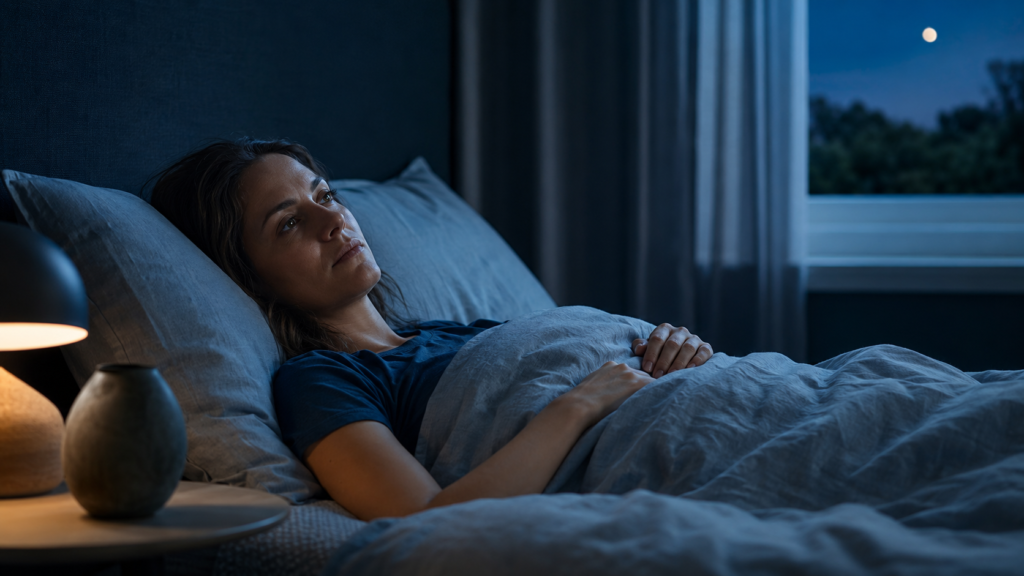
Some people seem to fall asleep the moment their head touches the pillow. Others remain awake replaying conversations, adjusting the blanket, or calculating how many hours remain before the alarm rings.
This raises a common question: How long should it take to fall asleep?
For many adults, falling asleep within approximately 10 to 20 minutes is a reasonable general range. Taking slightly more or less time on an occasional night is not automatically a problem. Stress, caffeine, illness, travel, naps, and changes in routine can all affect the transition from wakefulness to sleep.
However, regularly taking more than 30 minutes to fall asleep—or falling asleep almost instantly while experiencing severe daytime sleepiness—may deserve closer attention.
Quick answer: Many healthy adults fall asleep in roughly 10 to 20 minutes. Regularly needing more than 30 minutes may indicate difficulty initiating sleep, while repeatedly falling asleep within only a few minutes can sometimes reflect insufficient sleep or excessive sleepiness.
The number alone cannot diagnose a sleep disorder. Your total sleep duration, nighttime awakenings, daytime alertness, schedule, and health symptoms are equally important.
What Is Sleep Latency?
Sleep latency, also called sleep-onset latency, is the amount of time between attempting to sleep and actually falling asleep.
For example:
Lights turned off: 10:30 p.m.
Estimated sleep onset: 10:48 p.m.
Sleep latency: Approximately 18 minutes
Sleep latency is different from bedtime.
You may get into bed at 10:00 p.m., read for 30 minutes, turn off the light at 10:30 p.m., and fall asleep at 10:45 p.m. In this example, your sleep latency is approximately 15 minutes—not 45 minutes.
This distinction is important when tracking sleep:
Time in bed = When you physically enter the bed
Attempted sleep time = When you stop activities and try to sleep
Sleep onset = When sleep begins
Sleep latency = Time between attempted sleep and sleep onset
Sleep laboratories can measure sleep onset using brain waves, eye movements, muscle activity, and other signals. At home, sleep latency is usually estimated through a sleep diary or wearable device.
How Long Should It Take to Fall Asleep?
There is no single perfect number for every person or every night.
A practical interpretation for adults may look like this:
| Estimated sleep latency | General interpretation |
|---|---|
| Less than 5 minutes | May reflect strong sleep pressure or insufficient sleep |
| Approximately 5–10 minutes | Relatively fast sleep onset |
| Approximately 10–20 minutes | Common and generally reasonable |
| Approximately 20–30 minutes | May still occur normally, especially occasionally |
| More than 30 minutes regularly | May indicate difficulty initiating sleep |
These ranges are guides rather than grades.
For example, falling asleep in 25 minutes after an unusually stressful day is not necessarily concerning. Taking 45 to 60 minutes nearly every night and struggling to function during the day is more meaningful.
MedlinePlus identifies regularly taking more than 30 minutes to fall asleep as one possible sign of a sleep disorder. The CDC also lists difficulty falling asleep as a sign of poor sleep quality.
The pattern matters more than one isolated night.
Is Falling Asleep Immediately a Sign of Good Sleep?
Not always.
Many people assume that falling asleep instantly means they are excellent sleepers. In reality, extremely rapid sleep onset may simply mean that the body has accumulated substantial sleep pressure.
Possible explanations include:
- Not obtaining enough sleep
- Working long or irregular hours
- Recovering from several short nights
- Staying awake much later than usual
- Taking sedating medication
- Drinking alcohol
- Experiencing excessive daytime sleepiness
- Having an untreated sleep disorder
There is an important difference between falling asleep quickly at your normal bedtime and repeatedly falling asleep unintentionally during the day.
If you fall asleep within several minutes at night but wake refreshed, obtain enough sleep, and remain alert during the day, rapid sleep onset may not be a problem.
It deserves more attention if you also:
- Struggle to stay awake while reading or watching television
- Doze during meetings or conversations
- Need frequent naps
- Fall asleep as a passenger during short trips
- Feel sleepy while driving
- Sleep considerably longer on days off
- Depend heavily on caffeine to remain alert
Doctors may use a Multiple Sleep Latency Test, or MSLT, to measure how quickly someone falls asleep during several scheduled daytime nap opportunities. This controlled clinical test is different from estimating how quickly you fall asleep at night.
The NHLBI explains that the MSLT uses brain-activity sensors and helps healthcare professionals evaluate excessive daytime sleepiness and conditions such as narcolepsy.
Therefore, you should not interpret an evening stopwatch result as though it were a clinical daytime sleep test.
Is Taking Longer Than 30 Minutes Always Insomnia?
No.
One or two difficult nights do not establish insomnia. Short-term sleep difficulty can occur after:
- Emotional stress
- An important deadline
- Travel across time zones
- Illness or pain
- A late nap
- Evening caffeine
- An unfamiliar sleeping environment
- A major life change
- An argument or upsetting news
- A change in work schedule
Insomnia involves repeated difficulty falling asleep, staying asleep, or obtaining restorative sleep despite having an adequate opportunity to sleep. Daytime consequences are also important.
According to the NHLBI, chronic insomnia occurs at least three nights per week, continues for more than three months, and is not fully explained by another health condition.
This means the following situations are not automatically the same:
Person A:
Takes 50 minutes to fall asleep once before an important event

Person B:
Takes 45–60 minutes to fall asleep four nights each week
Experiences poor concentration and daytime exhaustion
Pattern has continued for several months
Person B’s pattern deserves a more thorough evaluation.
Do not diagnose yourself from the clock alone. Sleep opportunity, frequency, duration, distress, and daytime functioning all influence the clinical picture.
Why Does Sleep Latency Change From Night to Night?
Sleep onset is influenced mainly by two interacting processes:
Sleep Pressure
Sleep pressure gradually builds while you are awake. The longer you remain awake, the stronger the biological drive for sleep generally becomes.
Sleep pressure may be weaker at bedtime if you:
- Took a long afternoon nap
- Slept very late that morning
- Spent excessive time in bed
- Have been physically inactive
- Attempted sleep earlier than usual
It may be unusually strong if you:
- Slept too little the previous night
- Woke much earlier than usual
- Worked an extended shift
- Have accumulated sleep debt
- Remained awake for a prolonged period
Circadian Timing
Your circadian rhythm helps regulate when the body expects wakefulness and sleep.
Light exposure, meal timing, physical activity, and regular schedules help synchronize this internal rhythm. If your attempted bedtime does not match your circadian timing, you may feel tired without being ready to sleep.
For example, someone may feel exhausted at 9:00 p.m. after a demanding day but remain biologically alert until 11:00 p.m. Entering bed two hours early may produce a long sleep latency even when the person needs adequate sleep.
Teenagers and young adults often have a naturally later sleep schedule, while older adults may become sleepy and wake earlier. Shift work and jet lag can create larger mismatches between required sleep time and internal timing.
Tiredness Is Not Always Sleepiness
A common reason people enter bed too early is that they confuse fatigue with sleepiness.
Fatigue may feel like:
- Low energy
- Mental exhaustion
- Physical heaviness
- Reduced motivation
- A desire to rest
- Feeling overwhelmed
Sleepiness may feel like:
- Heavy eyelids
- Repeated yawning
- Difficulty keeping your eyes open
- Losing your place while reading
- Nodding off
- Struggling to remain awake
You can be fatigued without being ready to fall asleep.
After a stressful day, the body may feel depleted while the mind remains alert. Going directly to bed can then create frustration because the expectation of immediate sleep does not match your current state.
A short wind-down period can help bridge the transition between daytime activity and genuine sleepiness.
If exhaustion appears at bedtime without genuine sleepiness, explore other reasons you may feel tired but remain unable to sleep.
How Accurate Is Your Sleep-Latency Estimate?
Most people cannot identify the exact moment they fall asleep.
If you remember looking at the clock at 11:15 p.m. and then remember nothing until morning, you may assume you fell asleep immediately after checking it. In reality, sleep may have started several minutes later.
People with insomnia may also experience sleep-state misperception, in which light sleep is remembered as wakefulness. This does not mean the sleep difficulty is imaginary. It means subjective estimates and laboratory measurements do not always match perfectly.
Wearable devices have limitations as well. They usually estimate sleep through movement and heart-rate patterns rather than directly measuring brain activity. Quiet wakefulness may be classified as sleep, and restless sleep may be classified as wakefulness.
Use a wearable to identify trends rather than treating every minute as exact.
Track Your Average for One Week
To understand your usual sleep latency, record your sleep for at least seven nights.
Include:
- Time you entered bed
- Time you turned off the light
- Estimated time you fell asleep
- Approximate sleep latency
- Number of nighttime awakenings
- Final wake time
- Time you got out of bed
- Naps
- Caffeine and alcohol
- Morning energy
- Daytime sleepiness
A simple entry might look like this:
Entered bed: 10:20 p.m.
Attempted sleep: 10:40 p.m.
Estimated sleep onset: 11:05 p.m.
Sleep latency: Approximately 25 minutes
Final wake time: 6:40 a.m.
Morning energy: 6 out of 10
Calculate the weekly average instead of focusing on the most difficult night:
Nightly sleep latencies:
15, 20, 45, 25, 18, 35, and 22 minutes

Weekly average:
Approximately 26 minutes
Also look for patterns. Longer sleep latency may occur specifically after late caffeine, stressful evenings, long naps, or sleeping late on weekends.
A sleep diary is not expected to be perfectly accurate. Its purpose is to reveal repeated relationships that are difficult to notice from memory alone. The CDC recommends recording details such as bedtime, time needed to fall asleep, naps, exercise, caffeine, alcohol, and medication when investigating sleep difficulties.
7 Reasons You Take Too Long to Fall Asleep
A long sleep latency does not always have one obvious cause. Several behavioral, environmental, and medical factors may interact.
Use your sleep diary to identify repeated patterns rather than blaming yourself after one restless night.
1. Your Bedtime Does Not Match Your Body Clock
Trying to sleep before your body is ready can produce a long period of wakefulness.
This commonly happens when you:
- Go to bed unusually early after sleeping poorly
- Sleep late on weekends
- Travel across time zones
- Work rotating or overnight shifts
- Have an irregular daily schedule
- Naturally become sleepy later than your required bedtime
Suppose you usually become sleepy around 11:30 p.m. but begin attempting sleep at 9:30 p.m. The resulting two-hour sleep latency may reflect mismatched timing rather than an inability to sleep.
A consistent wake-up time, morning light exposure, and regular daytime activity can help reinforce your sleep-wake rhythm.
Do not move bedtime drastically based on a single difficult night. Observe when genuine sleepiness usually appears and make gradual adjustments.
2. Stress Keeps Your Mind and Body Alert
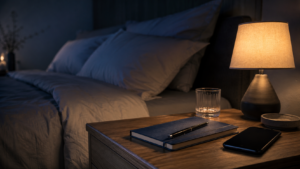
Stress can activate the mental and physical systems responsible for remaining alert.
At bedtime, you may begin:
- Replaying conversations
- Planning the following day
- Worrying about health or finances
- Reviewing unfinished work
- Checking how much sleep time remains
- Predicting how tired you will feel tomorrow
This can create a cycle:
Difficulty sleeping
↓
Concern about not sleeping
↓
Increased alertness and frustration
↓
Even greater difficulty sleeping
Trying to force yourself to “stop thinking” may increase awareness of every thought.
Instead, write down unfinished tasks or worries before beginning your wind-down routine. The purpose is not to solve everything at night but to give those concerns a place outside the bed.
3. Caffeine or Nicotine Is Still Active
Caffeine blocks signals that help create sleepiness, and its effects can continue for several hours.
Potential sources include:
- Coffee
- Black or green tea
- Energy drinks
- Cola
- Chocolate
- Pre-workout supplements
- Some headache and cold medications
The NHLBI notes that caffeine’s effects can last up to eight hours. Individual sensitivity varies, so an afternoon coffee may affect one person much more than another.
Record the time and amount of caffeine you consume for one week. Then move your final serving earlier and compare your average sleep latency.
Nicotine is also stimulating. Although some people describe smoking or vaping as relaxing, nicotine can make falling asleep more difficult.
4. Evening Light and Screens Delay Sleepiness
Light helps the brain determine when it should remain alert and when it should prepare for sleep.
Bright indoor lighting and prolonged screen use may delay this transition, especially when combined with stimulating content such as:
- Work messages
- Social media
- Competitive games
- Distressing news
- Online shopping
- Fast-paced videos
- Emotional conversations
The problem is not simply that a phone emits light. What you do on it can also keep the mind engaged.
During the final 30 to 60 minutes before bed, consider:
- Dimming overhead lights
- Lowering screen brightness
- Turning off unnecessary notifications
- Avoiding work-related content
- Choosing a quiet activity with a clear endpoint
- Keeping the phone away from the pillow
The CDC recommends turning off electronic devices at least 30 minutes before bedtime as part of healthy sleep habits.
Learn how evening blue light, screen brightness, and stimulating content can influence sleep timing.
5. Long or Late Naps Reduce Sleep Pressure
Napping reduces some of the biological sleep pressure that accumulates during the day.
A short, early nap may not interfere with nighttime sleep. However, a long nap late in the afternoon or evening can make it harder to feel sleepy at your intended bedtime.
If you regularly take more than 30 minutes to fall asleep, record:
Nap start time
Nap duration
Reason for napping
Sleep latency that night
The NHLBI recommends limiting naps or taking them earlier in the afternoon when they interfere with nighttime sleep.
People who work shifts, are recovering from illness, or experience severe daytime sleepiness may require an individualized approach. Do not eliminate necessary rest when sleepiness creates a driving or workplace safety risk.
6. Your Bedroom Encourages Wakefulness
Physical discomfort and environmental disruption can delay sleep even when your schedule is appropriate.
Common examples include:
- A room that is too warm
- Streetlights or early sunlight
- Traffic or household noise
- An uncomfortable mattress or pillow
- Itchy or excessively heavy bedding
- Phone notifications
- A snoring partner
- Pets repeatedly moving on the bed
- Using the bed for work or entertainment
The NHLBI recommends keeping the bedroom quiet, cool, and dark.
Focus on the most disruptive factor first. Replacing every bedroom item at once is unnecessary—and the bedside lamp probably does not need to be interrogated.
7. A Health Condition or Medication Is Interfering
Persistent difficulty falling asleep may be related to more than bedtime habits.
Possible contributors include:
- Chronic insomnia
- Anxiety or depression
- Chronic pain
- Acid reflux
- Restless legs syndrome
- Menopausal hot flashes
- Thyroid conditions
- Circadian rhythm disorders
- Sleep apnea
- Medication side effects
Some prescription medicines, over-the-counter products, and supplements can increase alertness or alter sleep. Do not stop prescribed medication independently. Ask a healthcare professional or pharmacist whether its timing or side effects could be relevant.
Seek medical guidance if difficulty falling asleep occurs at least three nights per week, continues for months, or causes significant daytime problems. The NHLBI identifies insomnia lasting three or more nights per week for at least three months as chronic insomnia.
Prompt evaluation is also important if you experience loud snoring, breathing pauses, severe daytime sleepiness, uncomfortable leg sensations, or sleepiness while driving.
Look for Patterns, Not a Single Cause
More than one factor may be involved.
For example:
Late afternoon coffee
+ A two-hour evening nap
+ An earlier-than-usual bedtime
= Longer sleep latency
Review at least one week of records and identify the factor most closely associated with difficult nights. Changing one or two variables at a time makes it easier to determine what actually helps.
7 Ways to Fall Asleep Faster Naturally
The goal is not to force immediate sleep. It is to strengthen the conditions that allow sleepiness to develop at the appropriate time.
Try one or two changes first and compare your weekly sleep-latency average.
1. Keep a Consistent Wake-Up Time
A regular wake-up time helps stabilize the daily rhythm that influences when you become alert and sleepy.
Try to:
- Wake at approximately the same time each day
- Avoid sleeping several hours later after a difficult night
- Get out of bed after waking rather than repeatedly snoozing
- Maintain a similar weekend schedule
- Allow enough time for your usual sleep requirement
Sleeping late after a poor night may provide temporary relief, but it can reduce sleep pressure and delay sleepiness the following evening.
The NHLBI recommends going to bed and waking at consistent times as part of a healthy sleep routine.
Do not shorten sleep deliberately just to make yourself exhausted. Consistency should support adequate sleep—not replace it.
2. Seek Light and Activity Earlier in the Day
Daytime light helps reinforce the contrast between wakefulness and nighttime darkness.
After waking:
- Open the curtains
- Spend time outside when possible
- Eat breakfast in a bright area
- Take a short morning walk
- Complete regular physical activity during the day
- Reduce bright light as bedtime approaches
The NHLBI advises spending time outdoors and being physically active to support healthy sleep habits.
Light timing can require extra care for shift workers or people with a circadian rhythm disorder. If your required sleep schedule conflicts substantially with your natural sleep period, seek individualized guidance rather than experimenting with intense light therapy independently.
3. Move Your Caffeine Cutoff Earlier
Do not assume caffeine has stopped affecting you simply because you no longer feel energized.
Its effects can continue for hours, and sensitivity differs considerably between individuals. The NHLBI notes that caffeine may affect the body for up to eight hours.
Try a two-week comparison:
Week 1: Record your usual caffeine timing
Week 2: Move the final serving two hours earlier
Compare: Average sleep latency and nighttime awakenings
Reduce caffeine gradually if sudden withdrawal causes headaches or fatigue. Remember to include tea, cola, energy drinks, chocolate, supplements, and caffeine-containing medications.
4. Create a Repeatable Wind-Down Routine

A wind-down period provides a predictable transition from activity to sleep.
Begin approximately 30 to 60 minutes before your intended bedtime. A simple routine may include:
- Finishing work and planning
- Dimming unnecessary lights
- Preparing clothes or supplies for morning
- Writing down unfinished tasks
- Taking a warm shower or bath
- Reading or listening to something calming
Avoid turning the routine into an elaborate performance that must be completed perfectly. Three repeatable steps are more useful than a complicated ritual that creates additional pressure.
The NHLBI recommends using the hour before bed for quiet time while avoiding bright light and stimulating activity.
5. Enter Bed When You Feel Sleepy
Going to bed solely because you feel tired may result in a long period of wakefulness.
Look for genuine sleepiness:
- Heavy eyelids
- Repeated yawning
- Difficulty concentrating on a calm activity
- Briefly losing your place while reading
- Feeling that staying awake requires effort
Continue your wind-down routine at a regular time, but enter bed when sleepiness is developing.
Do not delay bedtime until you are severely exhausted, especially when you must wake early. Your schedule must still provide enough opportunity to obtain the sleep duration you need.
6. Leave the Bed When Wakefulness Becomes Frustrating
If you remain awake and become increasingly alert, irritated, or worried, briefly leave the bed.
Move to a safe, dimly lit place and choose a quiet activity:
- Read a calm printed book
- Listen to gentle audio
- Practice slow breathing
- Write down persistent thoughts
- Stretch gently
- Sit quietly
Return to bed when sleepiness reappears.
MedlinePlus recommends getting out of bed when sleep is not coming, doing something quiet and returning when drowsy.
You do not need to monitor an exact number of minutes. Repeated clock-checking can increase pressure. Use your experience: if you are clearly frustrated and wide awake, change locations briefly.
People with dizziness, limited mobility, or a high fall risk should prioritize safety and adapt this method without walking through a dark home.
7. Correct the Main Bedroom Disruption
Improve the factor most likely to keep you awake rather than changing the entire bedroom at once.
Check:
- Temperature: Is the room uncomfortably warm?
- Light: Are streetlights, devices, or hallway lights visible?
- Noise: Are notifications, traffic, pets, or household sounds disruptive?
- Comfort: Does pain increase after lying down?
- Association: Is the bed regularly used for work or stimulating entertainment?
The NHLBI recommends keeping the bedroom quiet, cool, and dark.
Test one practical adjustment for several nights. Blackout curtains may help with outside light, while silencing notifications may address repeated phone disruptions. A new mattress is unlikely to defeat an active group chat at midnight—the mattress has limits.
Use a Two-Week Experiment
Apply the steps gradually:
Days 1–7:
Record your normal sleep latency and habits

Days 8–14:
Keep wake time consistent
Move caffeine earlier
Use a short wind-down routine
Enter bed when sleepy
Compare weekly averages rather than expecting immediate results.
Track whether you:
- Fall asleep more easily
- Obtain enough total sleep
- Wake feeling more refreshed
- Remain alert during the day
- Feel less anxious about bedtime
If your sleep latency remains longer than 30 minutes on most nights, or the problem causes significant daytime impairment, discuss it with a healthcare professional.
Common Mistakes That Make Sleep Latency Worse
When considering how long should it take to fall asleep, avoid turning the answer into a nightly performance target.
Common mistakes include:
- Going to bed much earlier after sleeping poorly
- Checking the clock repeatedly
- Trying to force sleep
- Sleeping late the following morning
- Taking long evening naps
- Changing several habits simultaneously
- Remaining in bed while increasingly frustrated
- Using alcohol as a sleep aid
- Reducing total sleep opportunity excessively
If racing thoughts are the main problem, use practical strategies to stop overthinking at night.
One difficult night does not erase your progress. Review patterns across at least one week rather than judging yourself by a single bedtime.
What About Melatonin and Sleeping Pills?
Melatonin may help certain people whose sleep timing has been disrupted, including those experiencing jet lag. However, it is not a universal solution for stress, chronic insomnia, pain, or an unsuitable sleep schedule.
The NCCIH notes that short-term melatonin use appears safe for most people, but its long-term safety remains uncertain. It may also interact with medication or cause daytime drowsiness.
Prescription and over-the-counter sleep medicines may have side effects and should not be combined casually with alcohol or other sedating products. Consult a healthcare professional or pharmacist before beginning, combining, or stopping sleep aids.
For persistent insomnia, the NHLBI describes cognitive behavioral therapy for insomnia, or CBT-I, as the usual first treatment option.
When Should You Seek Professional Help?
Speak with a healthcare professional if:
- Falling asleep regularly takes more than 30 minutes
- The problem occurs at least three nights per week
- It continues for several months
- Daytime mood, concentration, or performance suffers
- You experience loud snoring or breathing pauses
- Uncomfortable leg sensations prevent sleep
- Pain, reflux, or hot flashes repeatedly interfere
- You become sleepy while driving or working
Do not wait for a perfect sleep-diary record before seeking help when daytime safety is affected.
Frequently Asked Questions
Is 20 minutes a normal time to fall asleep?
Yes. Approximately 10 to 20 minutes is a reasonable general range for many adults, although normal variation occurs.
Is taking 30 minutes to fall asleep bad?
Not necessarily when it happens occasionally. It deserves attention when it occurs regularly and affects daytime functioning.
Why do I fall asleep as soon as I lie down?
You may simply be very sleepy, but repeatedly falling asleep within a few minutes can also reflect insufficient sleep or accumulated sleep debt.
Should I stay in bed until I fall asleep?
If you become frustrated and fully alert, briefly move to a dim, quiet place. Return when sleepiness develops again.
Final Thoughts
Understanding how long should it take to fall asleep requires more than watching the clock. Your weekly pattern, total sleep duration, schedule, health symptoms, and daytime alertness provide the fuller picture.
For many adults, 10 to 20 minutes is reasonable. If sleep regularly takes longer, begin with a consistent wake time, earlier caffeine cutoff, short wind-down routine, and a bedroom reserved for rest.
Sleep is a biological process, not a race—so your pillow does not need a stopwatch.