How Blue Light Affects Sleep: What Science Really Says (2026)
Blue Light and Sleep have become one of the most widely discussed topics in sleep science. Millions of people use smartphones, tablets, and computers before bed, but many wonder whether blue light exposure actually makes it harder to fall asleep.
You have probably heard that blue light is “bad” before bedtime—but how much of that is actually supported by science? Does using your phone at night always ruin your sleep, or is the story more complicated?
Research over the past decade has shown that blue light can influence your body’s natural sleep-wake cycle by affecting the production of melatonin, the hormone that signals it’s time to sleep. However, brightness, timing, duration, and even what you’re doing on your device all play important roles.
In this guide, you’ll learn how blue light affects sleep, what current research says, and practical strategies to reduce its impact without giving up your favorite devices.
Blue Light and Sleep: What Is Blue Light?
Blue light is a portion of the visible light spectrum with relatively short wavelengths and high energy. It is naturally produced by the sun, making it an important signal that helps regulate your body’s internal clock, also known as the circadian rhythm.
During the daytime, exposure to natural blue light is actually beneficial. It helps improve alertness, supports concentration, and tells your brain that it’s time to stay awake. Problems arise when the same type of light is encountered late in the evening.
Modern life surrounds us with artificial sources of blue light, including:
- Smartphones
- Tablets
- Laptop and desktop monitors
- LED televisions
- LED room lighting
- Gaming monitors
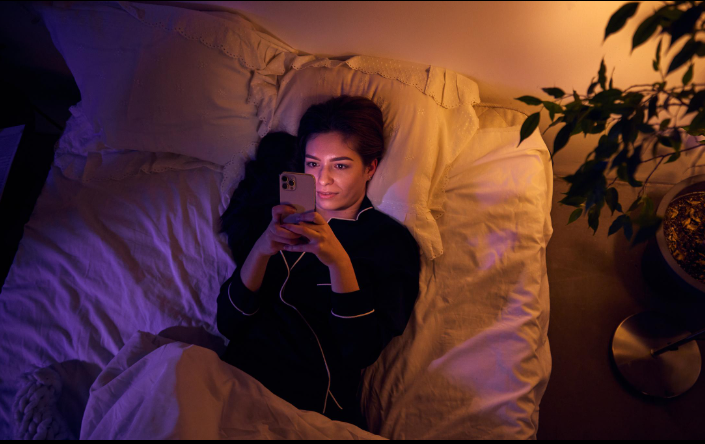
Unlike sunlight, these devices are often used just minutes before bedtime. This late-night exposure can confuse your brain by making it think that daytime is continuing, delaying the natural release of melatonin and making it more difficult to fall asleep.
Fortunately, blue light is only one factor affecting sleep. Understanding how it interacts with your body’s biological clock is the first step toward building healthier nighttime habits.
What Is Blue Light and Sleep?
Blue light is a portion of the visible light spectrum with relatively short wavelengths and high energy. It is naturally produced by the sun, making it an important signal that helps regulate your body’s internal clock, also known as the circadian rhythm.
During the daytime, exposure to natural blue light is actually beneficial. It helps improve alertness, supports concentration, and tells your brain that it’s time to stay awake. Problems arise when the same type of light is encountered late in the evening.
Modern life surrounds us with artificial sources of blue light, including:
- Smartphones
- Tablets
- Laptop and desktop monitors
- LED televisions
- LED room lighting
- Gaming monitors
Unlike sunlight, these devices are often used just minutes before bedtime. This late-night exposure can confuse your brain by making it think that daytime is continuing, delaying the natural release of melatonin and making it more difficult to fall asleep.
Fortunately, Blue Light and Sleep is only one factor affecting sleep. Understanding how it interacts with your body’s biological clock is the first step toward building healthier nighttime habits.
How Blue Light and Sleep Changes Your Brain Before Bed
Your brain relies on light to determine whether it is time to stay awake or prepare for sleep. This process is controlled by a tiny region called the suprachiasmatic nucleus (SCN), often referred to as the body’s master clock.
When your eyes detect blue light during the evening, special light-sensitive cells in the retina send signals directly to the SCN. The brain interprets these signals as daylight—even if it’s 11:00 PM.
As a result, several important changes occur:
- Melatonin production slows down.
- Your brain remains more alert.
- Falling asleep may take longer.
- Deep sleep may begin later in the night.
- Your natural sleep schedule can gradually shift.
This effect is strongest when bright screens are used within the last one to two hours before bedtime. Activities such as scrolling through social media, watching videos, or playing games often combine bright light with mental stimulation, making it even more difficult for the brain to relax.
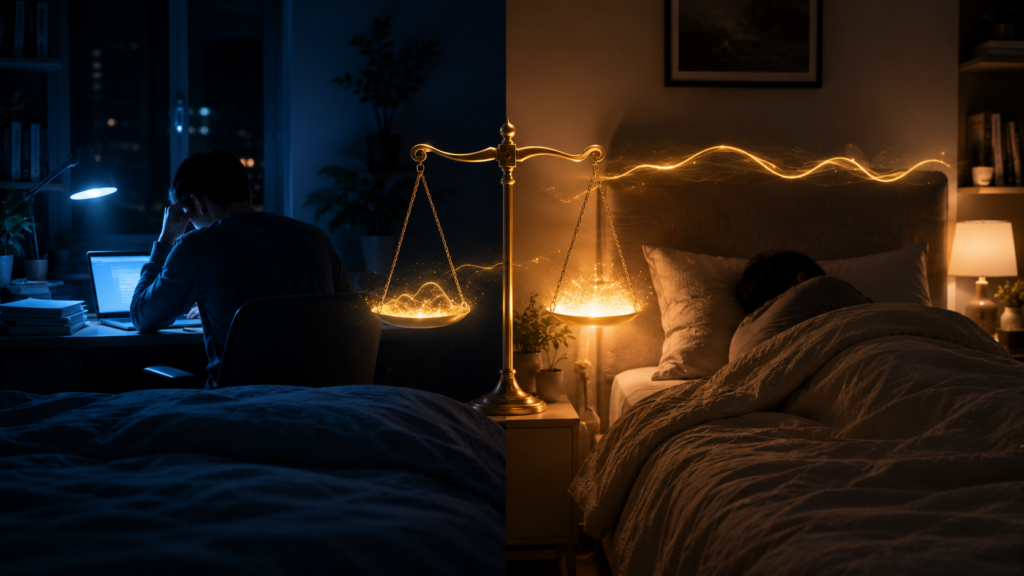
Does Blue Light and Sleep Really Ruin Your Sleep?
The answer is not always.
While blue light can delay melatonin production, scientists now recognize that brightness, duration, and behavior are just as important as the color of the light itself.
For example:
- Reading exciting news or replying to work emails may keep your brain active regardless of screen color.
- Watching fast-paced videos can increase mental stimulation.
- Using a very bright screen in a dark room has a greater impact than using a dim screen.
- Short periods of screen use are generally less disruptive than several continuous hours.
In other words, blue light is part of the picture—but your evening habits matter just as much.
waking up repeatedly during the night
Scientific Evidence
Multiple clinical studies have found that excessive evening exposure to blue-enriched light can:
- Delay the body’s circadian rhythm.
- Reduce natural melatonin secretion.
- Increase the time needed to fall asleep.
- Lower overall sleep quality in some individuals.
- Lead to greater daytime fatigue when poor sleep becomes habitual.
However, researchers also emphasize that reducing screen brightness, limiting late-night device use, and maintaining a consistent bedtime routine often provide greater benefits than relying solely on blue light filters.
These findings suggest that healthy nighttime habits—not just technology settings—play the biggest role in protecting sleep quality.
According to the American Academy of Sleep Medicine, reducing evening exposure to bright light and maintaining consistent bedtime habits are among the most effective ways to support healthy sleep and circadian rhythm.