
Does Eating Before Bed Cause Weight Gain? What Science Says
Many people believe that eating anything after a certain hour automatically turns into body fat. But does eating before bed cause weight gain, or is this another nutrition myth?
The short answer is that eating before bed does not automatically cause weight gain. Your total calorie intake, food choices, activity level, sleep quality, and eating habits all matter. However, regularly eating large or high-calorie meals late at night may make weight management more difficult.
This guide explains how nighttime eating may affect body weight, metabolism, hunger, and sleep—and how to eat wisely when you are genuinely hungry before bed.
The Short Answer
Weight gain generally occurs when you consistently consume more energy than your body uses. A small bedtime snack that fits within your daily energy needs is unlikely to cause noticeable weight gain by itself.
The problem is that nighttime eating often involves:
- Larger portions
- Sugary or salty snacks
- Eating while distracted
- Extra calories after a complete dinner
- Alcohol
- Poor-quality sleep
- Habitual eating rather than physical hunger
Meal timing may also influence hunger, glucose control, and energy expenditure. Therefore, both the amount you eat and the time you eat may affect long-term weight management.
Calories Still Matter Most
Your body does not automatically store every calorie consumed after sunset as fat. Calories eaten at night provide the same basic energy as calories eaten earlier in the day.
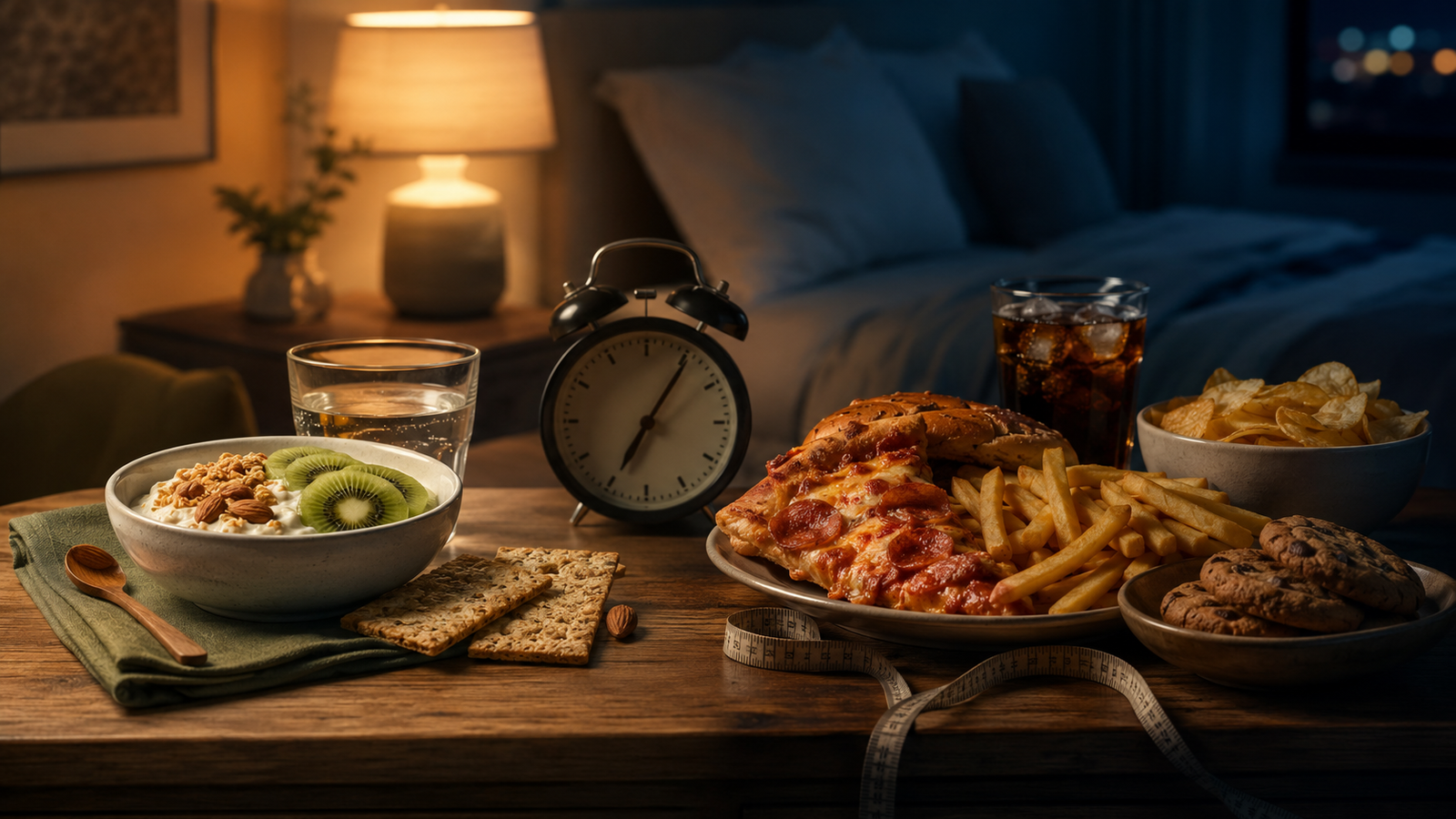
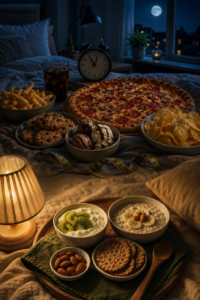
For example, eating a small serving of plain Greek yogurt before bed is very different from eating pizza, chips, cookies, and soda after already meeting your daily energy needs.
Weight gain is more likely when nighttime eating regularly pushes your total calorie intake above what your body needs.
Important factors include:
- Total daily calorie intake
- Portion size
- Food quality
- Physical activity
- Sleep duration
- How frequently you eat late
- Whether the food is replacing or adding to another meal
The clock matters, but it is only one part of the picture.
Why Late-Night Eating May Lead to Weight Gain
Eating late does not guarantee weight gain. However, several common nighttime habits can make excess calorie intake more likely.
Extra Calories After Dinner
Most nighttime snacks are eaten in addition to breakfast, lunch, and dinner rather than replacing part of those meals.
Even a few hundred extra calories each night can add up over time if they are not balanced by changes in food intake or physical activity.
Larger Portions While Distracted
Watching television, scrolling on a phone, or working on a laptop can make it harder to notice fullness signals.
Eating directly from a bag or package also makes portions difficult to judge. You may consume much more than intended before realizing you feel full.
High-Calorie Food Choices
Nighttime cravings often focus on foods that combine sugar, refined carbohydrates, fat, and salt.
Common examples include:
- Ice cream
- Cookies
- Chocolate
- Potato chips
- Pizza
- Fried food
- Sugary cereal
- Sweetened drinks
These foods are easy to overeat and may provide a large number of calories without keeping you satisfied for long.
Does Meal Timing Affect Metabolism?
Emerging research suggests that meal timing may influence metabolism independently of total calorie intake, although the evidence is still developing.
A controlled study published in Cell Metabolism found that later eating increased hunger and affected energy expenditure and appetite-related hormones under controlled conditions.
The human body follows a circadian rhythm that helps regulate sleep, digestion, hormones, and metabolism. Eating a large meal very late may be less aligned with the body’s natural daily rhythm.
Controlled research has found that later eating may:
- Increase feelings of hunger
- Affect appetite-related hormones
- Reduce energy expenditure slightly
- Influence how fat tissue stores and releases energy
- Reduce glucose tolerance in some circumstances
However, many studies are small or short-term, and individual results vary. Meal timing should be viewed as one factor alongside total food intake, diet quality, exercise, and sleep—not as the only cause of weight gain.
Eating Before Bed vs. Eating Late at Night
These phrases may sound similar, but they do not always mean the same thing.
Someone who goes to bed at 9:30 p.m. may eat a snack at 8:30 p.m. Another person who works a late shift may eat dinner at midnight and remain awake for several hours.
A more useful question is not simply, “What time did I eat?” Consider:
- How close was the meal to sleep?
- Was it a snack or a full meal?
- Was I physically hungry?
- Had I already eaten enough that day?
- What type of food did I choose?
- Is late eating an occasional event or a nightly habit?
These details provide a clearer picture of whether eating before bed may affect your weight or sleep.
How Eating Before Bed Can Affect Sleep
Eating a large meal shortly before lying down may cause digestive discomfort that makes restful sleep more difficult.
Possible problems include:
- Acid reflux
- Heartburn
- Bloating
- Stomach discomfort
- Increased body temperature
- Frequent nighttime awakenings
- Difficulty falling asleep
Spicy, greasy, acidic, and high-fat foods are particularly likely to cause discomfort in sensitive individuals.
Poor sleep can then affect appetite the following day. Insufficient sleep may increase hunger, strengthen cravings for high-calorie foods, and make balanced food choices more difficult.
This can create a cycle:
- Late-night eating disrupts sleep.
- Poor sleep increases hunger and cravings.
- Increased appetite leads to more nighttime eating.
- The pattern repeats.
Does Eating Carbohydrates at Night Cause Weight Gain?
Carbohydrates eaten at night do not automatically become body fat. Your total intake and the type of carbohydrate are more important.
Highly refined carbohydrates are easy to overeat and may not provide lasting fullness. These include:
- Candy
- Cookies
- Cakes
- Sugary cereal
- White bread
- Sweetened drinks
- Pastries
Complex carbohydrates such as oatmeal, whole-grain crackers, fruit, and sweet potatoes contain more fiber and may be more satisfying.
A small portion of complex carbohydrates combined with protein can be a reasonable bedtime snack when you are genuinely hungry.
Examples include:
- Oatmeal with plain Greek yogurt
- Banana slices with unsweetened peanut butter
- Whole-grain crackers with cottage cheese
- Kiwi with a small handful of nuts
Does Eating Fat Before Bed Cause Weight Gain?
Dietary fat contains more calories per gram than protein or carbohydrates. This makes high-fat foods easier to overconsume, particularly when portion sizes are not controlled.
Fat also slows digestion. A large, fatty meal before bed may remain in the stomach longer and contribute to reflux or uncomfortable fullness.
Foods that may be difficult to digest at night include:
- Fried chicken
- Greasy pizza
- Burgers
- French fries
- Ice cream
- Large portions of cheese
- Cream-based desserts
Healthy fats such as almonds, walnuts, avocado, and peanut butter can still be included in an evening snack. Keep the portion small because these foods are calorie-dense.
Does Protein Before Bed Cause Weight Gain?
Protein before bed does not automatically cause weight gain. Protein can support fullness and help maintain muscle, especially when combined with regular resistance exercise.
Sleep-friendly protein options include:
- Plain Greek yogurt
- Cottage cheese
- A boiled egg
- Unsweetened soy yogurt
- A small glass of milk
- A small portion of nuts
The total portion still matters. A light protein-rich snack is different from consuming a large meal or a high-calorie protein shake after already meeting your daily needs.
When a Bedtime Snack May Be Helpful
A small bedtime snack may be reasonable if:
- You ate dinner several hours earlier
- You exercised during the evening
- Physical hunger is keeping you awake
- You did not eat enough during the day
- You need a planned snack for a medical reason
- You tend to overeat when hunger becomes intense
Ignoring strong hunger is not always helpful. It may make falling asleep difficult or lead to uncontrolled eating later.
The goal is to choose a small snack that satisfies hunger without causing uncomfortable fullness.
When Nighttime Eating Is More Likely to Cause Problems
Nighttime eating may interfere with weight management when it:
- Happens automatically every night
- Continues after you feel full
- Adds significant calories to your daily intake
- Consists mainly of highly processed foods
- Occurs while watching television or using a phone
- Is triggered by stress, boredom, or loneliness
- Includes frequent alcohol consumption
- Replaces proper meals during the day
- Causes guilt or a feeling of losing control
If nighttime eating is habitual, examine the pattern rather than blaming one particular food.
Physical Hunger vs. Habitual Cravings
Before eating, pause and ask whether you feel physical hunger or simply want a familiar nighttime treat.
Signs of Physical Hunger
- Hunger develops gradually
- Your stomach feels empty
- Several different foods sound acceptable
- A simple snack would satisfy you
- Hunger improves after eating a modest portion
Signs of Habitual or Emotional Hunger
- The craving appears suddenly
- You want one specific comfort food
- Hunger begins during television or phone use
- You continue eating after feeling full
- Stress, boredom, or sadness triggers the urge
Physical and emotional hunger can occur together. Recognizing the difference can help you choose an appropriate response without judging yourself.
How Long Before Bed Should You Stop Eating?
Most people can aim to finish a full meal approximately two to three hours before bedtime. This allows digestion to begin before lying down and may reduce heartburn or uncomfortable fullness.
People who frequently experience acid reflux may benefit from leaving a longer gap between dinner and sleep.
A practical routine may look like this:
- Finish dinner two to three hours before bed
- Avoid large meals during the final two hours
- Choose a small snack only when physically hungry
- Stop eating before you feel overly full
- Reduce alcohol and sugary drinks in the evening
- Avoid lying down immediately after eating
Your schedule does not need to be perfect. Shift workers, parents, and people with irregular schedules may need to adapt meal timing to their individual routines.
Best Bedtime Snacks for Weight Management
A helpful bedtime snack should be small, satisfying, and easy to digest. Combining protein with fiber or complex carbohydrates may help control hunger.
Suitable options include:
- Plain Greek yogurt with kiwi
- A small banana with peanut butter
- A small bowl of oatmeal
- Cottage cheese with tart cherries
- Whole-grain crackers with cheese
- A boiled egg
- Unsweetened soy yogurt
- A small handful of almonds or walnuts
A snack of approximately 150 to 250 calories may be enough for many adults, although individual energy needs vary.
Eat from a bowl or plate rather than directly from a package. This makes the portion easier to see and helps prevent automatic overeating.
Foods to Limit Before Bed
Certain foods are more likely to add excessive calories or interfere with sleep when eaten late at night.
Consider limiting:
- Fried foods
- Greasy pizza
- Candy and cookies
- Large bowls of ice cream
- Sugary cereal
- Potato chips
- Spicy meals
- Chocolate containing caffeine
- Energy drinks
- Alcohol
You do not have to ban these foods completely. Portion size, frequency, and your overall eating pattern matter more than one occasional snack.
Tips to Prevent Unplanned Late-Night Eating
Eat Enough During the Day
Skipping breakfast or lunch may lead to intense hunger during the evening. Eat regular, balanced meals containing protein, fiber, complex carbohydrates, and healthy fats.
Build a Balanced Dinner
A satisfying dinner can reduce the urge to snack later. Include vegetables, a protein source, complex carbohydrates, and a moderate amount of healthy fat.
Plan Your Snack
If you usually become hungry before bed, choose the snack in advance. A planned portion is easier to manage than searching the kitchen while extremely hungry.
Avoid Eating From the Package
Place one portion in a bowl and put the package away. This simple step makes mindless overeating less likely.
Create a Kitchen Closing Routine
After your final meal or snack:
- Put away leftovers.
- Clean the kitchen.
- Prepare water for the next day.
- Brush your teeth.
- Begin your bedtime routine.
Improve Your Sleep Schedule
Staying awake very late creates more opportunities to snack. A consistent bedtime may support appetite regulation and reduce habitual eating.
Can You Lose Weight and Still Eat Before Bed?
Yes. Weight loss is possible while eating a small bedtime snack, provided it fits within your overall eating plan and energy needs.
A successful approach may include:
- Maintaining a reasonable calorie intake
- Choosing nutrient-dense foods
- Keeping evening portions modest
- Exercising regularly
- Getting enough sleep
- Eating consistently rather than severely restricting food
- Monitoring patterns instead of obsessing over one meal
You do not need to go to bed hungry simply because you are trying to lose weight. A planned, balanced snack may be more sustainable than ignoring hunger and overeating later.
Frequently Asked Questions
Will eating after 8 p.m. make me gain weight?
Eating after 8 p.m. does not automatically cause weight gain. Total calorie intake, food quality, portion size, activity, and sleep all matter. However, late eating can make it easier to consume unnecessary calories.
Is it better to go to bed hungry?
Mild hunger may not be a problem, but strong hunger can make sleep difficult. Choose a small, balanced snack if you are genuinely hungry rather than eating a large meal or ignoring intense hunger.
What is the best food to eat before bed without gaining weight?
Plain Greek yogurt, cottage cheese, kiwi, oatmeal, a boiled egg, whole-grain crackers, or a small portion of nuts can be suitable. Portion size remains important.
Does eating fruit before bed cause weight gain?
A moderate serving of whole fruit is unlikely to cause weight gain by itself. Whole fruit provides fiber and nutrients. Avoid turning it into a large, high-calorie snack with added sugar.
Can eating before bed slow metabolism?
Eating before bed does not shut down your metabolism. However, research suggests that very late eating may affect hunger, energy expenditure, and glucose control. The size and long-term importance of these effects can vary.
How many hours before bed should I stop eating to lose weight?
There is no universal cutoff for weight loss. Finishing a full meal two to three hours before bed is a practical guideline, while a small snack may be appropriate if you are genuinely hungry.
Final Thoughts
So, does eating before bed cause weight gain? Not automatically.
Weight gain is primarily influenced by consistently consuming more energy than your body uses. However, late-night eating may increase the risk of overeating, encourage high-calorie food choices, interfere with sleep, and work against the body’s natural circadian rhythm.
If you are genuinely hungry, choose a small protein- or fiber-rich snack. If nighttime eating is mainly a habit, stress response, or source of extra calories, changing your evening routine may be more helpful than simply watching the clock.
Related Guides
Why Do I Get Hungry at Night? 9 Causes and What to Do
12 Healthy Bedtime Snacks for Better Sleep
12 Foods to Avoid Before Bed for Better Sleep
Best Foods to Eat Before Bed for Better Sleep