Is It Bad to Exercise Before Bed? What Science Says
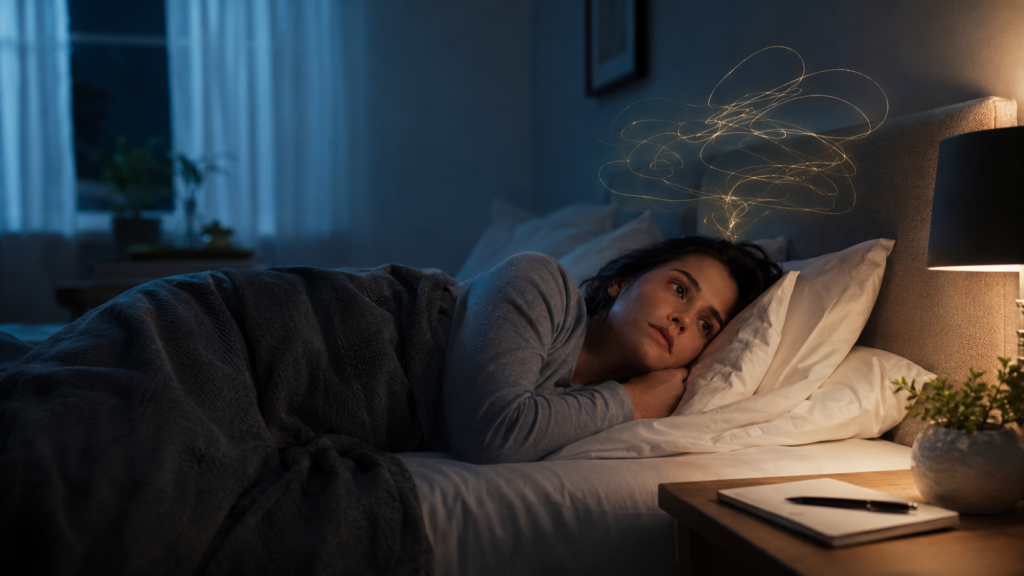
Many people avoid evening workouts because they believe exercise will keep them awake all night. But is it bad to exercise before bed, or can nighttime movement actually improve sleep?
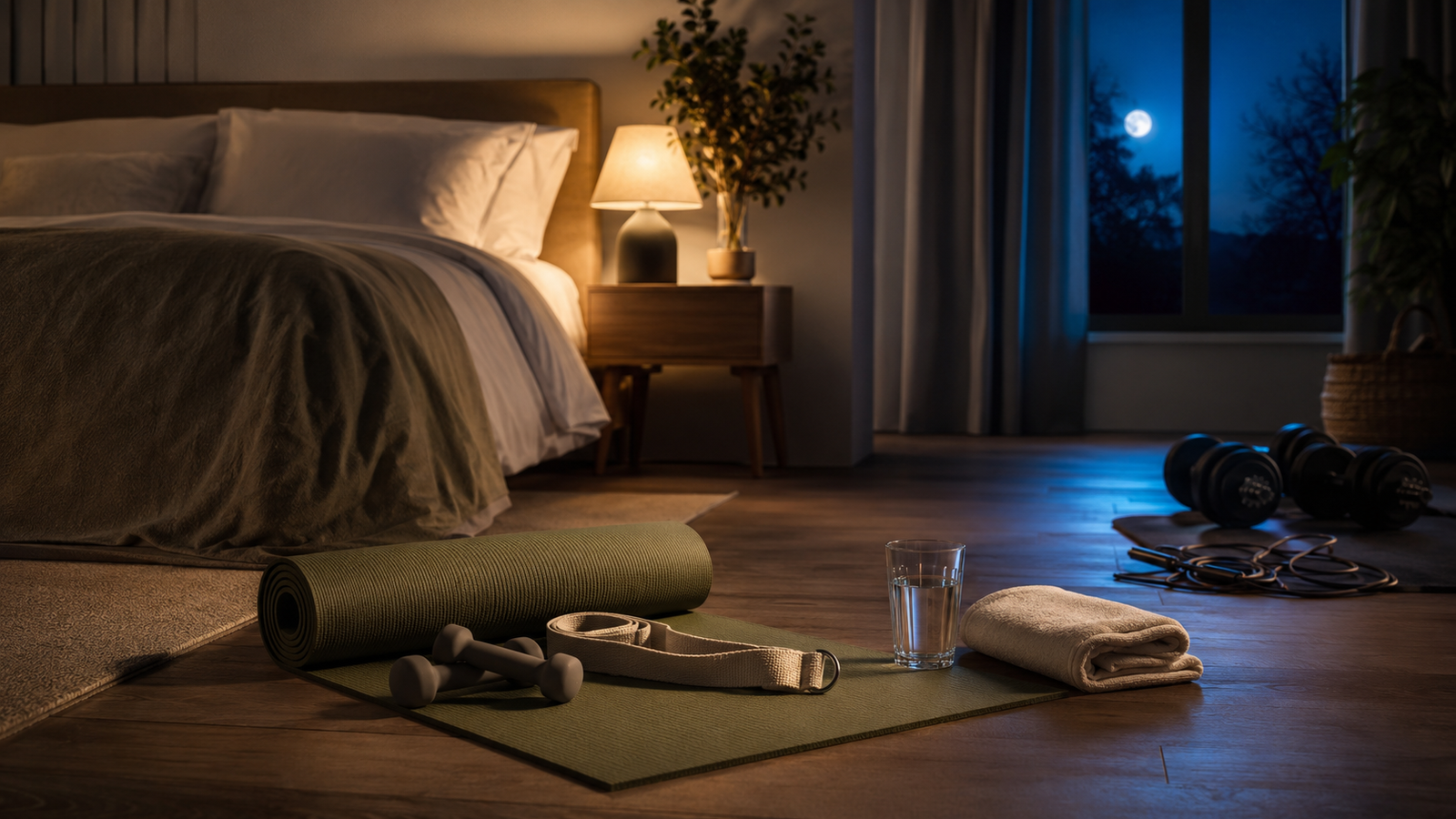
For most healthy adults, light or moderate evening exercise is unlikely to harm sleep. Walking, stretching, yoga, and comfortable strength training may even help reduce stress and prepare the body for rest.
The main concern is vigorous exercise performed very close to bedtime. High-intensity workouts can temporarily increase heart rate, body temperature, and alertness, making it harder for some people to settle down.
This guide explains how exercise timing, intensity, and individual sensitivity determine whether a nighttime workout helps or disrupts sleep.
The Short Answer
Exercising before bed is not automatically bad. Research generally suggests that evening exercise does not negatively affect sleep for most people.
However, sleep may be disrupted when exercise is:
- Very intense
- Longer than usual
- Finished immediately before bed
- Performed in a bright or stimulating environment
- Combined with caffeine or pre-workout supplements
- Followed by a heavy meal
- Difficult for your current fitness level
If evening exercise leaves you relaxed and pleasantly tired, there may be no reason to stop. If it leaves you overheated, energized, or unable to fall asleep, adjust the intensity or finish earlier.
A systematic review and meta-analysis of evening exercise found that evening workouts generally did not harm sleep, although vigorous exercise ending within one hour of bedtime could affect some sleep measures.
How Exercise Can Support Better Sleep
Regular physical activity can support sleep through several different mechanisms.
Exercise may help by:
- Reducing stress and mental tension
- Increasing natural sleep pressure
- Supporting circadian rhythm
- Improving mood
- Reducing sedentary time
- Promoting deeper sleep
- Helping regulate body temperature
- Improving overall physical health
Moderate exercise may be particularly helpful for people who spend most of the day sitting.
The benefits usually come from regular activity rather than one exhausting workout. Consistency is more important than pushing yourself to the limit.
Combine regular movement with a consistent healthy bedtime routine to help your body prepare for sleep.
Why Intense Exercise May Keep You Awake
During vigorous exercise, the body shifts into a highly activated state. Heart rate rises, breathing becomes faster, and body temperature increases.
The nervous system also releases stimulating chemicals that help you perform. These responses are useful during exercise but may conflict with the body’s transition toward sleep.
A late workout may interfere with sleep if you notice:
- A racing heartbeat in bed
- Feeling hot or sweaty
- Restlessness
- Increased alertness
- Difficulty relaxing
- Delayed sleepiness
- Frequent nighttime awakenings
This response varies between individuals. A trained runner may tolerate a late workout that keeps a beginner awake for hours.
Exercise Intensity Matters More Than the Clock
The term “exercise before bed” can describe very different activities.
A gentle 15-minute walk is not the same as sprint intervals or a heavy weightlifting session. The closer exercise occurs to bedtime, the more important intensity becomes.
Light-Intensity Exercise
Light exercise should feel comfortable and require little recovery.
Examples include:
- Gentle walking
- Relaxed stretching
- Restorative yoga
- Easy mobility exercises
- Slow breathing combined with movement
Light movement can usually be performed close to bedtime without disrupting sleep.
Moderate-Intensity Exercise
Moderate exercise increases breathing and heart rate, but you can still speak in short sentences.
Examples include:
- Brisk walking
- Comfortable cycling
- Moderate strength training
- Easy jogging
- Low-impact aerobics
Many people can complete moderate exercise one to two hours before bed and still sleep well.
High-Intensity Exercise
High-intensity exercise makes conversation difficult and requires significant effort.
Examples include:
- Sprint intervals
- High-intensity interval training
- Competitive sports
- Heavy compound lifting
- Fast running
- Intense cycling
- Long endurance sessions
If vigorous exercise affects your sleep, try finishing it at least three to four hours before bedtime.
How Long Before Bed Should You Stop Exercising?
There is no single cutoff time that works for everyone. The ideal gap depends on workout intensity, fitness level, body temperature, and personal sensitivity.
A practical starting point is:
- Light exercise: Can often be completed 15 to 30 minutes before bed
- Moderate exercise: Finish approximately one to two hours before bed
- Vigorous exercise: Finish approximately three to four hours before bed
These are flexible guidelines rather than strict rules.
If you exercise late and still fall asleep easily, remain asleep, and feel refreshed the next morning, your routine is probably working. If sleep becomes worse, move the workout earlier or reduce its intensity.
Best Exercises to Do Before Bed
Gentle movement can release muscle tension and create a clear transition from an active day to a restful night.

Gentle Stretching
Stretching may help relax tight muscles caused by sitting, standing, driving, or exercise earlier in the day.
Focus on areas such as:
- Neck and shoulders
- Upper and lower back
- Hips
- Hamstrings
- Calves
Hold each stretch gently without bouncing or forcing the body into pain.
Restorative Yoga
Slow yoga can combine movement, breathing, and relaxation. Choose calm poses instead of fast or physically demanding sequences.
Helpful options may include:
- Child’s pose
- Legs up the wall
- Reclined butterfly
- Cat-cow stretch
- Supine spinal twist
- Supported forward fold
Avoid uncomfortable poses or inversions if you have an injury, dizziness, or a medical condition that makes them unsuitable.
Slow Walking
A gentle walk after dinner can support digestion, reduce stress, and add physical activity without overstimulating the body.
Keep the pace comfortable and avoid turning the walk into an intense workout. Bright street lighting and phone use may increase alertness, so choose a quiet route when possible.
Breathing and Mobility Exercises
Simple mobility movements combined with slow breathing can help signal that the day is ending.
Try inhaling through the nose for four seconds and exhaling slowly for six seconds while performing gentle shoulder rolls or hip movements.
Stop if you feel dizzy or uncomfortable.
Can You Lift Weights Before Bed?
Strength training before bed is not necessarily harmful. A short, moderate session may have little effect on sleep, especially if you are accustomed to evening workouts.
Late strength training may be more disruptive when it includes:
- Maximum or near-maximum lifts
- Long workouts
- Short rest periods
- High-volume training
- Loud music and bright lighting
- Stimulant-based pre-workout products
If evening lifting affects sleep, reduce the load, allow longer rest periods, or finish the session earlier.
A calm cooldown and warm shower may help the body transition toward rest.
Is HIIT Before Bed a Bad Idea?
High-intensity interval training can sharply increase heart rate, breathing, body temperature, and nervous-system activity.
Some trained individuals may sleep normally after evening HIIT. Others may remain alert long after the workout ends.
HIIT is more likely to interfere with sleep when:
- It finishes within an hour of bedtime
- The session is longer or harder than usual
- The room is hot
- You take caffeine beforehand
- You are not accustomed to high-intensity training
- You already struggle with insomnia
When possible, schedule HIIT earlier in the day or allow at least three to four hours before bed.
Can Evening Exercise Raise Body Temperature?
Exercise temporarily increases core body temperature. Before sleep, body temperature normally begins to decline as part of the circadian process.
If a demanding workout ends too close to bedtime, your temperature may remain elevated while you are trying to sleep.
To cool down after evening exercise:
- Reduce intensity gradually
- Walk slowly for several minutes
- Drink a moderate amount of water
- Take a lukewarm or warm shower
- Wear breathable sleepwear
- Keep the bedroom cool
- Avoid heavy bedding
Do not drink excessive water immediately before bed, as this may cause nighttime bathroom visits.
Maintaining the best bedroom temperature for sleep may help your body cool down after an evening workout.
Regular exercise and adequate rest both matter because lack of sleep may contribute to weight gain
Watch Out for Pre-Workout Supplements
The workout itself may not be the reason you cannot sleep. Many pre-workout supplements contain caffeine or other stimulants.
Caffeine may remain active for several hours and can delay sleep even when taken during the late afternoon.
Check labels for ingredients such as:
- Caffeine
- Guarana
- Green tea extract
- Yerba mate
- Coffee extract
- Other stimulant blends
If you exercise in the evening, choose a stimulant-free option or skip pre-workout supplements entirely.
Individual Responses Matter
Exercise timing should match your body and schedule. Evening workouts may work well for:
- People who naturally prefer evening activity
- Shift workers
- Busy parents
- People who feel calmer after exercise
- Individuals accustomed to late training
Earlier exercise may be better for:
- People with insomnia
- Anyone sensitive to increases in heart rate
- Those who feel energized for hours after exercise
- People who need caffeine to complete a workout
- Anyone whose body temperature remains elevated
The best exercise time is one you can maintain without sacrificing sleep.
A Simple 10-Minute Bedtime Exercise Routine
This gentle routine is designed to reduce tension without significantly increasing heart rate or body temperature.
1. Slow Breathing — 1 Minute
Sit or lie comfortably. Inhale slowly through your nose and exhale for slightly longer than you inhale.
Keep the breath natural and stop if you feel dizzy.
2. Shoulder Rolls — 1 Minute
Roll your shoulders slowly backward several times, then reverse the direction. Avoid fast or forceful movements.
3. Cat-Cow Stretch — 1 Minute
Move gently between rounding and extending your back while breathing slowly. Keep the movement within a comfortable range.
4. Child’s Pose — 2 Minutes
Lower your hips toward your heels and reach your arms forward. Use a pillow for support if necessary.
5. Supine Spinal Twist — 2 Minutes
Lie on your back and gently lower your knees to one side. Repeat on the other side without forcing the stretch.
6. Legs Up the Wall — 2 Minutes
Lie on your back with your legs supported against a wall or placed on the bed. Choose another position if this causes discomfort.
7. Quiet Rest — 1 Minute
Remain still, relax your jaw and shoulders, and allow your breathing to return to its natural rhythm.
The routine should feel calming. If it feels like a workout, reduce the effort or choose fewer movements.
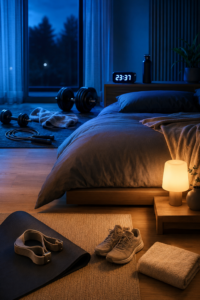
How to Build an Evening Exercise Routine
A consistent transition from exercise to sleep may help the body recognize when activity has finished.
Try this sequence:
- Complete the main workout.
- Reduce intensity gradually for five to ten minutes.
- Drink enough water without overdoing it.
- Take a comfortable shower.
- Change into breathable clothing.
- Dim the lights.
- Eat only a light snack if genuinely hungry.
- Avoid stressful work and stimulating screens.
- Begin your normal bedtime routine.
Try to follow a similar schedule on most days. Consistency helps you understand how your body responds.
How to Tell Whether Evening Exercise Affects Your Sleep
Track your workout and sleep for one or two weeks.
Record:
- Exercise type
- Exercise intensity
- Start and finish time
- Caffeine or pre-workout use
- Bedtime
- Time needed to fall asleep
- Number of nighttime awakenings
- Morning energy level
Compare exercise nights with rest days. If vigorous late workouts consistently delay sleep, move them earlier or replace them with lighter activity.
Do not judge the routine based on one unusual night. Stress, food, alcohol, room temperature, and screen use can also affect sleep.
What If Evening Is Your Only Time to Exercise?
An evening workout is often better than avoiding physical activity entirely. You may simply need to adjust the routine.
Consider these options:
- Choose moderate exercise instead of HIIT
- Shorten the workout
- Avoid caffeine
- Finish with a longer cooldown
- Keep the exercise environment comfortably cool
- Use gentle lighting when possible
- Move the hardest workouts to weekends
- Perform stretching or yoga on late nights
A sustainable evening routine can still provide meaningful health and sleep benefits.
When to Be Cautious
Consult a healthcare professional before beginning or significantly changing an exercise program if you have:
- Heart or lung disease
- Uncontrolled high blood pressure
- Frequent dizziness or fainting
- Chest pain during activity
- A recent injury or surgery
- Severe joint or back pain
- A sleep disorder affected by exercise
- Pregnancy-related exercise restrictions
Stop exercising and seek prompt medical advice if you experience chest pain, severe shortness of breath, fainting, or an irregular heartbeat.
Final Thoughts
So, is it bad to exercise before bed? For most people, light or moderate evening exercise is unlikely to harm sleep and may even promote relaxation.
The main risk comes from intense workouts performed very close to bedtime, especially when combined with caffeine, bright lighting, heat, or a long recovery period.
Pay attention to your own response. If you sleep well after evening exercise, there is no need to obey an imaginary fitness police officer holding a bedtime stopwatch. If sleep worsens, adjust the intensity, timing, or cooldown until the routine works for you.
Frequently Asked Questions
Is working out 30 minutes before bed bad?
Light stretching, yoga, or walking 30 minutes before bed is usually fine. Vigorous exercise may leave some people too alert or overheated to sleep comfortably.
What exercise is best before sleep?
Gentle stretching, restorative yoga, slow walking, breathing exercises, and easy mobility movements are suitable choices for many people.
Can exercise before bed help you lose weight?
Evening exercise can contribute to overall physical activity and weight management. Weight loss still depends on total energy balance, eating habits, consistency, and sleep.
Does exercising at night increase melatonin?
Exercise timing may influence circadian signals, but responses vary. Evening exercise should not be treated as a reliable way to directly increase melatonin.
Can I lift weights two hours before bed?
Many people can complete moderate strength training two hours before bed without sleep problems. If you remain alert or overheated, reduce the intensity or finish earlier.
Why can’t I sleep after a late workout?
The workout may have increased heart rate, body temperature, adrenaline, or mental alertness. Caffeine, bright lights, and heavy post-workout meals may also contribute.
Is morning or evening exercise better for sleep?
Both can support health and sleep. Morning exercise may help reinforce the body clock, while evening exercise may reduce stress. The best time is one you can maintain without disrupting sleep.
Related Guides
How to Build a Healthy Bedtime Routine
Best Bedroom Temperature for Sleep