Can Menopause Cause Sleepwalking? 7 Possible Triggers
Can menopause cause sleepwalking? Menopause is not considered a direct cause of sleepwalking, but night sweats, insomnia, stress, sleep deprivation, medication changes, alcohol, and sleep apnea may trigger episodes in susceptible adults.
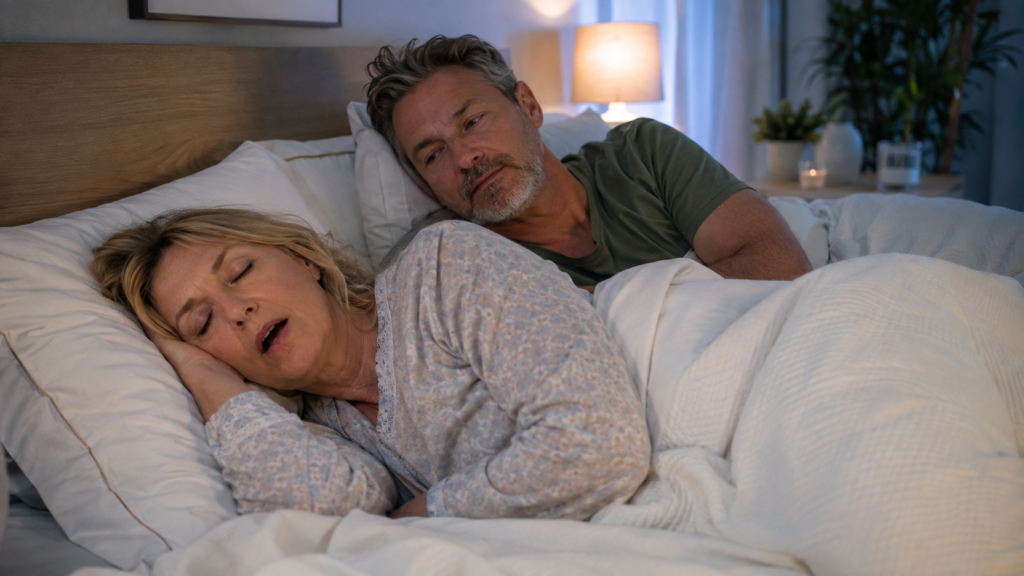
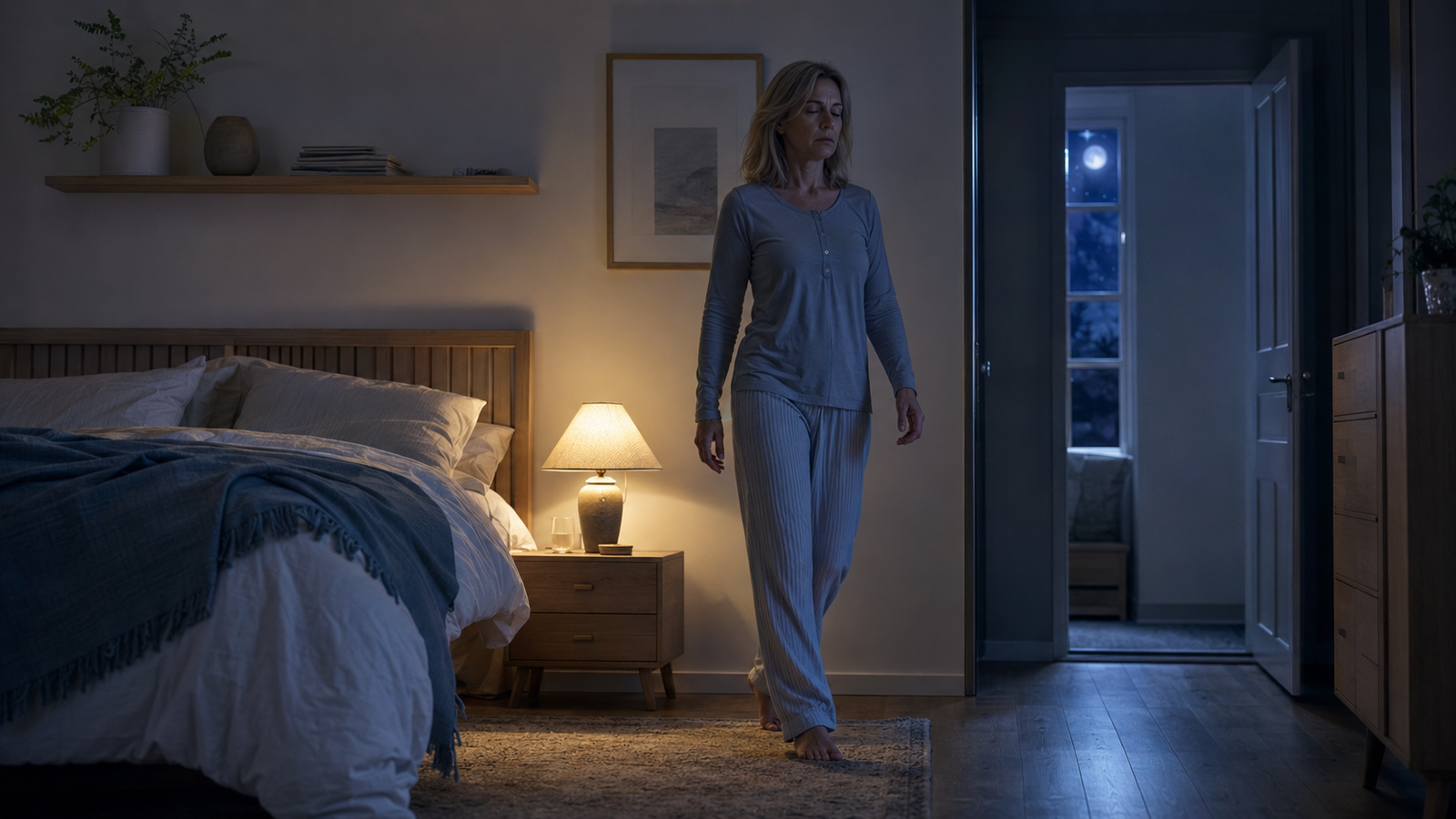
A partner might notice you:
- Sitting up while still asleep
- Walking with open, unfocused eyes
- Opening doors or moving objects
- Speaking without responding normally
- Performing familiar activities automatically
- Returning to bed without remembering the event
Sleepwalking may seem harmless until someone encounters a coffee table at 2 a.m. Adult episodes can lead to falls, burns, accidental exits, or other injuries, so new or repeated sleepwalking deserves attention.
This guide explores seven possible connections between menopause and sleepwalking, along with safety measures, treatment options, and warning signs.
Quick answer: Menopause does not appear to cause sleepwalking directly. However, menopause-related night sweats, insufficient sleep, anxiety, medication changes, alcohol use, and sleep apnea may disturb deep sleep and trigger episodes.
What Is Sleepwalking?
Sleepwalking, also known as somnambulism, is a non-REM parasomnia. Parasomnias involve unusual behaviors, movements, or experiences during sleep or transitions between sleeping and waking.
According to the Cleveland Clinic’s sleepwalking overview, sleepwalking generally arises during deep non-REM sleep and often occurs during the first portion of the night.
Despite its name, an episode does not always involve walking. Someone may:
- Sit up in bed
- Look around with a blank expression
- Walk through the room
- Open drawers or doors
- Rearrange bedding
- Eat or prepare food
- Attempt to leave the house
- Speak unclearly
- Perform routine activities
- Become confused when awakened
The person is not fully awake and may respond slowly or incorrectly. Most sleepwalkers remember little or nothing the following morning.
Is Sleepwalking Common During Menopause?
Sleepwalking is not recognized as a typical menopause symptom.
Hot flashes, night sweats, insomnia, mood changes, and sleep apnea are better-established sleep concerns during the menopausal transition. The National Institute on Aging notes that night sweats and mood changes may contribute to sleep problems during menopause.
These disruptions could indirectly increase:
- Sleep deprivation
- Irregular sleep timing
- Stress and anxiety
- Brief nighttime arousals
- Use of sleep medication
- Evening alcohol consumption
- Breathing-related sleep disruption
The appearance of sleepwalking during perimenopause does not prove that changing hormone levels caused it. Menopause may create conditions favorable to an episode while another factor serves as the actual trigger.
Can Menopause Directly Cause Sleepwalking?
Current evidence does not establish changes in estrogen or progesterone as a direct cause of sleepwalking.
A more plausible sequence is:
- Menopause symptoms interrupt sleep.
- Total sleep time decreases.
- Pressure for deep sleep builds.
- Deep sleep becomes less stable.
- A partial arousal occurs.
- Movement begins before the brain fully awakens.
- Sleepwalking develops in a susceptible person.
This distinction matters because treating menopause symptoms alone may not stop episodes caused by sleep apnea, medication, alcohol, chronic insomnia, or another sleep disorder.
The seven possible triggers covered in this guide are:
- Hot flashes and night sweats
- Insomnia and sleep deprivation
- Anxiety and emotional stress
- Medication or supplement changes
- Alcohol and other substances
- Obstructive sleep apnea
- Another parasomnia or medical condition
Several triggers may overlap. For example, a night sweat may shorten sleep, daytime fatigue may increase caffeine use, and evening alcohol may further fragment the following night.
Sleepwalking vs. Sleep Talking
Sleep talking and sleepwalking are both parasomnias, but their safety risks differ.
| Feature | Sleep talking | Sleepwalking |
|---|---|---|
| Main behavior | Mumbling, speaking, laughing, or shouting | Sitting, walking, or performing activities |
| Mobility | Usually remains in bed | May leave the bed or room |
| Awareness | Usually asleep | Partially aroused but not fully awake |
| Memory | Often absent | Usually absent or incomplete |
| Injury risk | Generally low | Can be significant |
| Safety changes | Rarely needed | Often recommended |
A person may speak during a sleepwalking episode, but their speech does not necessarily mean they understand questions or their surroundings.
If nighttime speech is the only behavior, Can Menopause Cause Sleep Talking? explains how disrupted sleep, vivid dreams, medication, and stress may be involved.
Sleepwalking vs. REM Dream Enactment
Sleepwalking usually arises from deep non-REM sleep. REM sleep behavior disorder involves physically or vocally acting out dreams during REM sleep.
| Sleepwalking | Possible REM dream enactment |
|---|---|
| More common during the first part of the night | More common later in the night |
| Routine or confused behavior | Movement may correspond to an action-filled dream |
| Dream recall is usually limited | A vivid dream may be remembered |
| Eyes may be open with a blank expression | Eyes are often closed |
| Wandering may occur | Punching, kicking, or grabbing may occur |
These are general clues, not a diagnosis. Violent movement, injury, vivid dream enactment, or sudden onset later in adulthood warrants medical assessment.
1. Hot Flashes and Night Sweats May Disrupt Deep Sleep
Hot flashes are sudden sensations of heat that may include sweating, flushing, chills, anxiety, or a rapid heartbeat. When they occur during sleep, they are commonly called night sweats.
Night sweats may cause someone to:
- Throw off blankets
- Sit up without fully waking
- Change sleepwear
- Walk toward a window or bathroom
- Search for water
- Move to a cooler room
- Wake repeatedly
- Lose total sleep time
These behaviors may resemble sleepwalking. In some cases, however, the person is mostly awake and remembers responding to the heat. During true sleepwalking, awareness and memory are usually limited.
Signs Night Sweats May Be Involved
Look for a pattern in which episodes:
- Began when hot flashes became frequent
- Occur on particularly warm nights
- Include removing clothing or bedding
- Coincide with visible sweating
- Follow repeated awakenings
- Become less frequent when temperature symptoms improve
If overheating repeatedly interrupts sleep, Why Can’t I Sleep During Menopause? explains how hot flashes, mood symptoms, and physical changes can interfere with continuous rest.
Cooling the bedroom may reduce heat-related awakenings, but it will not treat sleepwalking caused by medication, alcohol, sleep apnea, or another parasomnia.
2. Insomnia and Sleep Deprivation May Trigger Episodes
Insufficient sleep is a recognized sleepwalking trigger. It may increase deep-sleep pressure, making partial arousals more likely in people predisposed to non-REM parasomnias.
Menopause-related sleep loss may result from:
- Difficulty falling asleep
- Repeated night sweats
- Early-morning waking
- Joint or muscle discomfort
- Anxiety about sleep
- An irregular schedule
- Long periods awake in bed
- Sleep apnea
- Caregiving or work demands
Does Perimenopause Cause Insomnia? explores how hormone fluctuations, hot flashes, mood changes, and everyday stress can combine during the menopausal transition.
The Sleep-Loss Cycle
A repeating pattern may develop:
- Night sweats or anxiety reduce sleep.
- Daytime fatigue increases.
- Extra caffeine or a long nap delays bedtime.
- Sleep becomes more irregular.
- Deep-sleep pressure rises.
- A partial arousal triggers sleepwalking.
- Concern about another episode creates more bedtime anxiety.
Improving sleep regularity may reduce episodes related to sleep deprivation. However, repeated adult sleepwalking should not be managed with sleep hygiene alone when breathing pauses, dangerous movement, medication effects, or neurological symptoms are present.
A Quick Symptom Check
Ask yourself or a sleep partner:
- Did the episodes begin during perimenopause or after menopause?
- Did I sleepwalk as a child?
- Is there a family history of sleepwalking or night terrors?
- Do episodes follow unusually short nights?
- Are hot flashes or night sweats occurring simultaneously?
- Did the behavior begin after a medication change?
- Does evening alcohol make it worse?
- Has anyone noticed loud snoring or breathing pauses?
- Do I recall vivid dreams corresponding to the movements?
- Have I left the bedroom or sustained an injury?
New adult-onset sleepwalking, recurring episodes, or behavior that creates an injury risk should be discussed with a qualified healthcare professional.
Part 2 will cover anxiety, medication, alcohol, sleep apnea, and other conditions that may explain sleepwalking during menopause.
3. Anxiety and Emotional Stress May Destabilize Sleep
When considering can menopause cause sleepwalking, stress is an important indirect factor. Anxiety does not automatically cause sleepwalking, but it may shorten sleep, increase nighttime awakenings, and make deep sleep less stable.
During perimenopause and menopause, emotional strain may be related to:
- Unpredictable physical symptoms
- Concerns about health or aging
- Work pressure
- Family responsibilities
- Relationship difficulties
- Mood changes
- Persistent fatigue
- Fear of another sleepwalking episode
The Stress–Sleepwalking Cycle
A repeating pattern may develop:
- Stress makes it difficult to relax.
- Sleep becomes shorter or more fragmented.
- Sleep deprivation increases deep-sleep pressure.
- A partial awakening triggers sleepwalking.
- The episode frightens the household.
- Bedtime anxiety increases.
- The following night becomes less restful.
If racing thoughts regularly interfere with sleep, How to Calm Anxiety at Night offers breathing and grounding techniques that may reduce nighttime alertness.
Stress reduction can help improve sleep stability, but dangerous or newly developed adult sleepwalking should not be dismissed as “just anxiety.”
4. Medication and Supplement Changes May Trigger Episodes
Women may begin or adjust treatment during menopause for hot flashes, depression, anxiety, migraine, pain, allergies, or insomnia. Certain medicines can alter sleep depth, increase partial arousals, or contribute to unusual nighttime behavior in susceptible individuals.
Possible contributors may include certain:
- Sleep medicines
- Sedatives
- Antidepressants
- Antihistamines
- Stimulants
- Pain medicines
- Dopamine-related medicines
- Blood-pressure medicines
- Hormonal treatments
This does not mean these medicines are generally unsafe. The risk depends on the particular product, dose, timing, individual health history, and other substances being used.
Review the Timing Carefully
Record:
- Medication or supplement name
- Dose and time taken
- Date treatment began
- Recent dose changes
- Date sleepwalking first appeared
- Whether vivid dreams also developed
- Alcohol or cannabis use
- Other unusual nighttime behaviors
Bring the complete list to a doctor or pharmacist, including melatonin, herbal sleep remedies, CBD products, and nonprescription cold or allergy medicines.
Do not abruptly stop an antidepressant, sedative, hormone therapy, or prescribed sleep medicine. Withdrawal can worsen insomnia, anxiety, dreams, and other symptoms.
Can Melatonin Cause Sleepwalking?
Melatonin is not a common direct cause of sleepwalking, but responses differ between individuals. Some people experience vivid dreams, altered dream recall, or changes in sleep patterns.
If episodes began after starting melatonin:
- Record the product and dose
- Check when it is taken
- Note any other sedating products
- Discuss continued use with a healthcare professional
Taking more melatonin does not necessarily produce better sleep. Supplements apparently missed the meeting where “more” was supposed to mean “better.”
5. Alcohol and Other Substances Can Fragment Sleep
Alcohol may initially produce drowsiness, but sleep often becomes lighter and more disrupted as the night continues. It may also worsen snoring, obstructive sleep apnea, night sweats, confusion, and unusual sleep behavior.
Episodes may be more likely when alcohol is combined with:
- Sleep deprivation
- Sedating medication
- Antihistamines
- Sleep medicines
- Cannabis
- Significant emotional stress
- An irregular sleep schedule
Keep a record of whether sleepwalking occurs after drinking and whether the risk changes with the amount or timing.
Anyone who drinks heavily or regularly should seek medical guidance before abruptly stopping because alcohol withdrawal can be dangerous.
Caffeine and Nicotine
Caffeine and nicotine are stimulants rather than direct sleepwalking causes. However, late use may delay sleep, reduce sleep duration, and indirectly increase vulnerability to partial arousals.
Common caffeine sources include:
- Coffee
- Tea
- Cola
- Energy drinks
- Chocolate
- Pre-workout products
- Some headache medicines
Move caffeine earlier gradually if late consumption appears to affect sleep. Sudden elimination may create withdrawal headaches and enough grumpiness to make the coffee machine feel personally betrayed.
6. Obstructive Sleep Apnea May Trigger Partial Arousals
Obstructive sleep apnea causes repeated narrowing or closure of the airway during sleep. Each breathing interruption can produce a brief arousal, although the person may not remember waking.
These repeated arousals may occasionally be associated with:
- Sitting up
- Confused speech
- Sudden movement
- Leaving the bed
- Gasping or choking
- Returning quickly to sleep
- Little memory the next morning
A partner may focus on the walking and overlook the snoring or breathing pause that occurred immediately beforehand.
Sleep Apnea Warning Signs
Watch for:
- Loud habitual snoring
- Pauses in breathing
- Gasping or choking
- Morning headaches
- Dry mouth after waking
- Frequent nighttime urination
- Unrefreshing sleep
- Poor concentration
- Irritability
- Excessive daytime sleepiness
- Drowsiness while driving
Sleep-apnea risk increases after menopause in many women. Changes in airway physiology, body composition, and hormonal protection may all contribute.
Can Menopause Cause Sleep Apnea? explains the symptoms, risk factors, and testing process in more detail.
A cool bedroom and calming routine may improve comfort, but they cannot keep an obstructed airway open. Snoring, gasping, or witnessed breathing pauses should prompt a professional sleep assessment.
7. Another Parasomnia or Medical Condition May Be Involved
The question can menopause cause sleepwalking should not lead every new nighttime behavior to be labeled hormonal.
Similar episodes may occur with:
- Confusional arousals
- Night terrors
- REM sleep behavior disorder
- Nocturnal seizures
- Sleep-related eating disorder
- Medication side effects
- Fever or illness
- Alcohol or substance withdrawal
- Severe sleep deprivation
- Certain neurological conditions
Confusional Arousals
During a confusional arousal, a person may:
- Sit up in bed
- Look awake but remain confused
- Speak slowly or incoherently
- Respond incorrectly
- Resist attempts to awaken them
- Return to sleep
- Remember little afterward
These episodes commonly arise from deep non-REM sleep and may occur alongside sleepwalking.
Night Terrors
Night terrors may involve screaming, sweating, rapid breathing, open eyes, or intense fear while the person remains largely asleep. Unlike many nightmares, the sleeper is often difficult to comfort and remembers little the next morning.
New or frequent night terrors during adulthood deserve medical attention, particularly when they involve injury, medication changes, or leaving the bed.
REM Sleep Behavior Disorder
REM sleep behavior disorder may cause someone to physically act out a vivid dream. Behaviors can include:
- Shouting
- Punching
- Kicking
- Grabbing
- Jumping from bed
- Defensive movements
This differs from typical non-REM sleepwalking, but observing the episode without testing may not be enough to distinguish them.
Sudden dream enactment later in adulthood should be assessed by a healthcare professional because REM sleep behavior disorder can be associated with medication use and certain neurological conditions.
Nocturnal Seizures
Nocturnal seizures are less common than sleepwalking, but evaluation is important when events include:
- Highly repetitive or identical movements
- Body stiffening
- Rhythmic jerking
- Tongue injury
- Loss of bladder control
- Unusual breathing
- Sudden brief episodes occurring repeatedly
- Prolonged confusion after waking
A video recorded safely by a partner may help a clinician examine the behavior. No one should place themselves or the sleeper in danger merely to obtain footage.
What Should a Sleep Partner Record?
A partner’s observations can be extremely useful because the sleepwalker may remember nothing.
Record:
- Approximate time of the episode
- Estimated duration
- Activities performed
- Whether the eyes were open
- Ability to respond
- Snoring or breathing pauses
- Sweating or overheating
- Speech or shouting
- Forceful arm or leg movements
- Whether the person left the room
- Dream recall the next morning
- Any injury or dangerous behavior
- Alcohol, medication, or sleep loss beforehand
Do not interrogate, argue with, or deliberately frighten the sleepwalker. Calmly guide the person away from immediate danger when this can be done safely.
When Is Sleepwalking an Emergency?
Seek urgent assistance when an episode involves:
- Serious injury
- Leaving the home and becoming lost
- Access to weapons or dangerous machinery
- A fall from a height
- Difficulty breathing
- Prolonged unresponsiveness
- Repeated stiffening or jerking
- New weakness or loss of consciousness
- Severe confusion that continues after waking
Driving while asleep or attempting to operate appliances also requires prompt medical attention and immediate safety precautions.
The answer to can menopause cause sleepwalking remains indirect. Menopause-related insomnia, night sweats, emotional stress, medication changes, alcohol, and sleep apnea may increase partial arousals, but another parasomnia or medical disorder must be considered when episodes begin suddenly or become dangerous.
Part 3 will cover practical ways to reduce episodes, secure the bedroom and home, keep a sleepwalking diary, and determine when professional evaluation is appropriate.
How to Reduce Sleepwalking During Menopause
Because the answer to can menopause cause sleepwalking is usually indirect, the most effective approach is to identify triggers, stabilize sleep, and make the home safer. The goal is not merely to stop the walking—it is to reduce injury risk and address the sleep disruption behind it.
1. Make the Bedroom and Home Safer
Safety changes should begin immediately if someone leaves the bed, walks toward stairs, opens doors, cooks, or performs other potentially dangerous activities.
Consider:
- Clearing clutter, cords, and rugs from walking paths
- Removing sharp or breakable bedside objects
- Padding nearby furniture corners
- Closing and securing windows
- Installing alarms or chimes on exterior doors
- Placing keys out of reach at night
- Blocking access to stairs with an appropriate gate
- Keeping medicines, knives, firearms, and tools secured
- Sleeping on the ground floor when practical
- Using a low bed when falls are possible
- Keeping pets and children away from the immediate risk area
Avoid placing bells, obstacles, or objects where the sleepwalker could trip. The safety system should alert the household without turning the hallway into a low-budget obstacle course.
Do not lock a sleepwalker inside a room or physically restrain them. Fire safety and emergency exits must remain accessible.
2. Maintain a Consistent Sleep Schedule
Sleep deprivation and irregular sleep timing can increase deep-sleep pressure and make partial arousals more likely.
Try to:
- Wake at approximately the same time every day
- Allow enough time for sleep
- Avoid dramatic weekend schedule changes
- Reduce long or late-afternoon naps
- Return to the normal schedule after a poor night
- Adjust bedtime gradually rather than suddenly
- Track the routine for at least two weeks
A consistent wake time is often more practical than forcing an early bedtime when you are not sleepy.
If insomnia makes the schedule difficult to maintain, address the insomnia rather than simply spending more hours awake in bed.
3. Reduce Night Sweats and Overheating
When episodes occur alongside hot flashes, temperature management may reduce the awakenings surrounding them.
Helpful adjustments include:
- Keeping the bedroom comfortably cool
- Using breathable sheets and sleepwear
- Choosing lightweight layered bedding
- Running a quiet fan
- Keeping dry sleepwear nearby
- Using moisture-wicking bedding when helpful
- Avoiding excessively heavy blankets
- Discussing persistent hot flashes with a clinician
Do not make the room uncomfortably cold. Shivering and repeated temperature adjustments can also fragment sleep.
For practical guidance, What Is the Best Temperature for Sleep? explains how airflow, bedding, humidity, and individual comfort affect nighttime rest.
4. Create a Short Wind-Down Routine
Stress management may help when emotional overload contributes to insomnia or irregular sleep.
For 30–60 minutes before bedtime, consider:
- Dimming bright lights
- Ending demanding work
- Writing down unfinished tasks
- Practicing slow breathing
- Taking a lukewarm shower
- Reading something calming
- Listening to quiet music
- Performing gentle stretches
- Avoiding stressful conversations when possible
Keep the routine realistic. A complicated ritual can become another task to complete perfectly, which is not especially relaxing.
5. Review Alcohol, Caffeine, and Nicotine
Alcohol may produce initial drowsiness but fragment sleep later. It can also worsen snoring, sleep apnea, night sweats, confusion, and interactions with sedating medicines.
If sleepwalking follows alcohol use:
- Record the amount and timing.
- Avoid combining alcohol with sleep medicines.
- Reduce evening consumption.
- Compare episodes on alcohol-free nights.
- Discuss regular or heavy drinking with a professional.
People who drink heavily should not stop suddenly without medical advice because withdrawal can be dangerous.
Move caffeine earlier if it delays sleep or reduces total sleep time. Nicotine can also increase nighttime alertness and sleep disruption.
6. Review Medication and Supplements Professionally
Prepare a complete list that includes:
- Prescription medicines
- Sleep medicines
- Antidepressants
- Antihistamines
- Pain medicines
- Hormone therapy
- Melatonin
- Herbal products
- CBD or cannabis products
- Alcohol use
Record when each product is taken and whether sleepwalking began after starting it or changing the dose.
Do not abruptly stop prescribed treatment. A doctor or pharmacist may recommend changing the dose, timing, or medicine after considering its benefits and risks.
7. Keep a Two-Week Sleepwalking Diary

A diary can uncover patterns that are difficult to remember the following morning.
| Information | What to record |
|---|---|
| Sleep schedule | Bedtime, estimated sleep time, and wake time |
| Episode | Time, duration, and activity |
| Safety | Leaving the room, falls, appliances, or injuries |
| Awareness | Response to speech and memory afterward |
| Menopause symptoms | Hot flashes, sweating, chills, or mood changes |
| Breathing | Snoring, choking, gasping, or pauses |
| Medication | Name, dose, timing, and recent changes |
| Substances | Alcohol, caffeine, nicotine, or cannabis |
| Possible triggers | Stress, illness, travel, or insufficient sleep |
| Daytime effects | Fatigue, headaches, poor focus, or sleepiness |
Do not rely solely on the number of episodes. The behavior, breathing, movements, injuries, and surrounding triggers are equally important.
8. Ask a Partner to Respond Calmly
During an ordinary episode, a partner should:
- Remain calm
- Remove immediate hazards
- Use a quiet voice
- Guide the person gently toward bed when safe
- Avoid arguing or asking complicated questions
- Observe breathing and movement
- Record the approximate time
- Describe the event the following morning
It is generally unnecessary to forcefully awaken a sleepwalker. Sudden awakening may produce confusion, fear, or defensive movement.
However, immediate intervention is appropriate when the person is approaching stairs, an exterior door, traffic, fire, glass, or another serious hazard.
A common myth claims that waking a sleepwalker is medically dangerous. Waking them is not inherently harmful, but it can be difficult and disorienting. Safety—not folklore—should guide the response.
9. Consider Scheduled Awakenings
Scheduled awakenings may be useful when episodes occur predictably at approximately the same time.
The basic method is:
- Track episodes for one to two weeks.
- Identify their usual time.
- Gently wake the person about 15–30 minutes beforehand.
- Keep them awake briefly until they are clearly alert.
- Repeat nightly for a limited period under professional guidance.
This strategy is used more often for children, but a clinician may occasionally recommend it for adults with consistent episodes.
It is not appropriate when events are unpredictable, possibly seizure-related, associated with breathing problems, or dangerous enough to require urgent evaluation.
10. Address Persistent Insomnia
Chronic insomnia can maintain sleep deprivation, irregular schedules, and anxiety about nighttime episodes.
Cognitive behavioral therapy for insomnia, or CBT-I, may help by:
- Establishing a consistent sleep schedule
- Reducing excessive time awake in bed
- Rebuilding the connection between bed and sleep
- Addressing unhelpful beliefs about sleep
- Using relaxation strategically
- Planning for difficult nights
Sleep hygiene alone may not resolve chronic insomnia. A qualified CBT-I provider can adapt treatment around hot flashes, mood symptoms, medication, and safety concerns.
If you wake after a night sweat or interrupted episode, How to Fall Back Asleep After Waking Up offers a gentle step-by-step approach.
11. Arrange Assessment for Possible Sleep Apnea
Seek professional evaluation when sleepwalking occurs with:
- Loud habitual snoring
- Gasping or choking
- Witnessed breathing pauses
- Morning headaches
- Dry mouth
- Frequent nighttime urination
- Unrefreshing sleep
- Severe daytime sleepiness
- Drowsiness while driving
A clinician may recommend a home sleep-apnea test or an overnight sleep study. Treating breathing-related arousals may reduce associated nighttime behavior when sleep apnea is a contributing factor.
Avoid driving whenever sleepiness makes it unsafe.
Does Menopause Treatment Stop Sleepwalking?
Treating hot flashes, night sweats, anxiety, or insomnia may reduce episodes when those symptoms are fragmenting sleep. However, menopause treatment is not a specific treatment for sleepwalking.
Depending on individual circumstances, a clinician may discuss:
- Lifestyle adjustments
- Menopausal hormone therapy
- Nonhormonal treatment for hot flashes
- Mental-health support
- CBT-I
- Sleep-apnea testing
- Medication adjustments
- Referral to a sleep specialist
Benefits and risks vary according to age, medical history, symptom severity, and the treatment being considered.
If episodes result from alcohol, medication effects, sleep apnea, REM sleep behavior disorder, seizures, or another condition, controlling menopause symptoms alone may not resolve them.
When Should You See a Healthcare Professional?
Arrange a medical assessment when sleepwalking:
- Begins suddenly during adulthood
- Occurs repeatedly
- Becomes more frequent or complex
- Causes injury or property damage
- Leads to leaving the bedroom or home
- Begins after a medication change
- Occurs with intense dream enactment
- Regularly disrupts household sleep
- Appears with snoring or breathing pauses
- Causes significant daytime fatigue
- Involves cooking, driving, or unsafe activities
Seek prompt assistance when an episode includes:
- Serious injury
- Difficulty breathing
- Loss of consciousness
- Repeated stiffening or jerking
- Tongue biting
- Loss of bladder control
- New weakness
- Prolonged confusion after waking
- Access to weapons or dangerous machinery
- Leaving the home and becoming lost
What May Happen During an Evaluation?
A healthcare professional may ask about:
- Age when episodes began
- Childhood or family history of sleepwalking
- Frequency and timing
- Activities performed
- Dream recall
- Hot flashes and night sweats
- Sleep duration and schedule
- Medication and substance use
- Snoring and breathing pauses
- Injuries or dangerous behavior
- Stress and mental health
- Neurological symptoms
Evaluation may include a physical examination, medication review, sleep diary, laboratory tests, or referral to a sleep specialist.
Video polysomnography may be considered when the diagnosis is uncertain or when dream enactment, seizures, unusual movement, sleep apnea, or another sleep disorder is suspected. It records sleep stages, breathing, heart rhythm, muscle activity, and behavior overnight.
A Two-Week Action Plan
Days 1–3
- Begin a sleepwalking diary.
- Establish a consistent wake time.
- Remove immediate bedroom hazards.
- Secure medicines, tools, and exterior doors safely.
- List all medicines and supplements.
- Ask a partner to observe breathing and movement.
Days 4–7
- Move caffeine earlier.
- Avoid evening alcohol.
- Improve bedroom temperature and bedding.
- Begin a short wind-down routine.
- Record hot flashes and night sweats.
- Check for snoring, gasping, or breathing pauses.
Days 8–14
- Continue the regular schedule.
- Compare episodes with sleep duration and stress.
- Review medication and substance timing.
- Note whether events occur at a predictable time.
- Arrange an assessment if warning signs remain.
- Maintain safety precautions even if episodes decrease.
Change only a few routine factors at once when possible. Otherwise, every improvement will arrive wearing a disguise, and you will not know what helped.
What Not to Do
Avoid:
- Assuming every episode is caused by menopause
- Treating sleepwalking as intentional behavior
- Arguing with or frightening the sleepwalker
- Physically restraining the person
- Locking someone inside a bedroom
- Placing tripping hazards around the bed
- Abruptly stopping prescribed medication
- Combining alcohol with sleep medicines
- Ignoring snoring or breathing pauses
- Allowing a severely sleepy person to drive
- Dismissing violent movements as ordinary sleepwalking
The practical answer to can menopause cause sleepwalking remains nuanced: menopause may indirectly increase episodes through disrupted sleep, but safety measures and investigation of the actual trigger are essential.
Part 4 will complete the article with FAQs, final thoughts, internal and external resources, category, tags, and full Rank Math SEO information.
Frequently Asked Questions
Can menopause cause sleepwalking for the first time?
Can menopause cause sleepwalking? Menopause is not established as a direct cause. However, night sweats, insomnia, sleep deprivation, anxiety, medication changes, alcohol, and sleep apnea may trigger episodes in susceptible adults. New adult-onset sleepwalking should be medically assessed.
Is sleepwalking dangerous during menopause?
It can be. A person may fall, leave the house, use appliances, or encounter stairs and sharp objects while not fully awake. Secure immediate hazards and seek professional guidance when episodes recur or involve unsafe behavior.
Should you wake a sleepwalker?
Waking a sleepwalker is not inherently dangerous, but sudden awakening may cause confusion or defensive behavior. Speak quietly and gently guide the person away from danger when possible. Wake them if necessary to prevent an immediate injury.
Can hormone therapy stop sleepwalking?
Hormone therapy is not a specific sleepwalking treatment. It might indirectly help when hot flashes and night sweats are fragmenting sleep, but it will not correct episodes caused by medication, alcohol, sleep apnea, seizures, or another parasomnia. Discuss individual benefits and risks with a qualified clinician.
Can melatonin make sleepwalking worse?
Melatonin is not a common direct cause, although individual responses vary. If sleepwalking began after starting melatonin, document the dose, timing, other medicines, and alcohol use. Ask a doctor or pharmacist whether continued use is appropriate.
Does sleep apnea cause sleepwalking?
Sleep apnea can produce repeated partial arousals and may contribute to unusual nighttime behavior in some people. Loud snoring, choking, breathing pauses, morning headaches, and severe daytime sleepiness warrant professional assessment.
Why would an adult suddenly start sleepwalking?
Possible triggers include sleep deprivation, stress, fever, alcohol, medication changes, sleep apnea, another parasomnia, or a neurological condition. Sudden onset in adulthood deserves greater attention than occasional childhood sleepwalking.
How can I stop sleepwalking naturally?
Useful first steps include:
- Maintaining a regular wake time
- Getting sufficient sleep
- Managing night sweats
- Avoiding evening alcohol
- Moving caffeine earlier
- Creating a calm bedtime routine
- Keeping a two-week sleep diary
- Removing hazards from the bedroom and home
These measures may reduce triggers but should not replace medical evaluation for recurrent, dangerous, or newly developed adult episodes.
Final Thoughts
Can menopause cause sleepwalking? Current evidence does not show that menopause directly causes it. The menopausal transition may nevertheless create conditions that make sleepwalking more likely: night sweats interrupt deep sleep, insomnia creates sleep deprivation, anxiety increases nighttime disruption, and medication or alcohol may alter normal sleep patterns.
Begin with immediate home-safety measures, a consistent sleep schedule, temperature control, reduced evening alcohol, and a detailed two-week diary. Ask a partner to observe whether episodes include sweating, dream enactment, snoring, gasping, breathing pauses, or repetitive movements.
Do not automatically blame hormones when sleepwalking begins suddenly during adulthood. Recurrent episodes, injuries, leaving the home, violent movement, breathing problems, or significant daytime sleepiness require professional assessment. The nighttime wandering may be the visible symptom, while sleep apnea, medication effects, or another disorder is quietly pulling the strings.
Medical disclaimer: This article provides general educational information and does not replace diagnosis or individualized medical care. Consult a qualified healthcare professional before changing prescribed medication, supplements, hormone therapy, or treatment for a sleep disorder.
Internal Links
- Can Menopause Cause Sleep Talking?
- Why Can’t I Sleep During Menopause?
- Does Perimenopause Cause Insomnia?
- How to Calm Anxiety at Night
- Can Menopause Cause Sleep Apnea?
- What Is the Best Temperature for Sleep?
- How to Fall Back Asleep After Waking Up