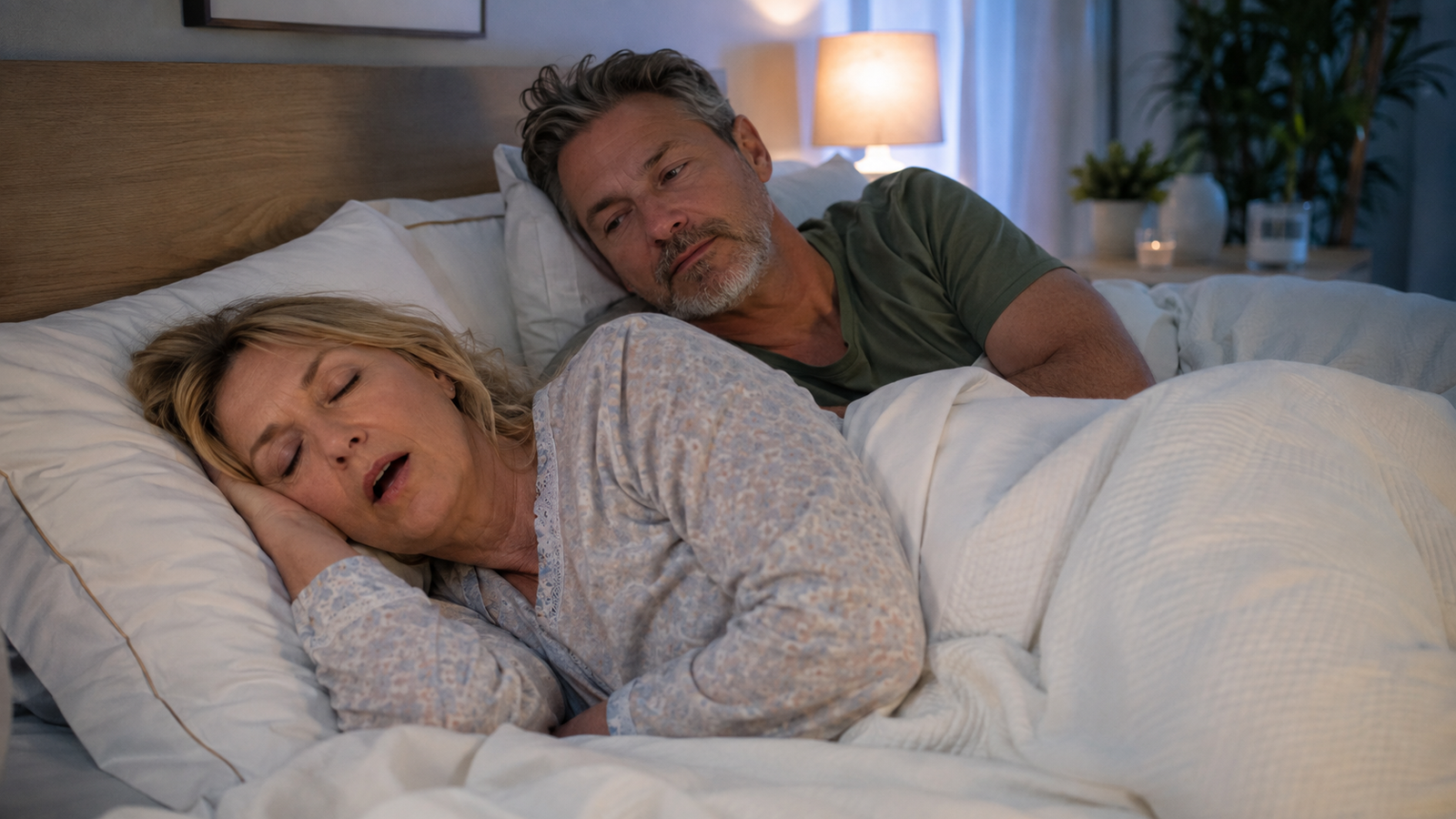
Can Menopause Cause Sleep Talking? 7 Possible Reasons
Can menopause cause sleep talking? Menopause is not considered a direct cause of sleep talking, but night sweats, insomnia, stress, medication changes, sleep deprivation, and underlying sleep disorders may make episodes begin or become more noticeable.
You may hear about the episodes from a partner who notices you:
- Mumbling quietly
- Speaking complete sentences
- Laughing or crying
- Calling someone’s name
- Answering an imaginary question
- Shouting during a dream
- Speaking without remembering it the next morning
An occasional sleepy conversation is usually harmless—even when your midnight vocabulary becomes unexpectedly creative. However, frequent or suddenly developing sleep talking can sometimes accompany another sleep problem that deserves attention.
This guide examines seven possible connections between menopause and sleep talking, warning signs that should not be ignored, and practical ways to improve sleep.
Quick answer: Menopause does not appear to cause sleep talking directly. It may indirectly increase episodes by disrupting sleep through hot flashes, night sweats, anxiety, insomnia, medication effects, or sleep apnea.
What Is Sleep Talking?
Sleep talking, medically called somniloquy, is a type of parasomnia. Parasomnias involve unusual behaviors, movements, emotions, or experiences that occur while falling asleep, during sleep, or while waking.
According to the Cleveland Clinic’s overview of parasomnias, these events can include talking, walking, moving, reacting to dreams, waking in fear, or temporarily being unable to move.
Sleep talking may occur during either:
- Non-rapid eye movement sleep
- Rapid eye movement sleep
- Transitions between sleep stages
- Brief partial awakenings
The speech can range from meaningless sounds to understandable conversations. Most people do not know they talked unless a partner or family member tells them.
Is Sleep Talking Normal?
Occasional sleep talking can occur in otherwise healthy people and usually does not require treatment.
A single episode after a stressful day, disrupted schedule, illness, or poor night of sleep is generally less concerning than a new pattern that:
- Occurs several nights each week
- Regularly wakes a partner
- Includes screaming or intense fear
- Appears with punching, kicking, or falling from bed
- Begins suddenly in later adulthood
- Accompanies loud snoring or gasping
- Produces significant daytime sleepiness
- Starts after a medication change
Sleep talking itself is generally less important than the behaviors and symptoms occurring around it.
Can Menopause Directly Cause Sleep Talking?
There is not enough evidence to say that changing estrogen or progesterone levels directly cause sleep talking.
A more reasonable explanation is that menopause may create conditions that destabilize sleep. The brain may move more frequently between sleeping and waking states, creating additional opportunities for speech or other parasomnia behaviors.
The National Institute on Aging notes that night sweats and mood changes can contribute to sleep problems during menopause. These disruptions may indirectly make sleep talking more likely or easier for a partner to notice.
The seven possible connections explored in this article are:
- Hot flashes and night sweats
- Insomnia and sleep deprivation
- Anxiety and emotional stress
- Vivid dreams and nightmares
- Medication or supplement changes
- Sleep apnea and fragmented sleep
- Another parasomnia or neurological condition
Several factors may overlap. For example, a night sweat may wake you from a vivid dream, anxiety may prevent you from returning to sleep, and the resulting sleep deprivation may make the following night less stable.
Sleep Talking vs. Dream Enactment
Sleep talking does not automatically mean that you are physically acting out dreams.
| Feature | Ordinary sleep talking | Possible dream enactment |
|---|---|---|
| Speech | Mumbling, short phrases, or sentences | Shouting or speech linked to visible actions |
| Movement | Little or no purposeful movement | Punching, kicking, grabbing, or jumping |
| Injury risk | Usually low | May injure the sleeper or partner |
| Dream memory | Often absent | A vivid action-filled dream may be recalled |
| Medical assessment | Not always necessary | Recommended when episodes recur |
Talking alone is commonly harmless. Vocalization combined with forceful movement requires more caution because it may indicate REM sleep behavior disorder or another parasomnia.
The Cleveland Clinic explains that REM sleep behavior disorder can involve physically or vocally acting out dreams. Repeated punching, kicking, falling from bed, or injuring a partner should not be dismissed as an ordinary menopause symptom.
Sleep Talking vs. Nightmares
A nightmare is a disturbing dream that commonly wakes the sleeper and may be remembered afterward. Sleep talking can occur without a frightening dream and usually does not wake the person speaking.
| Sleep talking | Nightmare |
|---|---|
| May occur without dream recall | Usually involves a distressing dream |
| Speaker often remains asleep | Sleeper commonly wakes |
| Words may be unclear | Dream story may be remembered |
| Usually causes little personal distress | May cause fear or reluctance to sleep |
Menopause-related sleep disruption can also make dreams feel more memorable. Can Menopause Cause Vivid Dreams? explains why repeated awakenings, anxiety, medication, and night sweats may increase dream recall.
1. Hot Flashes and Night Sweats May Fragment Sleep
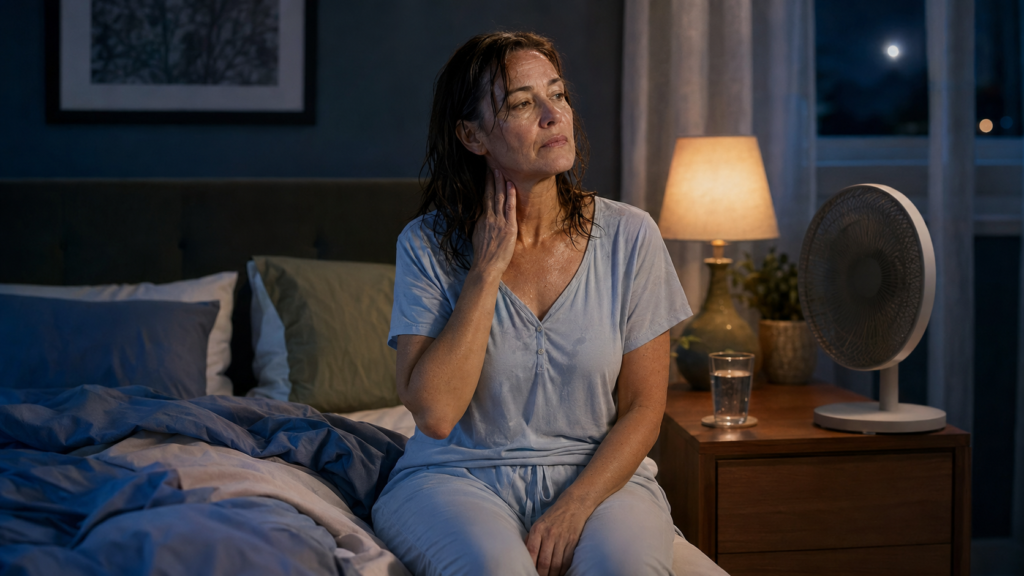
Hot flashes are sudden sensations of heat that may involve sweating, flushing, chills, or a rapid heartbeat. When they occur during sleep, they are commonly called night sweats.
Night sweats may:
- Cause brief partial awakenings
- Force you to remove bedding
- Make you change sleepwear
- Increase heart rate and alertness
- Interrupt a dream
- Make it difficult to fall asleep again
- Wake a partner who then notices speech
These interruptions do not prove that hot flashes directly produce sleep talking. Instead, unstable sleep may create more transitions between sleep stages and wakefulness.
A possible sequence is:
- A night sweat begins.
- Sleep becomes lighter.
- You partially awaken without becoming fully conscious.
- You mumble or speak.
- You return to sleep without remembering the episode.
If temperature symptoms are repeatedly interrupting your nights, Why Can’t I Sleep During Menopause? covers hot flashes and other menopause-related barriers to continuous sleep.
Signs That Night Sweats Are Involved
Consider whether sleep talking:
- Began around the same time as hot flashes
- Occurs on nights when you wake overheated
- Happens while you are removing blankets
- Becomes worse in a warm bedroom
- Coincides with sweating or chills
- Decreases when temperature symptoms improve
Keeping the room comfortably cool may reduce temperature-related awakenings, although it will not necessarily stop sleep talking caused by another condition.
2. Insomnia and Sleep Deprivation Can Destabilize Sleep
Insomnia can involve difficulty falling asleep, repeated awakenings, waking too early, or sleep that does not feel restorative.
When sleep becomes irregular or insufficient, pressure for deeper sleep can increase. Transitions between sleep stages may also become less stable, potentially contributing to parasomnia episodes in susceptible people.
Possible contributors include:
- Staying awake during hot flashes
- Going to bed at inconsistent times
- Worrying about whether sleep will come
- Using screens late at night
- Sleeping late after a difficult night
- Taking long daytime naps
- Drinking extra caffeine to manage fatigue
- Remaining in bed awake for hours
Does Perimenopause Cause Insomnia? explains how hormone fluctuations, mood changes, and physical symptoms may combine during the menopausal transition.
The Sleep-Deprivation Cycle
Sleep talking and poor sleep may become part of a repeating cycle:
- Menopause symptoms interrupt sleep.
- Total sleep time decreases.
- Daytime fatigue leads to naps or additional caffeine.
- The following night becomes less predictable.
- Sleep talking or another parasomnia occurs.
- A partner wakes you or reports the episode.
- Worry about the behavior creates more bedtime alertness.
Restoring a consistent sleep schedule may reduce episodes related to insufficient sleep. It cannot, however, treat sleep apnea, medication side effects, or dream enactment.
A Quick Symptom Check
Ask yourself:
- Did sleep talking begin during perimenopause or after menopause?
- Do episodes occur after particularly poor nights?
- Are night sweats present at the same time?
- Has a partner noticed snoring, gasping, or breathing pauses?
- Do I punch, kick, grab, or leave the bed?
- Did symptoms begin after starting a medicine or supplement?
- Am I unusually sleepy during the day?
- Do I remember frightening or action-filled dreams?
Brief, infrequent speech without movement is usually less concerning. New adult-onset episodes accompanied by breathing problems, injury, intense fear, or complex physical behavior should be medically assessed.
Part 2 will continue with anxiety, vivid dreams, medication effects, sleep apnea, and other conditions that may explain sleep talking during menopause.
3. Anxiety and Emotional Stress May Increase Sleep Talking
Anxiety does not directly cause every episode of sleep talking, but emotional stress can make sleep lighter and more fragmented.
During perimenopause and menopause, stress may be influenced by:
- Unpredictable physical symptoms
- Concerns about aging or health
- Changes in mood
- Work pressure
- Family responsibilities
- Relationship difficulties
- Persistent fatigue
- Worry about not sleeping
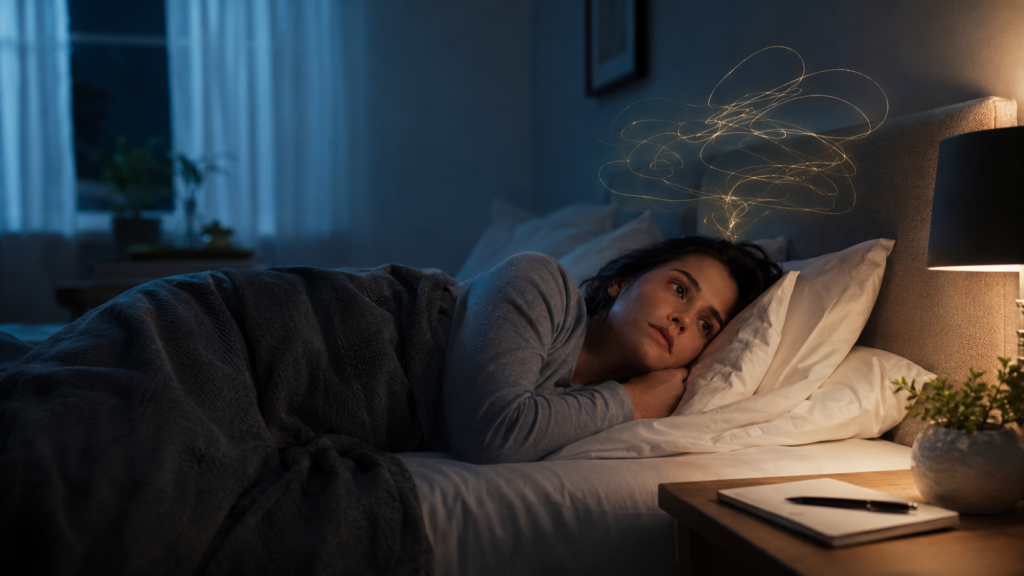
A busy or distressed mind may continue processing emotional experiences during sleep. Increased awakenings and unstable transitions between sleep stages could make talking, mumbling, or other parasomnia behaviors more likely in susceptible people.
The Stress–Sleep Talking Cycle
A repeating pattern may develop:
- Stress makes it difficult to relax.
- Sleep becomes lighter or shorter.
- Sleep talking occurs during a partial awakening.
- A partner reports the episode the next morning.
- You worry that something is wrong.
- Bedtime anxiety increases.
- The following night becomes more disrupted.
Sleep talking does not reveal hidden truths or reliably disclose secret thoughts. Words spoken during sleep may be incomplete, confused, or unrelated to waking intentions. Midnight testimony would make a very unreliable courtroom witness.
If racing thoughts regularly interfere with sleep, How to Calm Anxiety at Night offers breathing, grounding, and relaxation strategies that may reduce nighttime alertness.
When Anxiety-Like Movement May Be Something Else
Speaking during sleep while appearing frightened can occur with:
- Nightmares
- Night terrors
- Panic attacks
- Post-traumatic stress
- REM sleep behavior disorder
- Sleep apnea-related arousals
- Medication side effects
Record whether the person remains asleep, remembers a dream, sits up, screams, leaves the bed, or moves violently. These details can help a healthcare professional distinguish ordinary sleep talking from another condition.
4. Vivid Dreams and Nightmares May Make Vocalization More Noticeable
Many women report vivid or emotionally intense dreams during the menopausal transition. Menopause may not directly generate these dreams, but frequent awakenings can make them easier to remember.
Dream recall is more likely when you awaken during or shortly after REM sleep. Night sweats, anxiety, noise, pain, or breathing interruptions may therefore create the impression that dreaming has suddenly increased.
Sleep talking associated with dreams may include:
- Calling someone’s name
- Answering a question
- Crying or laughing
- Repeating a short phrase
- Shouting a warning
- Speaking in an emotional tone
- Using words connected to a remembered dream
Talking alone does not confirm that someone is acting out a dream. Concern increases when vocalization occurs with forceful, purposeful movement.
Warning Signs of Possible Dream Enactment
Arrange a medical assessment if episodes include:
- Punching or kicking
- Grabbing a partner
- Jumping or falling from bed
- Running movements
- Knocking over furniture
- Injuries or near injuries
- Repeated shouting linked to action-filled dreams
- Sudden onset later in adulthood
Create a safer sleeping area while waiting for assessment. Remove sharp or breakable objects, clear the floor, cushion nearby hard surfaces, and avoid physically restraining someone during an episode unless immediate safety requires intervention.
5. Medication and Supplements May Affect Sleep Behavior
Women may begin or change medication during menopause to manage hot flashes, anxiety, depression, migraine, pain, allergies, or insomnia. Some medicines can alter sleep stages, increase dream intensity, or contribute to parasomnia behaviors in certain people.
Possible contributors may include certain:
- Antidepressants
- Sedatives
- Sleep medicines
- Antihistamines
- Stimulants
- Dopamine-related medicines
- Blood-pressure medicines
- Pain medicines
- Hormonal treatments
This does not mean these treatments are unsafe or that they should automatically be stopped. The relationship depends on the specific medicine, dose, timing, health history, and other substances being used.
Review the Timing of Episodes
Record:
- The medication or supplement name
- The dose
- The time it is taken
- The date it was started
- Any recent dose change
- When sleep talking began
- Whether vivid dreams also appeared
- Alcohol, caffeine, or cannabis use
- Additional nighttime behaviors
Bring the complete list to a doctor or pharmacist. Include nonprescription sleep aids, melatonin, herbal remedies, CBD products, and cold or allergy medicines.
Do not abruptly discontinue an antidepressant, sedative, hormone therapy, or prescribed sleep medicine. Sudden withdrawal may worsen anxiety, insomnia, dreams, or physical symptoms.
Does Melatonin Cause Sleep Talking?
Melatonin does not consistently cause sleep talking, but some users report vivid dreams or changes in dream recall.
If episodes began after starting melatonin, note the dose, product, and timing. More is not necessarily better, and supplement quality may vary. Discuss ongoing use with a qualified healthcare professional, particularly when melatonin is combined with other sedating medicines.
6. Sleep Apnea Can Trigger Repeated Arousals
Obstructive sleep apnea causes the airway to narrow or close repeatedly during sleep. Each breathing interruption may trigger a brief awakening, even when the sleeper does not remember it.
These repeated arousals may be accompanied by:
- Mumbling
- Choking sounds
- Snorting
- Sudden body movements
- Confused speech
- Sitting up
- Returning quickly to sleep
A partner may notice the speech but overlook the breathing interruption that came immediately before it.
Sleep Apnea Warning Signs
Watch for:
- Loud habitual snoring
- Pauses in breathing
- Gasping or choking
- Morning headaches
- Dry mouth after waking
- Frequent nighttime urination
- Unrefreshing sleep
- Difficulty concentrating
- Irritability
- Excessive daytime sleepiness
Sleep-apnea risk can increase after menopause because of changes in airway physiology, body composition, and hormone levels. Can Menopause Cause Sleep Apnea? explains the risk factors, symptoms, and testing process in more detail.
Sleep talking caused by breathing-related arousals may not improve through relaxation or bedroom cooling alone. A sleep evaluation may be necessary.
7. Another Parasomnia or Neurological Condition May Be Involved
When asking can menopause cause sleep talking, it is important not to attribute every new nighttime behavior to hormones.
Speech may occur alongside:
- Sleepwalking
- Confusional arousals
- Night terrors
- Nightmare disorder
- REM sleep behavior disorder
- Nocturnal seizures
- Sleep-related eating
- Fever or illness
- Alcohol or substance withdrawal
- Significant sleep deprivation
Confusional Arousals
During a confusional arousal, a person may:
- Sit up in bed
- Speak slowly or incoherently
- Look awake without responding normally
- Appear confused
- Resist attempts to be awakened
- Return to sleep
- Remember little or nothing afterward
These episodes commonly arise from deep non-REM sleep. They may become more likely when sleep is interrupted or insufficient.
Night Terrors
Night terrors can involve screaming, sweating, rapid breathing, wide-open eyes, or intense fear while the person remains largely asleep. They differ from ordinary nightmares because the sleeper may be difficult to comfort and usually remembers little afterward.
New or frequent episodes in adulthood deserve medical attention, especially when they involve injury, leaving the bed, medication changes, or other neurological symptoms.
Nocturnal Seizures
Nocturnal seizures are less common than ordinary sleep talking, but assessment is important when episodes include:
- Repetitive stereotyped movements
- Body stiffening
- Rhythmic jerking
- Tongue injury
- Loss of bladder control
- Unusual breathing
- Confusion after waking
- Identical events occurring repeatedly
A smartphone recording made safely by a partner may help a clinician understand the behavior. Do not place anyone in danger to obtain a video.
What Should a Sleep Partner Record?
A sleep partner can provide useful information without trying to interpret the words.
Record:
- Approximate episode time
- Duration
- Whether the speech was clear
- Snoring or breathing pauses
- Sweating or signs of overheating
- Eye position
- Arm or leg movements
- Whether the sleeper left the bed
- Response when gently spoken to
- Dream recall the following morning
- Any injury or dangerous behavior
Avoid interrogating or deliberately startling the sleeper. Gentle guidance may be appropriate if there is an immediate safety concern.
The answer to can menopause cause sleep talking remains indirect: menopause-related hot flashes, stress, vivid dreams, medication changes, sleep deprivation, and sleep apnea may increase sleep disruption, but another parasomnia or medical condition should be considered when episodes are new, frequent, or physically intense.
Part 3 will cover practical ways to reduce sleep talking, improve bedroom safety, track episodes, support more stable sleep, and determine when medical evaluation is appropriate.
How to Reduce Sleep Talking During Menopause
When exploring can menopause cause sleep talking, the practical goal is not simply to stop the words. It is to reduce disrupted sleep and identify triggers such as night sweats, stress, sleep deprivation, medication, or sleep apnea.
1. Keep a Consistent Sleep Schedule
Irregular sleep and insufficient sleep may increase parasomnia episodes in susceptible people.
Try to:
- Wake at approximately the same time every day
- Allow enough time for sleep
- Go to bed when genuinely sleepy
- Avoid sleeping late after a difficult night
- Limit long or late-afternoon naps
- Get natural light shortly after waking
- Maintain a predictable evening routine
A consistent wake time is usually more helpful than forcing yourself into bed early when you are not sleepy.
Track your routine for at least two weeks. Sleep talking may not disappear immediately, but its frequency can decrease as sleep becomes more stable.
2. Manage Night Sweats and Bedroom Temperature
If sleep talking occurs during overheating or while removing bedding, reducing night sweats may help prevent the partial awakenings surrounding an episode.
Consider:
- Keeping the bedroom comfortably cool
- Using breathable sheets and sleepwear
- Choosing lightweight, layered bedding
- Running a quiet fan
- Keeping dry sleepwear nearby
- Avoiding overly heavy blankets
- Discussing persistent hot flashes with a clinician
Avoid making the room so cold that discomfort repeatedly wakes you. The goal is stable comfort rather than an overnight audition for life inside a refrigerator.
For practical temperature adjustments, What Is the Best Temperature for Sleep? explains how bedding, airflow, humidity, and personal comfort affect sleep.
3. Create a Calm Wind-Down Routine
Stress management may help when anxiety and emotional overload are contributing to fragmented sleep.
For 30–60 minutes before bed, try:
- Dimming bright lights
- Ending demanding work
- Writing down unfinished tasks
- Practicing slow breathing
- Reading something calming
- Taking a lukewarm shower
- Listening to quiet music
- Performing gentle stretches
- Avoiding upsetting conversations when possible
Choose a short routine that you can repeat consistently. An elaborate nighttime ritual may become another source of pressure if you feel it must be performed perfectly.
4. Reduce Sleep Deprivation Gradually
Trying to recover from chronic sleep loss by spending excessive time in bed can make sleep more irregular.
Instead:
- Choose a consistent wake time.
- Increase sleep opportunity gradually.
- Take a short early nap only if necessary.
- Avoid using large amounts of caffeine to compensate.
- Return to your regular schedule after a poor night.
- Seek help if insomnia continues.
If you frequently remain awake after a night sweat or sleep-talking episode, How to Fall Back Asleep After Waking Up provides a calm step-by-step approach.
5. Review Caffeine, Alcohol, and Other Substances
Substances that alter sleep depth or increase nighttime awakenings may make sleep talking more noticeable.
Caffeine
Caffeine may interfere with sleep even when consumed several hours before bedtime.
Possible sources include:
- Coffee
- Tea
- Cola
- Energy drinks
- Chocolate
- Pre-workout products
- Certain headache medicines
Move caffeine earlier rather than eliminating it suddenly. Rapid withdrawal can cause headaches and fatigue.
Alcohol
Alcohol may initially cause drowsiness but can fragment sleep later in the night. It may also worsen snoring, sleep apnea, night sweats, vivid dreams, and unusual sleep behaviors.
If episodes occur more often after drinking, reduce or avoid evening alcohol and monitor the pattern. Anyone who drinks heavily or regularly should obtain medical advice before stopping abruptly because withdrawal can be dangerous.
Nicotine and Cannabis
Nicotine is stimulating and may disrupt sleep. Cannabis can also alter sleep architecture and may interact with medicines or produce changes when use is reduced or stopped.
Record the timing and amount rather than assuming a product is helping simply because it makes you feel sleepy.
6. Review Medication With a Professional
If sleep talking began after starting or changing a medicine, prepare a complete list for a doctor or pharmacist.
Include:
- Prescription medication
- Antidepressants
- Hormone therapy
- Sleep medicines
- Antihistamines
- Pain medicines
- Melatonin
- Herbal supplements
- CBD or cannabis products
- Alcohol use
Record when each product is taken and whether the episodes appeared after a dose or timing change.
Do not stop prescribed treatment abruptly. A professional may recommend adjusting the dose, changing the timing, substituting another medicine, or continuing the treatment while investigating a different cause.
7. Keep a Two-Week Sleep-Talking Diary

A short diary can reveal patterns that memory misses.
Record:
| Information | What to note |
|---|---|
| Bedtime and wake time | Approximate times |
| Sleep talking | Time, duration, and frequency |
| Other behavior | Shouting, sitting, kicking, or leaving bed |
| Breathing | Snoring, choking, or pauses |
| Menopause symptoms | Hot flashes, sweating, or chills |
| Medication | Name, dose, and timing |
| Substances | Caffeine, alcohol, nicotine, or cannabis |
| Daytime effects | Fatigue, headaches, or poor concentration |
| Possible triggers | Stress, illness, travel, or sleep deprivation |
Do not worry about transcribing every word. The timing, physical behavior, breathing, and surrounding symptoms are usually more useful than the content of the speech.
8. Ask a Partner to Observe Safely
A sleep partner should not argue with, interrogate, or deliberately frighten someone who is talking during sleep.
During an ordinary episode, the partner can:
- Remain calm
- Observe breathing and movement
- Speak gently if necessary
- Guide the sleeper away from danger
- Record the approximate time
- Note whether the person wakes
- Describe the event the following morning
Avoid shaking the sleeper unless an immediate danger requires intervention. Sudden awakening may increase confusion or defensive movement during some parasomnias.
If the behavior includes violence, repeated wandering, or breathing pauses, observation should support medical evaluation—not replace it.
9. Improve Bedroom Safety
Simple speech generally presents little physical risk. Additional precautions are appropriate when episodes include movement or dream enactment.
Consider:
- Removing sharp or breakable bedside objects
- Clearing clutter from the floor
- Moving furniture away from the bed
- Securing windows and exterior doors
- Keeping dangerous items inaccessible
- Padding nearby hard edges
- Using a low bed if falls occur
- Preventing children or pets from sleeping in the immediate risk area
Sleeping separately may be temporarily appropriate when a partner is being kicked, struck, or repeatedly injured. This is a safety measure, not a permanent treatment.
Do not restrain a sleeping person or lock them inside a room. A clinician or sleep specialist should advise on recurring dangerous behavior.
10. Address Snoring and Possible Sleep Apnea
Sleep talking accompanied by loud snoring, gasping, choking, or breathing pauses may be related to repeated breathing-induced arousals.
Arrange an assessment when you also experience:
- Morning headaches
- Dry mouth
- Frequent nighttime urination
- Unrefreshing sleep
- Poor concentration
- Irritability
- Severe daytime sleepiness
- Drowsy driving
Bedroom cooling and relaxation exercises cannot keep an obstructed airway open. Sleep apnea may require an overnight sleep study or home sleep-apnea test and condition-specific treatment.
11. Seek Treatment for Persistent Insomnia
Chronic insomnia may maintain the sleep deprivation and anxiety surrounding nighttime episodes.
Cognitive behavioral therapy for insomnia, commonly called CBT-I, may include:
- Establishing a consistent schedule
- Reducing excessive time awake in bed
- Changing unhelpful beliefs about sleep
- Using relaxation appropriately
- Rebuilding the connection between bed and sleep
- Planning for difficult nights
Sleep hygiene alone may not resolve chronic insomnia. A healthcare professional or qualified CBT-I provider can tailor treatment around night sweats and other menopause symptoms.
Does Menopause Treatment Stop Sleep Talking?
Treating menopause symptoms may reduce episodes when hot flashes, night sweats, or mood changes are repeatedly fragmenting sleep. However, menopause treatment is not a specific therapy for sleep talking.
Depending on individual circumstances, a clinician may discuss:
- Lifestyle changes
- Menopausal hormone therapy
- Nonhormonal hot-flash treatments
- Mental-health treatment
- Insomnia treatment
- Evaluation for sleep apnea
- Medication adjustments
Benefits and risks vary according to age, medical history, symptom severity, time since menopause, and the particular treatment being considered.
If sleep talking is caused by another parasomnia, medication effect, seizure disorder, or sleep apnea, controlling hot flashes alone may not resolve it.
When Should You See a Healthcare Professional?
Arrange a routine medical assessment when sleep talking:
- Begins suddenly during adulthood
- Occurs several nights each week
- Becomes progressively more frequent
- Regularly disrupts household sleep
- Begins after a medication change
- Appears with intense nightmares
- Causes significant daytime fatigue
- Occurs with loud snoring or gasping
- Includes sleepwalking or confused behavior
- Is accompanied by unusual neurological symptoms
Seek more prompt evaluation if episodes involve:
- Punching, kicking, or grabbing
- Jumping or falling from bed
- Injury to the sleeper or partner
- Repeated body stiffening or jerking
- Tongue biting
- Loss of bladder control
- Prolonged confusion after waking
- Difficulty breathing
- New weakness or loss of consciousness
Avoid driving when excessive sleepiness makes it unsafe.
What May Happen During an Evaluation?
A clinician may ask about:
- When the behavior began
- Frequency and timing
- Dream recall
- Night sweats
- Sleep duration
- Stress and mental health
- Medication and substance use
- Snoring and breathing pauses
- Movement or injuries
- Family history of parasomnias
- Other neurological symptoms
Evaluation may include a physical examination, medication review, sleep diary, laboratory testing, or a sleep study.
Video polysomnography may be considered when dream enactment, seizures, unusual movements, or another sleep disorder is suspected. It records sleep stages along with breathing, heart rhythm, muscle activity, and movement.
A Two-Week Action Plan
Days 1–3
- Set a consistent wake time.
- Begin a sleep-talking diary.
- List medicines and supplements.
- Ask a partner to observe breathing and movement.
- Record hot flashes and night sweats.
Days 4–7
- Move caffeine earlier.
- Reduce evening alcohol.
- Cool the bedroom appropriately.
- Begin a short wind-down routine.
- Remove potentially dangerous bedside objects.
Days 8–14
- Continue the regular schedule.
- Compare episodes with stress and sleep duration.
- Note medication and substance timing.
- Look for snoring, gasping, or forceful movement.
- Arrange an assessment if warning signs remain.
Change only a few factors at once. Otherwise, you may improve but have no idea which change deserves the credit.
What Not to Do
Avoid:
- Assuming every episode is hormonal
- Recording or sharing embarrassing speech unnecessarily
- Treating sleep talk as a truthful confession
- Shaking or frightening the sleeper
- Abruptly stopping prescribed medication
- Combining multiple sleep supplements
- Using alcohol as a sleep aid
- Ignoring snoring or breathing pauses
- Dismissing violent movement as ordinary sleep talking
- Allowing a severely sleepy person to drive
The useful answer to can menopause cause sleep talking remains nuanced: menopause may indirectly increase episodes through fragmented sleep, but treatment should focus on the actual trigger and any accompanying warning signs.
Part 4 will complete the article with FAQs, final thoughts, internal and external resources, category, tags, and full Rank Math SEO information.
Frequently Asked Questions
Can menopause cause sleep talking?
Menopause is not known to directly cause sleep talking. However, hot flashes, night sweats, insomnia, anxiety, medication changes, vivid dreams, and sleep apnea may fragment sleep and make episodes more likely or noticeable.
Is sleep talking during menopause dangerous?
Occasional sleep talking without unusual movement is generally harmless. Medical assessment is recommended when it begins suddenly in adulthood, happens frequently, disrupts sleep, or occurs with breathing pauses, intense fear, violent movement, injury, or daytime sleepiness.
Can hormone changes make you talk in your sleep?
There is not enough evidence to confirm that changing estrogen or progesterone levels directly trigger sleep talking. Hormonal changes may indirectly contribute by worsening hot flashes, mood symptoms, and sleep disruption.
Can menopause cause other unusual sleep behaviors?
Menopause-related sleep disruption may coincide with nightmares, confused awakenings, vivid dreams, or increased dream recall. Sleepwalking, dream enactment, or repeated dangerous behavior should not automatically be attributed to menopause.
Does stress cause sleep talking?
Stress can make sleep lighter, shorter, or more fragmented, potentially increasing sleep talking in susceptible people. However, frequent episodes may also involve sleep deprivation, medication, alcohol, sleep apnea, or another parasomnia.
Can melatonin make sleep talking worse?
Melatonin does not consistently cause sleep talking, but some people report vivid dreams or altered dream recall. If episodes began after starting melatonin, record the dose and timing and discuss continued use with a healthcare professional.
Should I wake someone who is talking in their sleep?
Ordinary sleep talking usually does not require waking the person. Remain calm and observe their breathing and movements. Gently guide them only if there is a safety risk, and avoid shaking or startling them.
Why did I suddenly start talking in my sleep as an adult?
Possible triggers include sleep deprivation, stress, illness, alcohol, medication changes, sleep apnea, or another parasomnia. New adult-onset episodes warrant greater attention when they are frequent or accompanied by unusual movements or neurological symptoms.
When should sleep talking be medically assessed?
Arrange an assessment when episodes:
- Begin suddenly during adulthood
- Occur several nights per week
- Include kicking, punching, or falling
- Follow a medication change
- Occur with snoring, gasping, or breathing pauses
- Cause injury or severe daytime sleepiness
- Include repeated stiffening, jerking, or prolonged confusion
Final Thoughts
Can menopause cause sleep talking? Menopause probably does not directly cause it, but the menopausal transition can create ideal conditions for disturbed sleep. Night sweats, insomnia, anxiety, vivid dreams, medication changes, and sleep apnea may increase partial awakenings during which speech occurs.
Occasional mumbling without movement is usually harmless. Begin with a consistent wake time, sufficient sleep, a comfortable bedroom temperature, reduced evening alcohol, earlier caffeine, and a two-week symptom diary.
Pay closer attention when sleep talking begins suddenly, becomes frequent, or appears with loud snoring, breathing pauses, sleepwalking, punching, kicking, falling from bed, or significant daytime sleepiness. In those situations, identifying the underlying sleep or medical condition matters more than trying to silence the nighttime commentary.
Medical disclaimer: This article provides general educational information and does not replace diagnosis or individualized medical care. Consult a qualified healthcare professional before changing prescribed medication, supplements, hormone therapy, or treatment for a sleep disorder.
Internal Links
- Can Menopause Cause Vivid Dreams?
- Why Can’t I Sleep During Menopause?
- Does Perimenopause Cause Insomnia?
- How to Calm Anxiety at Night
- Can Menopause Cause Sleep Apnea?
- What Is the Best Temperature for Sleep?
- How to Fall Back Asleep After Waking Up