Revenge Bedtime Procrastination: 9 Ways to Stop Staying Up Late (2026)
You know you need to sleep. Tomorrow will be busy, your eyes feel heavy, and you have already promised yourself that tonight will be different.
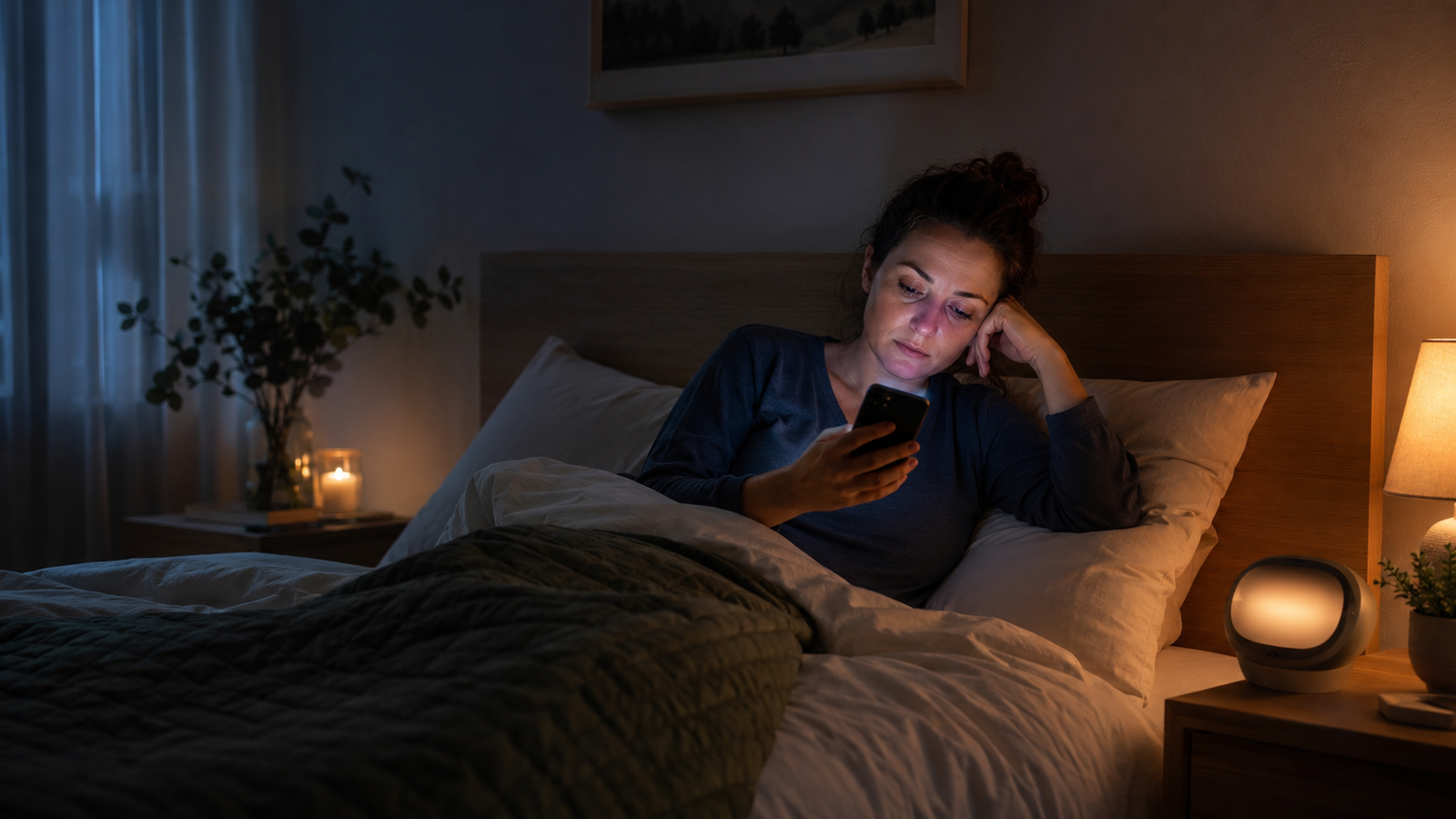
Yet instead of going to bed, you watch another episode, scroll through social media, play a game, or browse online without any particular purpose. Midnight becomes 1:00 a.m., and once again, you sacrifice sleep for a little more personal time.
This habit is often called revenge bedtime procrastination.
It commonly occurs when daytime responsibilities leave little room for relaxation, freedom, or enjoyable activities. Staying awake late can feel like a way to reclaim control over your time—even when you know you will feel exhausted the next morning.
The behavior is understandable, especially after a demanding day. However, repeatedly delaying bedtime can reduce sleep duration, make mornings more difficult, and create a cycle of fatigue that weakens your ability to make healthier choices the following evening.
In this guide, you will learn what revenge bedtime procrastination means, why it happens, how it differs from insomnia, and nine realistic ways to stop staying up late without giving up all your personal time.
Quick answer: Revenge bedtime procrastination means intentionally delaying sleep to enjoy personal time, despite knowing that staying awake will cause tiredness the next day. It is often linked to stress, limited free time, digital distractions, and difficulty transitioning from daytime responsibilities to sleep.
What Is Revenge Bedtime Procrastination?
Revenge bedtime procrastination describes repeatedly going to bed later than intended even though no unavoidable circumstance is preventing you from sleeping.
Researchers originally described bedtime procrastination as failing to go to bed at the intended time despite having no external reason to remain awake.
The “revenge” element refers to the feeling of reclaiming time that seemed unavailable during the day. After spending hours working, caring for family members, completing household tasks, or responding to other people’s needs, late evening may feel like the only time that truly belongs to you.
You might use that time to:
- Scroll through social media
- Watch television or online videos
- Play mobile or computer games
- Shop or browse online
- Read news or entertainment content
- Continue a hobby
- Chat or message friends
- Enjoy the quiet after everyone else is asleep
- Do nothing while resisting the end of the day
These activities are not inherently unhealthy. The problem develops when they regularly replace the sleep your body needs.
Research has associated bedtime procrastination with shorter sleep duration, poorer sleep quality, and greater daytime fatigue. However, the term itself is not a formal medical diagnosis. It describes a behavioral pattern rather than a recognized sleep disorder.
Why Is It Called “Revenge” Bedtime Procrastination?
The word “revenge” does not mean that you are consciously trying to harm yourself or punish someone else.
Instead, it reflects an emotional response to feeling that your daytime schedule does not provide enough freedom, enjoyment, or control.
You may think:
- “This is the only quiet time I get.”
- “I worked all day, so I deserve another episode.”
- “I do not want tomorrow to begin yet.”
- “Everyone needed something from me today.”
- “I need some time that belongs only to me.”
- “Going to bed now feels like giving up my free time.”
In the short term, staying awake can provide comfort and autonomy. You finally get to choose what you want to do without deadlines, demands, or interruptions.
The difficulty is that this freedom is borrowed from tomorrow’s energy.
After getting insufficient sleep, you may feel tired, irritable, or unfocused. Daily tasks can take longer and feel more stressful, leaving you with an even stronger desire to reclaim personal time the following night.
The cycle may look like this:
Demanding day → limited personal time → delayed bedtime → insufficient sleep → lower energy and self-control → another demanding day
This is why simply telling yourself to “be more disciplined” may not solve the problem. A lasting solution should address both the delayed bedtime and the unmet need for rest, enjoyment, and control during the day.
Common Signs of Revenge Bedtime Procrastination
Occasionally staying awake later than planned does not necessarily mean you have a serious problem. Most people do this from time to time.
The pattern becomes more concerning when it happens regularly and interferes with your sleep or daytime functioning.
Common signs include:
- Feeling tired but refusing to end your evening
- Going to bed much later than you planned
- Saying “just five more minutes” repeatedly
- Losing track of time while using your phone
- Watching episodes or videos you are not genuinely enjoying
- Delaying basic bedtime tasks such as brushing your teeth
- Feeling that sleep takes away your only personal time
- Regretting the decision every morning
- Promising to sleep earlier but repeating the behavior
- Relying on caffeine to manage daytime fatigue
- Sleeping late on weekends to compensate
- Feeling more alert once everyone else has gone to bed
A useful question is:
“Am I awake because I cannot sleep, or because I do not want my personal time to end?”
Your answer can help distinguish bedtime procrastination from other sleep difficulties.
Revenge Bedtime Procrastination vs. Insomnia
Revenge bedtime procrastination and insomnia can both lead to insufficient sleep, but they are not the same.
With bedtime procrastination, you delay getting into bed or attempting to sleep even though you have the opportunity to do so.
With insomnia, you may go to bed at an appropriate time and genuinely try to sleep, but you have difficulty falling asleep, staying asleep, or returning to sleep after waking.
| Revenge bedtime procrastination | Insomnia |
|---|---|
| You postpone going to bed | You go to bed but cannot sleep |
| An activity usually keeps you awake | Sleep difficulty continues despite trying |
| You may resist ending your free time | You often want to sleep but feel unable |
| Changing evening behavior may help | Professional assessment or CBT-I may be needed |
| Sleep opportunity is voluntarily reduced | Adequate sleep opportunity is available |
The two can also occur together. Repeatedly staying awake late may disrupt your sleep schedule, while anxiety about sleep can make it harder to fall asleep once you finally go to bed.
If worry keeps you awake after you go to bed, learn more about how anxiety can cause insomnia.
If you consistently allow enough time for sleep but remain unable to fall or stay asleep, another condition may be involved. Persistent symptoms should be discussed with a healthcare professional.
Why Does Revenge Bedtime Procrastination Happen?
Revenge bedtime procrastination is rarely caused by one simple problem. It usually develops through a combination of limited personal time, emotional exhaustion, digital distractions, and habits that make it difficult to end the day.
Understanding your specific reason matters because the most effective solution depends on what is keeping you awake.
1. You Have Too Little Personal Time During the Day
When work, caregiving, errands, and household responsibilities occupy nearly every hour, the late evening may become your only opportunity to relax.
Going to bed can then feel less like healthy self-care and more like surrendering the only part of the day you control.
You may remain awake because you genuinely need:
- Quiet
- Privacy
- Entertainment
- Creative time
- Social connection
- Freedom from responsibilities
- A chance to make your own choices
The need itself is not unreasonable. The problem is that personal time taken from sleep often creates more exhaustion and less freedom the following day.
2. You Feel Emotionally Drained
After a demanding day, you may lack the mental energy required to make intentional decisions.
Instead of choosing an activity that is genuinely restorative, you may automatically open an app, start watching videos, or continue scrolling because it requires almost no effort.
This can create a strange situation in which you are too tired to do something meaningful but unwilling to go to bed.
The activity may not even feel particularly enjoyable. It simply delays the transition into tomorrow and provides temporary relief from responsibility.
3. Your Self-Control Is Weaker at the End of the Day
Bedtime procrastination has often been studied as a self-regulation problem.
During the day, you make decisions, resist distractions, manage emotions, and respond to other people’s expectations. By nighttime, following through on another intention—such as beginning your bedtime routine—may feel surprisingly difficult.
You may sincerely plan to sleep at 10:30 p.m. but repeatedly choose the immediate reward of another video over the delayed benefit of feeling rested tomorrow.
This does not mean you are lazy or irresponsible. It means your bedtime plan is competing with activities designed to provide instant stimulation and enjoyment at a time when you are already tired.
Making the desired action easier is often more effective than relying on willpower alone.
4. You Want to Delay the Arrival of Tomorrow
Sometimes the activity keeping you awake is not the real reason you avoid bed.
Going to sleep means that morning will arrive sooner. If tomorrow includes an unpleasant job, an important appointment, family conflict, financial stress, or an overwhelming list of tasks, staying awake may feel like a temporary way to keep it at a distance.
You may think:
- “I am not ready for tomorrow.”
- “I do not want this day to end.”
- “Once I sleep, I have to start all over again.”
- “I need a little more time before facing everything.”
Unfortunately, reducing sleep rarely makes tomorrow easier. Fatigue can make the same responsibilities feel even more demanding.
If this pattern happens frequently, it may be helpful to consider what you are avoiding—not only what you are watching on your phone.
5. You Lose Track of Time
Digital entertainment makes it easy to underestimate how long you have been awake.
A single video automatically leads to another. One social media post becomes twenty. A short episode ends with a preview that encourages you to continue watching.
Unlike a book chapter or a scheduled television program, many online platforms do not provide a natural stopping point.
You may begin using your phone for five minutes and suddenly realize that an hour has passed.
This is sometimes called a lack of time awareness. Fatigue can make it even harder to monitor time accurately or interrupt an enjoyable activity.
6. Your Bedtime Has No Clear Starting Point
Many people have a required wake-up time but only a vague bedtime.
You may know that you need to wake at 6:30 a.m., yet the evening has no clear transition between free time and preparation for sleep. As a result, bedtime begins only when you feel completely exhausted.
A consistent routine creates a boundary that tells you when the active part of the day is ending.
Without that boundary, every evening decision must be made again:
- Should I watch another episode?
- Should I check my messages?
- Is it too early to go to bed?
- Can I finish one more task?
- Do I really need to brush my teeth now?
The more decisions bedtime requires, the easier it becomes to postpone.
7. You Expect Bedtime to Happen Instantly
Going to bed is not a single action. It may involve cleaning the kitchen, preparing for the next day, showering, brushing your teeth, taking medication, changing clothes, and finally settling into bed.
When you are already tired, this sequence can feel like one more list of chores.
You may delay the entire process because you do not want to begin it.
Reducing unnecessary steps and completing some tasks earlier can make bedtime feel less demanding. For example, you might prepare your clothes after dinner or brush your teeth before beginning a quiet evening activity.
The easier the transition feels, the less likely you are to avoid starting it.
How Smartphones Encourage Bedtime Procrastination
Smartphones are not the only cause of revenge bedtime procrastination, but they can make the pattern much easier to maintain.
They combine entertainment, social connection, shopping, news, games, work, and endless novelty in one device that is usually within reach.
Several features can keep you engaged:
Endless Content
Infinite scrolling removes the natural signal that an activity is finished. There is always another post, video, or recommendation waiting.
Automatic Playback
When the next video or episode begins automatically, continuing requires no decision. Stopping requires deliberate action.
Unpredictable Rewards
You do not know whether the next notification, message, or video will be interesting. That uncertainty encourages repeated checking.
Emotional Stimulation
News, arguments, work messages, and emotionally intense videos can increase mental alertness shortly before sleep.
Learn more about how blue light and nighttime screen habits may affect your sleep.
Easy Access in Bed
Keeping a phone beside your pillow removes nearly every barrier to continued use. You do not need to stand up, turn on a light, or move to another room.
Fear of Missing Out
You may worry that friends are still talking, something important has happened, or interesting content will disappear if you stop checking.
Research has found associations among problematic smartphone use, bedtime procrastination, and poorer sleep quality. However, this does not mean that every person must completely avoid technology at night.
The more useful question is:
“Does my phone help me enjoy a planned amount of personal time, or does it repeatedly take me beyond the bedtime I chose?”
If your phone frequently wins that argument—and it is a very persuasive little rectangle—changing where and how you use it may be more effective than simply promising to stop.
Who Is More Likely to Experience Bedtime Procrastination?
Anyone can delay bedtime, but certain circumstances may make the behavior more likely.
You may be particularly vulnerable if you:
- Have long or unpredictable working hours
- Care for children or other family members
- Have very little uninterrupted personal time
- Regularly work or study from home
- Feel little control over your daytime schedule
- Use your phone as your main form of relaxation
- Struggle with time management or task transitions
- Feel stressed, burned out, lonely, anxious, or depressed
- Naturally prefer later sleep and wake times
- Have an early schedule that conflicts with your preferred rhythm
- Frequently bring work messages or unfinished tasks into the evening
- Depend on late-night entertainment to improve your mood
Younger people have reported higher levels of bedtime procrastination in some studies, and the behavior has also been examined among adolescents and university students. However, it is not limited to any particular age or gender.
Parents, shift workers, professionals, and caregivers may also postpone sleep because nighttime is the first moment they are no longer needed by someone else.
Individual research findings should not be treated as a diagnosis or a rule that applies to everyone. Bedtime procrastination is influenced by lifestyle, emotional well-being, daily demands, habits, and access to genuinely restorative free time.
Is Revenge Bedtime Procrastination a Mental Health Disorder?
No. Revenge bedtime procrastination is not currently recognized as a separate mental health or sleep disorder.
It is a descriptive term for a behavioral pattern.
However, persistent bedtime procrastination may occur alongside:
- Chronic stress
- Anxiety
- Depression
- Burnout
- Attention difficulties
- Insomnia
- An irregular circadian rhythm
- Problematic smartphone use
Having one of these conditions does not automatically mean you will procrastinate at bedtime, and delaying bedtime does not prove that you have a mental health condition.
The pattern becomes important when it regularly reduces your sleep, affects your mood or performance, or feels difficult to control despite repeated attempts to change it.
Before trying to fix the habit, ask yourself three questions:
- What am I getting from staying awake?
- What makes going to bed feel difficult or undesirable?
- What need could I meet earlier without taking time from sleep?
Your answers can reveal whether you primarily need stronger digital boundaries, an easier bedtime routine, more meaningful personal time, or support for stress and emotional exhaustion.
9 Ways to Stop Revenge Bedtime Procrastination
Stopping revenge bedtime procrastination is not simply a matter of becoming more disciplined.
If staying awake gives you your only sense of freedom, removing that time without replacing it may make bedtime feel even more frustrating. A better approach is to protect meaningful personal time while making the transition to sleep easier and more automatic.
You do not need to apply all nine strategies immediately. Choose one or two that address your main reason for delaying sleep and practice them consistently.
1. Identify What You Are Trying to Reclaim
Before changing your bedtime, determine what staying awake gives you.
Ask yourself:
- Do I need quiet after being around people all day?
- Do I want entertainment or enjoyment?
- Am I seeking privacy?
- Am I avoiding tomorrow?
- Do I feel that everyone else controls my schedule?
- Am I too mentally exhausted to begin my bedtime routine?
- Am I continuing an activity because I enjoy it or because I cannot stop?
The answer matters.
If you need solitude, simply turning off your phone may not solve the deeper problem. If you are avoiding tomorrow, an earlier bedtime alarm will not remove the anxiety behind that avoidance.
For three evenings, briefly record:
- What you did instead of going to bed
- How you felt before the activity
- What need the activity seemed to meet
- How long you stayed awake
- How you felt the following morning
You are not collecting evidence to criticize yourself. You are looking for a pattern.
Once you know what you are trying to reclaim, you can find another way to meet that need without repeatedly borrowing time from sleep.
2. Schedule Personal Time Before You Become Exhausted
Personal time should not exist only after every responsibility is complete. On many days, that moment never arrives.
Instead, deliberately reserve a small period for yourself earlier in the evening. Even 20 to 30 minutes of protected time may reduce the feeling that going to bed means losing your only freedom.
Choose something that feels genuinely restorative:
- Read for pleasure
- Watch one planned episode
- Take a quiet walk
- Listen to music
- Work on a hobby
- Call a friend
- Enjoy coffee or tea earlier in the day
- Sit alone without completing another task
- Take a shower without rushing
- Write in a journal
Try to distinguish intentional leisure from passive delay.
Intentional leisure has a beginning, a purpose, and a stopping point. Passive delay often involves repeatedly consuming content that you are no longer enjoying.
For example:
From 9:00 to 9:30 p.m., I will watch one episode I have chosen. At 9:30, I will begin getting ready for bed.
This protects your need for enjoyment while preventing an unlimited activity from consuming the rest of the night.
Personal time does not become less valuable because you scheduled it. In fact, it may become more satisfying when you can enjoy it without negotiating with yourself every five minutes.
3. Set a Bedtime Routine Alarm
Most people set an alarm for waking up but expect bedtime to organize itself.
Instead of setting only a final bedtime, set an alarm that tells you when to begin preparing for sleep.
If you want to be in bed at 10:30 p.m. and your routine takes approximately 30 minutes, set the reminder for 10:00 p.m.
Give the alarm a clear label, such as:
Begin bedtime routine
or:
Finish today gently
When it rings, begin the first physical action immediately. Stand up, place your phone on its charger, brush your teeth, or change into sleepwear.
Avoid creating an alarm that you dismiss while continuing the same activity. The reminder works best when it is connected to a specific action.
You can also use two signals:
- A warning alarm 15 minutes before your routine
- A second alarm when the routine begins
The first provides time to finish what you are doing. The second marks the boundary.
This approach reduces the need to repeatedly ask yourself whether it is time for bed. The decision was already made when you were less tired and more able to think about tomorrow.
4. Make Your Bedtime Routine Easier
If preparing for bed feels like a complicated collection of chores, simplify it.
Write down every step you usually complete before sleeping. Then ask:
- Can I do this earlier?
- Can I remove this step?
- Can I prepare it in advance?
- Can I keep the necessary items in one place?
- Am I beginning household tasks that could wait until tomorrow?
You might:
- Prepare clothes after dinner
- Place medication beside a glass of water
- Charge devices outside the bedroom
- Keep skincare products together
- Finish kitchen cleanup earlier
- Lower the lights before you feel sleepy
- Brush your teeth before beginning a quiet activity
- Write tomorrow’s priorities down instead of mentally rehearsing them
Create a minimum routine for difficult evenings:
- Brush your teeth.
- Take any prescribed medication.
- Set the alarm.
- Put away the phone.
- Turn off the lights.
You can still follow a longer routine when you have the energy. However, having a simple version prevents perfectionism from turning bedtime into a project.
The goal is not to create the most impressive nighttime ritual on the internet. Your pillow will not inspect your checklist.
For a complete evening plan, follow our guide to building a better bedtime routine.
5. Add Friction to Late-Night Phone Use
Willpower has a difficult job when your phone is beside you, unlocked, and prepared to provide endless entertainment.
Change the environment so that continuing becomes slightly less convenient.
Try one or more of these boundaries:
- Charge your phone across the room
- Keep it outside the bedroom
- Use a separate alarm clock
- Sign out of the apps you repeatedly open
- Turn off autoplay
- Disable nonessential notifications
- Remove entertainment apps from the home screen
- Set an app limit or scheduled downtime
- Change the display to grayscale
- Use “Do Not Disturb” at a fixed time
- Stop watching videos in bed
- Leave the charger somewhere you cannot reach from the pillow
Choose a restriction that matches your behavior.
If short videos are the problem, turning off email notifications will accomplish very little. If work messages keep you alert, set a communication boundary rather than deleting every entertainment app.
The purpose is not to prove that phones are bad. It is to create a pause between the impulse to continue and the action of opening another piece of content.
The CDC recommends turning off electronic devices at least 30 minutes before bedtime as one part of a healthy sleep routine. If 30 minutes feels unrealistic, begin with 10 or 15 minutes and gradually increase it
The CDC provides additional recommendations for creating healthier daily sleep habits..
6. Replace Endless Content With Activities That Have an Ending
Removing a late-night activity creates an empty space. If you do not decide what will replace it, you may quickly return to the same habit.
Choose an activity with a natural stopping point.
Examples include:
- Reading one chapter
- Listening to a short podcast episode
- Completing a simple puzzle
- Writing one journal page
- Stretching for ten minutes
- Listening to a prepared music playlist
- Taking a warm shower
- Preparing one item for tomorrow
- Practicing slow breathing for five minutes
Be cautious with activities that can continue indefinitely, including social media feeds, short-form videos, online shopping, gaming, and autoplay streaming.
You do not necessarily need to eliminate them. Give them a defined limit before you begin:
I will watch one episode, not watch television until I feel exhausted.
I will check messages for 15 minutes, not keep checking until everyone else stops replying.
A visible ending helps your brain move from leisure to sleep without requiring a fresh decision after every video or post.
7. Create a Specific “If–Then” Plan
A vague intention such as “I will go to bed earlier” does not explain what you will do when the usual obstacle appears.
An implementation intention connects a predictable situation with a specific response:
If X happens, then I will do Y.
Examples include:
- If my bedtime alarm rings, then I will place my phone on the charger.
- If an episode ends after 10:00 p.m., then I will turn off the television.
- If I want to watch one more video, then I will save it for tomorrow.
- If I begin worrying about work, then I will write the concern down.
- If I realize I am scrolling automatically, then I will stand up and brush my teeth.
- If I feel that I have had no personal time, then I will schedule 20 minutes for myself the following evening.
Make the plan realistic and focused on your most common obstacle.
Research has found that a structured self-regulation exercise combining a desired outcome, the main internal obstacle, and an if–then plan can reduce bedtime procrastination. This does not guarantee an immediate change for everyone, but it can make the intended response easier to remember when you are tired.
Try this four-step version:
- Wish: “I want to begin my bedtime routine at 10:00 p.m.”
- Outcome: “I will have more energy in the morning.”
- Obstacle: “I usually continue scrolling after my alarm.”
- Plan: “If the alarm rings while I am scrolling, then I will lock the phone and place it across the room.”
A specific plan gives your tired nighttime brain fewer opportunities to begin a lengthy debate.
8. Make Tomorrow Feel More Manageable
If you delay sleep because you do not want tomorrow to arrive, prepare for the emotional obstacle rather than focusing only on bedtime.
Before your evening relaxation period:
- Write down everything occupying your mind.
- Select the three most important tasks for tomorrow.
- Choose the smallest first step for the most difficult task.
- Prepare anything you will need in the morning.
- Decide what can wait.
For example, replace:
Tomorrow is going to be overwhelming.
with:
At 9:00 a.m., I will spend ten minutes organizing the documents. I do not have to solve everything tonight.
You can also create one small reason to look forward to the morning, such as a favorite breakfast, a short walk, music during your commute, or a planned break.
If dread about tomorrow occurs frequently or feels connected to severe anxiety, depression, burnout, an unsafe environment, or an unmanageable workload, bedtime strategies alone may not be enough. Consider discussing the underlying problem with a qualified healthcare professional.
Sleep should not have to carry the entire responsibility for fixing a life that provides no room to recover.
9. Adjust Gradually and Track the Pattern
If you currently fall asleep at 1:00 a.m., demanding that you suddenly be in bed at 10:00 p.m. may create frustration.
Begin with a smaller adjustment, such as moving your routine 15 to 30 minutes earlier. Once that feels manageable, make another gradual change.
For one or two weeks, record:
- When you planned to begin your routine
- When you actually began it
- When you got into bed
- What delayed you
- How you felt the following morning
- Which strategy helped
A sleep diary can reveal whether the problem occurs every night or mainly after certain situations, such as stressful workdays, family responsibilities, evening caffeine, or unplanned phone use.
Discover how repeated late nights create sleep debt and whether lost sleep can truly be recovered.
Do not judge progress only by whether you followed the plan perfectly.
Useful signs of improvement include:
- Starting the routine closer to the intended time
- Spending less time scrolling in bed
- Recognizing the pattern earlier
- Ending entertainment after a planned amount of time
- Feeling less resentful about going to bed
- Getting more sleep on workdays
- Needing less weekend recovery sleep
- Making one deliberate choice instead of continuing automatically
If you stay awake late one night, return to your routine the next evening. Avoid deciding that the entire plan has failed.
Consistency develops through repeated restarts, not through a flawless record.
A Simple 7-Day Reset Plan
If nine strategies feel overwhelming, use this short plan to begin:
Days 1–2: Observe
Write down when you intended to sleep, what kept you awake, and what need the activity met.
Day 3: Protect Personal Time
Schedule at least 20 minutes of intentional leisure before your bedtime routine.
Day 4: Create a Digital Boundary
Choose one change, such as charging your phone across the room or disabling autoplay.
Day 5: Set a Routine Alarm
Schedule a reminder for the time your bedtime preparation must begin.
Day 6: Use an If–Then Plan
Identify your most common obstacle and prepare one specific response.
Day 7: Review and Adjust
Notice what helped, remove what felt unrealistic, and continue with the two most effective changes.
The purpose of this reset is not to eliminate every late night. It is to interrupt the automatic pattern and help you make a conscious decision about how you use your evening.
When Bedtime Procrastination May Be Something Else
Sometimes people blame themselves for delaying sleep when the real problem requires a different approach.
Consider speaking with a healthcare professional if:
- You go to bed but regularly cannot fall asleep
- You repeatedly wake during the night
- You feel excessively sleepy despite allowing enough time for sleep
- Loud snoring, gasping, or breathing pauses occur
- Uncomfortable sensations in your legs keep you awake
- Your preferred sleep time is several hours later than your required schedule
- Anxiety, depression, burnout, or attention difficulties affect daily life
- You rely on alcohol or sleep medication to fall asleep
- Sleep problems continue for weeks or months
These symptoms may involve insomnia, a circadian rhythm disorder, sleep apnea, restless legs syndrome, a mental health condition, medication effects, or another health issue.
Revenge bedtime procrastination describes voluntarily delaying bedtime. It should not be used to dismiss a persistent inability to sleep.
The National Heart, Lung, and Blood Institute explains how sleep deficiency can affect health and daily functioning.
Final Thoughts
Revenge bedtime procrastination is not simply a bad habit or a sign that you lack discipline. It often develops because late evening feels like the only part of the day that belongs entirely to you.
That need for freedom, quiet, and enjoyment is real. However, repeatedly taking those hours from sleep can make the following day more exhausting, stressful, and difficult to manage.
The most effective solution is not to eliminate personal time. It is to protect that time earlier and give it a clear boundary.
Begin with one manageable change:
- Schedule 20 minutes of intentional leisure
- Set an alarm for the beginning of your bedtime routine
- Charge your phone away from the bed
- Replace endless scrolling with an activity that has a natural ending
- Move bedtime earlier by only 15 minutes
- Prepare a specific if–then plan for your usual obstacle
Small changes are easier to repeat than a complete overnight transformation.
If you continue having difficulty sleeping even after providing enough time for rest, or if fatigue, anxiety, depression, snoring, or breathing problems affect your daily life, speak with a qualified healthcare professional.
Your evening should provide both personal freedom and sufficient rest. It does not have to choose only one.
Frequently Asked Questions
What is revenge bedtime procrastination?
Revenge bedtime procrastination means intentionally delaying sleep to enjoy personal time, even though you know staying awake will make you tired the following day. It commonly occurs when work, caregiving, or other responsibilities leave little time for relaxation and control during the day.
Why do I delay bedtime even when I am tired?
You may delay bedtime because you want more entertainment, privacy, quiet, or control over your time. Emotional exhaustion, smartphone use, an unpleasant bedtime routine, and anxiety about the following day can also make it difficult to stop evening activities.
Is revenge bedtime procrastination the same as insomnia?
No. With bedtime procrastination, you postpone going to bed even though you could attempt to sleep. With insomnia, you usually go to bed and want to sleep but have difficulty falling asleep, staying asleep, or returning to sleep.
The two problems can sometimes occur together.
Is revenge bedtime procrastination a mental health disorder?
Revenge bedtime procrastination is not recognized as a separate mental health or sleep disorder. It is a behavioral pattern. However, it may occur alongside stress, anxiety, depression, burnout, attention difficulties, insomnia, or problematic smartphone use.
How can I stop using my phone late at night?
Set a fixed stopping time, disable autoplay and unnecessary notifications, use scheduled downtime, and charge your phone beyond arm’s reach. Replacing endless scrolling with an activity that has a natural ending can also make the transition to sleep easier.
How long does it take to stop bedtime procrastination?
There is no fixed timeline. Some people notice improvement within several days after changing their phone environment or setting a bedtime alarm. Long-standing patterns may require several weeks of gradual and consistent changes.
Can I catch up on lost sleep during the weekend?
Additional sleep may temporarily reduce tiredness, but regularly sleeping much later on weekends can disrupt your sleep schedule. Protecting enough sleep throughout the week is generally more helpful than repeatedly relying on weekend recovery sleep.
When should I speak with a doctor?
Seek professional guidance if you regularly cannot sleep after going to bed, experience severe daytime sleepiness, or have loud snoring, gasping, breathing pauses, persistent anxiety, depression, or sleep problems that continue for weeks or months.
Medical note: This article is for general educational purposes and is not a substitute for diagnosis or individualized medical treatment.