How to Build a Better Bedtime Routine: A 60-Minute Plan for Deeper Sleep
A better bedtime routine gives your mind and body a predictable way to move from daytime activity into sleep. It cannot force you to fall asleep or guarantee a specific amount of deep sleep, but it can reduce common sources of stimulation and make restful sleep more likely.
The most effective routine is not necessarily the longest or most elaborate one. It is the routine you can repeat on ordinary weeknights, including the evenings when you are tired, busy, or tempted to watch one more episode.
This guide provides a practical 60-minute plan, along with shorter 15- and 30-minute versions for nights when time is limited.
Quick answer: Begin winding down about 30 to 60 minutes before bed. Lower the lights, finish stimulating activities, prepare for tomorrow, choose one calming activity, and go to bed when you feel sleepy rather than treating bedtime as a strict performance deadline.
What Can a Bedtime Routine Actually Do?
A bedtime routine works mainly by creating consistent cues.
When the same quiet activities happen in approximately the same order each evening, they help separate the active part of your day from the time reserved for sleep. Dimmer light and fewer stimulating tasks also reduce signals that encourage wakefulness.
The National Heart, Lung, and Blood Institute recommends using the hour before bed for quiet time and avoiding bright artificial light and intense activity.
However, a routine is not a direct treatment for every sleep problem. It cannot correct sleep apnea, eliminate chronic pain, or resolve persistent insomnia by itself. Think of it as a supportive daily habit rather than a guaranteed sleep switch.
Before You Begin: Choose a Realistic Bedtime
Work backward from your required wake-up time and allow enough opportunity for sleep.
For example, if you need to wake at 6:30 a.m. and function best with approximately eight hours of sleep, your target bedtime might be around 10:30 p.m. Your wind-down period could then begin between 9:30 and 10:00 p.m.
Try to keep your schedule reasonably similar throughout the week, but do not panic over occasional changes. A bedtime routine should create stability—not make you anxious because the clock moved three minutes past your target.
For a broader daytime sleep plan involving morning light, exercise, caffeine, and naps, see 10 Natural Ways to Sleep Better Without Medication.
A Sample 60-Minute Bedtime Routine
| Time before bed | What to do | Main purpose |
|---|---|---|
| 60 minutes | End work and stimulating activities | Create separation from the day |
| 45 minutes | Dim lights and reduce screen use | Lower mental and visual stimulation |
| 30 minutes | Wash, shower, or change clothes | Create a physical transition |
| 20 minutes | Write down tasks or worries | Reduce mental clutter |
| 10 minutes | Read, breathe slowly, or stretch | Settle the mind and body |
| Bedtime | Enter bed when reasonably sleepy | Strengthen the bed-sleep connection |
This schedule is a starting point, not a prescription. You can change the order to fit your household, work schedule, mobility, and personal preferences.
60 Minutes Before Bed: Close the Day
Begin by creating a clear stopping point for work, household planning, and demanding conversations.
Save unfinished work, close the laptop, and decide what truly needs attention tomorrow. If you work from home, physically putting away your equipment can help mark the end of the workday.
Choose a place outside the bedroom to charge your phone when practical. If you need it nearby for emergencies, use a do-not-disturb setting that allows calls from selected contacts.
The goal is not to make technology forbidden. It is to prevent messages, news, videos, and endless scrolling from quietly consuming the time you intended to spend sleeping.
45 Minutes Before Bed: Lower the Lights and Stimulation
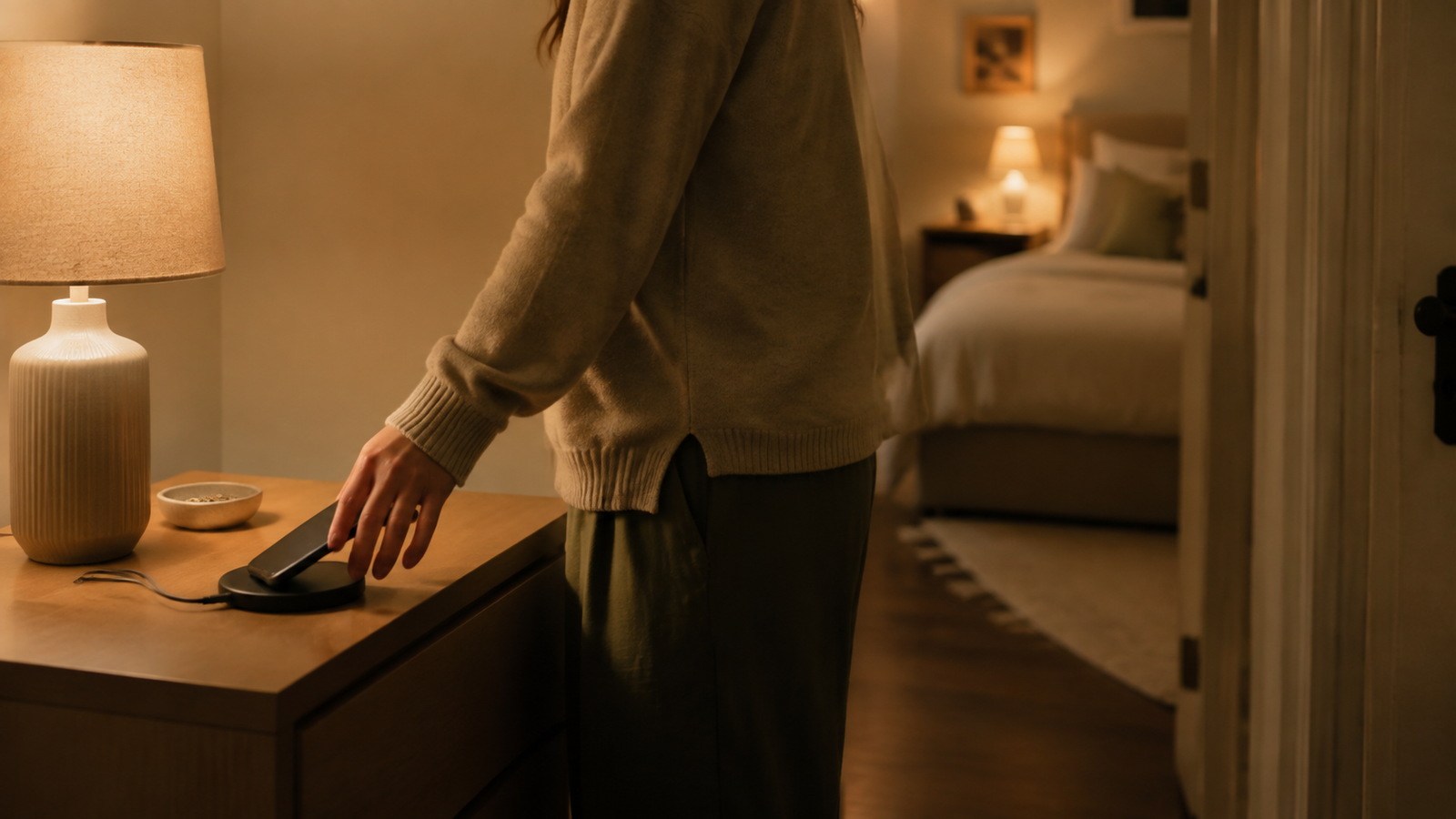
Bright light in the evening can send a wake-promoting signal to your brain. Begin turning off unnecessary overhead lights and use softer lamps instead.
Screens are not disruptive only because of blue light. The content itself can also matter. Work emails, online arguments, suspenseful shows, games, and short-form videos may keep your mind active even when night-mode settings are enabled.
If avoiding every screen is unrealistic, make the boundary more specific:
- Stop checking work messages.
- Avoid news and emotionally intense content.
- Lower screen brightness.
- Keep the device farther from your face.
- Set a firm stopping time for entertainment.
- Turn off autoplay and unnecessary notifications.
A sustainable boundary is more useful than a perfect screen ban that lasts for two nights.
30 Minutes Before Bed: Use a Physical Transition
A warm shower, washing your face, brushing your teeth, and changing into comfortable sleepwear can act as physical cues that the day is ending.
Keep this step simple. A better bedtime routine does not require an expensive collection of oils, candles, teas, and gadgets. If those items genuinely help you relax, they can be enjoyable additions, but they are not the foundation of healthy sleep.
Gentle stretching may also feel calming, particularly if you have been sitting for much of the day. Avoid forcing deep stretches or turning the final minutes of the evening into a demanding workout.
If a shower makes you feel more alert, move it earlier. Personal observation matters more than following an idealized routine from social media.
20 Minutes Before Bed: Give Your Thoughts Somewhere to Go

Many people feel physically tired but become mentally busy as soon as the room grows quiet.
Instead of trying to suppress every thought, write down:
- Tasks that need attention tomorrow
- Items you are afraid of forgetting
- One problem you can address during the day
- One concern that cannot be solved tonight
Keep this exercise brief. The goal is to store the thought somewhere reliable, not conduct a full analysis of your life at 10:15 p.m.
If journaling makes you more emotional or alert, complete it earlier in the evening. You may prefer a short checklist, a calming audiobook, quiet music, or slow breathing.
For strategies specifically related to racing thoughts, see Can Anxiety Cause Insomnia? 9 Ways to Sleep Better.
10 Minutes Before Bed: Choose One Quiet Activity
The final part of your routine should be easy and predictable.
You might:
- Read several pages of a physical book
- Practice slow breathing
- Listen to calm, familiar audio
- Perform gentle stretches
- Sit quietly with the lights dimmed
- Practice a brief body scan
Avoid trying six relaxation techniques in one evening. Constantly asking, “Is this working yet?” can create more pressure and make relaxation feel like another job.
Choose one activity and repeat it for several nights before deciding whether it suits you.
Prepare the Bedroom Before You Feel Exhausted
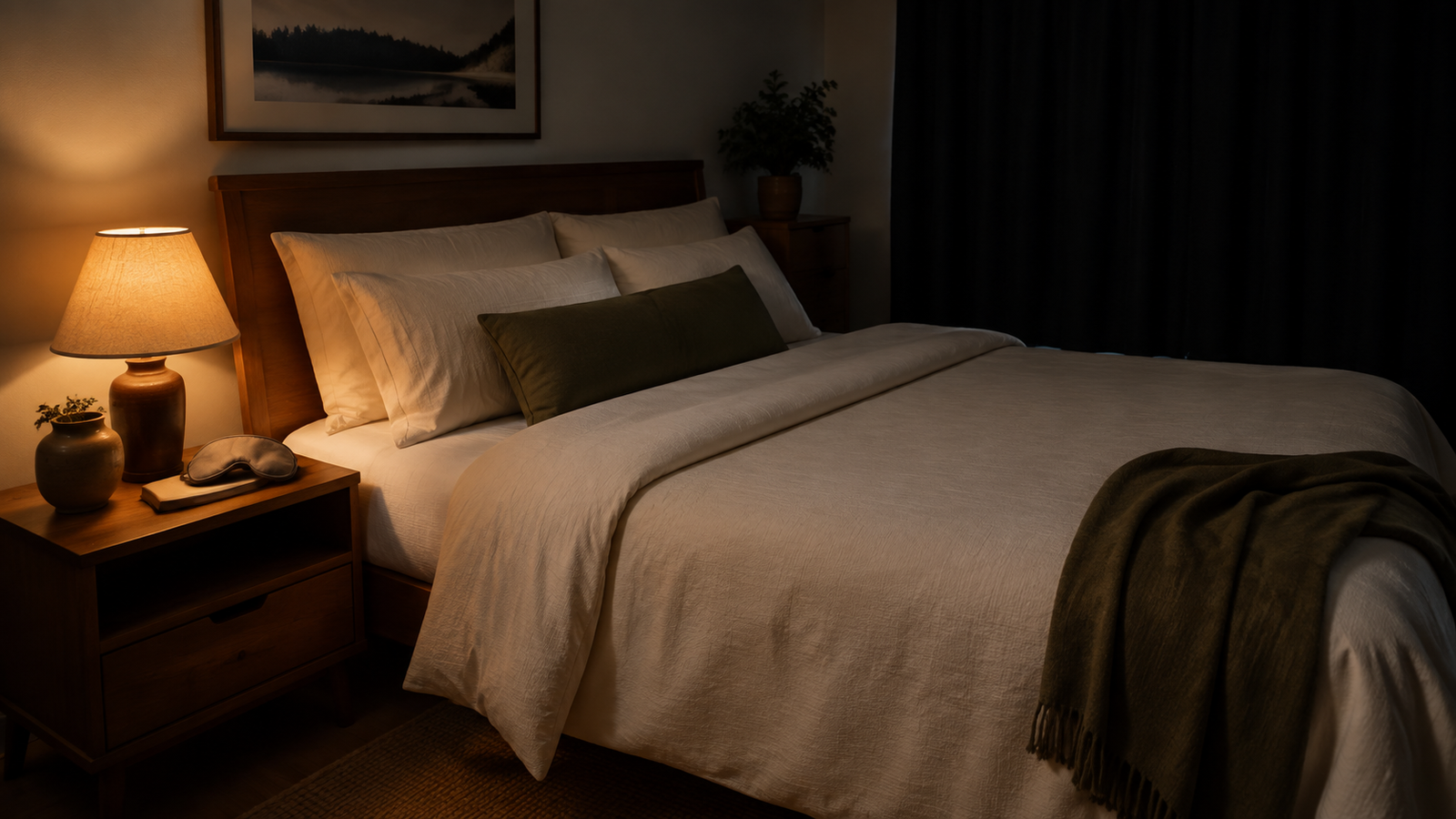
Make your bedroom ready earlier in the evening so you are not rearranging the room when you are already sleepy.
A basic bedroom check takes less than two minutes:
- Close curtains or wear an eye mask if outside light enters the room.
- Reduce unpredictable noise with earplugs or steady background sound.
- Keep the room comfortably cool.
- Remove work materials from the bed.
- Turn bright clocks away.
- Place necessary nighttime items within reach.
- Use the bathroom before getting into bed.
Avoid drinking a large amount immediately before sleep if nighttime bathroom trips are a recurring problem.
A light snack may be reasonable if hunger keeps you awake, but heavy meals and alcohol close to bedtime can interfere with sleep. Our guide to foods that may support sleep explains how food can fit into a balanced evening routine without treating one ingredient as a cure for insomnia.
Go to Bed When You Feel Sleepy
A target bedtime is helpful, but lying in bed while completely alert can strengthen the connection between bed and wakefulness.
Enter bed when you feel reasonably sleepy. If you remain awake and become frustrated, get out of bed and do something quiet in dim light. Return when sleepiness comes back.
Avoid watching the clock or calculating how many hours remain before morning. This often increases pressure without helping sleep arrive.
This approach is related to stimulus control, which is used in cognitive behavioral therapy for insomnia. The NHLBI’s insomnia treatment guide explains that CBT-I commonly includes using the bed only for sleep and leaving it when you cannot sleep.
Do not attempt formal sleep-restriction therapy without appropriate guidance, especially if severe daytime sleepiness could affect driving or workplace safety.
Shorter Routines for Busy Evenings
Your routine does not need to collapse simply because you have less than an hour.
The 30-Minute Version
- 30 minutes: Finish work and put away stimulating screens.
- 20 minutes: Wash, change clothes, and prepare the bedroom.
- 10 minutes: Write tomorrow’s priorities and read quietly.
- Bedtime: Enter bed when sleepy.
The 15-Minute Version
- 15 minutes: Dim the lights and put the phone away.
- 10 minutes: Wash and prepare for bed.
- 5 minutes: Practice slow breathing or read quietly.
- Bedtime: Turn off the light without checking messages again.
The order matters more than the exact duration. Repeating a simple sequence can preserve the bedtime cue even on unusually busy nights.
Common Bedtime Routine Mistakes
Making the Routine Too Complicated
A long checklist can become another source of stress. Begin with three dependable steps and add more only when they serve a clear purpose.
Expecting Immediate Results
One calm evening may feel pleasant, but sleep patterns are better judged over several nights. Avoid abandoning the routine after one difficult night.
Using Alcohol as the Main Relaxation Tool
Alcohol may shorten the time it takes to fall asleep, but it can contribute to lighter and more fragmented sleep later in the night.
Going to Bed Much Earlier After Poor Sleep
Entering bed hours before you feel sleepy may lead to more time awake and frustrated. Maintain a reasonably stable schedule instead of chasing sleep.
Treating a Sleep Tracker as a Final Verdict
Consumer devices estimate sleep stages; they do not directly measure brain activity like a clinical sleep study. If your tracker reports little deep sleep but you feel well during the day, do not assume something is medically wrong based on one number.
Learn more in Are Sleep Trackers Accurate? and How Much Deep Sleep Do You Need?.
How to Test Your Routine for Two Weeks
Choose one routine and follow it for approximately 14 nights.
Record only a few useful details:
- When the routine started
- Which activities you completed
- Approximate bedtime and wake-up time
- Whether falling asleep felt easy, moderate, or difficult
- How alert you felt the following morning
Look for weekly patterns instead of judging every night individually. If part of the routine consistently makes you more alert, replace it. If the entire plan feels impossible, shorten it.
The best routine is not the most impressive one. It is the one that remains practical after the novelty wears off.
When a Bedtime Routine Is Not Enough
Speak with a healthcare professional if sleep problems persist, interfere with daytime functioning, or occur with symptoms such as:
- Loud snoring, choking, or gasping during sleep
- Severe daytime sleepiness
- Falling asleep while driving or working
- Frequent morning headaches
- Uncomfortable urges to move the legs
- Repeated panic symptoms at night
- Insomnia that continues despite consistent habit changes
- Major changes in mood, memory, or daily functioning
A bedtime routine supports healthy sleep, but it does not diagnose or treat sleep apnea, chronic insomnia, anxiety disorders, medication effects, or other medical conditions.
Do not stop or change prescribed sleep medication without consulting the healthcare professional managing your treatment.
Frequently Asked Questions
How long should a bedtime routine be?
Approximately 30 to 60 minutes works well for many people, but there is no mandatory duration. A consistent 15-minute routine can be more useful than an hour-long routine you rarely complete.
Does a bedtime routine increase deep sleep?
A routine may support overall sleep by reducing stimulation and helping you maintain healthier timing. However, it cannot guarantee a specific amount of deep sleep.
Should I follow the routine on weekends?
Try to maintain the same general sequence and avoid shifting your schedule by several hours. Occasional flexibility is unlikely to ruin your progress.
Is reading before bed always helpful?
Reading can be calming when the material and lighting are not overly stimulating. If a book keeps you awake because you cannot stop reading, choose something more familiar or set a stopping point.
What should I do if the routine does not work?
Simplify it first. Keep a consistent wake-up time, remove the most stimulating evening activity, and test the revised routine for another week. Persistent insomnia may require professional evaluation or CBT-I rather than additional sleep-hygiene tips.
Final Thoughts
A better bedtime routine should make the end of your day quieter, simpler, and more predictable. It does not need to look perfect, and it should not become another test you feel pressured to pass.
Start with three steps: end stimulating activities, prepare your mind and bedroom, and enter bed when you feel sleepy. Repeat the sequence for two weeks, keep the parts that genuinely help, and remove the ones that create extra work.
The goal is not to perform bedtime beautifully. The goal is to make sleep the easiest next step.