8 Foods That Help You Sleep: What the Evidence Really Says
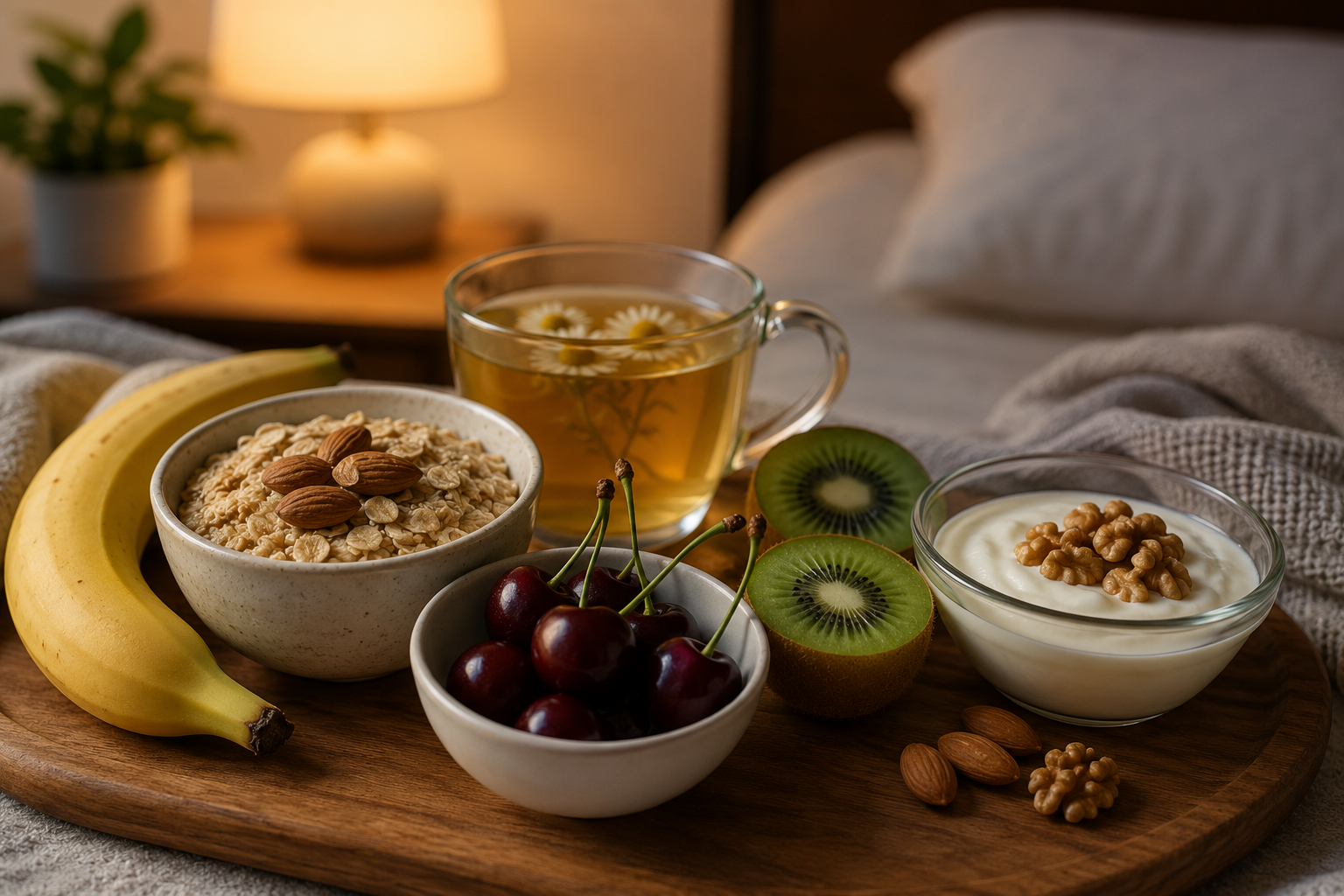
Foods that help you sleep are not substitutes for insomnia treatment, but certain choices may support a calmer evening and prevent hunger from disrupting your rest.
Some foods provide tryptophan, magnesium, complex carbohydrates, or small amounts of melatonin. These nutrients participate in processes related to sleep, but finding a nutrient in a food does not automatically prove that eating it before bed will make you fall asleep faster.
The strongest approach is to combine a balanced diet with consistent sleep habits. If you need an evening snack, choose something light, familiar, and unlikely to cause reflux or digestive discomfort.
Quick answer: Kiwifruit and tart cherry products have received the most direct attention in small human sleep studies. Yogurt, milk, oats, bananas, nuts, seeds, and whole-grain foods are practical evening options, but evidence that they directly improve sleep remains limited.
Can Food Really Help You Sleep Better?
Diet and sleep are connected, but the relationship is complicated.
Your body uses nutrients from food to support the production and function of substances involved in sleep regulation. For example:
- Tryptophan is an essential amino acid involved in serotonin and melatonin production.
- Magnesium contributes to normal nerve and muscle function.
- Vitamin B6 participates in neurotransmitter metabolism.
- Complex carbohydrates can provide steady energy and may make a small snack more satisfying.
- Melatonin occurs naturally in small amounts in some foods.
However, a food containing one of these nutrients should not be treated as an edible sleeping pill. A scientific review of diet and sleep found promising results for certain foods, including kiwifruit, tart cherry juice, milk, and fatty fish, but also emphasized that many studies were small and more research was needed. See the review in Advances in Nutrition.
Your overall diet, meal timing, caffeine intake, alcohol use, health conditions, stress level, and sleep schedule may matter more than any individual food.
Foods That Help You Sleep: Evidence at a Glance
| Food | Why it is suggested | Current evidence | Practical option |
|---|---|---|---|
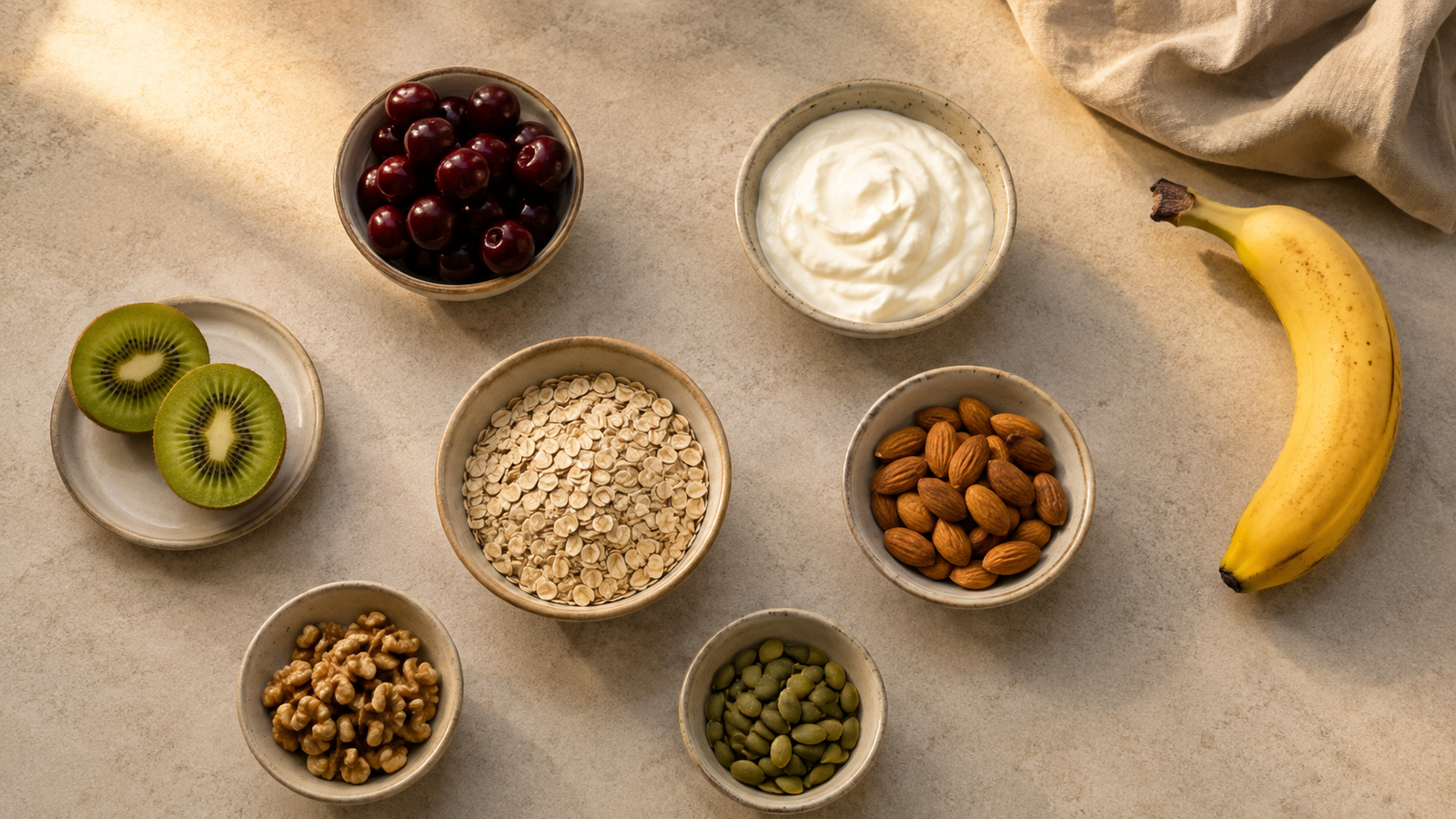
| Kiwifruit | Antioxidants and serotonin-related compounds | Promising but based on small studies | One or two kiwis |
| Tart cherries | Naturally contain melatonin-related compounds | Several small trials; results not conclusive | Fresh or unsweetened tart cherries |
| Milk or yogurt | Protein, calcium, and tryptophan | Limited direct evidence | Small serving if tolerated |
| Oatmeal | Complex carbohydrates and fiber | Little direct sleep research | Small bowl without heavy toppings |
| Almonds and seeds | Magnesium, protein, and healthy fats | Nutritionally useful; direct evidence is weak | Small handful |
| Banana | Potassium, vitamin B6, and carbohydrates | Direct evidence remains limited | One small banana |
| Whole-grain toast | Light source of complex carbohydrates | Practical rather than proven | One slice with a modest topping |
| Balanced daytime meals | Supports stable energy and overall health | Broader dietary patterns appear important | Regular, varied meals |
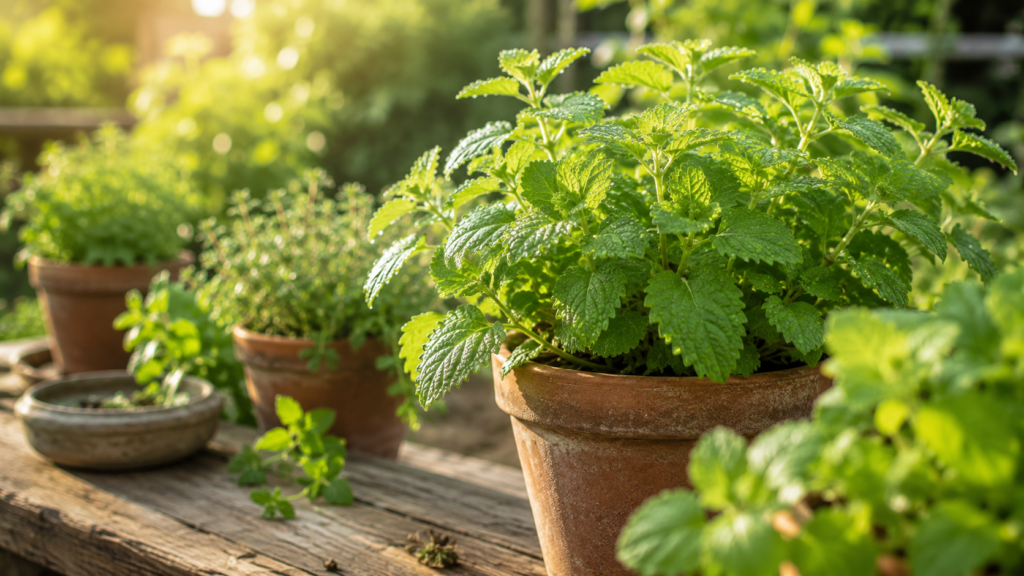
본문 이미지 1 삽입 위치: 위 표가 끝난 직후
1. Kiwifruit
Kiwifruit is one of the few individual foods studied directly in people with sleep difficulties.
In a small 2011 study, participants ate two kiwifruits approximately one hour before bedtime for four weeks. They reported improvements in measures such as sleep onset, total sleep time, and nighttime waking. However, the study was small and lacked the type of large comparison group needed to prove that kiwi alone caused the improvements. You can review the kiwifruit sleep study on PubMed.
A later study involving athletes also reported potentially favorable changes after participants consumed two green kiwifruits before bed, but these results still do not establish kiwi as an insomnia treatment.
How to Try It
If kiwi agrees with your digestion, try one or two fruits about an hour before bed. There is no need to combine them with multiple “sleep ingredients.”
People with kiwi or latex-related allergies should avoid this experiment. Kiwi may also cause digestive discomfort in some people, particularly when eaten close to lying down.
2. Tart Cherries
Tart cherries are frequently promoted because they contain small amounts of naturally occurring melatonin and plant compounds that may influence sleep-related pathways.
Small trials involving tart cherry juice have reported modest improvements in sleep duration or sleep efficiency. One pilot study in older adults with insomnia described modest benefits, while another small trial reported increased sleep time. These findings are encouraging, but the number of participants was limited. See the older-adult tart cherry trial and the pilot insomnia study.
How to Try It
Fresh, frozen, or unsweetened tart cherries can be included in a normal diet. If using juice or concentrate, check the serving size and added-sugar content.
Drinking a large glass immediately before bed may cause nighttime bathroom trips. Juice can also provide a concentrated amount of carbohydrate, which matters for people managing diabetes or blood sugar.
Tart cherry products should be viewed as an optional food—not a nightly treatment you must purchase to sleep well.
3. Plain Yogurt
Plain yogurt provides protein and calcium and may be more satisfying than a sugary dessert when evening hunger appears.
Dairy products also contain tryptophan. Your body needs tryptophan, but eating yogurt does not guarantee an immediate increase in brain melatonin or instant sleepiness.
Research on dairy foods and sleep is mixed and sometimes involves specialized fermented or fortified products rather than ordinary grocery-store yogurt. Therefore, it is more accurate to recommend yogurt as a light, nutrient-rich snack than as a proven sleep remedy.
How to Try It
Choose a modest serving of plain yogurt and add sliced kiwi or a spoonful of oats if you need something more substantial.
Avoid yogurt if dairy triggers reflux, bloating, an allergy, or lactose-related discomfort. Lactose-free yogurt or another familiar alternative may be more comfortable.
4. Milk
Warm milk is a traditional bedtime drink, but its comforting effect may come partly from familiarity, warmth, and routine.
Milk supplies protein, calcium, and tryptophan. Some studies have examined milk products and sleep, yet the evidence does not show that an ordinary glass of milk reliably treats insomnia.
That does not make the ritual useless. A small warm drink may help mark the transition into your nighttime routine, provided it does not cause digestive problems or repeated bathroom visits.
How to Try It
Choose a small serving rather than a large mug immediately before lying down. Avoid adding a large amount of sugar, chocolate, or caffeinated ingredients.
If milk makes you feel bloated or congested, it is not the right bedtime food for you—tradition does not outrank your stomach.
5. Oatmeal
Oatmeal is warm, mild, and easy to portion, making it a practical choice when hunger might otherwise keep you awake.
Oats provide complex carbohydrates, fiber, and several minerals. Although oats are sometimes described online as a rich natural sleep aid, there is not strong clinical evidence showing that a bowl of oatmeal directly increases sleep duration or deep sleep.
Its main advantage is practical: a small bowl may satisfy hunger without the heaviness of a large late-night meal.
How to Try It
Prepare a modest portion with milk or water. Keep toppings simple, such as sliced banana, a few nuts, or plain yogurt.
Large amounts of sugar, chocolate, cream, or syrup can turn a light snack into a heavy dessert. The oats should not arrive wearing a birthday cake as a disguise.
6. Almonds, Walnuts, and Pumpkin Seeds
Nuts and seeds provide healthy fats, protein, and minerals such as magnesium.
Magnesium is involved in normal nervous-system function, but claims that a handful of almonds “cures insomnia” go beyond the evidence. A systematic review found associations between magnesium status and some sleep measures, while randomized trials produced uncertain or contradictory results. Read the systematic review of magnesium and sleep.
Walnuts also contain small amounts of melatonin, but the amount present does not prove a clinically meaningful sleep effect.
How to Try Them
A small handful can be paired with fruit or yogurt. Because nuts and seeds are energy-dense, eating directly from a large package may result in a much bigger snack than intended.
Avoid them completely if you have a relevant allergy. People following a medically prescribed diet for kidney disease may also need individualized guidance about potassium, phosphorus, or portion size.
7. Bananas
Bananas contain carbohydrates, potassium, and vitamin B6. They are soft, convenient, and generally easy to combine with other foods.
These nutrients support normal body functions, but the common claim that bananas relax your muscles and send you directly to sleep is overstated. Human research examining bananas as a sleep intervention is still limited.
A banana remains a reasonable evening choice when it replaces a large dessert or when hunger would otherwise disturb sleep.
How to Try It
Eat one small banana alone or pair half a banana with plain yogurt or a small amount of nut butter.
If you have diabetes, kidney disease, or another condition requiring carbohydrate or potassium management, follow the eating plan provided by your healthcare professional.
8. Whole-Grain Toast
Whole-grain toast is not a miracle sleep food, but it can be a simple solution for genuine evening hunger.
A slice of toast supplies carbohydrates without requiring a large meal. Adding a modest amount of nut butter or plain yogurt can make it more satisfying.
The benefit here is mostly behavioral: a light, planned snack may prevent you from raiding the kitchen later or lying awake because your stomach feels empty.
Avoid heavily buttered toast, large sandwiches, spicy toppings, or rich sauces shortly before bed if they trigger reflux.
Build a Better Bedtime Snack
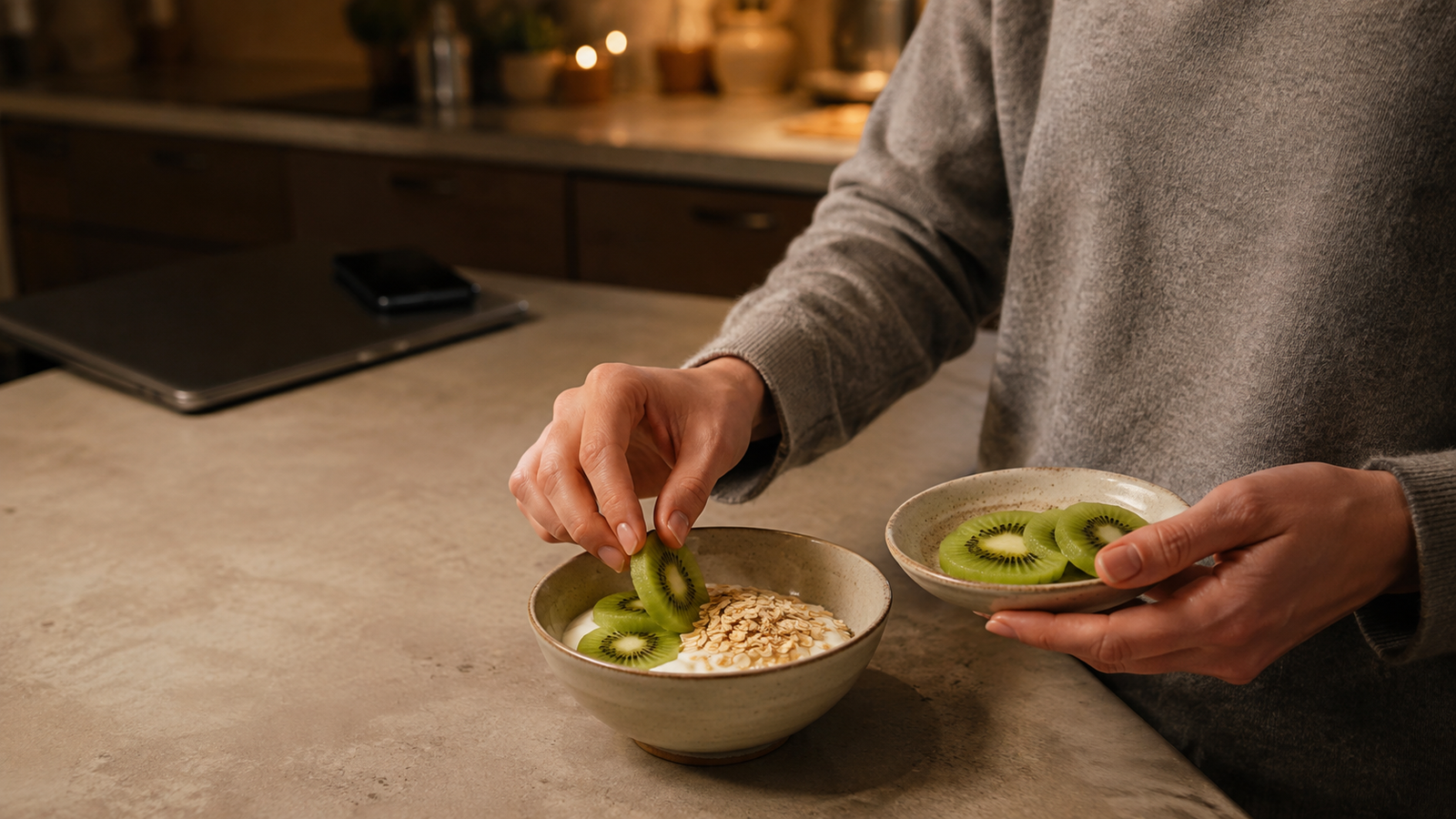
Instead of searching for one perfect ingredient, use this simple formula:
Choose one light base:
- Plain yogurt
- A small bowl of oatmeal
- One slice of whole-grain toast
- A small glass of milk
Add one modest extra if needed:
- One kiwi
- Half a banana
- A few tart cherries
- A small amount of nuts or seeds
The snack should address hunger without feeling like a second dinner. If you are not hungry, you do not need to eat simply because a food appears on a sleep list.
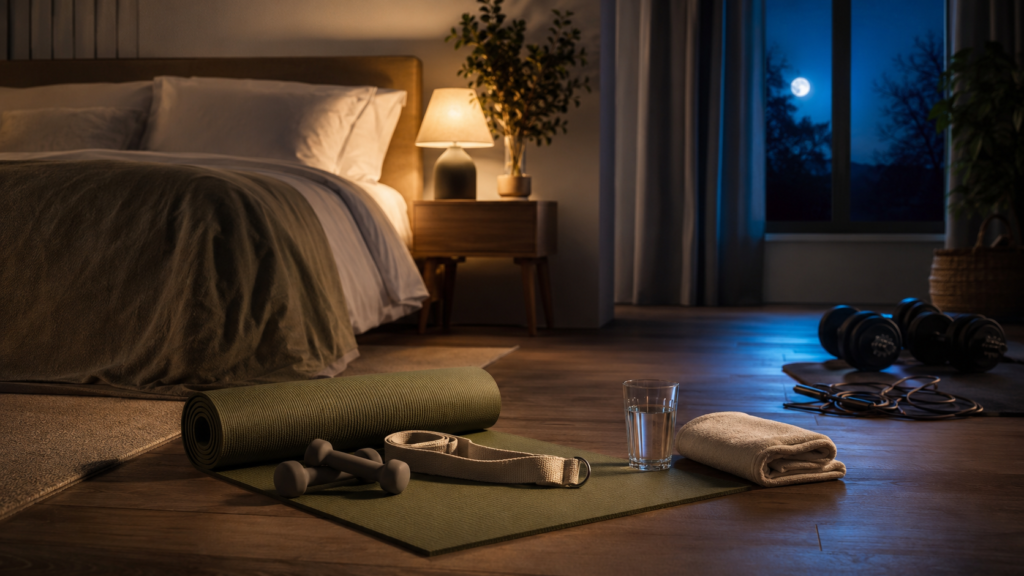
본문 이미지 2 삽입 위치: 이 문단이 끝난 직후
Five Simple Combinations
- Plain yogurt with sliced kiwi
- Small oatmeal with banana
- Whole-grain toast with a thin layer of nut butter
- Yogurt with oats and several tart cherries
- Warm milk with one plain whole-grain cracker
Try one combination at a time. Using five supposed sleep foods together makes it difficult to tell what helped—or which ingredient caused the 2 a.m. stomach rebellion.
When Should You Eat Before Bed?
There is no universal bedtime-snack schedule.
If you need a snack, begin with a small portion approximately one to two hours before bed. This gives you time to notice fullness, reflux, bloating, thirst, or increased alertness.
The National Heart, Lung, and Blood Institute recommends avoiding heavy or large meals within a few hours of bedtime while noting that a light snack is acceptable.
People with reflux may need a longer interval between eating and lying down. Others may sleep comfortably after a small snack closer to bedtime. Use your symptoms and medical guidance rather than forcing a rigid rule.
For a complete evening schedule, see How to Build a Better Bedtime Routine.
Foods and Drinks That May Disrupt Sleep
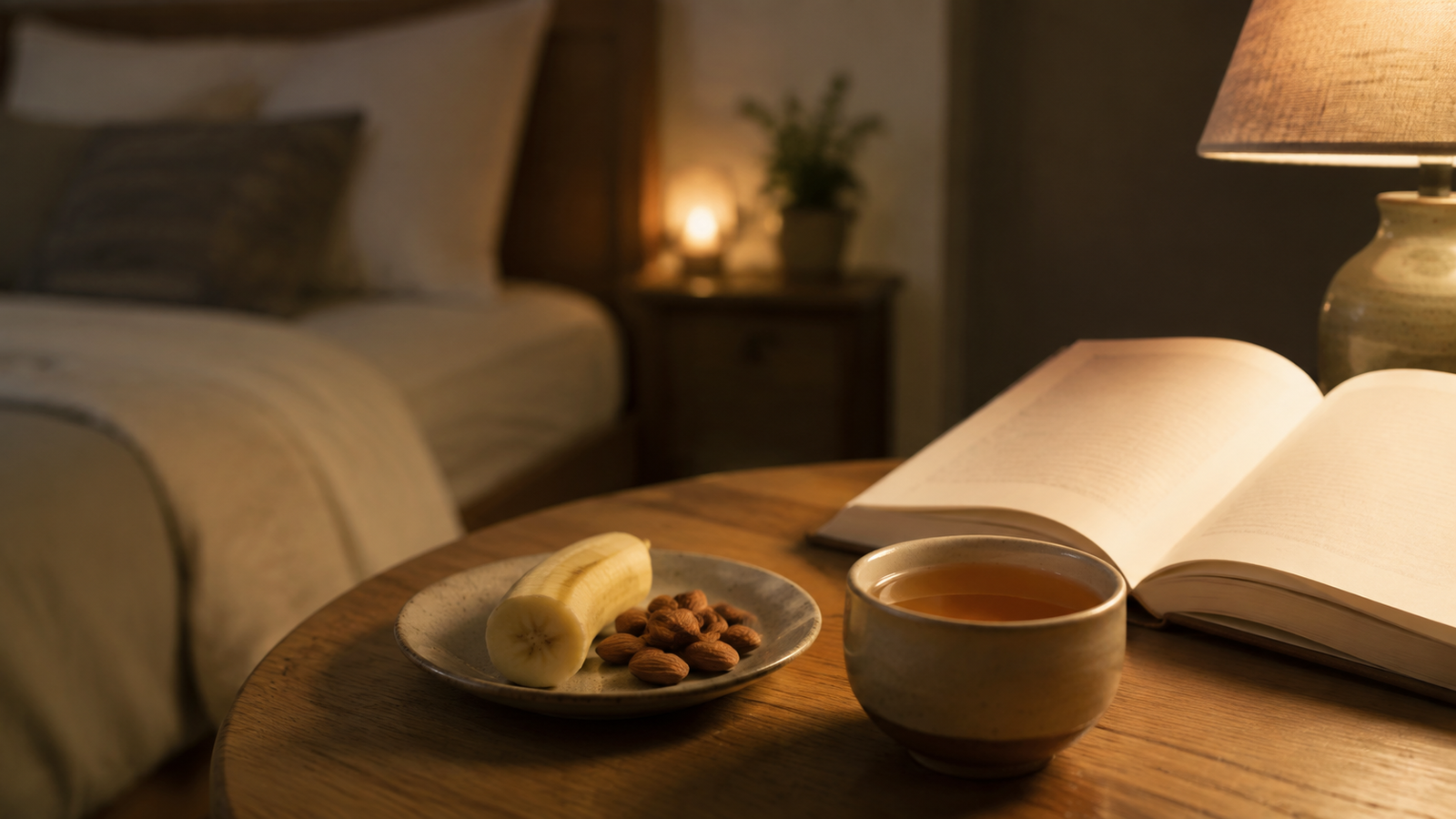
Choosing a kiwi will not compensate for habits that repeatedly interfere with sleep.
Caffeine Too Late in the Day
Coffee, tea, energy drinks, cola, chocolate, pre-workout products, and some medications contain caffeine.
A systematic review found that caffeine reduced total sleep time and sleep efficiency while increasing the time required to fall asleep. Individual sensitivity and dose vary, so your cutoff may need to be earlier than someone else’s. Review the systematic analysis of caffeine and sleep.
Alcohol Near Bedtime
Alcohol may make you feel sleepy initially, but it can contribute to fragmented and less restorative sleep later in the night.
Do not treat wine or another alcoholic drink as a natural sleep aid.
Heavy or High-Fat Meals
Large meals require more digestion and may worsen fullness or reflux when you lie down. Whenever practical, finish your main evening meal several hours before bed.
Spicy or Acidic Foods
These foods do not disturb everyone. However, they may trigger heartburn in people who are sensitive to them.
Excessive Fluids
Hydration is important, but drinking a large amount immediately before sleep may increase nighttime bathroom trips.
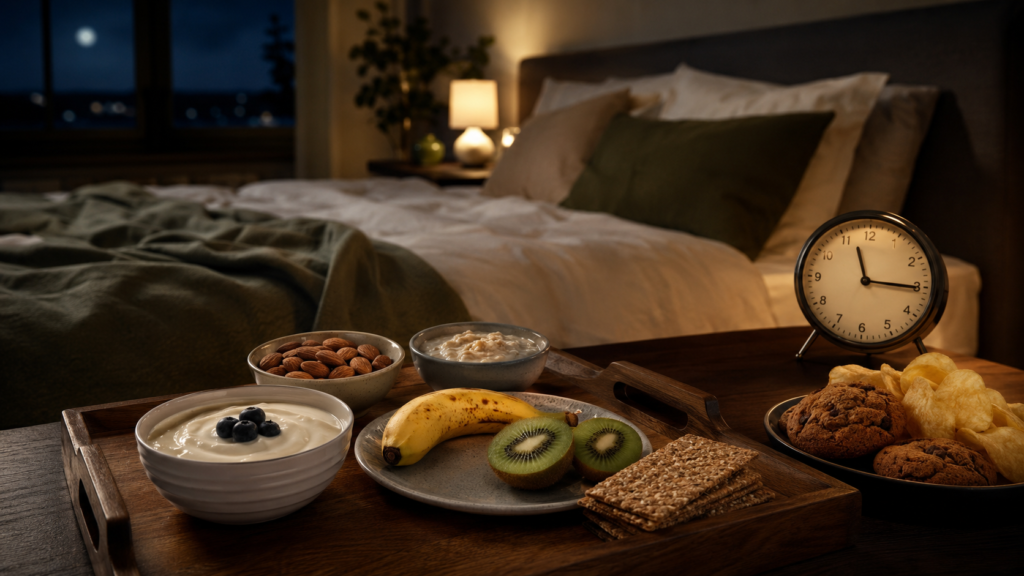
본문 이미지 3 삽입 위치: 이 항목이 끝난 직후
Test the Food, Not the Hype
If you want to know whether an evening food helps, test it consistently rather than changing everything at once.
For seven to fourteen nights, record:
- What and how much you ate
- When you finished eating
- Approximate bedtime
- Whether you experienced hunger or digestive discomfort
- How difficult it felt to fall asleep
- Nighttime awakenings
- Morning energy
Keep the rest of your routine reasonably stable. One excellent or terrible night does not prove that a food caused the result.
For broader habits involving light, activity, caffeine, and bedroom conditions, read 10 Natural Ways to Sleep Better Without Medication.
When Food Is Not the Solution
Food cannot treat every cause of poor sleep.
Speak with a healthcare professional if sleep problems continue, interfere with daytime functioning, or occur with:
- Loud snoring, choking, or gasping
- Severe daytime sleepiness
- Falling asleep while driving or working
- Persistent insomnia despite healthy routines
- Frequent morning headaches
- Uncomfortable urges to move your legs
- Significant anxiety, depression, or mood changes
- Ongoing reflux, pain, or digestive symptoms at night
If worry or racing thoughts are the main problem, changing snacks may have little effect. Our guide to anxiety and insomnia explains strategies that address mental arousal more directly.
Do not stop prescribed medication or replace medical treatment with a food, supplement, tea, or juice without consulting your healthcare professional.
Frequently Asked Questions
What is the best food to eat before bed?
There is no single best food for everyone. Kiwi and tart cherry products have some direct human research, but the studies are small. If hunger is the issue, plain yogurt, oatmeal, a banana, or whole-grain toast may be practical choices.
How long before bed should I eat?
A small snack approximately one to two hours before bed works well for many people. Allow more time if eating close to bed causes reflux, bloating, or discomfort.
Can bananas make you sleepy?
Bananas contain useful nutrients, but current evidence does not show that one banana reliably causes sleepiness. They are best viewed as a convenient light snack.
Does tart cherry juice contain melatonin?
Tart cherries contain naturally occurring melatonin-related compounds, and small trials have reported possible sleep benefits. The findings are not strong enough to treat tart cherry juice as a replacement for insomnia care.
Should I go to bed hungry?
Severe hunger can make relaxation difficult. If you are genuinely hungry, choose a small, familiar snack rather than a large meal. If late-night hunger occurs frequently, review whether your daytime meals provide enough food and protein.
Can magnesium-rich foods cure insomnia?
No. Magnesium-rich foods can be part of a healthy diet, but research does not establish them as a cure for insomnia. Evidence for magnesium supplementation is also uncertain and should not be confused with eating ordinary foods.
Final Thoughts
The best foods that help you sleep are ordinary foods that fit comfortably into an overall healthy diet. Kiwifruit and tart cherries have promising but limited research, while yogurt, oats, bananas, nuts, seeds, and whole grains can provide sensible options when evening hunger is the real problem.
Start with one small change. Choose a light snack only when you need it, avoid heavy meals and late caffeine, and observe your response for one or two weeks.
Food can support a healthy sleep routine, but it cannot overpower an irregular schedule, untreated sleep disorder, or midnight espresso with ambitions.